
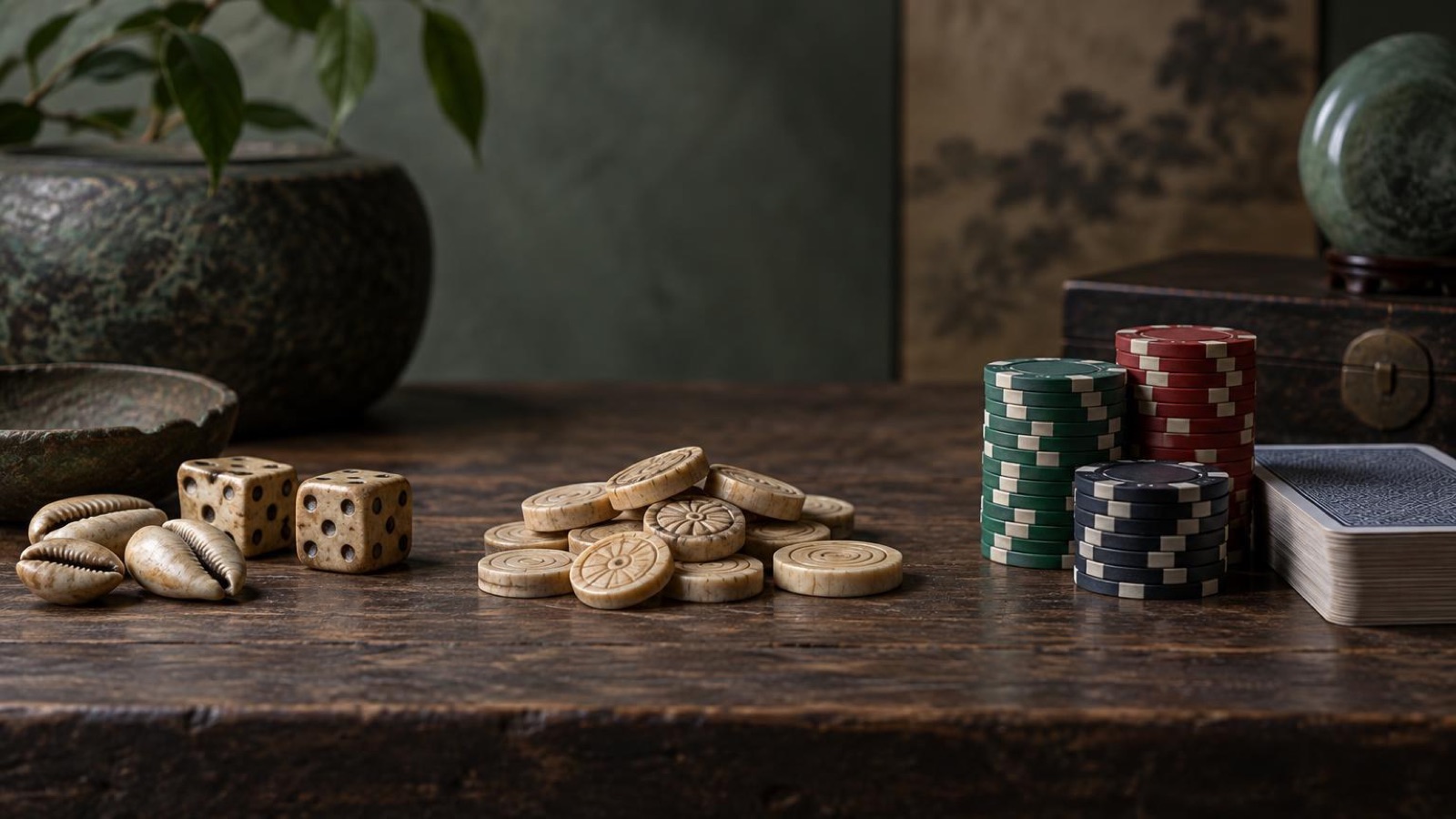
Centuries of games, lucky numbers and beliefs
Gambling in Asia is not a recent import. The recorded history of racing in Japan goes back to 701 A.D., during the reign of the Emperor Mommu, long before anyone thought of a casino6. Western-style horse racing arrived in 1861, when foreign residents formed the Yokohama Race Club and held the first race there, and in 1888 the Japan Racing Club sold the country's first betting tickets, priced at one dollar, for its races in Yokohama6.
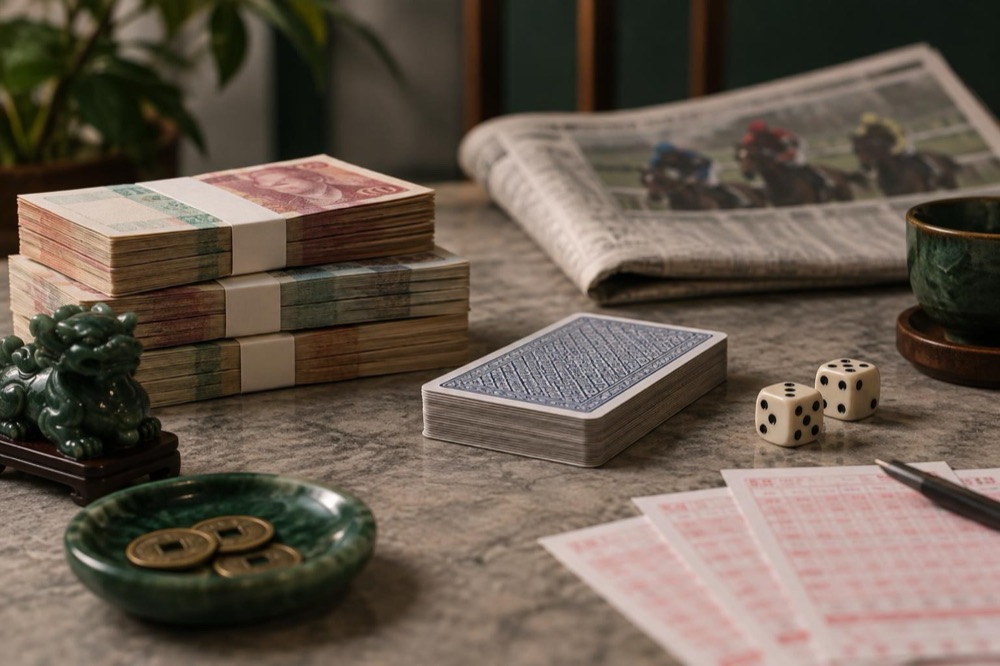
In the Philippines, sabong, or betting on live cockfighting, is an established tradition that dates as early as 3,000 years ago and is still a national pastime7. Mainland China's games are just as old and just as embedded in daily life: an official enforcement notice lists mahjong, poker, dominoes and dice among the forms gambling takes there, alongside underground lotteries and even WeChat red packets5. If you want to see how deep these traditions run, read about ancient board games played for stakes like liubo and pachisi, or the gambling games recognized as cultural heritage, such as Vietnam's bai choi.
Belief and luck run through all of it. Players across the region watch lucky and unlucky numbers, carry lucky colors, charms and amulets, pick lucky days from almanacs and follow gambling superstitions about entrances, books and shoulders. Some turn dreams into lottery numbers or ask spirits for winning numbers through temple, tree and shrine rituals. Casino design itself follows these beliefs, as you can read in our page on casino feng shui. Religion shapes attitudes too, and the details are in gambling and religion in Asia.
Where gambling is legal, restricted or banned across Asia
There is no single answer for the continent. A handful of places have fully embraced casinos as an industry: Macau, Singapore, the Philippines, Cambodia and Vietnam among them, while others such as Japan, Taiwan and Thailand have debated legalizing casino gaming without yet doing so8. At the other end, mainland China prohibits gambling in every form, from mahjong for stakes to online football betting5. In between sit places like Hong Kong, which allows betting only through a few tightly regulated channels, and Japan, which bans casinos but runs state-sanctioned racing betting.
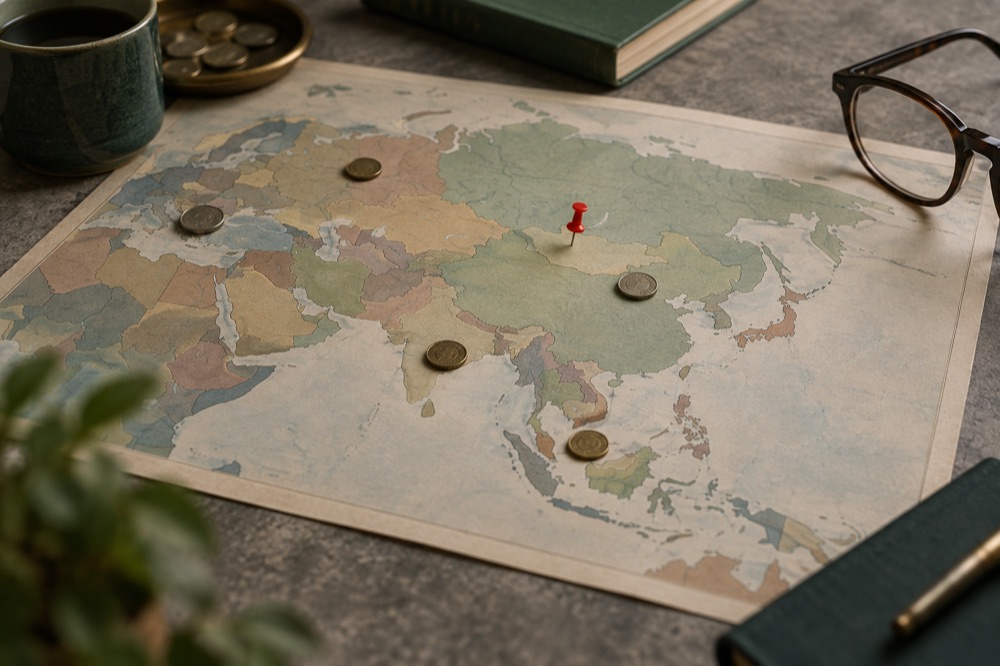
Here is the shape of it at a glance:
| Place | What is on offer | Who can take part |
|---|---|---|
| Macau | Full casino floors, open 24 hours1 | Locals and visitors alike |
| Hong Kong | Horse racing, football, Mark Six, soon basketball, via one operator2 | Anyone 18 and over |
| Singapore | Two resort casinos, betting with Singapore Pools, club jackpot machines3 | Visitors enter free; citizens and residents pay a levy |
| Japan | Horse, boat, cycling and auto racing betting4 | People aged 20 and over, at licensed venues and tracks4 |
| South Korea | More than a dozen casinos | Foreigners at almost all; locals only at Kangwon Land |
| Philippines | PAGCOR casinos, sabong, eSabong, offshore online licensing7 | Locals and visitors, with some channels offshore-only |
| Mainland China | Nothing legal | Gambling prohibited in all forms5 |
The pattern that repeats across the region is this: governments want the tourism revenue that gambling brings, but they want to keep their own citizens away from the tables. That is why so many countries run casinos open to foreign visitors only, or charge locals a fee to enter, or limit how often residents may visit. The sections below walk through each place in turn.
Macau: the gambling capital of the world
Macau is the headline act of Asian gambling. The former Portuguese enclave legalized casino gambling in the 19th century, and the modern industry grew out of the monopoly franchise held by Stanley Ho's STDM from 1962 until the market opened to foreign operators in 2002, a story covered in our pages on the STDM monopoly and Stanley Ho.
The casinos themselves are open around the clock: entertainment venues in Macau operate 24 hours a day1. The games are dominated by baccarat, which suits the preferences of Chinese players, alongside roulette, blackjack, sic bo and a growing floor of slot machines. The landmark Casino Lisboa remains one of the most famous buildings in the city.
Macau has also led the region in formalizing the idea of responsible gambling. Its regulator, the Gaming Inspection and Coordination Bureau, defines it this way10:
For practical details on visiting, see can I gamble in Macau?.
Hong Kong: a Jockey Club monopoly
Hong Kong takes the opposite approach to Macau: instead of many operators, it has exactly one. The Hong Kong Jockey Club is the sole operator authorized by the government to provide horse racing and football betting, and it has limited its betting services to horse racing, the Mark Six lottery and football, in accordance with its licensing conditions2. Government policy confines gambling to these few regulated channels, plus licensed activities approved under the Gambling Ordinance, such as mahjong parlors11.
The Club is not a normal business. It runs a not-for-profit model in which proceeds are ploughed back into the community through charitable donations, betting duties and taxes2.
A few practical points if you bet in Hong Kong:
- Gambling is restricted to those aged 18 and above12
- The Club accepts cash betting and account-based betting only, with no credit facilities and no credit card betting2
- The menu is about to grow: the government plans to issue the Jockey Club a basketball betting license, following the existing horse racing and football betting model13
Racing itself is the city's passion, held at two historic tracks. The stories of Happy Valley Racecourse, including the terrible 1918 fire, and of Sha Tin are part of the wider history of the sport. See can I gamble in Hong Kong? for the full practical picture.
Singapore: two casinos and an entry levy for locals
Singapore legalized gambling carefully and narrowly. The legal forms are social gambling, betting with Singapore Pools, casino gambling at Marina Bay Sands and Resorts World Sentosa, and jackpot machines in private clubs15. The law caps the number of casinos at exactly two15.
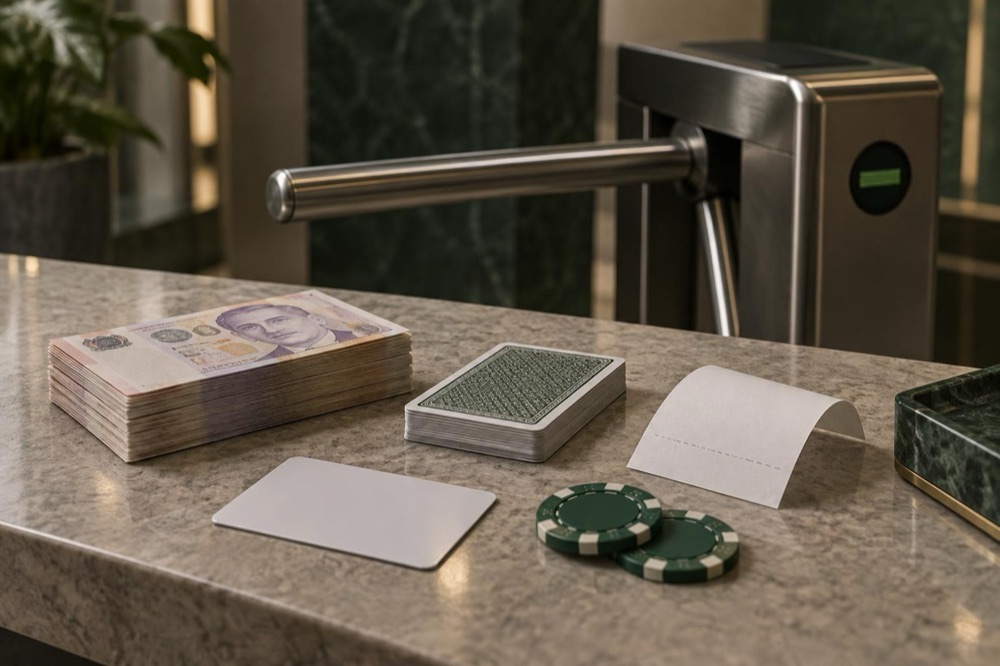
The famous part is the entry levy. A casino operator must not allow any Singapore citizen or permanent resident to enter or remain on casino premises unless the person has paid the entry levy3. The annual levy stands at S$3,000 for a valid annual membership3. Foreign visitors simply walk in free, which is the clearest example in Asia of a system designed to take tourist money while discouraging locals. For more, see can I gamble in Singapore?.
Japan: prohibited by default, with legal exceptions
Japan's position looks contradictory until you see the pattern. Casinos are banned: Japanese law prohibits opening or providing gambling venues within Japan, and connecting from Japan to gamble at an online casino is treated as a crime even if the operator is legally run overseas4. Yet the same country runs some of the biggest legal betting in Asia through its public sports: horse racing, boat racing, cycling and auto racing, all state-sanctioned for decades.
Winnings are not tax-free everywhere: in Japan, online casino winnings are treated as miscellaneous income, and a tax return is required if annual winnings exceed JPY 500,00017.
The legal betting side is enormous. The Japan Racing Association runs a nationwide network of 10 racecourses and 38 off-course betting facilities called WINS18. The 10 licensed national venues are Chukyo, Sapporo, Hakodate, Fukushima, Niigata, Tokyo, Nakayama, Kyoto, Hanshin and Kokura19. Add 15 local government racecourses and Japan has 25 in total, with night races at four of them6. Pachinko, the noisy pinball cousin of gambling, has its own history, which you can read about in when and where was pachinko invented?. See can I gamble in Japan? for practical details.
Famous venues and racing traditions, from Yokohama to Genting
Beyond the JRA circuit, Japan's racing and betting venues are built for a full day out. Boat Race venues offer restaurants, food stalls, souvenir shops, sports facilities, VR experiences, karaoke boxes, arcades and photo spots, and seven special venues host night races20. Betting tickets for the boat races, called funaken, can be bought right at the venues21.
The racing tradition stretches back to that first Western-style race in Yokohama in 18616, and shrine festivals kept their own horse racing alive, as described in our pages on saiten keiba, Soma Nomaoi and the Kamo Kurabeuma festival.
South of Japan, the Genting highlands resort in Malaysia is the region's other great gambling landmark, built from scratch in the hills by Lim Goh Tong, whose story is told in Lim Goh Tong and the founding of Genting. Hong Kong's racing museums and old racecourses appear in our guide to gambling museums and heritage sites, and the great sweepstakes of the colonial era, from the Calcutta Derby to the Shanghai horse lotteries, have their own page on racing sweepstakes in Asia.
South Korea: restrictive rules for citizens, casinos for foreigners
South Korea follows the region's most common model: casinos exist, but mainly for visitors. There are more than a dozen casinos across the country, and all but one, the Kangwon Land casino in a former mining town, admit foreign passport holders only. For local residents, the rules are restrictive in other ways too: visit frequency is limited for people living near the casinos22. Gambling by South Koreans at home outside those narrow channels is prohibited, which is why the country has a strong culture of illegal gambling, a theme explored in the Korean film Tazza: The High Rollers. See can I gamble in South Korea? for details.
The Philippines: PAGCOR, sabong and offshore sites
The Philippines runs the most wide-open gambling industry in the region, all under one regulator. PAGCOR, the Philippine Amusement and Gaming Corporation, holds the rights and authority to operate and license gambling casinos, gaming clubs and similar recreation and amusement places, and gaming pools including basketball, football and bingo, whether on land or sea23.
Sabong sits at the heart of the culture. Betting on live cockfighting is an established tradition dating as early as 3,000 years ago, and PAGCOR regulates the online version, known as eSabong24. The eSabong platform accepts bets from within the Philippines only and is not accessible from outside the country7.
PAGCOR also licenses offshore online gaming: licensees may offer authorized games of chance via the internet exclusively to offshore players, excluding Filipinos abroad, who have registered an online gaming account with the licensee25. The regulator warns the public to check its list of licensees on the PAGCOR website before accessing offshore gaming sites, because fake sites circulate26. The wider story of the region's offshore industry, and its entanglement with underground banking, is covered in reporting on how Southeast Asian casinos shifted online to offer live-dealer streaming and proxy betting27. For practical guidance, see can I gamble in the Philippines?.
Vietnam, Thailand and Malaysia: gray zones and pilot schemes
These three countries show the region's middle ground. Vietnam long ran casinos for foreigners only, but a pilot program now allows Vietnamese people to play at permitted casino premises, with the duration set by the competent authority28. Malaysia has long hosted the Genting casino complex, one of the largest in the world, while betting for the Muslim majority population is prohibited under Islamic law, a tension explained in gambling and religion in Asia. Thailand has historically banned almost everything, but in August 2025 the government overturned a long-standing ban and made tournament poker officially legal, though a full legal framework has yet to be implemented29.
The region-wide picture, as investors saw it a decade ago, is that certain countries have legalized casino gaming, including Malaysia, Vietnam, Cambodia, the Philippines and Russia, while others such as Japan, Taiwan and Thailand may yet do so8. Country guides: Vietnam, Thailand, Malaysia.
China: a broad prohibition and its black market
Mainland China prohibits gambling across the board. Official guidance states plainly that gambling is an act prohibited by Chinese laws and regulations30. An enforcement notice in Liaoning province spells out the breadth: gambling is strictly prohibited in all forms, including mahjong, poker, dominoes, dice, the underground Mark Six lottery, electronic gaming machines, computer networks and WeChat red packets5. Online football betting is treated as a criminal offense9, and cross-border gambling is likewise a crime strictly prohibited by Chinese law31.
Two nuances matter. Small-scale recreational gambling is not a crime where the amounts involved are small and the purpose is only recreation or entertainment32. And the law reaches beyond the border: Chinese citizens gambling overseas, and opening casinos abroad to attract Chinese citizens as primary customers, may constitute gambling crimes under Chinese judicial interpretation33.
The ban has not stopped the demand. It has pushed it underground, into illegal venues, offshore sites and the unlicensed online operations described above27. There was even a proposal at one point to allow gambling on Hainan Island, a sign of how strong the commercial pull is34. The history behind all this, from imperial edicts to Qing dynasty bans, is in historic gambling bans in Asia and what Chinese games were banned under the Qing dynasty?. See can I gamble in China?.
How attitudes to gambling differ between residents and visitors
If you read the sections above as one story, the theme is obvious. Nearly every government in Asia draws a line between the visitor and the local:
- Singapore charges its own citizens and permanent residents an entry levy that tourists never pay3
- South Korea limits how often local residents may visit casinos22
- Vietnam only recently began letting its own nationals play at casino premises at all, and only under a pilot program28
- Hong Kong and Macau, the two Chinese special administrative regions, sit at opposite extremes: Hong Kong confines everyone to a single not-for-profit operator2, while Macau welcomes the world's tables 24 hours a day1
The reason is cultural as much as legal. Gambling is deeply woven into family and festival life across the region, from gambling at funerals and wakes to animal contests and the 36 animals lottery. Because it is so close to home, governments treat it as a social risk to be managed, not just a business to be licensed. Macau's own definition of responsible gambling captures the attitude: gambling should pose no threat to the player, their family, other players or casino staff, and bring no negative impact to the region or the player's place of origin10. The deeper reasons are set out in why many Asian countries restrict gambling.
For visitors, the practical upshot is simple: in most of Asia, the red carpet is rolled out for you, and the rules that bind locals, levies, entry bans, visit limits, do not apply. For residents and citizens, the picture is patchwork, and each country guide on this site tells you exactly where the lines fall.
All Pages in Section
- Lucky Numbers for Gambling
- Gambling Superstitions in Asia
- Casino Feng Shui
- Lucky Days to Gamble
- Lucky Charms for Gambling
- Dream Numbers and the Lottery
- Praying for Lottery Numbers
- Gambling and Religion in Asia
- Asian Gambling Laws and Restrictions
- History of Gambling Bans in Asia
- The Colonial Gambling Farm System
- Horse Racing Sweepstakes History
- Gambling Museums and Heritage Sites in Asia: Racing Museums, Old Racecourses and Memorials
- Ancient Board Games Played for Stakes in Asia: Liubo, Chaupar, Pachisi and Shengguan Tu
- Gambling Games Recognized as Cultural Heritage: Bai Choi, Bo Bing and Others
- Cockfighting and Animal Contests in Asian Gambling
- Gambling at Funerals and Wakes: Mahjong, Cards and Dice Across Asia
- The 36 Animals Lottery: Huahui, Jeu des 36 Bêtes and Flower Lotteries
- Triads, Yakuza and Syndicates: Organized Crime in the History of Asian Gambling
- Asia's Gambling Tycoons: Stanley Ho, Lim Goh Tong and Other Industry Founders
- Gambling in Asian Films and TV: Tazza, God of Gamblers, Kaiji and Matka King
- Gambling Slang in Asian Languages: Chinese, Japanese, Korean, Thai and Vietnamese Terms
- What Happened to the Macao Canidrome Greyhounds
- The 1918 Happy Valley Racecourse Fire
- When and Where Was Pachinko Invented?
- When Were Temple Lotteries (Tomikuji) Banned in Japan?
- What Punishments Did Gamblers Face in Feudal Japan?
- Which Yakuza Groups Descended from Bakuto Gambling Organizations?
- Why Are Hong Kong Mahjong Parlours Called "Zhu Guan"?
- When Did the Mark Six Lottery Begin?
- When Did UNESCO Recognize Bai Choi?
- What Was the Jeu des 36 Bêtes Lottery in Colonial Vietnam?
- When and Where Did Matka Gambling Originate?
- Ganjifa Cards
- What Numbers Game Is Masiao Based On?
- What Games Are Played at Filipino Wakes?
- What Is the Korean Film Tazza: The High Rollers About?
- What Is Saiten Keiba, Horse Racing at Shrine Festivals?
- What Is the Armored Horse Racing at Soma Nomaoi?
- When Is the Kamo Kurabeuma Horse Racing Festival Held?
- What Is Liubo and When Did It Disappear?
- What Chinese Games Were Banned Under the Qing Dynasty?
- When Did Lotteries First Appear in China?
- What Is the Masamura Gauge in Pachinko?
- When and Where Was the First Western-Style Horse Race in Japan?
- Why Is the Japanese Gambling Venue Fee Called Temple Money?
- Why Is November 14 Pachinko Day in Japan?
- Old Shanghai Horse Racing
- Does the Hong Kong Racing Museum Offer Guided Tours?
- Ganjifa vs Ganjapa: Indian Traditional Cards Compared
- Bai Choi vs Tam Cúc: Vietnamese Traditional Games Compared
- Zha Jinhua vs Guandan: China's Card Game Shift
- The STDM Monopoly: Macau's Casino Franchise From 1961 to 2002
- Jiangwan Racecourse: Shanghai's Former Chinese Race Club Track
- Happy Valley Racecourse: History of Hong Kong's First Racetrack
- When Sha Tin Racecourse Opened and How It Was Built
- The Calcutta Derby Sweep
- Ratan Khatri, the Matka King of Bombay
- Bill Benter and Computer Betting Syndicates in Hong Kong Racing
- Stanley Ho and the Macau Gambling Monopoly
- Casino Lisboa: Macau's Original Casino, Still Open Today
- Lim Goh Tong and the Founding of Genting
Common Questions
What is the legal gambling age in Asian countries?
It varies by country and by game. In Hong Kong, gambling is restricted to those aged 18 and above. Most other jurisdictions in the region set similar minimums for casinos, betting shops and lottery tickets, though a few set higher ages for casino entry than for lottery play.
Can foreigners gamble in mainland China?
No. Gambling is broadly prohibited across mainland China in all forms, including mahjong for stakes, online betting and cross-border gambling trips. There are no legal casinos on the mainland, and Chinese law also reaches citizens who gamble at casinos overseas.
Which country has the most casinos in Asia?
The Philippines has the largest number of licensed gaming venues, largely because PAGCOR both operates its own casinos and licenses private ones. Macau has fewer properties but is the region's most famous casino city and its biggest single market.
Is online gambling legal anywhere in Asia?
Yes, in a few places. The Philippines licenses offshore online gaming aimed at players outside the country, and PAGCOR has regulated online cockfighting betting. In Japan, connecting to an overseas online casino from inside the country is treated as a crime even if the operator is licensed abroad.
Why are locals banned from some casinos but not others?
Governments want tourism revenue without exposing their own citizens to gambling harm. Singapore charges citizens and permanent residents a daily entry levy, South Korea limits how often local residents may visit, and Vietnam only recently began a pilot letting Vietnamese nationals play at certain casinos.
What is sabong and why is it so popular in the Philippines?
Sabong is betting on live cockfighting, a tradition in the Philippines that dates back roughly 3,000 years and remains a national pastime. Regulated online versions, called eSabong, let players bet on matches through PAGCOR-licensed platforms.
Do you pay tax on gambling winnings in Asia?
It depends on the country. In Japan, winnings from online casinos are treated as miscellaneous income, and a tax return is required if annual winnings exceed JPY 500,000. Rules elsewhere range from no tax on casual winnings to withholding on large prizes.
Sources34 sources
- Gaming, Macao Government Tourism Office, October 27, 2021.
- Responsible Gambling, Hong Kong Jockey Club, accessed September 26, 2026.
- Casino Control Act 2006, Section 116, Singapore Statutes Online, accessed September 26, 2026.
- Online Casino Warning, National Police Agency, Japan, accessed September 25, 2026.
- Notice on Strictly Cracking Down on Gambling Crimes in Accordance with the Law, Liaoning Provincial Public Security Department, January 20, 2023.
- Local Racing in Japan, Japan Racing Association, accessed 2026.
- E-Sabong Regulatory Framework, PAGCOR, April 27, 2022.
- MGM Resorts 10-K 2015, U.S. Securities and Exchange Commission, December 31, 2015.
- Online Football Betting Warning, Chinese government website, August 18, 2026.
- Responsible Gambling, Gaming Inspection and Coordination Bureau, Macau, 2026.
- Gambling Policy, Home and Youth Affairs Bureau, Hong Kong, 2026.
- Bet Limits, Hong Kong Jockey Club, accessed September 25, 2026.
- Press Release on Betting Regulation, Hong Kong Government, June 4, 2025.
- Basketball Betting Licence Announcement, Hong Kong Government, September 11, 2025.
- Casino Control Act 2006, Section 41, Singapore Statutes Online, accessed September 25, 2026.
- Policy Paper on Casino Regulation, National Police Agency, Japan, 2026.
- Online Casino Guide, operator page, accessed September 26, 2026.
- JRA Guidebook 2026, Japan Racing Association, 2026.
- Racing Legislation, House of Representatives, Japan, 2026.
- Boat Race Step-by-Step Guide, Boat Race Promotion Association, accessed September 25, 2026.
- Boat Race Betting Guide, Boat Race Japan, accessed September 25, 2026.
- Research Paper on Casino Regulation, Osaka Prefecture, 2025.
- Republic Act No. 9487, LawPhil, June 20, 2007.
- E-Sabong Regulation, PAGCOR, accessed September 25, 2026.
- GR No. 252965, Supreme Court of the Philippines, December 7, 2021.
- PAGCOR Warns vs Fake Online Gaming Sites, PAGCOR, September 12, 2023.
- Casinos, Cryptocurrency and Underground Banking, UNODC, January 15, 2024.
- Decree on Casino Business Conditions, Government of Vietnam, 2025.
- Tournament Poker Now Legal in Thailand, Asia Gaming Brief, August 6, 2025.
- Legal Guidance on Gambling, Chinese government website, September 12, 2024.
- Cross-Border Gambling Warning, Chifeng Public Security Bureau, February 6, 2026.
- Legal Q&A on Gambling, National People's Congress, China, April 19, 2002.
- Judicial Interpretation on Online Gambling Crimes, Chinese Embassy in the Philippines, August 8, 2019.
- MGM Resorts 10-K 2017, U.S. Securities and Exchange Commission, February 23, 2018.















