
Origins: from American pinball to 1920s Japan
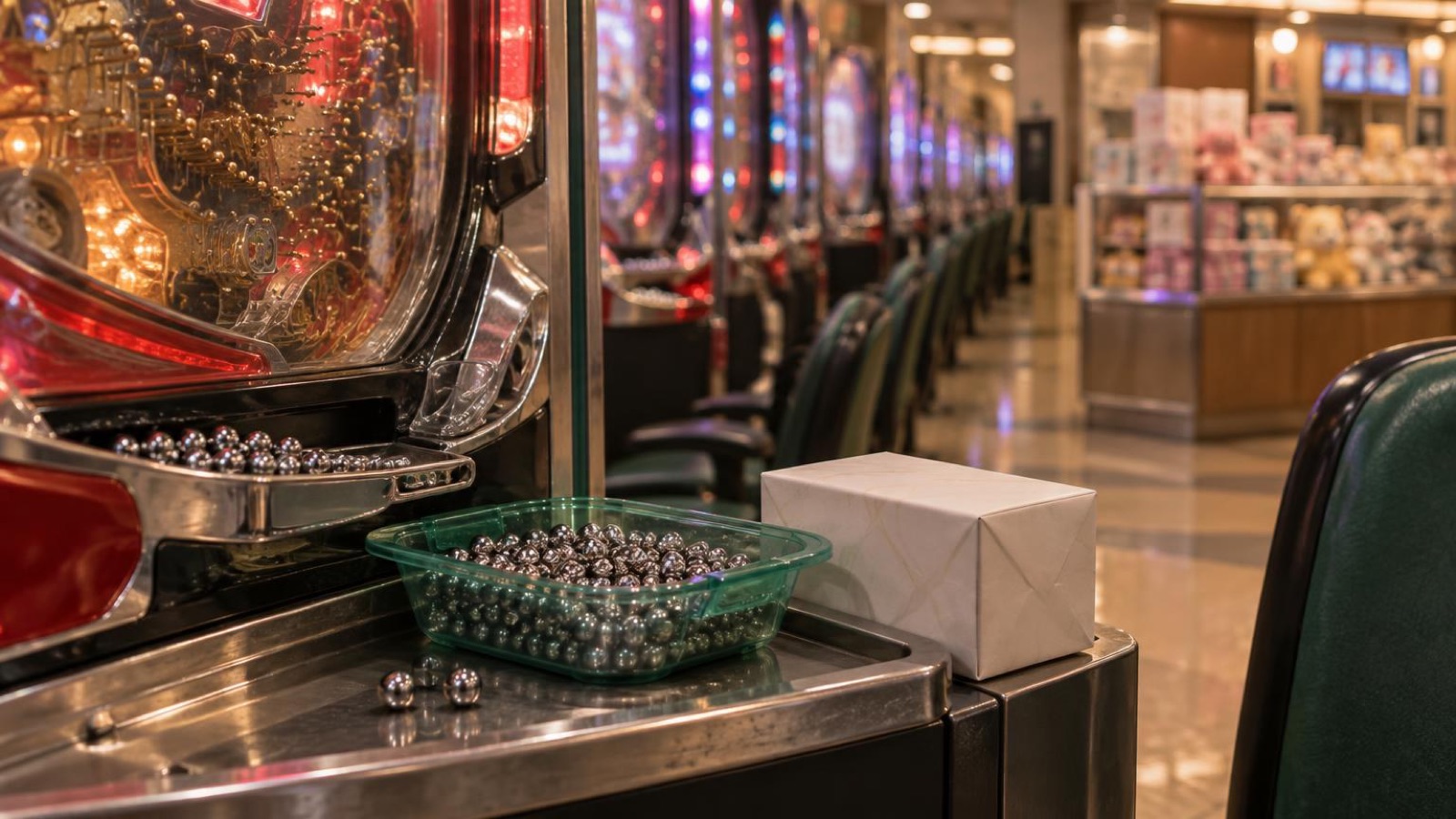
Pachinko began as an import. The game descends from an early twentieth-century American ball-and-pin machine in the pinball family, which arrived in Japan in the 1920s and was reworked by Japanese makers into something of their own: a vertical board, a rented supply of steel balls, and a parlor where you play sitting down1.
The 1920s were a busy decade for imported games in Japan. Mahjong, for instance, was introduced to the West around 1920 and spread through the same channels of travel, shipping and print that carried new parlor games across the Pacific4. A 1915 account of a Chinese tile game describes it being played in Peking, Shanghai, Suzhou and Hankou, and by educated Chinese communities in America and Europe, which gives a sense of how quickly games moved between continents in that period5.
Pachinko's own lineage is a chain of small mechanical steps rather than one invention. Early boards were purely mechanical, with pins and pockets and no electronics at all. Over the following decades the machines gained features that players now take for granted. One type-2 machine, the Chindonya P-2, was the first in its class to use a human voice6. Bravo, a later machine, was its maker's first super-tokuden type, the category now known as digipachi7. Fever Punch Out, a bowling-themed series, shows how far the theming went once makers were competing on novelty as much as on mechanics8.
If you want the wider setting, Gambling Culture and History in Asia covers how imported and local games shaped the region's play, and When and Where Was the First Western-Style Horse Race in Japan? shows the same 1860s and 1920s pattern in a different game.
How pachinko works and how prizes are paid
You sit at a machine, rent a supply of small steel balls, and turn a handle to launch them up the right side of the board. The balls fall through a field of pins. Most drop into losing pockets. A few reach the pockets that trigger a payout, and the machine releases more balls.
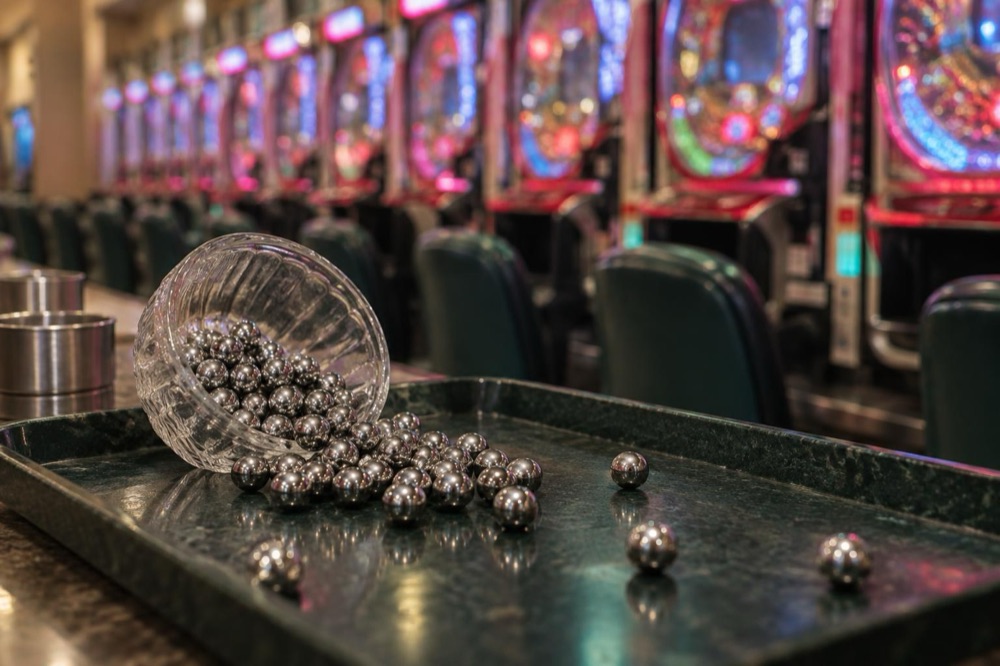
Modern machines decide the outcome before the balls even matter. On a pachinko machine, whether a spin will be a jackpot is settled at the start of the spin by a simple random lottery on a separate chip, using a roulette method, strictly at the point the bet is held9. The ball path is theater on top of that decision, which is why two identical-looking shots can produce completely different results.
Payouts come in balls, not cash. A machine's prize-ball count is a fixed number, and one example, Bravo, pays 13 balls on all wins7. Feature rounds vary by machine. Pachinko CR Hokuto no Ken has a Hyper Bonus jackpot that you win by feeding balls into the attacker on the right side of the board with right-hand hitting10.
The balls you finish with are not money. You carry them to a counter in the parlor and exchange them for prizes, and the prizes are what you leave with. That exchange step is the reason pachinko sits where it does in Japanese law, and it is the single thing first-time visitors most often get wrong.
Pachislot works differently. It is a slot-style machine with reels, spun with tokens or medals rather than balls, and it sits in the same halls. Sanscarlet is a pachinko machine of the digipachi type, while Pachislot Kelot 3 is a type-5 pachislot machine, which is a neat illustration of how the two product lines are catalogued separately even when they share a floor11.
Why Japan is the world's biggest gambling market
The scale is the story. The pachinko industry is often called a 30-trillion-yen business, a figure that traces back to a hall revenue total published by the former Management and Coordination Agency in January 199613. A more recent operator figure puts the industry at ¥21 trillion, employing over 240,000 people and accounting for nearly a third of Japan's entertainment and leisure market1.
That is a lot of machines. Japan has long been described as having more gambling machines per person than almost anywhere else, and pachinko supplies the overwhelming majority of them. A single Maruhan branch, Maruhan Matsuhidai, lists 322 pachinko machines and 243 slot machines on its floor2. Multiply that across thousands of halls and the machine count becomes enormous.
The industry is not one company. There are many small operators and a smaller number of large ones, and MARUHAN is the largest of the large operators1. That mix is why the parlor you walk into can be a two-aisle neighborhood hall or a multi-floor building with escalators.
Pachinko also sits inside a broader gambling picture. Japan allows public racing and sports betting such as horse racing and bicycle racing, alongside pachinko and pachislot14. The legal basis for the non-cash side runs through several separate laws, including the Act against Unjustifiable Premiums and Misleading Representations for prizes and premiums, and the Entertainment Business Act for pachinko, shooting galleries and ring toss15. Cash-based forms rest on different statutes again15.
| Statute | What it covers |
|---|---|
| Financial Instruments and Exchange Act | Derivatives |
| Sports Promotion Voting Act | The soccer toto sports lottery |
| IR Development Act | Integrated resorts with private casinos |
The overall position is that gambling is basically illegal in Japan, but not all gambling is illegal, and legal forms exist to respect everyday entertainment or to return proceeds to social welfare15. Pachinko parlors are allowed to operate by working around the transaction rules and through a cultural carve-out16.
The parlor experience: what a first visit is like
Parlors are loud, bright and open long hours. You will hear the machines before you see them. Staff stand in the aisles to help with ball rentals and machine questions, and the whole floor is designed for long, seated sessions rather than quick stops.
Here is the practical sequence for a first visit:
- Pick a machine and sit down. Machines are grouped by type, and pachinko and pachislot usually occupy separate aisles or floors.
- Rent balls or medals. You buy them at the machine or from a nearby counter, and the price is set per ball or per medal.
- Play with the handle. On pachinko you control launch strength with a dial; on pachislot you press a button to spin the reels.
- Watch the payout counter. Balls or medals accumulate in the lower tray as the machine pays out.
- Take your winnings to the prize counter. You exchange balls or medals for prizes, and you leave with the prizes.
Dress is casual. There is no door policy worth planning around, and no need to book. Peak times are evenings and weekends, when the aisles fill and finding a free machine takes patience.
If you are comparing this with the region's other machine floors, Gambling in Japan covers the country's venues and products in more detail, and Gambling in South Korea shows how a neighboring market handles its own machine and casino mix.
Who can play: age rules for pachinko and public sports
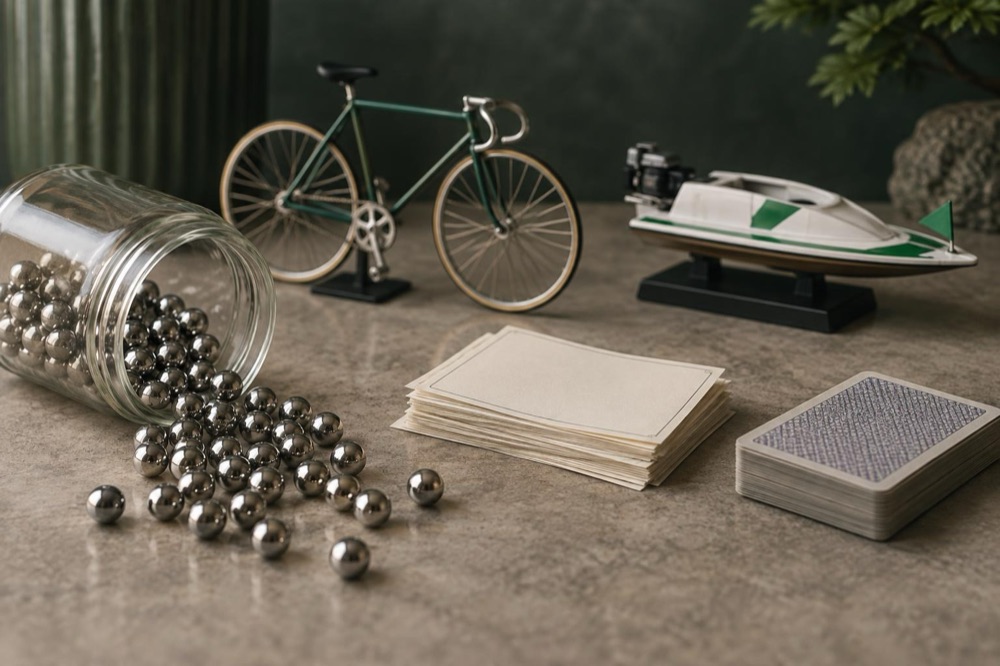
Pachinko and pachislot are open to players aged 18 or older under Japanese law3. Public sports betting, which covers horse racing, keirin, boat racing and auto racing, is restricted to people aged 20 or older3. For horse racing specifically, under-20s are barred from buying betting tickets, though they may enter a racecourse if accompanied by a parent or guardian17.
The rules differ by product, so the age that applies to you depends on what you want to play. If you are 18 or 19 and in Japan, the parlor floor is open to you and the betting windows are not.
Online pachinko is a separate matter. It is illegal in Japan, so play happens in physical parlors rather than on a screen18. That is worth knowing before you search for a site, because the legal product and the illegal one look similar in a browser.
For anyone worried about their own play, support organizations in Japan publish guidance on gambling dependence and where to get help19. The practical risk is straightforward: machine play is fast, the balls are cheap, and a session can run longer than you intended.
Racing and public sports: the other half of Japanese gambling
Pachinko is the biggest machine game, but racing has the longer history. The recorded history of racing in Japan can be traced as far back as 701 A.D., during the reign of the Emperor Mommu20. Western-style racing arrived much later: it was in 1861, toward the end of the Tokugawa Shogunate, that it was introduced to Japan, with the first race run in Yokohama under the Yokohama Race Club, formed by foreign residents20. Another account places the first Western-style meeting in 1860, at Motomachi in Yokohama17.
Betting followed slowly. In 1888, the Japan Racing Club, formerly the Yokohama Race Club, put one-dollar betting tickets on sale for club-sponsored races in Yokohama, the first in Japan20. By 1908, 15 racecourses nationwide were selling betting tickets21. Betting was not legalized again until 1923, with the enactment of the Racecourse Law21. Horse racing had been officially illegal since 190822.
Today there are 25 racecourses in Japan, 15 local government tracks plus 10 JRA tracks, and night races are conducted at four racecourses20. Local racing runs its own calendar and its own admission arrangements, and you can read more at Gambling in Japan.
Common Questions
What machine inspired pachinko?
Pachinko descends from an early twentieth-century American ball-and-pin game in the pinball family, which reached Japan in the 1920s. Japanese makers reworked it into a vertical, ball-rental game with its own boards, and the modern electronic machines followed decades later.
Is pachinko legal in Japan?
Parlors operate under entertainment business rules rather than gambling law, and winnings are exchanged for prizes rather than cash at the counter. Online pachinko is treated differently and is illegal in Japan, so play happens in physical parlors.
How old do you have to be to play pachinko?
You must be 18 or older to play pachinko or pachislot. Public sports betting such as horse racing, keirin, boat racing and auto racing is restricted to people aged 20 or older, and under-20s cannot buy betting tickets.
How many gambling machines does Japan have per capita?
Japan has long been described as having more gambling machines per person than almost anywhere else, and pachinko accounts for the great majority of them. A single large parlor can hold several hundred machines, with one example listing 322 pachinko machines and 243 slot machines.
What other forms of gambling are legal in Japan?
Alongside pachinko and pachislot, Japan allows public racing and sports betting, including horse racing, bicycle racing, boat racing and auto racing, plus the soccer toto sports lottery. Prize draws and New Year's gift postal cards are permitted under separate rules.
Are there casinos in Japan?
Japan has no long-established casino floor in the Macau or Singapore sense. Integrated resort development with private casinos was enabled by later legislation, and the country's everyday machine play remains pachinko and pachislot in neighborhood parlors.
What is the difference between pachinko and pachislot?
Pachinko is a vertical ball game in which you rent steel balls and shoot them into a board. Pachislot is a slot-style machine with reels, spun with tokens or medals. Both sit in the same parlors, and both are restricted to players aged 18 and over.
Sources22 sources
- MARUHAN: Pachinko Business, Maruhan, 2023
- Maruhan Matsuhidai, Minpachi, 2026
- Gambling dependence pamphlet, SCGA, 2026
- Mahjongg before and after Mahjongg, part 2, The Mahjong Tile Set, 2026
- Chinchirorin, Wikipedia (Japanese), 2026
- Chindonya (pachinko)), Wikipedia (Japanese), 2026
- Bravo (pachinko machine)), Wikipedia (Japanese), 2026
- Fever Punch Out, Wikipedia (Japanese), 2026
- Reach (pachinko)), Wikipedia (Japanese), 2026
- Pachinko CR Hokuto no Ken, Wikipedia (Japanese), 2026
- Sanscarlet, Wikipedia (Japanese), 2026
- Pachislot Kelot 3, Wikipedia (Japanese), 2026
- Pachinko industry scale, Pachinko Shiryoshitsu, 2026
- Gambling signs and notices, NCASA Japan, 2026
- Crimes relating to gambling and lotteries, Wikipedia (Japanese), 2026
- Best online casinos for players from Japan, Wizard of Odds, 2026
- Matsudo Racecourse, Wikipedia (Japanese), 2026
- RSN Sakura, RSN Sakura, 2026
- Gambling in Japan, Oxford Brookes University, September 2007
- Local racing in Japan, Japan Racing Association, 2026
- Flowers and kings: an hypothesis of their function in early ma que, The Mahjong Tile Set, 2026
- Horse racing, Wikipedia (Japanese), 2026















