Why feng shui shapes casino design in Asia
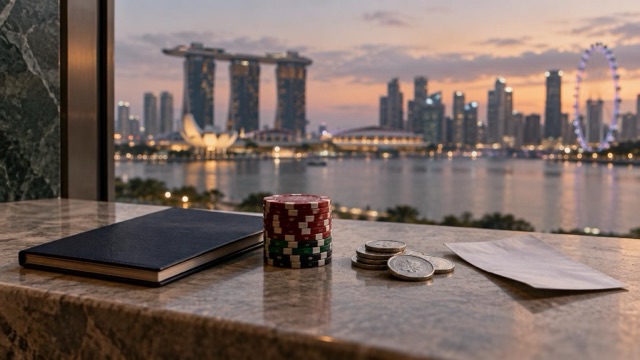
Walk into a major casino in Macau or Singapore and you are walking into a building designed, in large part, around what Chinese players believe. The industry's center of gravity in Asia is the Chinese-speaking world, and Chinese gambling culture is thick with beliefs about luck: which numbers help, which colors protect, and which days are considered good or bad for playing. You can read more about those beliefs in our pages on lucky and unlucky numbers, gambling superstitions and lucky colors and charms.
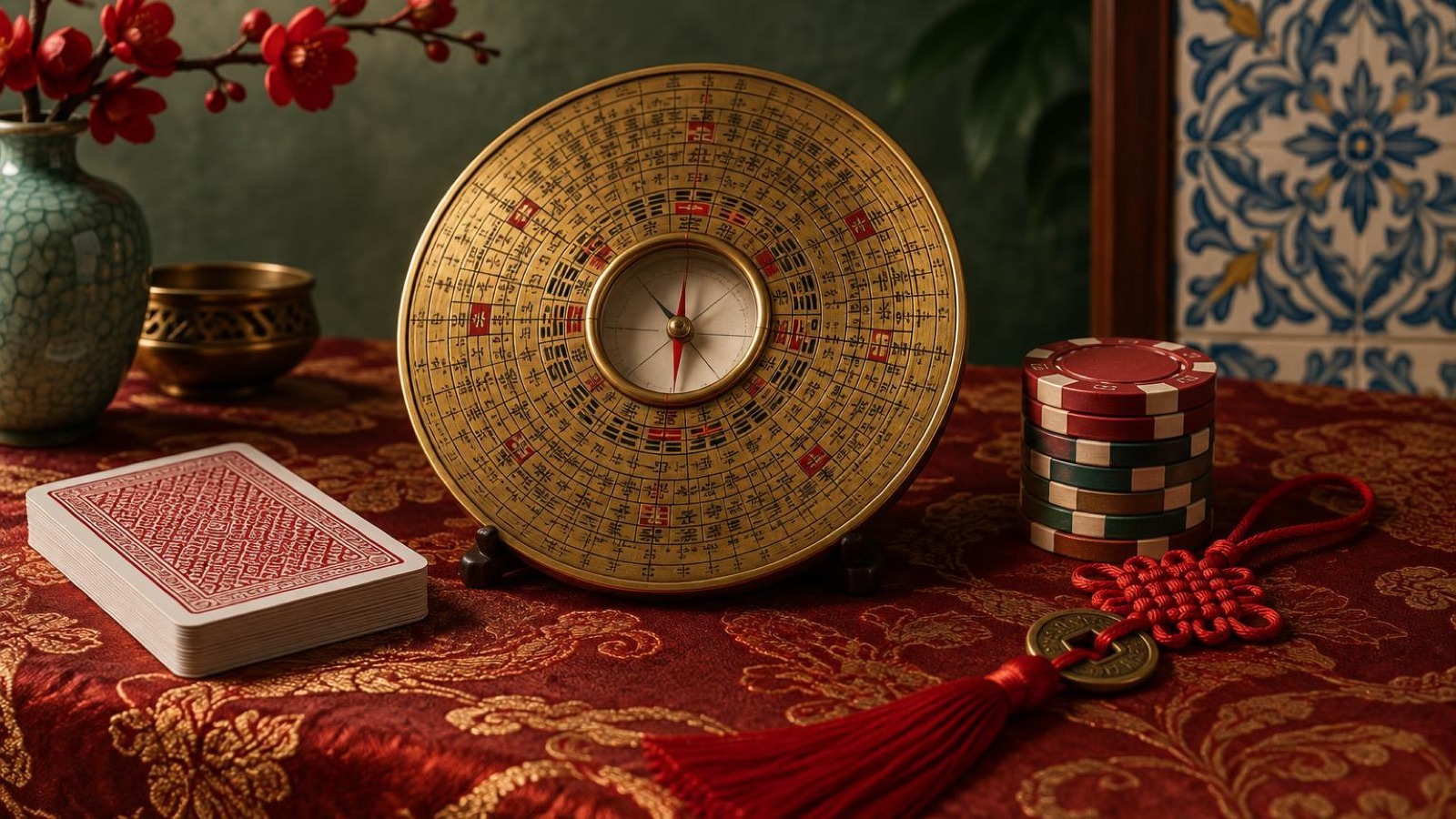
Casino operators in Asia do not treat these beliefs as folklore. Their customers live by them, so the venues are built to match. That is the practical meaning of feng shui in casino design: entrances, layouts, colors and decoration are chosen so that a Chinese player feels the building itself is on their side. The same logic explains what happens on the floor. Players pick their games, their tables and even their days around beliefs about fortune, and casinos organize their offering to fit, as our page on lucky days for gambling explains.
The result is a casino culture that looks quite different from Las Vegas, and this page walks through it: the city at its center, the games Chinese players actually choose, the two resorts that brought the same model to Singapore, and the entry rules and legal limits that apply no matter what anyone believes.
Macau: the gambling capital of the world
Macau is the anchor of all of this. It has been called the world's gambling capital, a title earned on the sheer scale of its gaming industry1. That position has shaped everything about how Asian casinos are designed and run: when your customers are overwhelmingly Chinese, you build for Chinese beliefs about luck.
The scale is enormous. A single resort, The Parisian Macao, runs 365 gaming tables9. One concessionaire's 2007 filing counted roughly 28 other existing casinos of varying sizes competing in the territory10. The industry is not just the big resort casinos either: Macao's gaming industry is characterized by horse racing, Pacapio and slot machines as well as the internationally renowned table games of its large casinos3.
For a visitor, the practical side is simple. The casinos are open 24 hours3, so there is no closing time to plan around, and the legal age of entry is 21, with persons under 21 not allowed to enter2. You can read the full picture in our guide to gambling in Macau.
What Chinese gamblers play: baccarat over poker and blackjack
The clearest place where belief meets design is the choice of games. In Western casinos, poker and blackjack carry the prestige. In Macau, the game that matters is baccarat, and it is not close. Baccarat is typically the only game offered in VIP rooms and is the preferred game among Chinese players4.
That preference is rooted in how Chinese players think about gambling. Baccarat is a game of pure fortune: you bet on player or banker, the cards do the rest, and there is nothing to master. For players who believe luck is a force you can align with rather than a probability you can calculate, that is exactly the point. Poker, with its bluffing and skill, and blackjack, with its strategy charts, ask you to rely on yourself. Baccarat asks you to read the flow of the shoe, and many Chinese players track streaks and patterns with a seriousness that would surprise a Las Vegas pit boss.
The VIP rooms take this to its extreme. These are private high-stakes rooms where patrons wagered on high-stakes baccarat, and in the past they were even permitted to use aliases or to place bets under the names of junkets or collaborators4. Traditionally, VIP-room patrons were expected to bring a gaming budget of over MOP500,000 per visit, though casinos sometimes relaxed this threshold during periods of intense competition4. The main floor is far more accessible: Macau law permits 24 games of fortune in casinos, ranging from baccarat, railway baccarat, blackjack, craps, sic bo, fan tan, pai gow and roulette to mahjong variants, thirteen-card poker, five-card poker and fu gui san gong11. So while baccarat dominates, a visitor will find plenty of familiar tables alongside the Chinese favorites.
Singapore's two integrated resorts
Singapore took the Macau model and rebuilt it under strict state control. The law allows exactly two casinos in the whole country, a rule that has stood since the Casino Control Act was first passed5. Both sit inside what the legislation calls integrated resorts: developments comprising hotel, retail, dining, entertainment, recreation and other facilities, of which a casino may be a part12. They are Marina Bay Sands and Resorts World Sentosa, and the casino is only one part of each property.
The design logic is the same as Macau's. Singapore's casinos were built to draw Chinese high rollers and regional visitors, and the same beliefs about luck, numbers and fortune shape the floors. But Singapore layered its own social policy on top, and that policy is what a visitor notices most: the entry levy for locals, the exclusion system, and a strict separation between what citizens and residents may do and what foreigners may do. Our guide to gambling in Singapore covers the full picture.
What Singapore citizens and residents pay to walk in
Singapore's most distinctive rule is the entry levy. Citizens and permanent residents must pay simply to enter a casino, a deliberate deterrent designed to make casual local gambling expensive. The levy is SGD 150 for every consecutive period of 24 hours, or SGD 3,000 for a valid annual membership of the casino6.
The levy applies only to Singapore citizens and permanent residents. Foreign visitors walk in free, which is the whole point: the resorts were built for tourism, and the levy is the fence around the local population. If you are a resident, you pay the levy at the entrance before you can reach the floor, and the annual option only makes sense if you visit often.
Who is barred from Singapore casinos
Beyond the levy, Singapore runs an exclusion system that can bar people from the casinos outright. Exclusions ban individuals from one or more gambling activities in Singapore: the casinos at Resorts World Sentosa and Marina Bay Sands, jackpot machine rooms at private clubs, and Singapore Pools online betting13. Visit limits are a softer tool, capping the number of visits a person can make to the casinos per calendar month13.
Several routes lead to an exclusion:
- A self-exclusion is imposed on voluntary application, letting you block yourself from the casinos, Singapore Pools online betting and jackpot machine rooms14.
- A family exclusion lets family members apply to have a relative barred15.
- A third-party exclusion is imposed by the National Council on Problem Gambling without any application at all, targeting individuals who have a poor credit record or are vulnerable to financial harm due to their gambling behavior16.
- Minors are barred completely: a person under 21 must not enter or remain on, or take part in any gaming at, any casino premises, and the operator must bar them and may require proof of age17.
An excluded person who enters or remains on casino premises commits an offense, with an exception for those excluded only by their own voluntary application18.
Macau's concession system and where the casinos stand
Macau's casino landscape is the product of its licensing system. The government decided in 2001 to end the old monopoly, run for decades by Stanley Ho's STDM, and to grant at most three licenses for the operation of games of fortune11. In practice the market opened wider: by the mid-2000s the listed concessionaires included Sociedade de Jogos de Macau, Galaxy, Venetian (Macau) and Wynn Resorts (Macau)19, and in 2022 Macao awarded new gaming concessions to six companies: MGM Grand Paradise, Galaxy Casino, Venetian Macau, Melco Resorts (Macau), Wynn Resorts (Macau) and SJM Resorts4.
Each concessionaire is authorized to operate a specific list of casinos. Wynn's contract, for example, authorizes exactly two: Casino Wynn Macau and Casino Wynn Palace20. Under the old STDM monopoly the authorized venues were Casino Lisboa, Macau Palace Casino, Jai Alai Casino, Kam Pek Casino, Oriental Casino, Golden Dragon Casino, Hyatt Casino, Triumph Casino and Holiday Inn Casino21. The government currently prohibits additional concessions and subconcessions, but does not limit the number of casinos or gaming areas a concessionaire may run, subject to government approval for each new casino22. Games of fortune may only be operated inside casinos, so the action is concentrated in these licensed venues23.
For a first-time visitor, this means the casinos cluster in a handful of resort complexes on the Cotai Strip and around the peninsula, all open around the clock. The history behind this system, from the 1962 monopoly to the 2002 opening, is covered in our pages on the STDM monopoly, Stanley Ho and Casino Lisboa.
What belief cannot change: the legal limits
Feng shui shapes the buildings and the rituals, but it does not move the rules. Whatever a player believes about luck, the legal limits in both cities are fixed, and they apply to everyone on the floor.
In Singapore, credit is the clearest line. No casino operator, licensed international market agent, agent or employee may, in connection with gaming in the casino, accept a wager made otherwise than by means of money or chips, lend money or any valuable thing, provide money or chips as part of a credit card transaction, or extend any other form of credit6. You cannot gamble on credit in a Singapore casino, full stop. Entry itself is also conditional: except as provided by the Act, a person enters and remains on casino premises only by the license of the casino operator24.
In Macau, the equivalent limits are structural. Online games of fortune have not been authorized, so the casino floor is the only legal place to play7. The minimum age of 21 is enforced at the door2. Even casino employees are subject to their own bar: they may not enter casinos to gamble, with narrow exceptions such as the first three days of Chinese New Year, training purposes with documentation, or academic research with the DICJ Director's approval, and in those cases they may not gamble directly or through others25. And the games themselves are regulated down to the details: in fu gui san gong, for instance, each position may take turns banking, limited to two rounds per turn, and a player banker may win or lose no more than their bank stake per round26.
Visiting Macau: age checks and voluntary self-exclusion
Two practical systems matter to a Macau visitor. The first is the age check. The legal age of entry to casinos in Macao is 21, and persons under 21 are not allowed to enter2. The bill that set this raised the minimum from 18 to 21, so carry ID if you look young27.
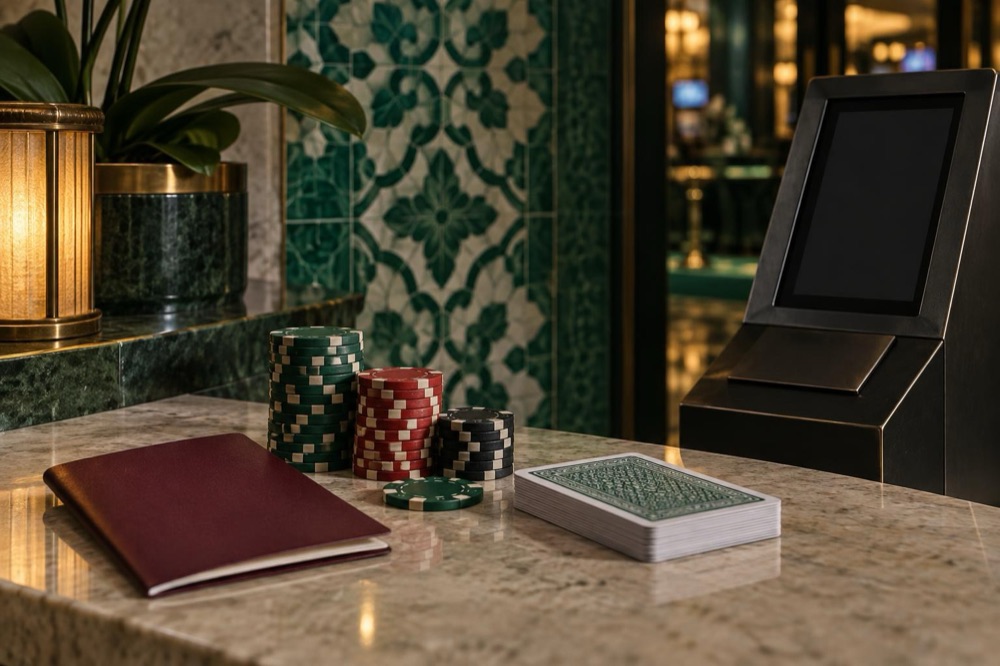
The second is self-exclusion, which Macau runs on a voluntary basis. Participation in the isolation scheme is voluntary, and an excluded person may choose to accept or decline counseling services from problem gambling prevention bodies28. You can apply in two ways: through any Macau casino, in which case the DICJ will verify the excluded person's details and the person must attend the DICJ office in person, or at a Responsible Gaming Information Kiosk. These kiosks are located in the casino areas of major operating casinos and at community locations, and both Macau residents and tourists may use them to apply29. Singapore runs a parallel voluntary system, with self-exclusion and voluntary visit limits imposed on application16.
A quick comparison
| Macau | Singapore | |
|---|---|---|
| Number of casinos | Dozens across six concessionaires4 | Exactly two5 |
| Opening hours | 24 hours3 | Regulated resorts |
| Main game | Baccarat, especially in VIP rooms4 | Full resort floor |
| Entry age | 212 | 2117 |
| Local entry cost | None | SGD 150 per 24 hours or SGD 3,000 per year for citizens and permanent residents6 |
| Credit for play | Not offered in VIP rooms as a right; budgets over MOP500,000 traditional4 | Prohibited entirely6 |
| Online casino | Not authorized7 | Not part of legalized gambling8 |
Both cities, in other words, offer the same core product: large, belief-aware casino resorts built for Chinese players. Macau gives you scale and choice; Singapore gives you two polished resorts with a strict fence around the local population. The feng shui is the decoration on top; the rules underneath are what you actually have to follow.
Common Questions
What is the minimum age to enter a casino in Macau?
The legal age of entry to casinos in Macao is 21. Persons under 21 are not allowed to enter, and this applies to everyone, residents and visitors alike.
Is online casino gambling legal in Macau or Singapore?
No. Online games of fortune have not been authorized in Macau, and Singapore's legalized gambling is limited to the two casino resorts, Singapore Pools betting and jackpot machine rooms at private clubs. Online casino play is not part of either system.
What currencies can I use to gamble in Macau?
Macau's own currency is the pataca (MOP), but Hong Kong dollars are the working currency of the tables even though the pataca is Macau's own [1]. VIP-room patrons were traditionally expected to bring a gaming budget of over MOP500,000 per visit, though casinos sometimes relaxed that threshold.
How much is the Singapore casino entry levy for a one-year ticket?
Singapore citizens and permanent residents pay an annual levy of SGD 3,000 for a valid annual membership of the casino. The daily levy is SGD 150 for every consecutive period of 24 hours. Foreign visitors do not pay the levy.
Can I put casino bets on credit in Singapore?
No. The Casino Control Act prohibits casino operators and their agents from accepting wagers other than by money or chips, lending money, or extending any other form of credit for casino gaming. You must pay with funds you already have.
What happened to horse racing in Macau and Singapore?
Horse racing remains one of the pillars of Macao's gaming industry alongside Pacapio and slot machines, and it is run separately from the casinos. Singapore's legalized gambling, by contrast, centers on the two integrated resorts and Singapore Pools.
What is the maximum bet in a Macau VIP room?
There is no single published maximum. VIP rooms are high-stakes baccarat rooms, and patrons were traditionally expected to bring a gaming budget of over MOP500,000 per visit. Individual table limits are set by each casino.
How does voluntary self-exclusion work in Macau?
Participation is voluntary. You can apply through any Macau casino or at Responsible Gaming Information Kiosks located in the casino areas of major casinos and at community locations. If you apply through a casino, DICJ verifies your details and you must attend its office in person.
Sources29 sources
- Macau: the world's gambling capital, BBC, 2013
- Gaming in Macao, Macao Government Tourism Office, 2021
- Gaming in Macao, Macao Government Tourism Office, 2021
- The Transformation of Macao's Gaming Industry, University of Macau repository, 2026
- Casino Control Act 2006, Singapore Statutes Online, 2021
- Casino Control Act 2006, Singapore Statutes Online, 2024
- Public consultation report, DICJ, Macau, 2021
- About problem gambling, National Council on Problem Gambling, Singapore, 2026
- The Venetian accounts, DICJ, Macau, 2017
- SEC filing, U.S. Securities and Exchange Commission, 2007
- Law 16/2001, Macau Official Gazette, 2015
- Casino Control Act 2006, Singapore Statutes Online, 2021
- Overview of exclusions and visit limits, National Council on Problem Gambling, Singapore, 2026
- Step-by-step guide to self-exclusion, National Council on Problem Gambling, Singapore, 2026
- Family exclusions and visit limits, National Council on Problem Gambling, Singapore, 2026
- Second tranche of amendments to the Casino Control (Amendment) Act 2024, Ministry of Home Affairs, Singapore, 2026
- Casino Control Act 2006, Singapore Statutes Online, 2025
- Casino Control (Amendment) Bill 24-2024, Singapore Statutes Online, 2024
- Gaming statistics, DICJ, Macau, 2005
- Macau gaming concession contract, U.S. Securities and Exchange Commission, 2022
- Concession extract, Macau Official Gazette, 1997
- MGM annual report, U.S. Securities and Exchange Commission, 2015
- Law 16/2001 Article 3(2), DICJ, Macau, 2022
- Casino Control Act 2006, Singapore Statutes Online, 2025
- Casino entry Q&A, DICJ, Macau, 2026
- Fu gui san gong rules, DICJ, Macau, 2026
- Explanatory note, Macau Legislative Assembly, 2015
- Self-isolation scheme, DICJ, Macau, 2026
- Responsible gaming information kiosks, DICJ, Macau, 2026