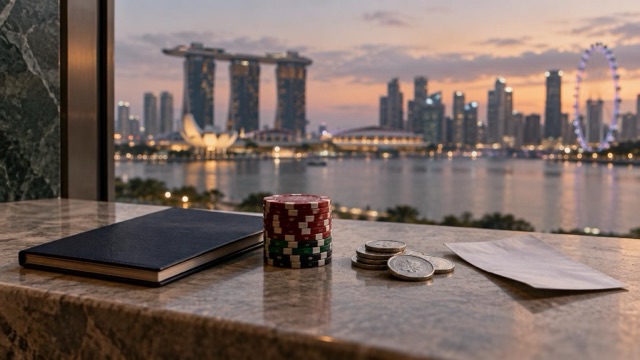
The rituals and taboos you will see at the tables
Walk through any large casino in Asia and you are watching two games at once: the one at the table and the one in the player's head. The four most famous rituals:
- The main entrance. Many players refuse to walk through the front door of a casino, because the entrance is where the house's feng shui is strongest, and they look for a side door instead. Casinos know this, and some have famously configured their entrances so that the main doorway does not face the gaming floor directly. If you want to understand how far casinos go to accommodate belief, read about casino feng shui.
- The shoulder. In Cantonese gambling culture, touching a player's shoulder or back while they are betting is thought to sweep their luck away. If you brush past someone mid-hand at a baccarat table, do not be surprised by a sharp look or a request to step back. The same logic applies to hands: reaching across another player's bet is bad manners at best and bad luck at worst.
- The word "book." In Cantonese, the word for book sounds like the word for losing, so you will rarely hear anyone say it aloud on a casino floor. Players avoid the word, and some avoid the object. This is part of a much wider pattern of homophone beliefs, where a word's sound decides whether it is lucky or unlucky. The same thinking drives the number taboos across the region: four sounds like death, eight sounds like prosperity. Our page on lucky and unlucky numbers in gambling covers the full list.
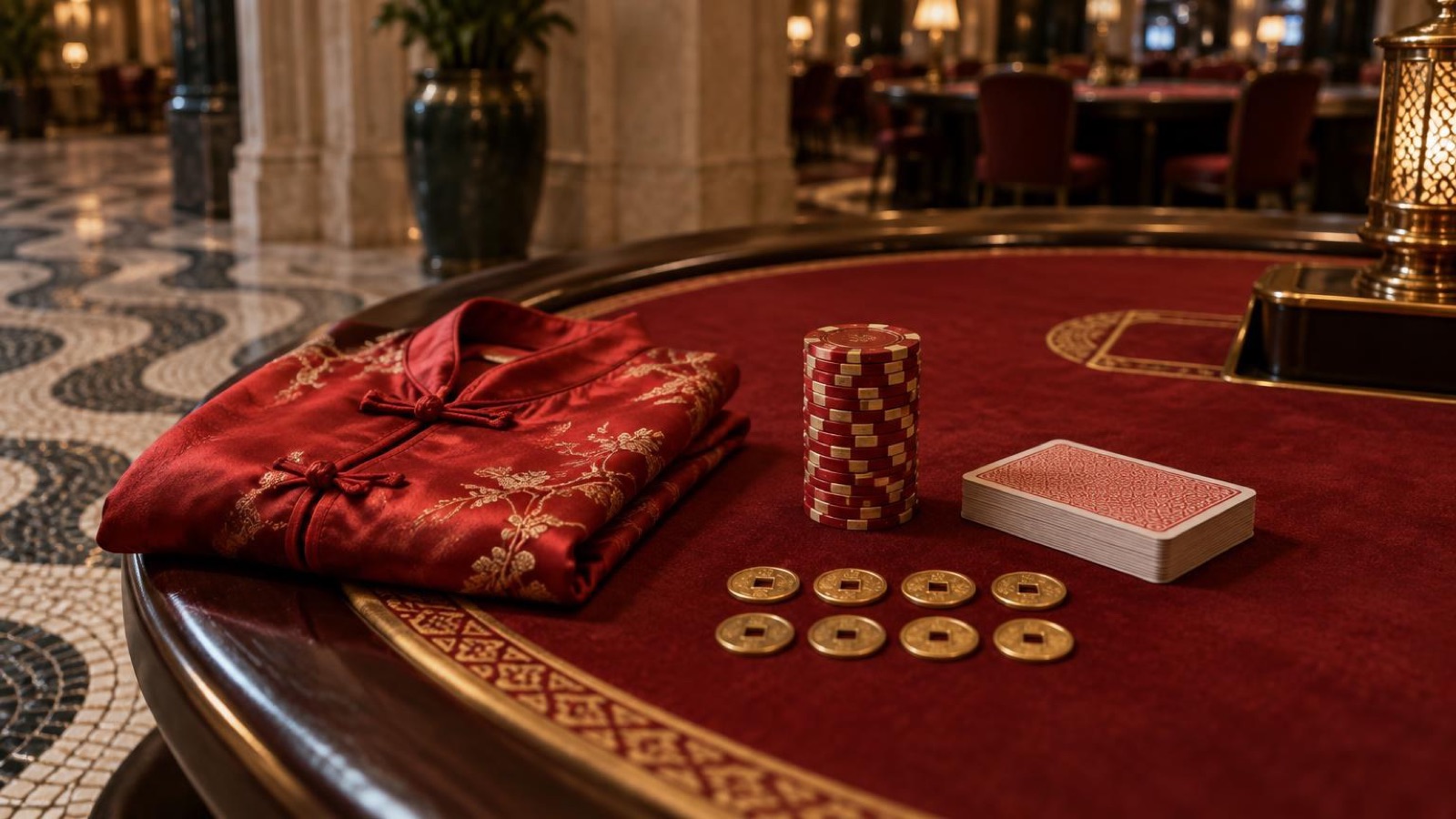
- Red underwear. Red is the color of luck, celebration and money across Chinese culture, worn at weddings and Lunar New Year. At the tables it becomes underwear: many players, especially at baccarat, wear red undergarments on a big night out, and some casinos have noted spikes in red clothing during Lunar New Year. Red chips, red envelopes, red decorations: the color is everywhere in Asian casinos because the belief is everywhere. For the wider world of charms and colors, see our page on lucky colors, charms and amulets.
Beyond these four, the rituals multiply. Players blow on dice, squeeze baccarat cards slowly to "bend" the outcome, count their chips in fours or eights, and consult almanacs before choosing which day to play, a habit we cover in lucky days for gambling. Some even turn dreams into lottery numbers, a tradition explained in our page on dream numbers.
Why Macau is where these beliefs are on full display
Macau is the natural home of Chinese gambling superstition because it is the natural home of Chinese gambling. The city offers white pigeon tickets with local character, horse racing and football betting, slot machine centers and internationally renowned large casinos2. It is the only place on Chinese soil where casino gaming is legal, so players from across the mainland, Hong Kong, Taiwan and the wider diaspora converge there, bringing their rituals with them.
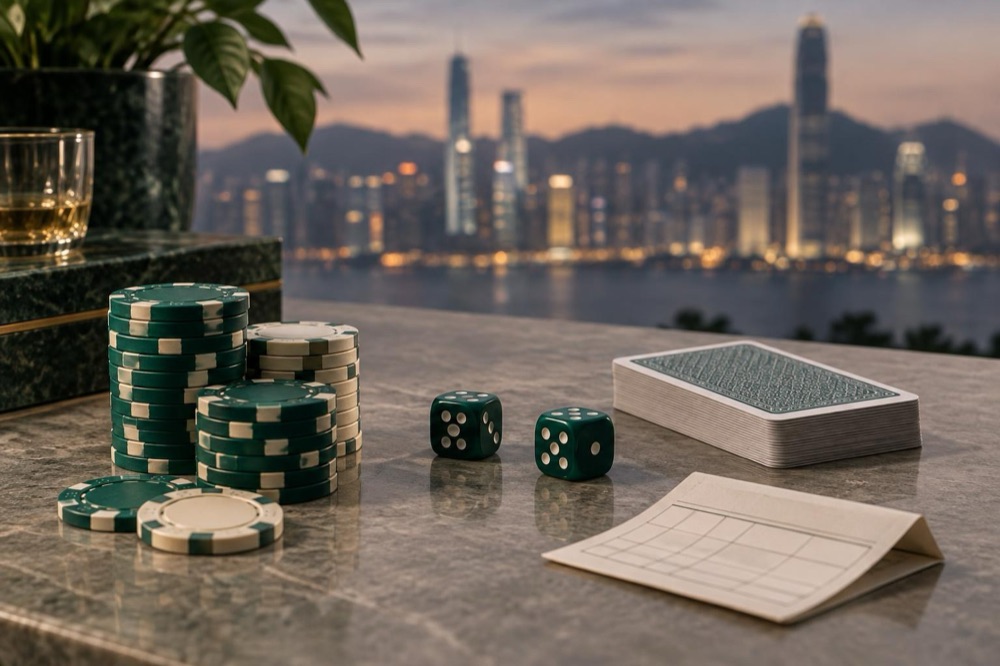
The casinos never close, which matters for the superstitious: entertainment venues in Macau are open 24 hours6, so a player who believes the eighth hour of the eighth day is lucky can act on it. The scale is hard to grasp until you see it. The Venetian Macao alone runs 632 gaming tables7, more than the entire casino floors of many countries. When tens of thousands of Chinese-speaking players gather in one place, the shared taboos become visible public behavior: the side doors busy while the main entrance stands quiet, the red shirts at every baccarat table during New Year.
Baccarat, red and the games Chinese players actually choose
The permitted games list in Macau reads like a museum of Chinese gambling culture. Casino games of fortune legally include 24 named games4, among them:
| Game | Origin or type |
|---|---|
| Baccarat and "railway" baccarat | European import, now the dominant game |
| Fan tan | Old Chinese counting game |
| Sic bo and fish-prawn-crab sic bo | Traditional Chinese dice games |
| Pai gow, small pai gow, mahjong pai gow | Chinese tile games |
| Mahjong and mahjong baccarat | Chinese classics |
| Blackjack, craps, roulette, five-card poker | Western imports |
| Twenty-five doors, twelve numbers, fu gui san gong, Chinese poker (thirteen cards) | Regional and hybrid games |
Baccarat matters for superstition because it is the purest chance game in the house. There is no strategy, no skill, no decision after the bet is placed. That vacuum gets filled with ritual: card squeezing, pattern tracking, betting on "player" because red is lucky, following a "hot" table. Poker and blackjack, which reward skill and decision-making, have never caught on with Chinese high rollers the way baccarat has. In the VIP rooms, patrons wagered on high-stakes baccarat, and were even permitted to use aliases or place bets under the names of junkets or collaborators3. When the stakes are enormous and the outcome random, ritual is what players reach for.
Where the rituals happen: Macau's casinos
Macau had 41 licensed casinos as of 20201, spread between the peninsula and the Cotai Strip on Taipa. The peninsula is the older, denser gaming district, home to the historic venues of the former monopoly era. Casino Lisboa, Macau Palace Casino, Jai Alai Casino, Kam Pek Casino, Oriental Casino, Golden Dragon Casino, Hyatt Casino, Triumph Casino and Holiday Inn Casino were all named in the old concession contract8. Casino Lisboa remains the spiritual home of old-school Macau gambling, the place where the superstitions of the 1960s monopoly era were forged; you can read its story on our page about Casino Lisboa.
Cotai is the modern colossus. The table counts tell the story:
| Casino | Gaming tables |
|---|---|
| The Venetian Macao | 6327 |
| The Parisian Macao | 3657 |
| The Plaza Macao | 1427 |
| Sands Macao | 210 (2016 figure)9 |
A decade ago the Venetian ran 583 tables, the Plaza 108, the Parisian 365 and Sands Macao 21010. The numbers shift year to year, but the picture is stable: a handful of mega-resorts hold most of the tables, and that is where you will see superstition as mass behavior. Watch the entrances at the Venetian during Lunar New Year and you will see the feng shui of the building itself, designed to keep luck in and let bad luck flow out.
Minimum age: 21 to cross the threshold
The legal age to enter or leave a casino in Macau is 21, and persons under 21 are not allowed to enter6. This applies to everyone, visitors and residents alike, and it is enforced with photo ID checks at the doors. If you are traveling with family, note that children can walk through the shopping and dining areas of the integrated resorts but cannot enter the gaming floors, even accompanied.
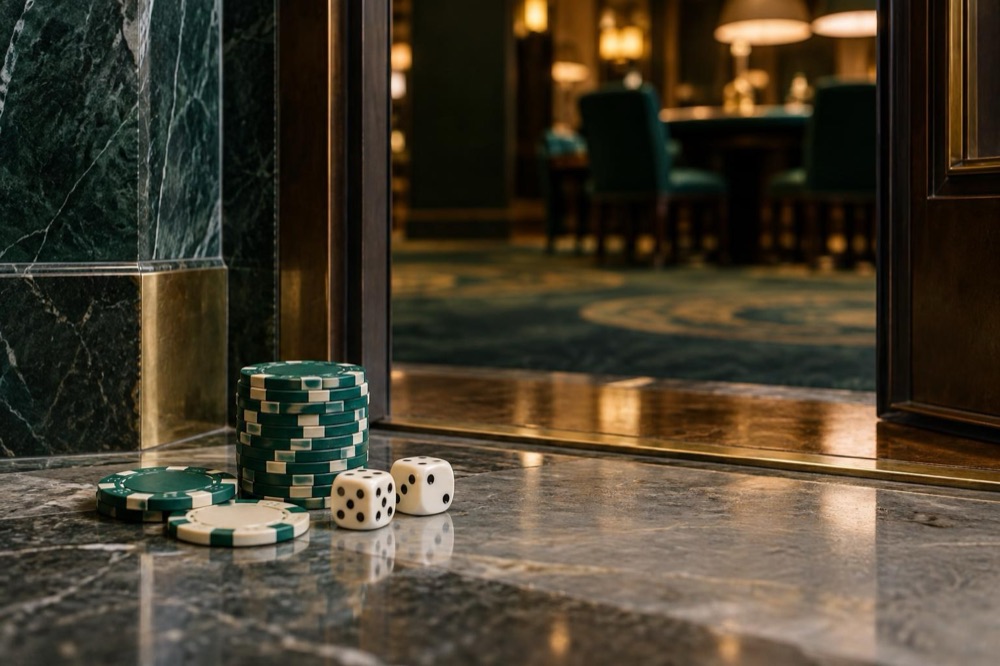
Table stakes: what it costs to sit down
The mass-market floor has gotten more expensive. It is unlikely you will find any traditional live table at an HK$300 minimum bet in any of the big casinos on the peninsula, whereas HK$100, HK$200 and HK$300 denominations were commonly seen until about three years ago5. Expect higher minimums at peak times and at the flagship properties.
The ceiling has risen too. The maximum bet on some mass floors can now run as high as 150 times the table's minimum bet5, so check the placard before you assume a big wager is unwelcome. Hong Kong dollars are the working currency of the tables even though the pataca is Macau's own, so do not be confused when placards quote HK$ figures.
VIP rooms: high stakes behind closed doors
The VIP rooms are where the biggest money and the most elaborate rituals meet. Traditionally, VIP-room patrons were expected to bring a gaming budget of over MOP500,000 per visit, though casinos sometimes relaxed this threshold during periods of intense competition3. Play there centers on high-stakes baccarat, and patrons were historically permitted to use aliases or place bets under the names of junkets or collaborators3.
The rooms also have a shadow side. Researchers describe "side-betting," a method of private, off-the-books wagers that run alongside a visible, within-limit bet placed by a principal bettor, settled outside the casino's systems3. For an ordinary visitor, the practical point is simpler: the VIP rooms are invitation or relationship-based spaces, and the mass floor is where you will play.
Who runs Macau's casinos
In 2022, Macau awarded new gaming concessions to six companies3:
- MGM Grand Paradise S.A.
- Galaxy Casino S.A.
- Venetian Macau S.A.
- Melco Resorts (Macau) S.A.
- Wynn Resorts (Macau) S.A.
- SJM Resorts S.A.
The government manages gaming activity by granting concession contracts to three concessionaires and three subconcessionaires, including VML7. For the story of how one company, STDM, held the monopoly from 1962 to 2002, see our page on the STDM monopoly and on Stanley Ho, the man behind it.
What you cannot do: online casinos
Macau's casino law stops at the casino doors. The city does not issue online gaming licenses and has no legal framework to do so, meaning no online casino or online betting operation has ever been licensed there. The law is explicit:
The same prohibition is written into the concession contracts themselves, which exclude pari-mutuel betting, games offered to the public outside casinos, interactive gaming, and gaming on vessels or aircraft12. So while the superstitions thrive on the physical floor, there is no licensed online alternative in Macau where they could follow you home.
Tax on winnings
Individual players do not pay tax on their winnings in Macau. The tax burden falls on the operators: the special gaming tax rate is 35 percent of gross gaming revenue13. Research on the industry puts the combined effective rate at about 39 percent of a casino's recorded gross gaming revenue3. That is a tax on the house, not on you, and no one will hand you a tax bill on your way out.
Self-exclusion: barring yourself from Macau casinos
For players who feel the rituals have stopped being fun, Macau offers a formal way out. You can apply to be excluded from all of Macau's gaming casinos, or only from some of them, through the Gaming Inspection and Coordinating Bureau14. The choice of counseling is yours: an excluded person may choose to accept or decline counseling services from problem gambling prevention bodies14. Responsible gaming information kiosks also handle self-exclusion applications, and nothing else15, so they are easy to spot and easy to use. If you are traveling from elsewhere in Asia, similar schemes exist in Singapore and the Philippines, and our gambling culture and history pages cover the wider context of how the region thinks about luck, chance, and control.
Common Questions
What is the minimum age to enter a casino in Macau?
You must be 21 or older to enter a casino in Macau. Anyone under 21 is not allowed through the doors, and the rule applies to visitors and residents alike. Bring photo ID, because staff can and do check at the entrance.
Do I pay tax on casino winnings in Macau?
No. The gaming tax, set at 35 percent of gross gaming revenue plus about 5 percent for cultural and tourism projects, is paid by the casino operators out of their revenue, not by individual players on their winnings.
Can I use Hong Kong dollars in Macau casinos?
Yes. Hong Kong dollars circulate widely in Macau casinos and table minimums are commonly quoted in HK$. The pataca is the local currency, but at the tables you will usually see HK$ denominations.
Are online casinos licensed in Macau?
No. Macau has never granted a concession for interactive gaming, and the law bars casino concessionaires from operating any form of online casino or online betting, whether over the internet or any other remote means.
How many casino operators hold concessions in Macau?
Six companies hold gaming concessions in Macau: MGM Grand Paradise, Galaxy Casino, Venetian Macau, Melco Resorts (Macau), Wynn Resorts (Macau) and SJM Resorts. They were awarded the concessions in 2022.
What is the maximum bet allowed in a Macau VIP room?
There is no single published figure. On some mass floors the maximum can run as high as 150 times the table's minimum bet, and in VIP rooms the stakes are negotiated privately, with patrons traditionally bringing budgets of over MOP500,000 per visit.
How do I exclude myself from gambling in Macau?
Apply to the Gaming Inspection and Coordinating Bureau. You can ask to be barred from all of Macau's casinos or only some of them, and you can choose whether to accept counseling services from problem gambling prevention bodies. Responsible gaming kiosks also take self-exclusion applications.
Sources15 sources
- Macao government news on casino numbers, Government of Macao, 2020-02-04
- Gaming, Macao Government Tourism Office, Macao Government Tourism Office, 2021-10-27
- The Transformation of Macao's Gaming Industry, University of Macau, 2026-02
- Law 16/2001, games permitted in casinos, Gaming Inspection and Coordinating Bureau, 2001
- Macau casinos stretch max bets to boost yield, GGRAsia, 2026-09-26
- Gaming, Macao Government Tourism Office (simplified Chinese), Macao Government Tourism Office, 2021-10-27
- The Venetian Macao annual accounts 2022, Gaming Inspection and Coordinating Bureau, 2022-12-31
- 1997 gaming concession extract, Boletim Oficial, Imprensa Oficial, 1997-07-30
- The Venetian Macao annual accounts 2016, Gaming Inspection and Coordinating Bureau, 2016-12-31
- The Venetian Macao annual accounts 2017, Gaming Inspection and Coordinating Bureau, 2017-12-31
- Law 16/2001, Article 4(1), interactive gaming prohibition, Imprensa Oficial de Macau, 2015-12
- Melco Resorts (Macau) Limited concession contract, Gaming Inspection and Coordinating Bureau, 2022-12-16
- Law 16/2001, Article 27(2), gaming tax rate, Imprensa Oficial de Macau, 2015-12
- Self-exclusion information, Gaming Inspection and Coordinating Bureau, Gaming Inspection and Coordinating Bureau, 2026
- Responsible gaming information kiosks, Gaming Inspection and Coordinating Bureau, 2026