A three-dice game from ancient China
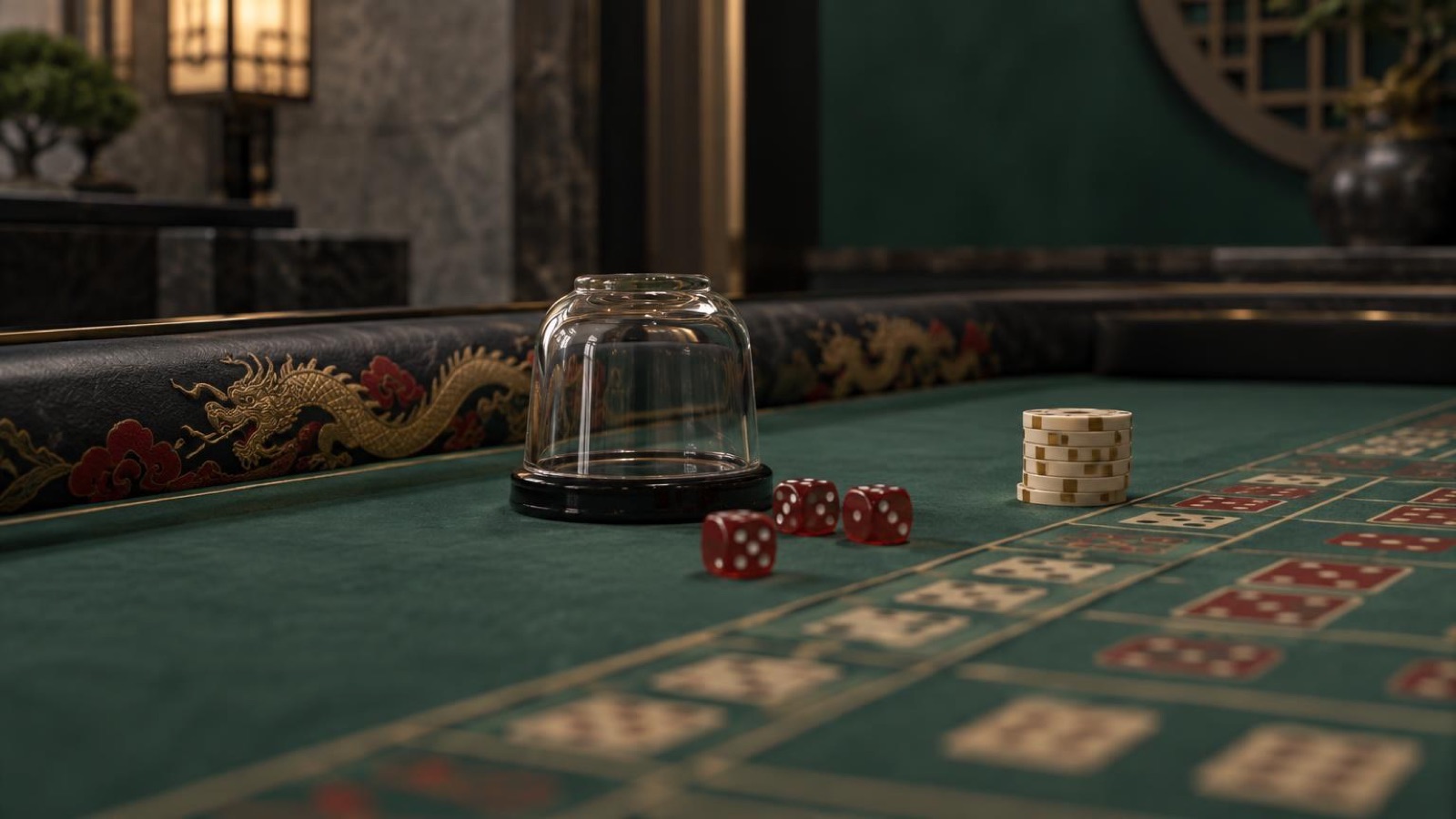
Sic Bo, originally pronounced "SEE-BO", is an ancient Chinese dice game played with three dice. It is a unique game of chance that is very popular in Macau casinos, where locals know it as Dai Siu (大小), Tai Sai (大細), Hi-Lo, or simply Big and Small6. The Chinese name 骰寶 literally means "precious dice", and the game's core idea is exactly what the name Big and Small suggests: you are betting on whether the total of three dice will land low or high7.
The game spread across Asia as a traditional Chinese gambling game, popular for its simplicity. In its electronic form, players win by guessing whether the sum of the top faces of three dice is greater or less than 10, which is the Big and Small bet at the heart of the game8. But there is much more to the table than that one wager: a full Sic Bo layout offers bets on single numbers, pairs, totals, triples and combinations, each with its own payout.
It is a game of pure chance that moves quickly. There is no strategy or skill involved, and the dealer cannot influence the outcome in any way1. That makes it one of the easiest games in a Macau casino to walk up to and play on your first visit. If you are planning a trip, our page on casinos in Macau covers where to go, and casino games in Macau puts Sic Bo alongside the baccarat tables that dominate the floor.
How a round is played
A round of Sic Bo is simple from start to finish:
- Betting opens. Players place chips on the printed layout, which shows every available bet with its payout. You can place as many different bets as you like within the table limits.
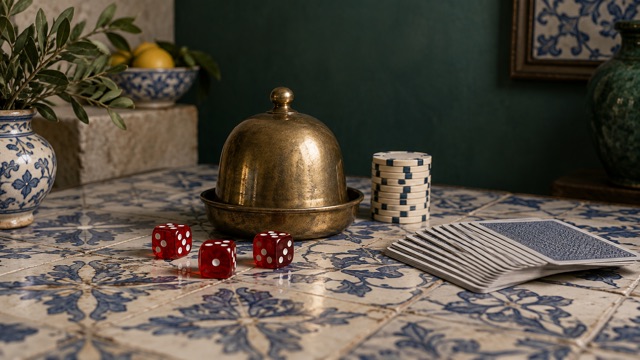
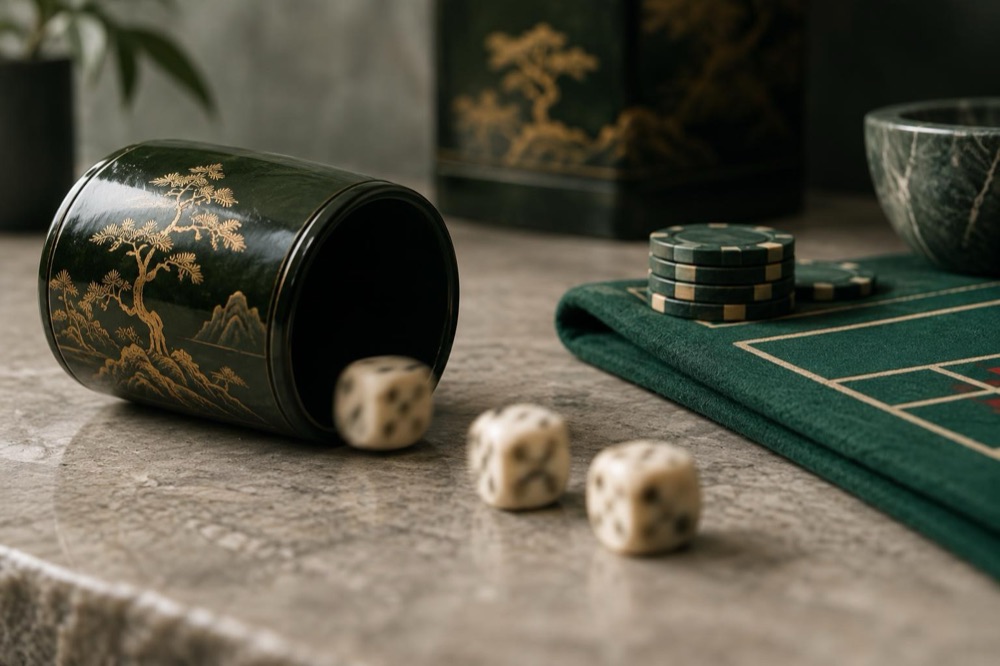
- The dice are shaken. In a live casino, the three dice are shaken in a special dice cup with a black opaque base, a glass cover and a removable lid9. At many modern tables, the dice are "rolled" using an electronic dice shaker activated by a button on the table1.
- The cup is lifted. The dealer reveals the three dice and announces the result.
- Bets are settled. Winning bets are paid according to the posted odds, losing bets are swept away, and a new round begins.
The equipment is prescribed in detail by Macau's official rules: three dice of equal weight, each face pair summing to seven, plus one or more table plaques printed with the betting options9. Three dice, and no more, are thrown at every throw10.
One quirk worth knowing before you play in Macau: if the dice are found stacked or leaning unevenly when the lid is lifted, the dealer declares the round void and a new round begins immediately. You cannot cancel your bets, but you can bet again on the fresh roll9.
Most tables also have an electronic board that displays the outcomes of recent rounds of play. It is tempting to read patterns into it, but each roll is purely random and independent of the last1. The board is there for interest, not for prediction.
Bet types: Small/Big, totals and specific triples
There are six main categories of bets on a Sic Bo table: single number bets, two number combinations, three number total bets, triple bets, pair bets, and Big and Small bets1. Here is what each one means, with the payouts set out in Macau's official Sic Bo rules9.
Small and Big. The headline bets. Small wins if the total of the three dice is 4 to 10; Big wins if the total is 11 to 17. Both pay 1 to 1. The catch: if all three dice show the same number, the house takes both Small and Big bets9. Under the older statutory rules, Small is defined as a total of 4 to 10 except a triple, paying 1 to 110.
Three Dice (single number). You bet on one specific number from 1 to 6. If one die shows it, you are paid 1 to 1; if two dice show it, 2 to 1; if all three show it, 3 to 19.
Totals. You bet on the exact sum of the three dice, from 4 to 17. The rarer the total, the more it pays. Macau's official payouts are:
| Total | Payout |
|---|---|
| 4 or 17 | 50 to 1 |
| 5 or 16 | 18 to 1 up to 30 to 1 |
| 6 or 15 | 14 to 1 up to 18 to 1 |
| 7 or 14 | 12 to 1 |
| 8 or 13 | 8 to 1 |
| 9, 10, 11 or 12 | 6 to 1 |
The ranges on 5/16 and 6/15 reflect different house pay tables in use at different casinos9.
Triples. A specific triple (圍骰) means all three dice show one chosen number, and it pays 150 to 1. Any Triple (全骰) means all three dice show the same number, any number, and it pays 24 to 1 in Macau, or 30 to 1 under the older statutory odds9.
Combinations and pairs. A bet on two dice showing the same face with one different pays 50 to 1. The "three chosen dice" bet, where you pick the exact faces of all three dice, pays 30 to 1. Long Pair (長牌) pays 5 to 1 and Short Pair (短牌) pays 8 to 1. A bet that three of four chosen numbers appear pays 7 to 19. Under the statutory rules, a specific double pays 10 to 1, and a specific double combined with a single number pays 50 to 110.
A simple rule of thumb ties the whole table together: the higher the payout odds, the less likely the outcome will occur, and lower payouts mean greater chances of winning1.
The odds behind the 216 outcomes
Three six-sided dice give 216 possible ordered outcomes. Those 216 break down into three shapes: exactly one pair occurs in 90 arrangements, three of a kind in 6, and all different in 12011.
That breakdown explains almost everything about the table:
- Triples are rare. Only 6 of the 216 outcomes are three of a kind, which is why a specific triple pays 150 to 1 and why Any Triple pays 24 to 1. It is also why the triple rule on Small and Big matters: it only kills your bet 6 rolls in 216.
- Pairs are common. 90 of the 216 outcomes contain exactly one pair, which is why combination bets on pairs pay relatively modest odds.
- All different is the most common shape, with 120 of the 216 outcomes.
The totals follow a bell curve. Totals of 10 and 11 sit in the middle of the distribution and come up often, so they pay only 6 to 1. Totals of 4 and 17 sit at the extreme ends, each one dice combination but 3 of the 216 ordered outcomes, since the page counts ordered outcomes, so they pay 50 to 19.
Because every bet is settled on a single roll and each roll is independent, there is nothing to carry over from round to round. The electronic display of past results does not change what the next roll will do1.
House edge and RTP: 2.78% on Big and Small
Big and Small bets on totals 4 to 10 (Small) or 11 to 17 (Big) pay 1 to 1 and offer the lowest house edge in the game, around 2.78%3. That figure comes from the triple rule: you win 105 of the 216 outcomes and lose 111, and the 6 triple outcomes are what give the house its margin.
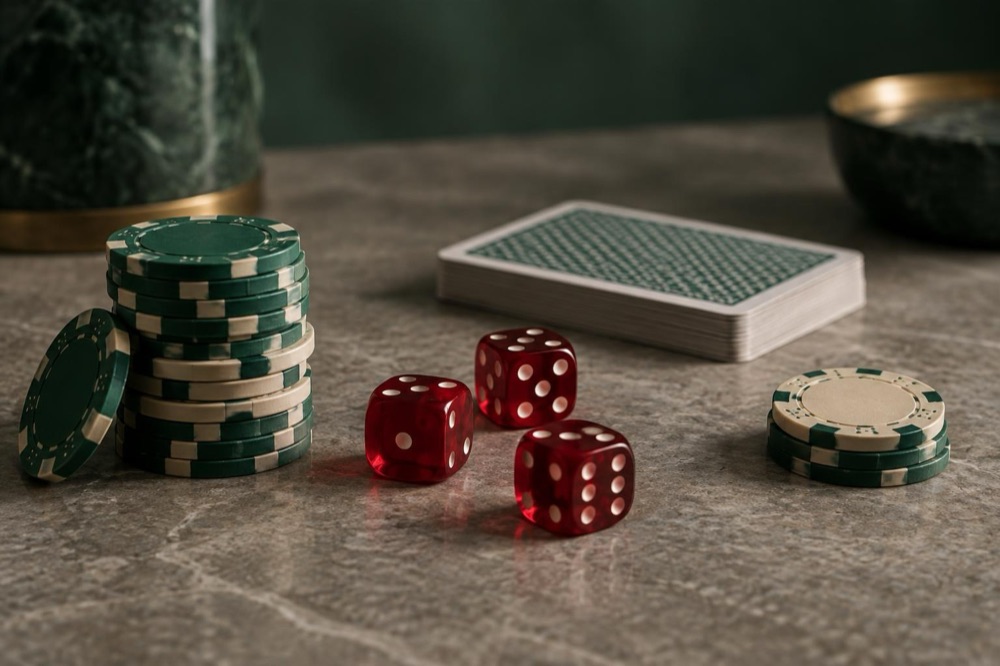
For comparison, that puts Big and Small in the same neighborhood as a banker bet in baccarat, which carries a house edge of 1.06%12, and better than a tie bet in mini-baccarat at 14.36%. Sic Bo's overall RTP is quoted at 97.22%, which corresponds to that 2.78% edge on the best bets13. The riskier bets on the layout, especially the specific triple at 150 to 1, carry a much higher house edge, so the game you experience depends heavily on which bets you choose.
If you want to compare before you sit down, our page on baccarat in Macau covers the game that takes most of the floor space in the territory.
Bet limits and stakes: from $0.50 a roll
Online, Sic Bo is one of the cheapest table games to play: you can bet from $0.50 up to several hundred per roll4. That low entry point makes it a good game for learning the layout without much money at risk.
In Macau casinos, minimums are set per table and posted on a plaque at the table. Bets are typically taken in Macau patacas or Hong Kong dollars. For a sense of scale elsewhere in the casino, live dealer baccarat online runs from $0.50 to $20,000, and live blackjack from $5 to $10,000 per hand, so Sic Bo sits at the accessible end of the table-game range15.
On the GG Network, Sic Bo wagering counts toward rewards at a rate of a $2.00 USD wager per point16. If you are playing live dealer games online, the same lobbies usually carry Sic Bo alongside baccarat, blackjack and roulette, with bets on totals, combinations and single numbers on the three dice15.
Super Sic Bo multipliers up to 1000x
Super Sic Bo is a live dealer version of the game that adds random multipliers of up to 1000x to each round5. The base game is unchanged: three dice, the same betting layout, the same settlement. But before the dice are shaken, the game assigns multipliers to certain bet spots, and if you have money on a spot that receives a multiplier and it wins, your payout is boosted by that multiplier, far beyond the standard odds.
It has become a massively popular global live dealer version, precisely because a routine 1 to 1 Small bet can occasionally turn into something much bigger3.
The multiplier does not change the underlying dice or the 216 outcomes; it changes only what a winning bet can pay. The trade-off is that the base payouts on multiplied spots are often trimmed to fund the multipliers, so the house edge stays in the same range as the standard game.
Where to find it: Macau and the Asia-Pacific
Sic Bo is popular in Macau and other Asia-Pacific casinos for its fast pace, and it is now adapted globally through online versions3. In Macau itself, the game is a fixture of the casino floor. The territory's casinos are open 24 hours17, and the gaming offer ranges from traditional games with local character to slot machine centers and internationally renowned large casinos18.
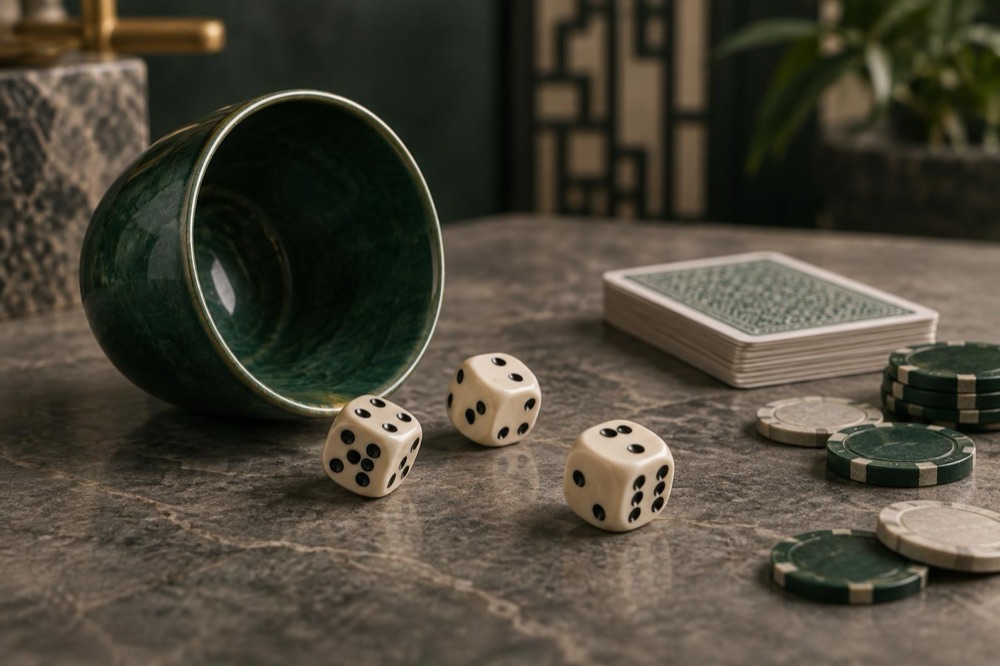
You will find Sic Bo tables at properties across the territory, on both the Macau Peninsula side, home to casinos such as Grand Lisboa, and the Cotai Strip, home to Grand Lisboa Palace and the other resort casinos19. Slot machines are available in slot lounges and most casinos if you want a break from the tables20. A number of larger casinos also offer a free direct shuttle bus service to and from the border crossings, which makes hopping between properties easy21.
For the full picture of what you can play in the territory, see gambling in Macau, and for what to expect at the door, casino entry rules in Macau.
Playing online: Games Global and GG Network versions
Online, Sic Bo comes in two main forms: a standard RNG version, where the three dice are generated electronically, and a live dealer version streamed from a studio, where a real dealer shakes a real dice cup on camera.
The GG Network carries Sic Bo in its live dealer casino, alongside the full range of table games6. CoinPoker offers Sic Bo playable on any Android or iOS device, with intuitive controls and high-definition streaming3. Stakes run from $0.50 to several hundred dollars per roll4, and Sic Bo wagering counts toward player points at $2.00 per point16.
Super Sic Bo, the multiplier version described above, is the headline live variant, with random multipliers up to 1000x per round5. If you are exploring live casinos generally, Sic Bo sits in the same lobbies as live baccarat, blackjack and roulette, with limits from $0.50 to $20,000 on some tables15.
One practical note: online social casino games are freely available on social networks, websites, apps, smartphones and tablets22, and not all of them involve real money. If you are playing from Macau, check our page on online gambling in Macau for what applies locally before you deposit.
Common Questions
What does Sic Bo mean?
Sic Bo literally means 'precious dice'. The game comes from ancient China and is known in Macau as Dai Siu or Tai Sai, meaning Big and Small, and elsewhere as Hi-Lo. All the names refer to the same three-dice game.
How many dice are used in Sic Bo?
Three dice, and no more, are thrown at every roll. Each die is marked 1 to 6, with opposite faces summing to 7. You bet on the combined outcome of all three dice.
What is the best bet in Sic Bo?
Big and Small have the lowest house edge, around 2.78%, paying 1 to 1. They lose only when all three dice show the same number. Higher payouts on totals and triples come with much worse odds.
What is the RTP of Sic Bo?
Around 97.22% overall, which corresponds to a house edge of about 2.78% on the best bets. Riskier bets such as specific triples carry a much higher house edge.
What is Super Sic Bo?
A live dealer version with random multipliers of up to 1000x applied each round. The base game is the same, but winning bets can be boosted well beyond the standard payouts.
Is Sic Bo the same as craps?
No. Craps uses two dice and involves multiple rolls and complex betting sequences. Sic Bo uses three dice shaken in a cup, with every bet settled on a single roll.
What is the minimum bet in Sic Bo?
Online, you can bet from $0.50 per roll, with tables going up to several hundred dollars. In Macau casinos, minimums vary by table and are posted at each Sic Bo table.
Sources22 sources
- Sic Bo: How to Play, PlaySmart, accessed 2026-09-25
- Electronic Machine Table (English), Mocha Clubs, accessed 2026-09-26
- Sic Bo at CoinPoker, CoinPoker, 2026-06-17
- CoinPoker Games, CoinPoker, 2026-09-16
- Max88 Casino, Max88, 2026
- Natural8 Live Dealer Casino, Natural8, accessed 2026-09-26
- Natural8 Live Dealer Casino (Chinese), Natural8, accessed 2026-09-26
- Electronic Machine Table, Mocha Clubs, accessed 2026-09-26
- Cussec (Sic Bo) Rules, DICJ Macau, 2004-05-12
- The Gaming Clubs (Bankers' Games) (No. 2) Regulations 2002, UK legislation, 2002-05-13
- Three-dice outcome analysis, fk57dcard, 2026-09-11
- How to Play Blackjack, GameSense, 2026
- Sic Bo with Litecoin, CoinPoker, 2026-08-23
- CoinPoker Games (Japanese), CoinPoker, 2026-09-10
- CoinPoker Live Casino (Japanese), CoinPoker, 2026-09-10
- Natural8 Online Casino Games, Natural8, 2026-09-26
- Gaming in Macau (Chinese), Macao Government Tourism Office, 2021-10-27
- Gaming in Macau (Traditional Chinese), Macao Government Tourism Office, 2021-10-27
- SJM Resorts Properties, SJM Resorts, 2026-09-25
- Casinos in Macau, Macao Government Tourism Office, 2026-09-25
- Gaming in Macau (English), Macao Government Tourism Office, 2021-10-27
- Gaming and Gambling, Responsible Gambling, 2026-09-25