Tokyo City Keiba: a racetrack in the heart of Tokyo
Oi Racecourse is the home of Tokyo City Keiba, and it sits inside Tokyo proper rather than out in the suburbs. The address is 2-1-2 Katsushima, Shinagawa-ku, Tokyo 140-0012, which puts it within easy reach of central hotels and a short ride from Haneda1. That location is the main reason it draws a mixed crowd of regulars, after-work groups and visitors who have never read a racing form in their lives.
This is a local government racecourse, not a Japan Racing Association track. The distinction matters for a first-timer because the two run on different calendars and different ticket systems. If you want the big-name JRA meetings at Tokyo Racecourse in Fuchu, that is a separate operation with its own JPY 200 admission and its own betting windows. Oi is the local-racing side of the sport, and it is the one that races at night.
Night racing is the thing Oi is known for. Tokyo City Keiba was the first racetrack in Japan to host night racing and events, and the evening cards here are nicknamed the Twinkle Races3. The track markets itself as Tokyo's New Night Spot and as the "Nighttime playground of Tokyo," which tells you what the atmosphere is like: floodlights, food stalls, a crowd that is there as much for the evening out as for the horses6.
One timing note that catches people out. Racing at Oi is not always at night. Meetings held in January through March run during the day, and the night cards resume as the year warms up3. If you are planning a trip specifically for the floodlit version, check the schedule before you book anything.
What you can bet on at Oi Racecourse
The menu is standard Japanese horse racing, and the bet types are the same ones you will find at any local track in the country. The minimum stake is JPY 100 per bet, so there is no reason to feel committed before you understand what you are doing3.
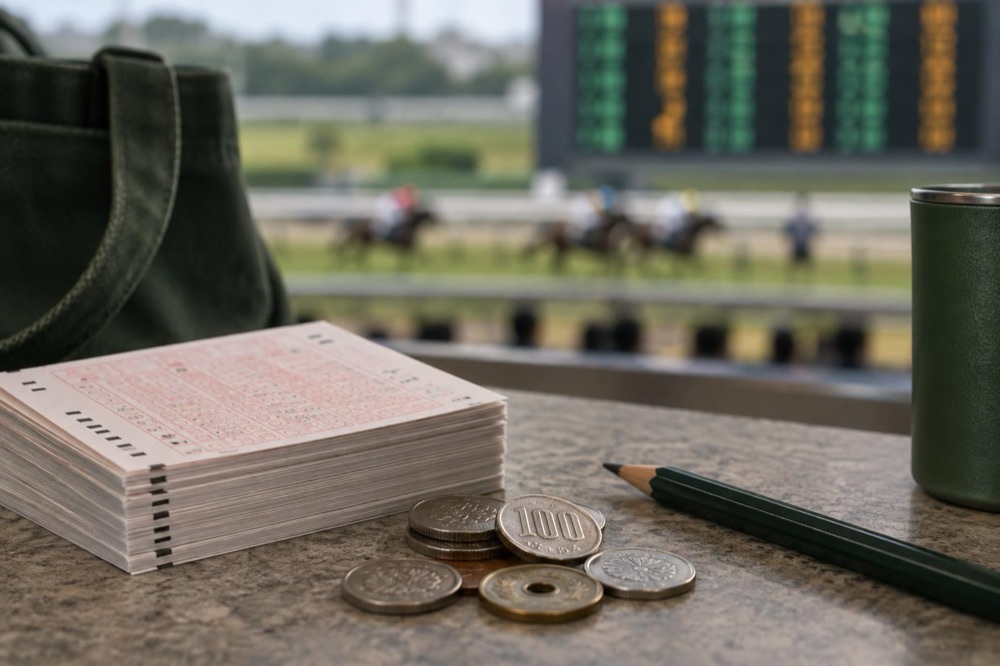
The common tickets:
- Win (tansho). You pick the horse that finishes first. The simplest bet on the board.
- Place or show (fukusho). You pick a horse to finish in the top three. More forgiving than a win bet.
- Exacta (umatan). You name two horses and they must finish first and second in that order. Do not confuse it with the quinella, which pays either order, or with wide, which pays when your two horses both finish in the top three7.
- Trifecta. Three horses in the exact finishing order. Hardest to hit, biggest payoff.
At Sonoda-Himeji, the published minimums for win, show, trio, exacta and trifecta tickets are all 100 yen, which is the standard floor across local racing8. Oi follows the same JPY 100 minimum3.
If you cannot make it to the track, Oi races are also available through the online betting services that cover local racing.
| Service | Local racing coverage |
|---|---|
| Odds Park | All races at local government racecourses except the four in the southern Kanto group, which are Urawa, Funabashi, Oi and Kawasaki9 |
| Rakuten Keiba | All races at all local racecourses, Oi included9 |
| Nagoya Racecourse | Lists Rakuten Keiba, Odds Park, SPAT4 and JRA Net Voting among its internet betting options10 |
For a visitor, though, the track itself is the point. You do not need an account, an app or a Japanese address to buy a ticket at the window.
How to place a bet on race day
The process is short and the staff are used to newcomers.
- Pay at the gate. Hand over JPY 100 and walk in1.
- Pick up a racing form. English racing forms and bet slips are available at the General service counter and the Beginners' counter3. Take both. The form tells you the horses, jockeys and recent form; the slip is where you mark your selection.
- Choose your race and bet type. Mark the race number, the bet type and your horse or horses on the slip.
- Take it to a betting window. Hand over the slip with your stake. You get a ticket back. Keep it safe, because that ticket is your claim on any winnings.
- Watch the race. The parade ring and the track are both open to general admission.
- Check your ticket after the result. If it won, take it to a payout machine.
Reserved seats work differently. Same-day and advance reserved seat tickets are sold on race days, so if you want a guaranteed seat rather than a spot by the rail, buy on the day you arrive or check the advance sales window2. Reserved seating is also where the food and drink rules bite, which is covered below.
One practical habit worth copying from the regulars: buy your ticket before the race you care about, not during the post parade. Windows get busy in the ten minutes before a jump.
Admission, access and facilities
Admission is JPY 100, charged at the North Gate1. That is the standard local-racing price. Urawa, Sonoda, Saga and Obihiro all charge 100 yen as well, while the JRA tracks at Tokyo, Nakayama, Kyoto, Hanshin and Chukyo charge 200 yen12. So Oi is at the cheaper end of Japanese racing, and the difference is not trivial if you are bringing a group.
Getting there is straightforward, and there are two good routes.
- By monorail. Get off at Oi Keibajomae Station on the Tokyo Monorail and walk 2 minutes to the North Gate1. This is the shortest walk of any option.
- By train. Tachiaigawa Station on the Keihin Electric Express Railway is a 12 minute walk1.
The racecourse has a main gate, a north gate and a parking gate, so if you arrive by car you will come in through the parking gate rather than the north entrance4. Parking is available but limited, and on a busy night meeting it fills early.
Once inside, the layout is what you would expect from a Japanese racecourse: betting windows, payout machines, a parade ring, grandstand seating and general admission areas along the track. The main gate and north gate both put you close to the betting floor.
Eating and drinking at the track
There is food and drink inside, and the rules about bringing your own depend entirely on where you sit.
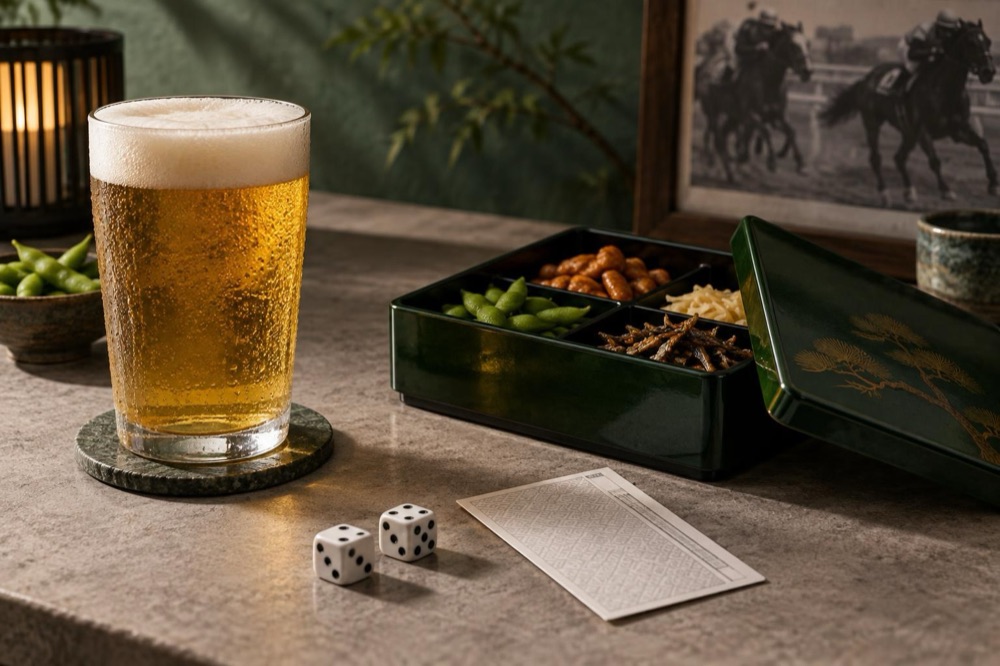
In the reserved seating areas and the Diamond Turn Restaurant, outside food and drink are not allowed. Anything you bought outside Oi Racecourse had to be left at the baggage counter or in a coin locker, and you pay for that storage yourself3. If you have stocked up at a convenience store on the way, this is the moment you find out it was wasted money.
In general admission areas, the rules are looser, and plenty of people bring snacks for a long evening card. If you would rather buy on site, there are food outlets around the grounds, and the night-racing atmosphere is built around eating and drinking while you watch.
A useful comparison from elsewhere in the region: at Happy Valley in Hong Kong, the beer garden setup lets you socialize over cold beer and quick bites from a food truck while you watch the track17. Oi's night meetings run on similar lines. The difference is that Oi's general admission is JPY 100, so the evening is cheap before you have bought anything.
One caution that applies to racecourses generally in Japan: venues publish lists of prohibited items and behavior, and they are enforced. At Nagoya Racecourse, for example, the banned list includes dangerous items like fire sources, bottles, cans and fireworks, pets other than assistance dogs, wheeled equipment except wheelchairs and strollers, tents and shade structures, loudspeakers and instruments, balls, drones and kites, and cooking equipment18. Throwing anything onto the course or into the paddock, picking up discarded betting tickets, standing on stepladders to watch, and smoking outside designated areas are all prohibited there too18. Oi runs a tighter ship than a park, so treat the rules as real.
What winnings look like and how payouts work
Payouts at Japanese racecourses are handled by automated machines inside the grounds. At JRA tracks, you take a winning ticket to a payoff machine and the machine handles the payment12. Oi works the same way, and the machines are clearly marked.
The number that matters most is the payout rate, because it tells you what share of the money bet goes back to punters rather than to the operator. At Kasamatsu Keiba, win bets return 80.0 percent and place or show bets return 75.0 percent7. So a place bet at a local track returns roughly three quarters of the pool, and a win bet a little more. That gap is the house's cut, and it is worth knowing before you decide how much to stake.
Reading a payout is simpler than it looks. The amount shown is per JPY 100 staked. If the display reads JPY 300 and you hold a JPY 500 ticket, you multiply: 300 times 5, which pays JPY 1,5007. So a JPY 100 ticket on the same result pays JPY 300. The math scales cleanly, and you can work out your return before you reach the machine.
Two small things to know about collecting:
- Payout windows have hours. At Kasamatsu, payout windows open 20 minutes before the first race and stay open until payouts end after the final race7. Do not assume you can come back the next morning.
- Tickets bought elsewhere may need a staffed window. At Kasamatsu, tickets for other local racing bought outside the racecourse or its satellite venue are only paid at staffed payout windows, not machines7. If you bought a bet somewhere other than Oi, ask at the counter rather than queuing for a machine.
Fractions get rounded down in this market. At keirin velodromes, any fraction of less than 10 yen in winnings is cut and not paid, with the remainder going to the organizer and used for things like free shuttle buses19. The principle is the same across Japanese public racing: payouts are calculated to the yen, and small fractions do not reach you.
Finally, a note on what you are actually betting into. Prize money at Japanese public racing varies by race grade and class, but it does not differ between venues of the same type19. So the horses running at Oi on a Tuesday night are running for the same structure as horses at any other local track. What changes is the field quality and the size of the pool, and the pool is what sets your odds.
If you want to compare Oi with the rest of the Japanese racing scene, the JRA racecourses guide covers Tokyo Racecourse and the other major tracks, and the local racing guide explains how chiho keiba fits together. For the wider picture of what gambling is legal in the country, start with Can I Gamble in Japan?.
Common Questions
Where is Oi Racecourse located?
Oi Racecourse sits at 2-1-2 Katsushima, Shinagawa-ku, Tokyo 140-0012, in the heart of the city. It is the closest racecourse to central Tokyo and the only one reachable by monorail, which makes it an easy evening out.
How do I get to Tokyo City Keiba by public transport?
Take the Tokyo Monorail to Oi Keibajomae Station, then walk 2 minutes to the North Gate. By train, Tachiaigawa Station on the Keihin Electric Express Railway is a 12 minute walk. Both routes are signposted on race days.
What time do the races start?
Gates usually open between 13:00 and 15:00, with the first race roughly 30 to 90 minutes later. Night meetings run to about 20:50. Check the schedule page for your date, since times shift through the year.
Is there an entry fee for Oi Racecourse?
Yes. General admission is JPY 100, paid at the gate. That is the same low price charged at other local racecourses such as Urawa, Sonoda, Saga and Obihiro, and it is far less than the JPY 200 charged at JRA tracks.
Can foreign visitors bet at Tokyo City Keiba?
Yes. There is no residency requirement to buy a bet. English racing forms and bet slips are available at the General service counter and the Beginners' counter, so you can fill in a ticket without reading Japanese.
What is the minimum bet at Oi Racecourse?
JPY 100 per bet. That applies across the standard bet types, so you can try a win, place, exacta or trifecta ticket for the price of a coffee and see how the night goes.
Are outside food and drinks allowed into the racecourse?
Not in the reserved seating areas or the Diamond Turn Restaurant, where outside food and drink are banned and items must be left at the baggage counter or coin lockers at your own cost. General admission areas are more relaxed.
Sources19 sources
- Oi Racecourse guide, Tokyo City Keiba, 2026
- Reserved seat buying guide, Tokyo City Keiba, 2026
- About TOKYO CITY KEIBA, Tokyo City Keiba, 2026
- Tokyo City Keiba, Tokyo City Keiba, 2026
- Race schedule, Tokyo City Keiba, 2026
- TOKYO CITY KEIBA, Tokyo City Keiba, 2026
- Betting guide, Kasamatsu Keiba, 2026
- How to bet, Sonoda-Himeji Racecourse, 2026
- Betting, Kasamatsu Keiba, 2026
- Betting, Nagoya Racecourse, 2026
- Oi Racecourse, Japan Racing Association, 2026
- Go Racing guide, Japan Racing Association, 2026
- Urawa Racecourse, Japan Racing Association, 2026
- Sonoda Racecourse, Japan Racing Association, 2026
- Saga Racecourse, Japan Racing Association, 2026
- Obihiro Racecourse, Japan Racing Association, 2026
- Happy Valley Racecourse, Discover Hong Kong, 2026
- Course rules, Nagoya Racecourse, 2026
- Keirin guide, Keirin, 2024