
What Pachinko Village is
Pachinko Village is a Japanese information site about pachinko and pachislot. It is a reference resource, not a gambling venue. You go there to read about machines, understand how they work, and look up details, the same way you might read a guidebook before visiting a parlor. There is no account to open, no deposit to make, and no game to play on the site itself1.
The name can be confusing if you are searching from outside Japan. "Village" sounds like a platform or a community, and in some markets that would mean an online casino lobby. Here it does not. The site sits in the same category as machine databases and parlor directories: it tells you what a machine is, what type it belongs to, and how it plays. If you want to actually feed balls into a machine, you need to walk into a physical parlor in Japan3.
For visitors and expats in Asia, the practical takeaway is simple. Pachinko Village is useful for research. It is not a way to gamble from your phone. If you are looking for somewhere to play, the real venues are the thousands of pachinko parlors operating across Japan, and the rules for entering them are covered in our guide to visiting a pachinko parlor3.
Games covered: pachinko and pachislot
The site covers both major machine families in Japan: pachinko and pachislot. These are distinct products with different hardware, different betting, and different payout mechanics, and a good reference site treats them separately.
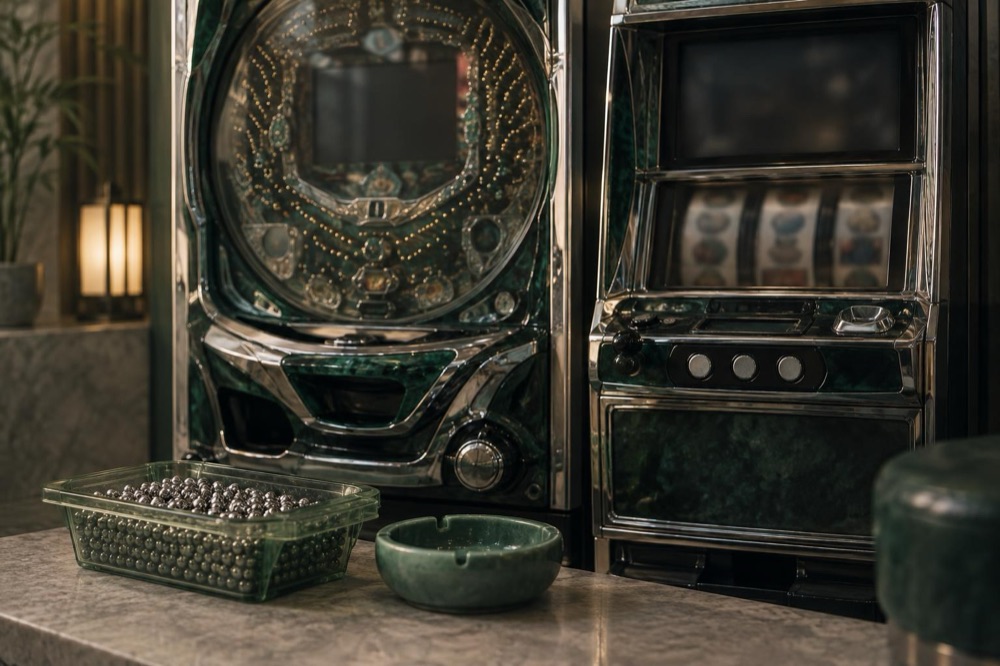
On the pachinko side, the coverage includes the modern digital types that dominate parlors today. A degipachi machine, short for digital pachinko, is the standard electronic pachinko type found across Japan. Examples include CR Pachinko Checkers, CR Shin Oedo Nikki, and CR Shin Seiki Evangelion: Shito, Futatabi, all of which are degipachi type machines5. There are also older style variants such as hane-mono, or feather type machines, like the Chindonya P-2, which is themed on a chindonya street performer1. Sanscarlet is another pachinko machine in the degipachi category8.
On the pachislot side, the site covers slot-style machines that use medals rather than balls. Titles include Ore no Na wa Lupin the Third, a pachislot machine, and Pachi-Slot Sengoku Musou, released as Yamasza Digi World SP Pachi-Slot Sengoku Musou9. Pachislot Kelot 3 and Pachislot Kelot 4 are both YAMASA products, with Kelot 3 released in June 2014 and Kelot 4 in March 202011. Ring ni Kakero 1 is a pachislot title that uses 2-coin and 3-coin bets only13.
| Machine | Family | Type or note |
|---|---|---|
| CR Pachinko Checkers | Pachinko | Degipachi5 |
| CR Shin Oedo Nikki | Pachinko | Degipachi6 |
| CR Shin Seiki Evangelion: Shito, Futatabi | Pachinko | Degipachi7 |
| Chindonya P-2 | Pachinko | Hane-mono (feather type)1 |
| Sanscarlet | Pachinko | Degipachi8 |
| Ore no Na wa Lupin the Third | Pachislot | Medal play9 |
| Pachi-Slot Sengoku Musou | Pachislot | Type 510 |
| Pachislot Kelot 3 | Pachislot | Type 5, released June 201411 |
| Pachislot Kelot 4 | Pachislot | Released March 202012 |
| Ring ni Kakero 1 | Pachislot | 2-coin and 3-coin bets only13 |
If you want a deeper look at either family, we have separate pages on pachinko and on pachislot machines.
How pachinko works
Pachinko is a vertical pinball-style game. You sit or stand at a machine mounted in a wall or cabinet, and you feed small steel balls into the playfield2. The ball drops through a field studded with nearly 500 small nails and small spinners, bouncing unpredictably on the way down2. Your only real input is the strength of the launch, controlled by a knob on the machine.
The goal is to land a ball in a winning pocket. When that happens, the machine typically returns about 10 to 15 extra balls for you to play with2. Those balls collect in a lower tray. From there, you either keep feeding them back into the machine or carry them to the counter when you are done2.
Modern machines add a digital layer on top of the physical play. On a degipachi machine, landing in the right spot triggers a digital slot or reel display on the screen, and that display determines whether you get a bigger payout. This is why the machines look like a hybrid of pinball and video slot. The physical ball path still matters, but the screen decides the size of the win5.
If you have never been inside a parlor, the atmosphere takes some adjusting. Parlors are loud, brightly lit, and full of machines. Staff generally do not speak English, and the machines are almost entirely in Japanese. Our pachinko parlor guide walks through the practical side: how to buy balls, how to call staff, and what to do when you finish.
How pachislot differs from pachinko
Pachislot is the slot machine branch of the same industry. Instead of balls, you play with medals. Instead of a pinball playfield, you get reels. The two are often found in the same parlor, sometimes on separate floors, and the site covers both because players in Japan move between them.
The betting structure is different. Pachislot machines take fixed bets per spin, and some machines are restricted to specific bet sizes. Ring ni Kakero 1, for example, is a 2-coin and 3-coin bet only machine, meaning you cannot choose other bet amounts on it13. That is a meaningful difference from pachinko, where your spend is driven by how many balls you feed in.
There is also a conversion issue when the two are compared directly. One pachislot medal is treated as equal to five pachinko balls14. That is worth knowing before you decide which floor to play on.
Machine generations matter too. Pachislot machines are classified by type, and older machines are labeled by generation. Pachislot Kelot 3 is a Type 5 machine, and Pachi-Slot Sengoku Musou is also a Type 5 machine11. Newer machines follow later standards. If you are reading machine guides, the type number tells you which rules and payout limits apply.
Manufacturers are a big part of the picture. YAMASA is behind several titles, including Pachislot Kelot 3 and Pachislot Kelot 4, and Kelot 4 was developed by Seven League, a YAMASA subsidiary11. Knowing the maker helps when you are comparing machines, because payout feel and machine behavior tend to run in families.
Prizes and how winnings are paid
What you win at pachinko is not cash handed over at the machine. It is balls, and then prizes, and then sometimes cash through a separate step. Understanding the chain matters before you sit down.
The payout chain runs in three stages.
- The machine payout: a winning pocket returns roughly 10 to 15 extra balls2, and those balls accumulate in the lower tray.
- The counter: you take your balls to the parlor counter and trade them in for prizes2.
- The exchange: under a system known as santen hoshiki, or the three-store method, prizes are exchanged for cash at a separate kiosk outside the parlor15. The parlor itself does not hand you cash.
That separation is how the industry has historically worked within the rules.
The practical result is that your winnings come to you in two steps, and the cash step happens off the premises. If you are a visitor, this is the part that surprises people most. You do not walk out of the parlor with yen in your pocket from the counter. You walk out with prizes, and the exchange happens elsewhere15.
For comparison, other gambling products in Asia pay very differently. In the Philippines, the PCSO settles every prize above PHP 10,000 by check, with a 20 percent final tax withheld, and only prizes of PHP 10,000 and below are handed over in cash, at PCSO outlets, PCSO branch offices, or the Treasury Department of the PCSO Main Office16. Japan's lottery products work on a variable prize model: for BIG, prize amounts vary with sales and the number of winning entries, excluding special rounds, and BINGO5 prizes vary each draw depending on sales and the number of winning entries17. Special BIG rounds follow the same variable principle19.
So if you are used to a lottery or a casino cage, pachinko's payout path will feel indirect. It is not a scam, and it is not hidden. It is simply structured differently, and knowing the three steps in advance saves confusion at the counter15.
Where pachinko parlors fit in Japan's gambling rules
Pachinko is legal in Japan, and it is everywhere. There are thousands of pachinko parlors across the country3. The game is not officially classified as gambling for money, which is the key to how the whole industry operates15. Parlors are allowed to work within transaction rules and a cultural carve-out that keeps them on the right side of the line3.
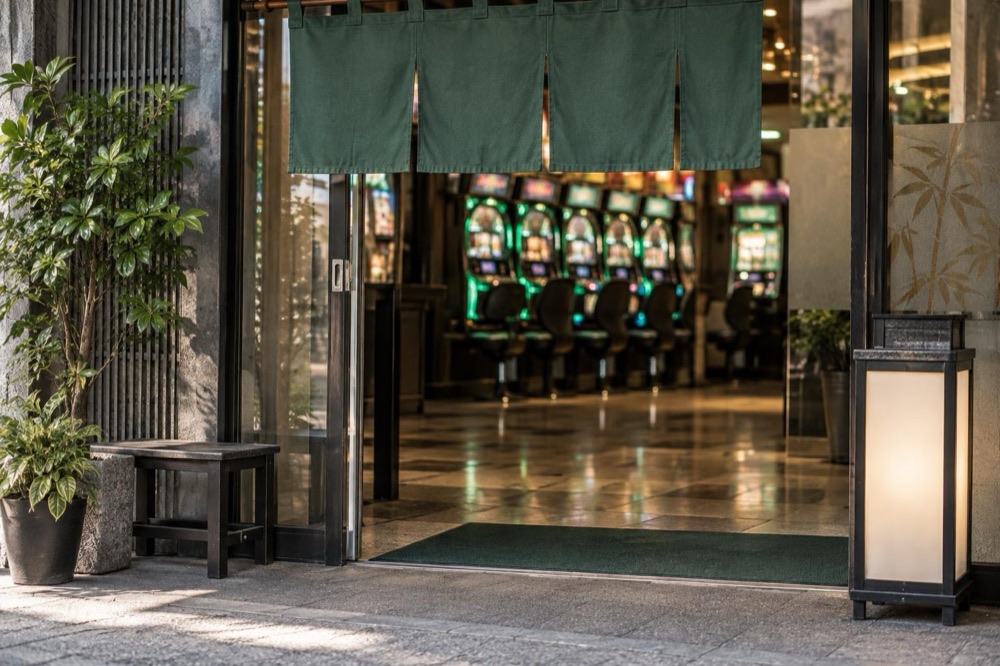
For you as a player, the rules that matter are practical ones. You must be 18 or older to enter a pachinko parlor in Japan4. That age limit is enforced through signage and entry rules, and the industry has been pushed to improve compliance. Registered advisors have been placed at pachinko parlors, and notices about the ban on entry for under-18s have been improved, with the goal set in the FY2022 Basic Plan assessed as achieved4.
Cost is the other practical rule. Ball rental at Japanese parlors costs up to 4.4 yen per ball including consumption tax, as of October 20193. That is the ceiling, and parlors set their own rates at or below it. A few hundred balls is a normal starting buy, so a session costs what you decide to put in, not a fixed entry fee.
| Question | Answer |
|---|---|
| Minimum age | 184 |
| Ball rental ceiling | 4.4 yen per ball including tax, as of October 20193 |
| Typical win per pocket | About 10 to 15 extra balls2 |
| Where cash is exchanged | At a separate kiosk outside the parlor15 |
| Number of parlors | Thousands across Japan3 |
There is also a notable exception worth knowing about if you are a foreign visitor. The Paradise pachinko hall in the Paradise Garden Sasebo resort hotel in Sasebo City opened on February 1, 2017. It is open to Japanese players but targets foreign hotel guests, with machine guides in English, Chinese, Korean and Taiwanese. Its hours are 16:00 to 22:40, matched to hotel check-in, and it closes on days when there are no foreign guests3. That is unusual for Japan, and it is the closest thing to a visitor-friendly pachinko venue.
If you want the wider picture on what is and is not allowed in the country, our guide to gambling in Japan covers the ground, and the casinos in Japan page explains who can go into the casino side of things.
Who the site is for
Pachinko Village is aimed at people who want to understand pachinko and pachislot before or after playing. That includes Japanese players checking machine details, but it is also useful for visitors and expats in Asia who are curious about the game and want a reference in one place.
If you are a visitor, the site helps you decode what you are looking at. Parlor machines are Japanese-language products with complex screen displays, and a reference site lets you look up a machine type, its category, and its basic behavior before you sit down. That is far more useful than guessing at the machine.
If you are an expat or long-term resident, the site works as a machine database. You can check whether a title is a degipachi pachinko machine or a pachislot machine, which generation it belongs to, and who made it5. That kind of detail matters when you are choosing where to spend an evening.
If you are looking for actual play, the site is not the destination. You need a physical parlor. For chains, Niraku operates pachinko halls across Japan and lists detailed information for each store on its site20. For a broader directory approach, our P-WORLD page and Minpachi page cover parlor-finding resources. If you want to try pachislot-style games without leaving your chair, some titles appear on the Japanese online game site 777town.net, though those are entertainment versions rather than real-money play13.
One more thing for anyone playing regularly: support exists. The Recovery Support Network covers help for gambling-related problems, and Japan's basic plan on gambling addiction includes measures such as registered advisors at parlors and improved under-18 entry notices4.
Common Questions
Is Pachinko Village a place to play pachinko online?
No. Pachinko Village is an information site about pachinko and pachislot machines. You cannot play real-money pachinko there. If you want to try pachislot-style games online, some titles appear on Japanese online game sites, but those are entertainment versions, not the real thing.
Who operates Pachinko Village?
Pachinko Village is a Japanese information site covering pachinko and pachislot. It is not a parlor operator. For actual parlor chains, companies like Niraku run halls across Japan and list store details on their own sites.
Does Pachinko Village cover pachislot as well as pachinko?
Yes. The site covers both pachinko machines and pachislot machines. Pachislot is the slot-style cousin of pachinko, using medals instead of balls, and it has its own machine types, bet rules and payout structures that the site explains.
What can you win playing pachinko?
In a parlor, a winning pocket typically returns about 10 to 15 extra balls to play with. Balls collect in a lower tray and are traded for prizes at the counter, or exchanged for cash at a separate kiosk outside the parlor under the three-store system.
Is pachinko legal in Japan?
Yes, pachinko parlors operate legally across Japan. The game is not officially classified as gambling for money, and parlors work within transaction rules and a cultural carve-out. Thousands of parlors operate nationwide, and players must be 18 or older.
Is Pachinko Village free to use?
Yes. Pachinko Village is a free information site. You do not pay to read machine guides or parlor details. The costs come later, at a real parlor, where ball rental runs up to 4.4 yen per ball including tax.
Sources20 sources
- ちんどん屋 (パチンコ)), Wikipedia
- Pachinko game, Community College of Philadelphia
- パチンコ, Wikipedia
- ギャンブル等依存症対策基本計画, Cabinet Secretariat, March 21, 2025
- CRぱちんこチェッカーズ, Wikipedia
- CR新大江戸日記, Wikipedia
- CR新世紀エヴァンゲリオン 〜使徒、再び〜, Wikipedia
- サンスカーレット, Wikipedia
- 俺の名はルパン三世, Wikipedia
- パチスロ戦国無双, Wikipedia
- パチスロケロット3, Wikipedia
- パチスロケロット4, Wikipedia
- リングにかけろ1 (パチスロ)), Wikipedia
- パロット (パチスロ)), Wikipedia
- Gambling in Japan, Oxford Brookes University, September 2007
- 2025 PCSO Citizen's Charter, Philippine Charity Sweepstakes Office, 2025
- BIG, Japan Sport Council
- BINGO5, Takarakuji Official
- Special BIG, Japan Sport Council, August 20, 2018
- ニラク, Niraku