Casinos in Thailand: what is legal now
There are no legal casinos in Thailand. Casinos have been completely banned in the country for many years, and that remains the position today5. If you are looking for a casino floor in Bangkok, Pattaya or anywhere else on Thai soil, you will not find a licensed one.
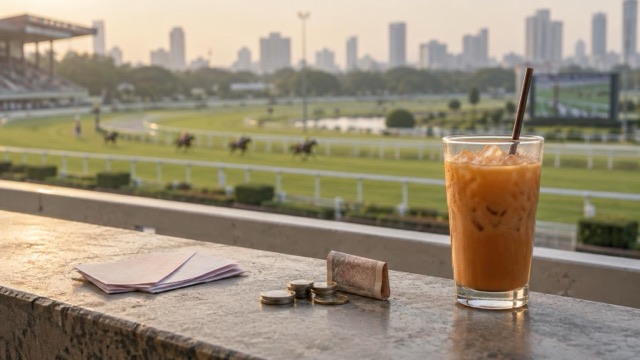
What Thailand does have is a legal gambling scene of a different kind: the government lottery, horse racing at the state tracks, and a range of traditional games that people play at home and in underground settings. Card games like Pok Deng are hugely popular and are found in underground casinos, since gambling is largely illegal outside the permitted exceptions5. For the wider picture of what you can and cannot do, see gambling in Thailand.
The practical reality for a visitor is simple: any venue in Thailand offering casino table games or slot machines is operating illegally, and taking part carries a real risk of trouble with the police. That is why the question "is there a casino in Thailand" almost always leads to one of two answers: wait for the entertainment complexes, or cross into Cambodia.
The Entertainment Complex bill and what it would allow
The big change on the horizon is the draft Entertainment Complex bill, which would legalize integrated resorts with casinos for the first time. A draft bill was anticipated for enactment in early 2026, and it remained before parliament into the year6.
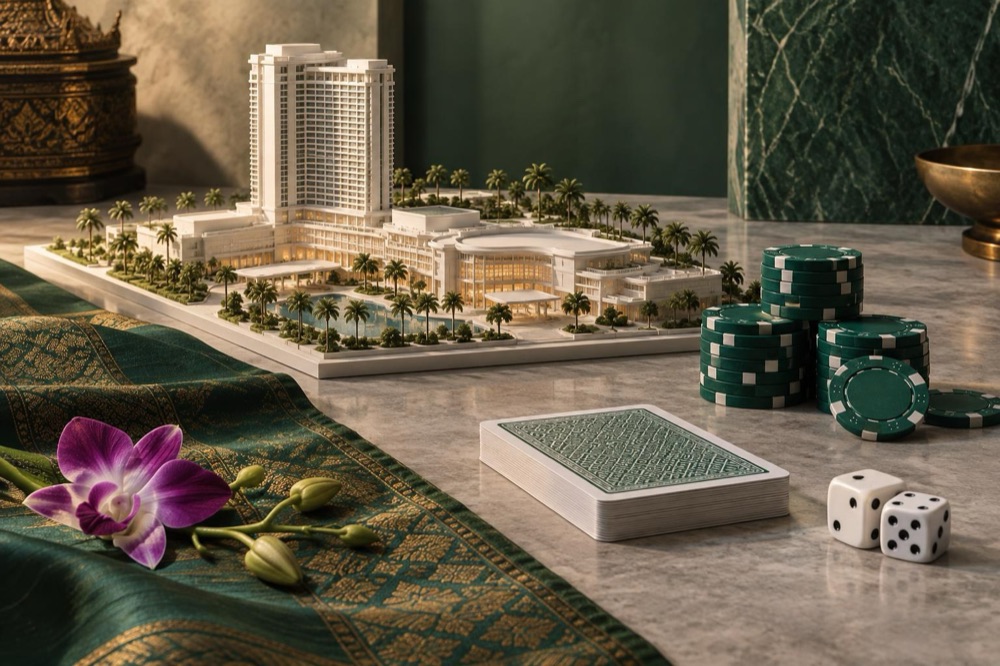
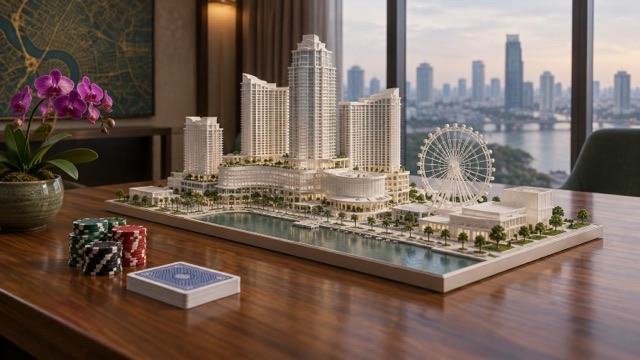
The complexes are envisioned as massive developments, around $2.9 billion each, featuring five-star hotels, theme parks, and casinos6. Each one would include components such as a hotel, a shopping mall, an amusement park, bars and restaurants, with the casino as one part of a much larger leisure destination7. The model is closer to Singapore's Marina Bay Sands or Macau's Cotai Strip than to a standalone casino.
Key features of the draft bill:
- Foreign visitors would be allowed to play in the casinos8
- The minimum gambling age would be 202
- Thai nationals would face the entry levy and deposit rules described below
- The government would have the final say on where each complex is built1
For the full picture of the plan, the timeline and how the resorts would work, see Thailand's Entertainment Complex casino plan, our in-depth page on the bill.
Where the casinos would be built
Five potential sites have been identified1.
| Site | Venues |
|---|---|
| Bangkok | Two |
| Eastern Economic Corridor | One |
| Chiang Mai | One |
| Phuket | One |
An earlier government panel proposed the same shape, one casino for each of the country's five regions, with Pattaya as the target site for the central region, Chiang Rai or Chiang Mai for the north, and Bangkok or an adjacent province as the prime location9.
The bill requires the complexes to sit in specific tourist zones such as Bangkok, Pattaya, Phuket and Chiang Mai7, and likely targets for investment are Bangkok, Chiang Mai, Phuket and Pattaya2. Major operators have already shown interest: Galaxy Entertainment has confirmed a sole focus on a Bangkok project10.
One concrete proposal is already on the table for the capital. The Royal Siam Haven, planned for a 1,200-rai plot in Bangkok, would include a horse racetrack, a golf course, a yacht club, a sports complex, a six-star hotel, luxury restaurants, a wellness hospital and a casino13. Construction was slated to take seven years, and the casino portion cannot proceed until the law passes14. In other words, even after enactment, the first Thai casino is years away.
Entry levy: 5,000 baht for Thais, free for foreigners
The draft law takes a two-tier approach at the door. Foreign visitors would enter the casinos free of charge2. Thai nationals, by contrast, would be required to register and pay an entry fee of 5,000 baht, roughly $148, each time they enter11.
The levy is deliberately high. It is modeled in part on Singapore's casino entry levy, which charges locals an annual pass of 2,000 SGD, and the idea is to make casual repeat visits by locals expensive while keeping the doors open for tourists2. Foreigners would need to present a passport or equivalent document at entry.
The 50-million-baht deposit rule for Thai nationals
The entry fee is only half of the hurdle for Thais. The draft law would also require Thai nationals to show proof of at least 50 million baht in bank deposits, about $1.47 million, to enter the casino floor12. More precisely, they must have held that amount in a fixed deposit account continuously for no less than six months12.
The combined effect of the levy and the deposit rule is that only the wealthiest slice of the Thai population could legally gamble at home. Commentators have noted that the requirements would effectively block a large percentage of Thais from entering, and that most would continue to visit illegal gambling dens or casinos in neighboring countries instead15. If you are a foreign visitor or expat, none of this applies to you: the deposit rule targets Thai nationals only.
Taxes on gaming revenue and government take
The bill proposes a 17 percent tax on gross gaming revenue from the casinos2, a figure operators have also been told to expect10. On top of that, the government expects to collect 30 percent in taxes from each entertainment complex overall, once other levies and contributions are counted9.
For players, the more relevant number is the withholding tax. Thailand imposes a 15 percent withholding tax on gambling winnings exceeding 1,000 baht16. If the complexes open, winnings would be taxable as assessable income under the Revenue Code, and the details are on our tax on gambling winnings page.
Estimates of the market are large. Analysts have suggested the plan could put Thailand behind only Las Vegas and Macau in global gaming revenue2, and that the country could become the main gambling hub in Southeast Asia8.
Online gambling: what the bill does not cover
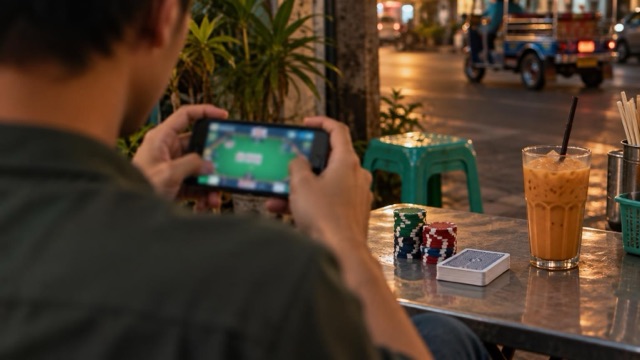
One thing the Entertainment Complex bill does not do is legalize online gambling. The bill did not address online gambling at all; it is land-based only15. There is no legal sportsbook, no legal online casino, and no legal bookmaker of any kind in Thailand15.

The old Gambling Act of 1935 bans most forms of gambling, including online betting and casinos, allowing only limited activities such as the state lottery and horse racing18. Offshore sites are accessible in practice, and enforcement is difficult because many gaming websites are international, but playing online in Thailand carries genuine legal risk17. For what people actually play online, and how, see our pages on online gambling in Thailand and casino games Thai players play, which covers the slots, poker rooms, live dealer tables and traditional games like Hi-Lo that Thai players favor.
Playing across the border: Poipet, Cambodia
Until Thailand's complexes open, the practical answer for a casino trip is Cambodia. Cambodian casinos are located mostly in the border towns of Poipet, near Thailand, and Bavet, bordering Vietnam, with others in Koh Kong and Sihanoukville4. Poipet sits on the border between Cambodia and Thailand, and its Star Vegas Club and Casino is often described as the closest legal gaming destination to the Bangkok area4.
The Poipet casinos are allowed to operate legally on the Cambodian side, and they cater to Thais, thousands of whom cross the border at weekends to gamble, along with visitors from China, South Korea and Malaysia19. The minimum gambling age in Cambodia is 1817.
A few things to know before you go:
- Bring your passport; you are crossing an international border
- The casinos are clustered in the border town, so you can walk between several of them
- Weekend crowds are heavy with day-trippers from Bangkok
- Thai authorities have noted that a legal Thai casino industry would pull much of this traffic back over the border8
For more on cross-border options, including other nearby jurisdictions, see gambling trips abroad from Thailand.
Common Questions
When will the first casino in Thailand open?
No date is set. The Entertainment Complex bill was still working through parliament in 2026, and even after it passes, large integrated resorts are expected to take years to build. One Bangkok project, The Royal Siam Haven, was slated for a seven-year construction period.
How much is the casino entry fee for foreigners?
Under the draft bill, foreign visitors enter the casinos free of charge. Only Thai nationals would pay the entry levy, set at a minimum of 5,000 baht per visit. Foreigners would need to show a passport at the door.
Can Thai citizens enter the proposed casinos?
Yes, but only wealthy ones. The draft law requires Thai nationals to prove at least 50 million baht held in a fixed deposit account for at least six months, plus pay the 5,000 baht entry fee. Most Thais would not qualify.
What is the minimum age to enter a casino in Thailand?
The draft bill sets the minimum gambling age at 20. Anyone under 20 would be prohibited from entering the casino areas of the entertainment complexes.
Is online gambling legal in Thailand?
No. There is no legal online casino, sportsbook or bookmaker of any kind in Thailand, and the Entertainment Complex bill covers land-based venues only. Offshore sites are accessible in practice but carry legal risk.
Where are the nearest legal casinos to Thailand?
Across the border in Cambodia. The border town of Poipet, about four hours from Bangkok by road, has several legal casinos, including Star Vegas, often described as the closest legal gaming destination to the Bangkok area.
What games would the Thai entertainment complex casinos offer?
The complexes are planned as full integrated resorts with hotels, malls, theme parks and dining alongside the gaming floors. Typical casino games at comparable Asian resorts include baccarat, blackjack, roulette, slots and poker.
Sources19 sources
- Thai casino legalization bill gives government final say on casino location, Asia Gaming Brief, 2024
- Casino plan could put Thailand behind only Las Vegas and Macau, Business Times, 2025
- Thailand proposes tough safeguards for local gamblers in casino plan, Reuters, 2025
- G3 September 2023 Cambodia report, G3 Newswire, 2023
- Thailand gambling laws, Bangkok Views, 2026
- Poker guides: Asia, Thailand, Somuchpoker, 2026
- Legalising casinos in Thailand: deeper dive, Bangkok Post, 2025
- Thailand could become the main gambling hub in Southeast Asia, Inquirer, 2024
- Panel touts a casino for each region, Bangkok Post, 2022
- Galaxy Entertainment confirms sole focus on Bangkok IR project, Asia Gaming Brief, 2024
- Thailand legalizes casino entertainment complex, AP News, 2025
- Thai cabinet approves draft law on casinos with limits for local gamblers, Reuters, 2025
- Horse racing club plans Bangkok casino, Bangkok Post, 2024
- Sanook news report on The Royal Siam Haven, Sanook, 2024
- Thailand iGaming payments 2026: what's legal, how it works, LinkedIn, 2026
- Rules and regulations for crypto gambling in Thailand, Thailand Business News, 2022
- Best online casinos for players from Thailand, Wizard of Odds, 2026
- Thailand seizes $560M, escalates crackdown on illegal online gambling networks, Mundo Video, 2026
- Games without frontiers, South China Morning Post, 2013