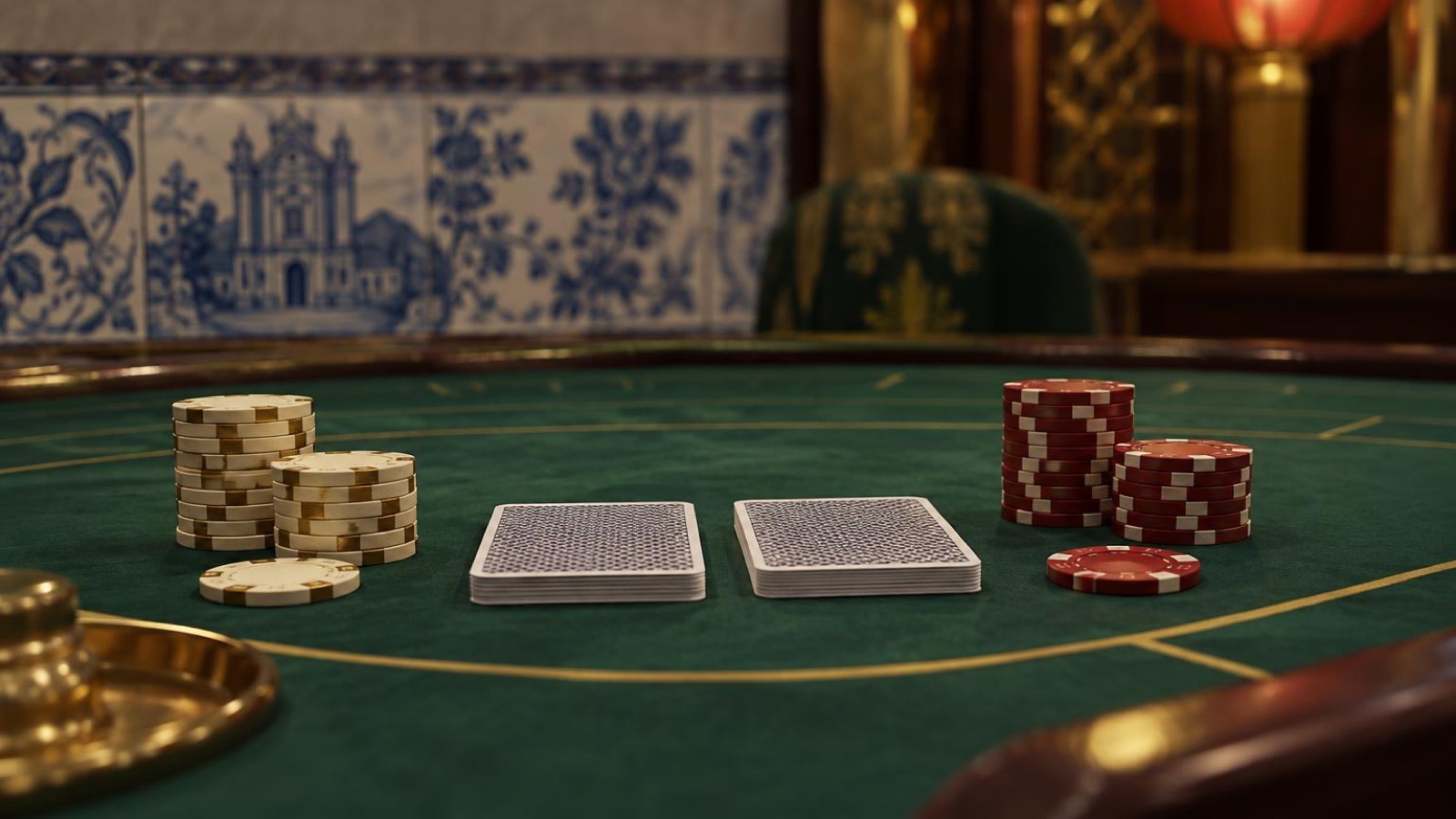
What baccarat is and how a round works
Baccarat is, at heart, a guessing game. Two hands are dealt, one called Player and one called Banker, and you bet on which will end up closer to nine points. You are not playing the Player hand yourself; those are just the names of the two betting positions, and the dealer does everything after you place your chips1.
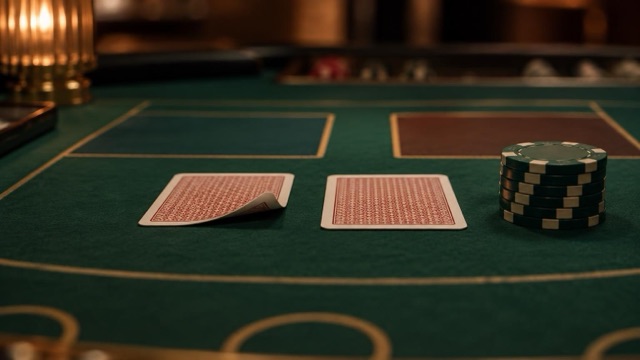
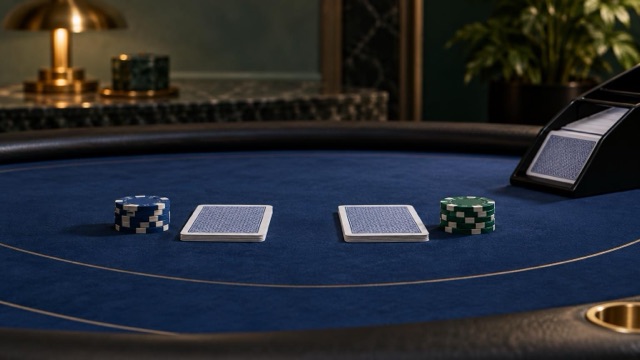
No matter how many people are at the table, and there can be anywhere from seven to 14 seats depending on the version, only two hands of cards are dealt: the Player's and the Banker's1. Once the bets are placed, the dealer slides out four cards in total, two for the Player box and two for the Banker box1. Depending on the totals, a third card may then be drawn for one or both hands, but this is not a decision anyone makes. A fixed set of drawing rules, sometimes called the tableau, is applied automatically by the dealer6.
The game is especially popular among high-rollers and Asian gamblers, and in Macao's VIP rooms baccarat is typically the only game offered7. That popularity comes down to pace and simplicity: a round takes under a minute, the house edge on the main bets is among the lowest in the casino, and there is nothing to learn beyond where to put your chips. If you want to see how the game fits into the wider casino floor, our page on casinos and integrated resorts in Asia covers what you will find inside.
Most tables, live and online, use eight standard 52-card decks with no jokers, for 416 cards in total, held in a dealing shoe9. At the start of a new shoe the dealer turns over one card to see how many cards to burn; a 10 or face card means 10 cards are burned11.
Card values and the nine-point limit
Card values in baccarat are simpler than in any other table game:
- Ace counts 1 point
- Cards 2 through 9 count their face value
- 10, jack, queen and king count 012
The winning hand is the one closest to a total of 9 points3. The trick is what happens when a hand goes past nine: only the rightmost digit counts. Once the points reach a double digit, the second digit automatically becomes the value of the hand, so 10 is worth 0, 11 is worth 1, and 12 is worth 21. If the total is higher still, say 25, the first number is dropped and the hand is worth 55.
So a hand of 7 and 8, which totals 15, is worth 5. A hand of 4 and 6, which totals 10, is worth 0. The maximum any hand can reach is 9, and 9 is the best possible result12.
The three bets: Player, Banker and Tie
Each seat at the table has three bet boxes, one each for Player, Banker and Tie3. A game of baccarat has exactly three possible outcomes: Player wins, Banker wins, or the two hands tie15.
- Player wins if the Player hand is closer to 9.
- Banker wins if the Banker hand is closer to 9. Despite the name, the Banker is not the casino and not a person; it is just the other betting position.
- Tie wins if both hands finish on the same total. In the event of a tie, neither hand wins or loses3.
At most tables you pick one side, Player or Banker, and you can add a Tie bet at any time even if you already have money on one of the sides5. Some online versions are more flexible and let you bet on Banker and Player at once, or combine a side bet with a Pair or Tie wager16. If you are curious about the many regional versions of the game, from no-commission to squeeze baccarat, see our page on baccarat variants.
Payouts and the 5% Banker commission
The payouts on the three main bets are straightforward:
| Bet | Payout | Notes |
|---|---|---|
| Player | 1 to 1 | Paid in full, no deduction12 |
| Banker | 1 to 1 minus 5% | Commission taken on winnings17 |
| Tie | 8 to 1 | Stake is not collected on a win18 |
The 5% commission on winning Banker bets exists because the Banker hand wins slightly more often than the Player hand. Without the commission, backing Banker would be the obvious play. With it, a winning Banker bet is paid at 19 to 20, so a 20 unit bet returns 19 units of profit19. Some tables collect the commission at payout; online, it is usually deducted automatically9.
There is a popular alternative called no-commission baccarat. As the name suggests, no commission is charged on winning Banker bets, with one exception: when the Banker wins with a total of 6, the bet is paid only half the wagered amount, 50%20. This is why the Banker win on 6 is singled out by the Lucky 6 and Super Six side bets described below.
Naturals: when no more cards are dealt
A natural is a two-card hand totaling 8 or 95. If either the Player or the Banker is dealt a natural on the first two cards, the round is over: no third card is drawn for either hand, no exceptions, and the placed bets are paid1.
Naturals are the fastest part of the game. A Player dealt 5 and 4 (nine) against a Banker dealt 3 and 10 (three) ends immediately with a Player win, and nobody draws anything. If both hands have naturals of the same value, the round is a tie.
The third-card rule for the Player hand
When there is no natural, the Player hand is resolved first, because baccarat rules call for the Player to always go first and the Banker's hand depends on the Player's hand1. The Player's rule is short:
- Totals 0 to 5: the Player draws a third card23
- Totals 6 or 7: the Player always stands23
- Totals 8 or 9: natural, no more cards24
That is the whole rule. If the Player's first two cards total 4, a third card comes. If they total 7, the hand is finished. The only wrinkle is that the Player draws on 0 to 5 unless the Banker has a natural 8 or 9, in which case the round has already ended3.
The third-card rule for the Banker hand
The Banker's rule is the part of baccarat that looks intimidating, because it depends on two things: the Banker's own total and, if the Player drew, the value of the Player's third card. You never have to memorize it; the dealer applies it automatically. But here is the full table:
| Banker's first two cards | Banker action |
|---|---|
| 0, 1 or 2 | Always draws, unless the Player has a natural 8 or 91 |
| 3 | Draws unless the Player's third card is 814 |
| 4 | Draws if the Player's third card is 2, 3, 4, 5, 6 or 73 |
| 5 | Draws if the Player's third card is 4, 5, 6 or 73 |
| 6 | Draws if the Player's third card is 6 or 73 |
| 7 | Always stands1 |
| 8 or 9 | Natural, no more cards1 |
If the Player stood on 6 or 7, the Banker simply draws on totals of 0 to 5 and stands on 6 or 7, mirroring the Player's rule12. So the long table above only comes into play when the Player has taken a third card.
A worked example: the Player is dealt 3 and 2 (five) and draws a 6, for a final total of 1. The Banker is dealt 4 and 3 (seven). Because the Player drew, the Banker with a total of 7 still stands, and the Banker wins 7 to 1. Another: the Player has 2 and 2 (four), draws a 5, finishing on 9. The Banker has 5 and 2 (seven) and stands; the Player wins. A third: the Player stands on 7, the Banker has 4 and 1 (five), so the Banker draws, and the higher final total wins.
Side bets: Pairs, Lucky 6 and Super Six
Beyond the three main bets, most tables offer side bets. The common ones in Asian casinos:
- Player Pair and Banker Pair. You are betting that the first two cards dealt to that hand will be a pair of the same rank, such as 5-5 or K-K, regardless of suit or color. The bet loses on every other outcome, and you can make it alongside your main bet or on its own16.
- Lucky 6. A bet that the Banker will win with a total of 6. It pays 12 to 1 if the Banker wins on 6 with two cards, and 20 to 1 if the Banker wins on 6 with three cards15.
- Super Six. Found on no-commission style tables, this is an insurance bet on the Banker winning with 6 points, paying 12 to 110. It exists precisely because a Banker win on 6 is the one result where the no-commission table pays you half.
- Either Pair and Perfect Pair. Online versions offer wider pair menus, including bets on either hand making a pair or on a pair of identical cards5.
Some tables go much further. One Manila traditional baccarat guide lists Player, Banker, Lucky 6, Player Pair, Banker Pair, Tie, Super Tie, Small Tiger, Big Tiger, Lucky 7 and Super Lucky 7 on a single layout4. Macau's official rules also allow Dragon Seven side bets and progressive jackpot wagers26. For a first visit, the three main bets plus perhaps a Pair bet are all you need.
House edge by bet: 1.06% to 14.36%
The house edge is the casino's average take on each bet, and in baccarat the spread between the best and worst bet is enormous:
The Banker bet, even after the 5% commission, is one of the cheapest bets in the entire casino, at about 1.06%8. The Player bet is barely worse. The Tie bet, despite its attractive 8 to 1 payout, carries a house edge of 14.36%, more than thirteen times the Banker bet27. Pair side bets sit in between at 10.36%20. On no-commission tables the Banker edge rises to 1.46% because of the half payout on a Banker 620.
If you want to compare these numbers with blackjack, roulette, sic bo and slots, see our page on the house edge of casino games compared.
Table etiquette and betting rules
Baccarat is one of the friendliest games for a newcomer because there is nothing you can do wrong at the cards. The rules that matter are about betting:
- All bets must be placed before the cards are dealt. Once the dealer announces no more bets, the round is locked26.
- Every wager must sit within the table's minimum and maximum, which are displayed at the table21. For context on what those minimums look like across the region, see our page on casino table minimums and maximum bets in Asia.
- At tables with reserved seats, standing players may not bet in the positions marked for seated players26.
- In big baccarat and squeeze versions, the players with the largest wagers on each hand get to look at, or squeeze, the cards before the dealer announces them2. If that is not you, just wait for the reveal.
A few practical notes for your first table. Chips are bought at the table with cash or at the cashier cage; our page on buying and cashing chips explains how that works in Asian casinos. When you win, the dealer pays winning bets and collects losers; on a Tie, your Player or Banker chips stay where they are for the next round. Score cards are usually provided so players can track results, and many regulars treat streaks seriously, though each round is independent. Tipping practice varies by country, covered in our page on tipping dealers in Asian casinos.
Questions first-timers usually ask
Do I need to know the third-card rules to play? No. The dealer applies them automatically, and in online games the software does. You only choose where to put your chips.
Is there any strategy? Baccarat is a game of pure chance; you make one choice, which hand to back, and everything after that is fixed rules1. The only decision with a mathematical basis is that the Banker bet has the lowest house edge, and even that is a margin of about one bet in 55012.
What if I bet on Player and the Banker wins? You lose your Player chips, plain and simple. There is no folding, no drawing back, no second decision.
Can I play without sitting down? Yes, at most tables standing players can bet, as long as you do not take a position reserved for a seated player26.
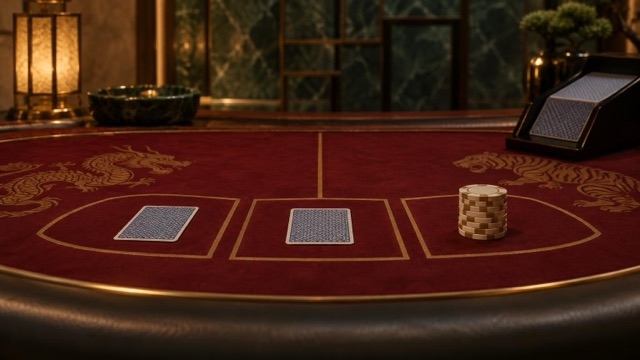
What does a table actually look like? A standard live table is a rounded rectangle around 1450 by 800 mm, with three betting spots for Player, Tie and Banker at each position22. Mini-baccarat versions are smaller and faster, with the dealer handling everything.
Where do the variants fit in? No-commission, squeeze and Super Six tables all use the rules on this page; only the payout on a Banker 6 or who touches the cards changes. Our page on baccarat variants breaks them down.
Common Questions
How many decks are used in baccarat?
Most baccarat tables, live and online, use eight standard 52-card decks with no jokers, for 416 cards in total. Some tables use six decks or a single deck, which slightly changes the odds, but the rules of play stay the same.
What is a natural in baccarat?
A natural is a two-card hand totaling 8 or 9. If either the Player or Banker has a natural on the first two cards, both hands stand, no third card is dealt, and the round ends immediately with bets paid.
Why is there a commission on Banker bets?
The Banker hand wins slightly more often than the Player hand, so a straight even-money payout on Banker would favor the player. The 5% commission on winning Banker bets brings the house edge back to about 1.06%, the lowest of the three main bets.
What happens if both hands tie?
Neither hand wins or loses. Player and Banker bets push and are returned to you, and Tie bets are paid at 8 to 1. You can then leave your chips where they are for the next round or move them.
Can I bet on both Player and Banker at the same time?
At most tables you choose one side or the other, though some online versions do allow bets on both. You can usually add a Tie bet alongside your Player or Banker bet at any time.
Do I pay tax on baccarat winnings?
It depends on where you play. In most Asian casino jurisdictions, winnings at the table are not taxed at payout. In Vietnam, for example, casino winnings are exempt from personal income tax, while winnings from betting are taxable.
Is baccarat a game of skill or luck?
It is pure chance. You make one decision, which hand to back, and every card after that is dealt by fixed rules the dealer applies automatically. There is no playing strategy that changes the outcome.
What are the table limits in baccarat?
Every table sets its own minimum and maximum, displayed on a sign at the table. In the Philippines, high roller baccarat tables start at PhP25,000 per hand, or USD500 for dollar play. Online tables usually offer low, normal and high limit options.
Sources28 sources
- How to play baccarat, PlaySmart, 2026-09-25
- How to play baccarat details, PlaySmart, 2026-09-25
- Baccarat how to play, PlaySmart, 2026-09-25
- Traditional Baccarat gaming guide, City of Dreams Manila, 2026
- Baccarat, Natural8, 2026-09-26
- Làm chủ baccarat tại Hà Tiên Vegas, Ha Tien Vegas, 2026-03-21
- Baccarat, Wizard of Odds, 2026-09-27
- The Transformation of Macao's Gaming Industry, University of Macau repository, 2026-02
- Natural8 house rules, Natural8, 2026-09-25
- FB88 live casino rules, FB88, 2026-09-26
- Baccarat basics, Wizard of Odds (archived), 2017-02-23
- Baccarat, GameSense, 2025
- Paradise Casino game manual, Paradise Casino, 2026-09-26
- Baccarat Deluxe, Casino Plus, 2026-09-26
- Baccarat, NUSTAR Resort and Casino, 2026-06-25
- Online Baccarat, 888casino, 2026
- Baccarat, Hoiana Resort and Golf, 2026
- Paradise City casino game guide, Paradise City, 2026-09-26
- Bài Cào, Casino Corona, 2026-09-25
- No Commission Baccarat, City of Dreams Manila, 2026-09-26
- Baccarat, Hoiana Resort and Golf, 2026
- GGPoker house rules, GGPoker, 2026-03-27
- Baccarat 27 gaming guide, City of Dreams Manila, 2026-09-26
- FB88 live casino rules, FB88, 2026-09-26
- Baccarat statutory rules, DICJ Macau, 2004-05-12
- Baccarat, Natural8, 2026-09-26
- Stake Originals Baccarat, Stake, 2026-09-26
- Table games, GameSense, 2020