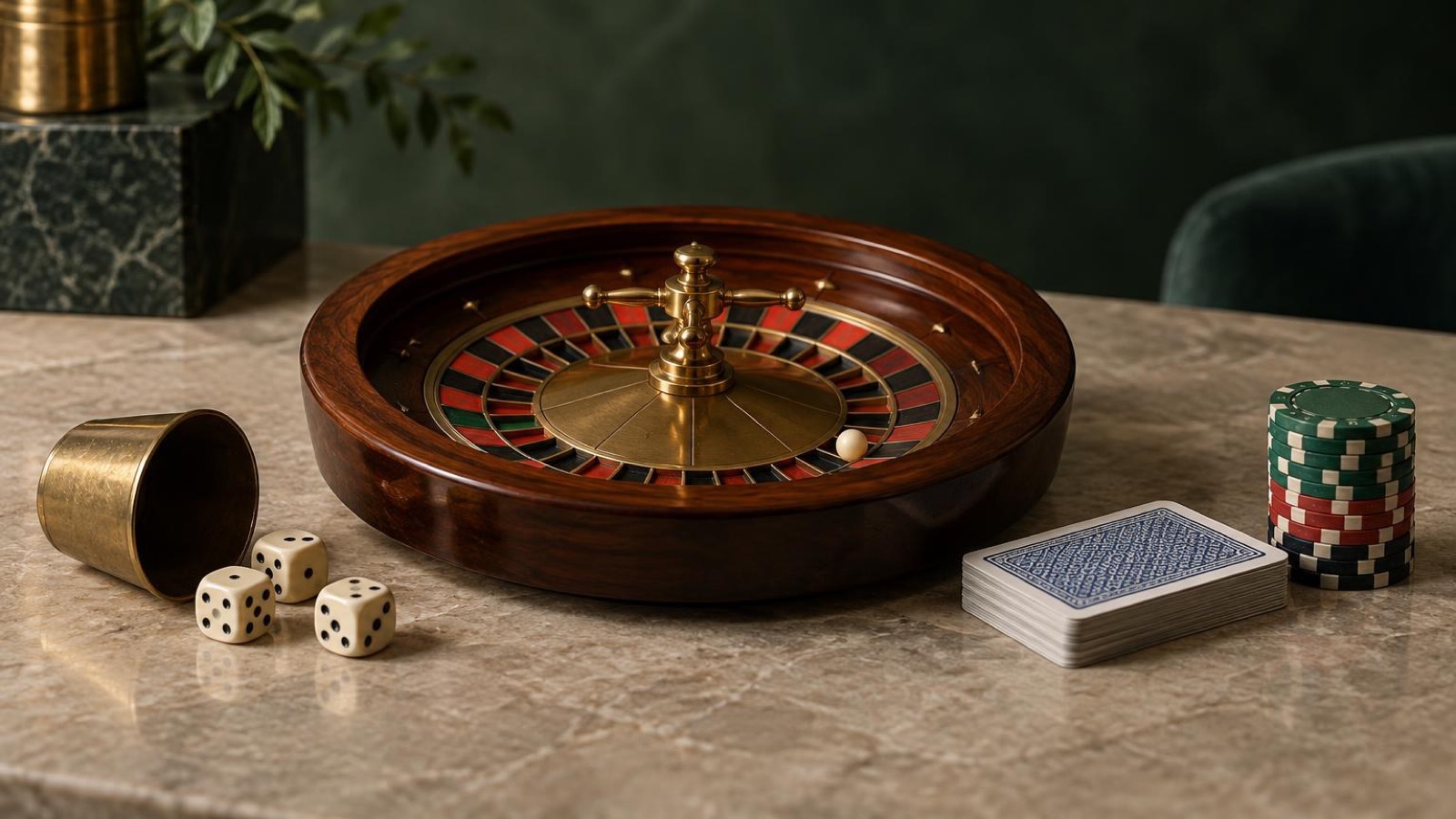
What house edge means
The house edge is the casino's revenue expressed as a percentage of the amount you originally bet5. Another way to say it: it is the slice of every wager the casino keeps on average over time. The higher the house edge, the more the odds favor the casino over you5.
Every casino game has a built-in advantage in favor of the house. A skilled player may reduce the house edge, but it is never completely eliminated6. The Japanese term for the same idea, 控除率, literally means the percentage of fee taken on a bet4.
The most useful way to read a house edge figure is as an average loss rate. A game with a 3.333% house edge means an average loss of JPY 333 for every JPY 10,000 wagered7. That does not describe any single session, where luck dominates, but over many bets your results drift toward that percentage. If a slot shows 96% return to player, the remaining 4% is the house edge, the built-in slice that stays with the casino over time.
Return to player (RTP) is simply the house edge flipped around. A game with a 2.7% edge returns 97.3% of wagered money to players on average, which is why European Roulette is often listed as RTP 97.3%8.
The numbers side by side
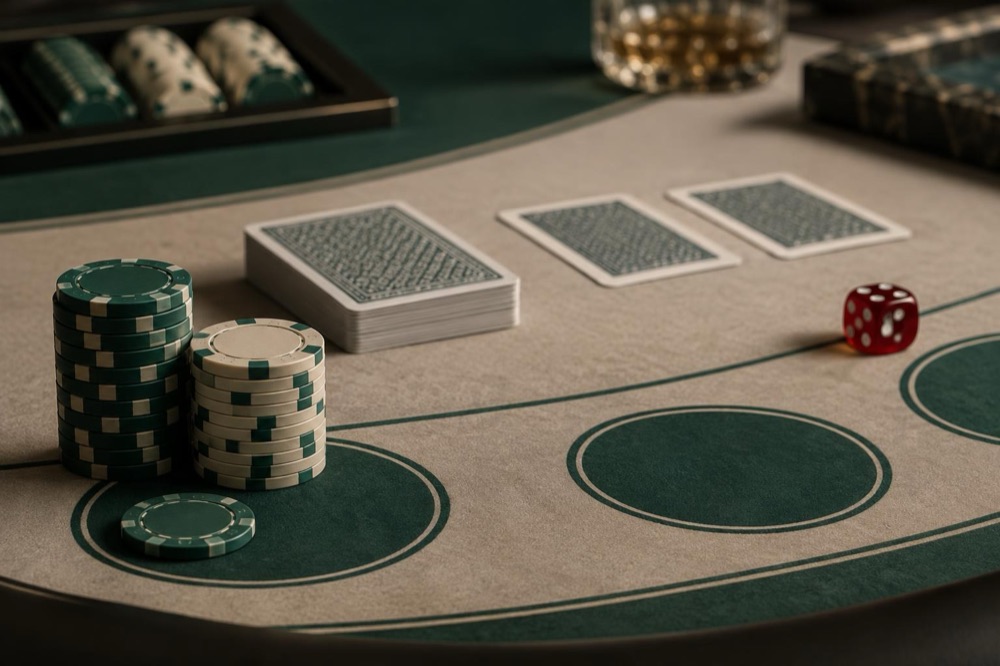
Here are the headline figures for the bets most visitors actually make. Each figure assumes the standard version of the game and, where noted, correct play.
| Game | Main bet | House edge |
|---|---|---|
| Blackjack | Basic strategy, 3:2 payout | about 0.5%1 |
| Baccarat | Banker bet | about 1.06%2 |
| Baccarat | Player bet | 1.24%2 |
| Roulette | Single-zero wheel | 2.7%3 |
| Roulette | Double-zero wheel | 5.26%3 |
| Roulette | Typical play, both wheel types | 5.3%2 |
| Slot machines | Average | 8%2 |
A few things jump out. Blackjack and baccarat sit in a different league from roulette and slots. The banker bet in baccarat carries an edge of only about 1.06%, which is one reason baccarat dominates Macao gaming and is typically the only game offered in VIP rooms there10. Slots sit at the other end: slot machines return less to players than table games such as blackjack and roulette11.
Ranges matter too. Published figures for blackjack vary from 0.5% to 2% depending on rules and play4, baccarat from about 1% to 14% depending on which bet you take4, and slots from 3% to 15% depending on the machine4.
Blackjack: lowest edge, but only with correct play
Blackjack played with correct decisions has one of the lowest house edges in the casino, while careless play hands that advantage back12. The headline figure of about 0.5% applies to an eight-deck game paying 3:2 for a blackjack, following basic strategy9. Some official guides put standard blackjack even lower, at roughly 0.4%13.
The catch is that the number only holds if you play every hand correctly. Players who make suboptimal decisions increase the house edge significantly, sometimes to 2% or higher14. Unlike most other table games, blackjack is a game where skill can genuinely improve your odds15.
The payout rule on a natural blackjack matters more than anything else. A 3:2 table, where a natural pays 3:2, is better than a 6:5 table16. On a $10 bet, a 3:2 natural wins $15, while a 6:5 table pays only $12, which meaningfully raises the house edge over a session12. A typical live game uses eight decks, with the dealer drawing on 16 or less and standing on 17 or more, and blackjack paying 3 to 217.
Rule variations shift the number. European Blackjack, a two-deck variant where the dealer takes no second card until players have acted, comes in at 0.62%9. American rules tend to run slightly higher, while European rules often run slightly lower18. Live dealer variants measured by independent analysts range from 0.35% to 0.57%, with a few as low as 0.11% to 0.15%19. VIP live tables sit at approximately 0.50% with optimal play18.
Regional variants can beat standard blackjack. In Sydney, Pontoon offers a house edge about one third less than conventional blackjack20. Side bets usually go the other way: the C4 side bet in Spanish 21 carries a house edge of 14.48%19.
For the full rules on doubling, splitting and insurance, see blackjack rules in Asian casinos.
Baccarat: banker, player and tie bets compared
Baccarat, also known as punto banco, is one of the oldest and most popular games in casinos all over the world, and it is especially popular among high-rollers and Asian gamblers21. In essence it is a simple guessing game: you bet on which of two dealt hands, Player or Banker, will end up closer to 9 points22. Aces count 1, tens and face cards count 0, and only the rightmost digit of a total counts, so a hand of 12 is worth 22. If either hand starts with 8 or 9, that is a natural and no more cards are dealt2.
Because the drawing rules are fixed, you make no decisions after placing your bet. All bets must be placed before the cards are dealt23. That makes baccarat a game of pure chance, and it makes the three main bets easy to compare:
- Banker: pays 1 to 1 minus a 5% commission, house edge about 1.06%2
- Player: pays 1 to 1, house edge 1.24%2
- Tie: house edge 14.36%2
The 5% commission on winning banker bets is what keeps the banker bet from being a straight 50-50 proposition22. Even after commission, banker remains the better of the two main bets, which is why it is the workhorse of baccarat play.
Side bets are where the edge climbs. Player Pair and Banker Pair wagers carry a house edge of 10.36%24. Tiger side bets run higher still: Small Tiger at 14.33% and Big Tiger at 15.25%24.
Variants shuffle the numbers slightly. No Commission Baccarat drops the 5% commission on banker wins but keeps the Player bet at 1.24% and the Player Pair at 10.36%26. Baccarat 27 lists the Banker bet at 1.72%, the Player bet at 1.24%, pairs at 10.36%, Big Tiger at 15.25% and a Super Tie bet at 16.51%25. For how these versions differ at the table, see baccarat variants, and for the drawing rules, baccarat rules.
Roulette: why the single zero matters
Roulette is a spinning wheel with red and black slots numbered 1 to 36, plus green zero slots27. The number of zeros is the whole story for the house edge.
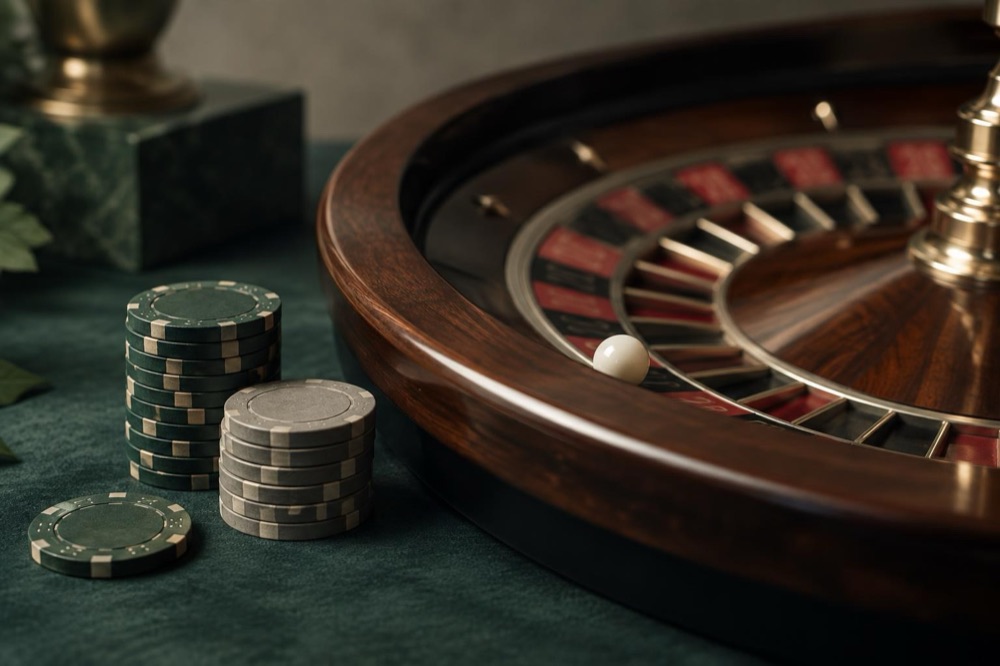
A single-zero (European) wheel carries a house edge of 2.7%, compared to American Roulette's 5.26%3. On an American wheel the house edge on all bets is 1/19, or 5.26%, except for the 0-00-1-2-3 combination, which carries 7.89%27. The reason is simple: a straight-up number pays 35 to 1, but with 38 pockets on a double-zero wheel the true odds against you are worse than that payout implies8.
Newer variants make the zero problem worse. Triple-zero roulette carries a house edge of 1/13, or 7.69%, on every bet, and quadruple-zero roulette reaches 10% on every bet27. Single-zero tables are rare in some regions: the only single-zero roulette in California is at the Barona casino, with a house edge of 2.70%27.
The edge is the same on almost every bet on the wheel, so the choice between red/black, dozens or single numbers changes your variance, not the casino's cut. Multiplier variants like Lightning Roulette add bonus multipliers of up to 500x, at the cost of a different payout structure28. On electronic roulette tables there is no croupier; the wheel spins automatically each time a player makes a bet29.
For bet types and the full payout table, see roulette rules.
Sic Bo and Dragon Tiger: dice and single-card odds
Sic Bo is played with three standard dice shaken in a plastic cup, with players betting on the outcome of the roll29. The betting layout offers everything from single-dice picks to specific triples, and the house edge varies widely across the layout. Multiplier versions such as Super Sic Bo add random multipliers of up to 1000x per round28.
Dragon Tiger is effectively a two-card version of baccarat. One card is dealt to the Dragon box and one to the Tiger box, and the higher card wins; the Ace is the highest card, followed by King, Queen, Jack, Ten down to Two, and the suit makes no difference17. The main Dragon and Tiger bets carry a house edge of about 3.7%, with an overall RTP of 96.7%14. It is a fast game, one card per side and no decisions, which is why it spreads quickly across Asian gaming floors.
Both games are pure chance: once your chips are down, nothing you do changes the outcome. For the full betting layouts, see Sic Bo rules and Dragon Tiger rules.
Slot machines: paylines, RNG and jackpot odds
Slot machines are the least favorable games on the floor in terms of return to player, returning less than table games such as blackjack and roulette11. The average house edge runs around 8%2, with published figures ranging from 3% to 15% depending on the machine4.
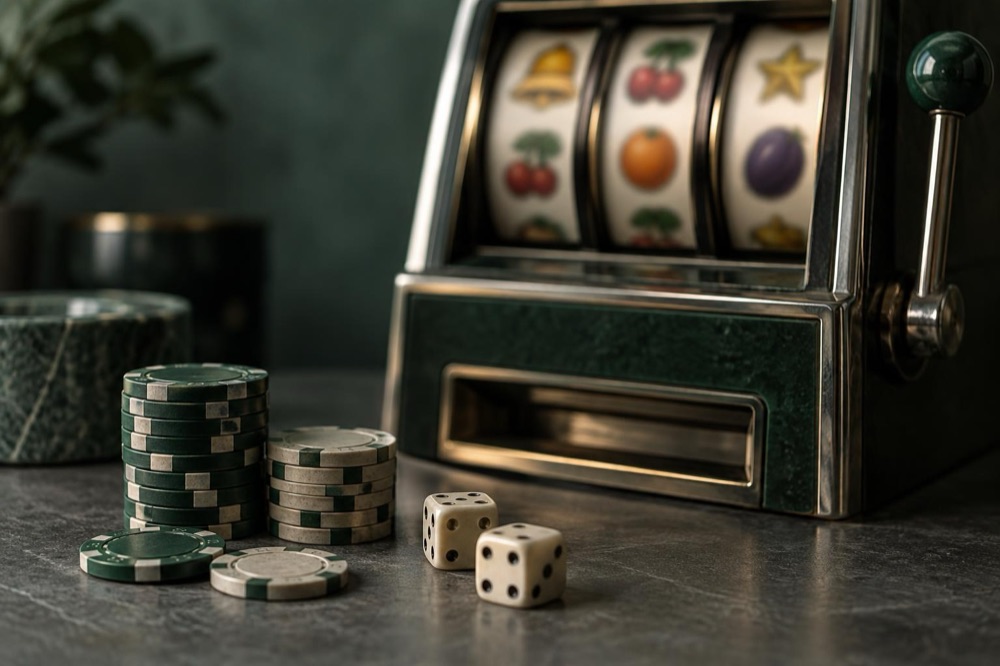
How the machine works explains why. A payline is a line crossing one symbol on each reel where winning combinations are evaluated, and your chance of hitting a winning combination is higher the more paylines you select30. Wild symbols substitute for other symbols on the line, and three Scatter symbols landing anywhere on the reels typically trigger a free game feature30. The prize table pays based on one bet credit, with higher bets multiplying the prize30.
Two facts about slot odds are worth fixing in mind. First, the odds are fixed and do not change regardless of how you play31. Second, the odds always favor the house, so over time the chance of winning back more money than you started with is low32. A machine that has not paid out recently is not "due"; the odds of each spin are the same.
Jackpots are the extreme case. The odds of hitting a slot jackpot can be as low as 1 in 17,000,000 spins33. Progressive jackpots pool a slice of every bet into a growing prize, and in rare cases a long-unwon progressive can push a machine's expected value above 100%4, though the base game around it still carries its normal edge.
For denominations, jackpot types and RTP figures at Asian venues, see slot machines in Asian casinos.
How skill changes the numbers
Skill affects the house edge in very different ways depending on the game.
In blackjack, skill is the whole ballgame. Basic strategy brings the edge down to about 0.5%9, and card counting can lower it a further 1 to 2%4. Careless play pushes it the other way, sometimes to 2% or higher14. No skill level eliminates the edge entirely12.
In baccarat, Sic Bo, Dragon Tiger and roulette, skill plays no role at all. The drawing rules are fixed, the dice and wheel are blind, and the only decision you make is which bet to place22. Choosing the banker bet over the tie bet in baccarat is not skill; it is simply picking the lower number from a fixed menu.
In slots, skill does not exist in any form that changes the odds. The odds are fixed regardless of how you play31, so timing, bet-sizing patterns and machine-switching rituals have no effect on the house edge.
Even in skill-adjacent games, the fine print matters. In Australian Pontoon, the Envy Bonus lowers the house edge by only 0.0015% per additional player in a six-deck game, and the Super Bonus by 0.030%20. These are rounding errors, not strategies. The practical takeaway: the published house edge is the number that matters, and the only reliable way to change it is to play the games and bets where it is already low.
Common Questions
Which casino game has the lowest house edge?
Blackjack played with basic strategy has the lowest edge, around 0.5% at an eight-deck table paying 3:2. The banker bet in baccarat is close behind at about 1.06%. Some live dealer blackjack variants list edges below 0.5%.
Is baccarat a game of skill or luck?
Baccarat is a pure guessing game of chance. You bet on the player hand, banker hand or a tie, and fixed drawing rules decide everything after that. No playing decision you make changes the odds.
What does the 5% commission on banker bets mean?
When your banker bet wins, the dealer collects 5% of your winnings as commission. A winning banker bet pays 1 to 1 minus that commission, which is why the banker bet still carries a lower house edge than the player bet.
How much does a tie bet pay in baccarat?
A winning tie bet typically pays 8 to 1, but the house edge is 14.36%, far higher than the roughly 1% on banker and player bets. Tie side bets like Super Tie run even higher.
What are the odds of hitting a slot machine jackpot?
Jackpot odds can be as low as 1 in 17,000,000 spins. Slot odds are fixed and do not change based on how you play, how long you play or the size of a previous payout.
What is the RTP of online blackjack?
Online blackjack RTP typically sits between 98% and 99.5%, matching a house edge of 0.5% to 2%. Live dealer variants list edges from roughly 0.35% to 0.57% when played with correct strategy.
Why is a 3:2 blackjack table better than a 6:5 table?
A 3:2 table pays $15 on a $10 natural blackjack, while a 6:5 table pays only $12. That difference meaningfully raises the house edge over a session, so the payout rule matters more than most other table rules.
Sources33 sources
- Lottery, GameSense, 2024
- Baccarat, GameSense, 2025
- European Roulette, PlaySmart, 2026
- 控除率, Wikipedia, 2026
- House Edge, City of Dreams Manila
- Super Niu Niu Gaming Guide, City of Dreams Manila, 2022
- 手本引, Wikipedia, 2026
- All About Gambling, Responsible Gambling Council, 2026
- Blackjack Odds, CoinPoker, 2025
- The Transformation of Macao's Gaming Industry, University of Macau, 2026
- How Do Slot Machines Work, GameSense, 2021
- How to Play Blackjack, Shuffle, 2026
- How to Play Blackjack Details, PlaySmart, 2026
- Live Casino, Panas777, 2026
- Table Games, PlaySmart, 2026
- Casino Trả Thưởng Như Thế Nào, Casino Corona, 2026
- Rules Live, FB88, 2026
- Blackjack, Stake, 2026
- Blackjack Strategy, 4 Decks, Wizard of Odds, 2026
- Australian Pontoon, Wizard of Odds, 2026
- Baccarat, Wizard of Odds, 2026
- How to Play Baccarat, PlaySmart, 2026
- Baccarat, Natural8, 2026
- Traditional Baccarat, City of Dreams Manila, 2024
- Baccarat 27, City of Dreams Manila, 2025
- No Commission Baccarat, City of Dreams Manila, 2025
- Roulette Basics, Wizard of Odds, 2026
- Max88 Casino, Max88, 2026
- Electronic Machine Table, Mocha Clubs, 2026
- Slot Machines, Mocha Clubs, 2026
- Gambling FAQs, Responsible Gambling Council, 2026
- How Slots Work, GameSense, 2026
- Gambling FAQs, Responsible Gambling Council, 2026