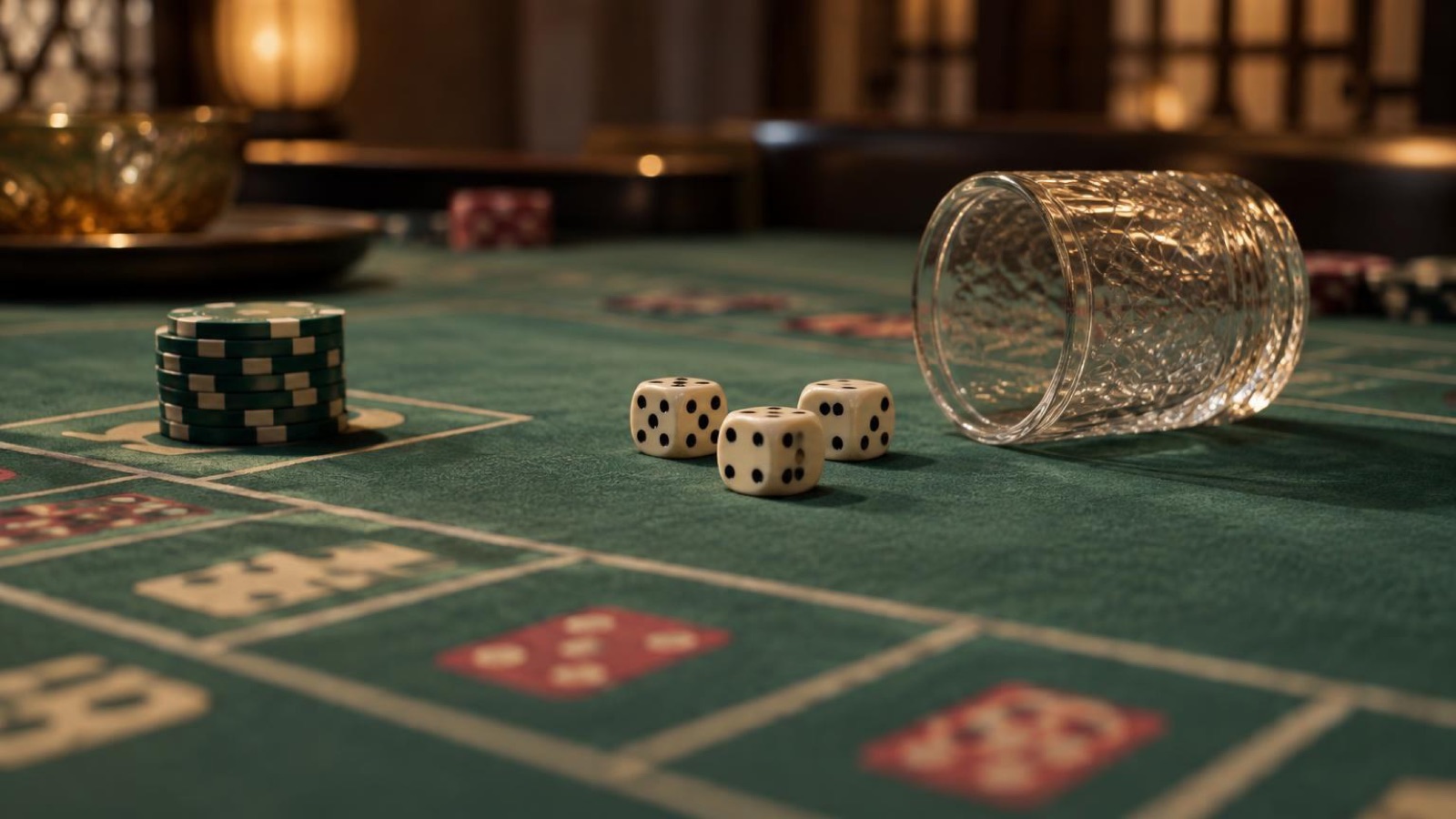
A three-dice game of pure chance
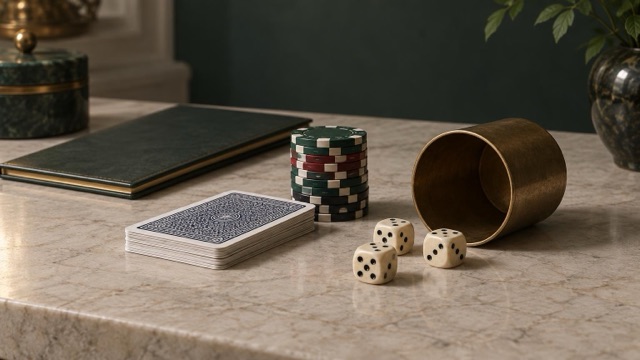
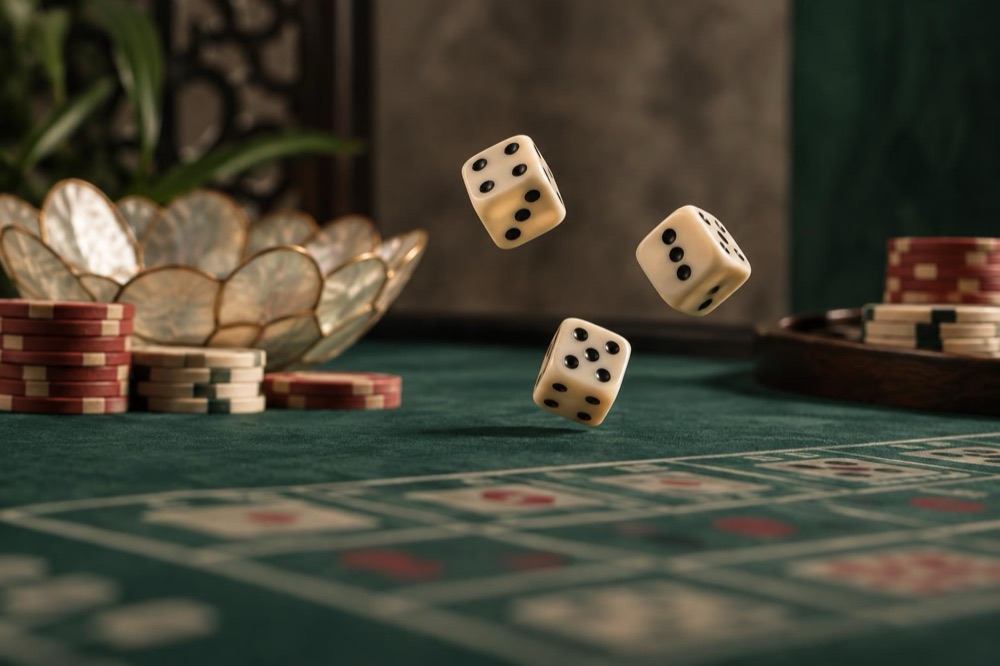
Sic bo, originally pronounced "SEE-BO", is an ancient Chinese dice game. The name is a Chinese word for a pair of dice, precious dice or jewel dice. It is played with three dice, and players bet on the outcome of each roll1.
It is a game of pure chance that moves quickly. There is no strategy or skill involved: you place your chips, the dice are shaken, and the result decides everything. That speed and simplicity are why the game remains popular in Macau and other Asia-Pacific casinos, where it sits alongside baccarat as a fixture of the main floor3.
If you have ever seen bầu cua tôm cá, the Vietnamese festival game played with dice and a mat of symbols, sic bo will feel familiar: same three dice, same idea of betting on what lands face up, but played with casino chips and a much wider menu of bets.
The table: three dice and a lit-up layout
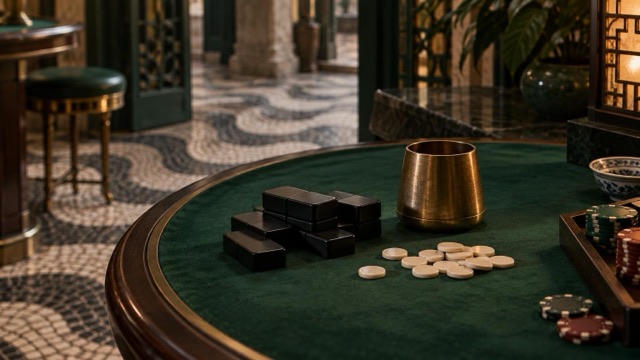
A sic bo table uses three dice of equal weight, each marked 1 to 6, with opposite faces summing to seven. In the traditional Macau setup, the dice are shaken inside a special cup with a black opaque base, a glass cover and a removable lid4. In many modern casinos the dice are "rolled" using an electronic dice shaker activated by a button on the table1.
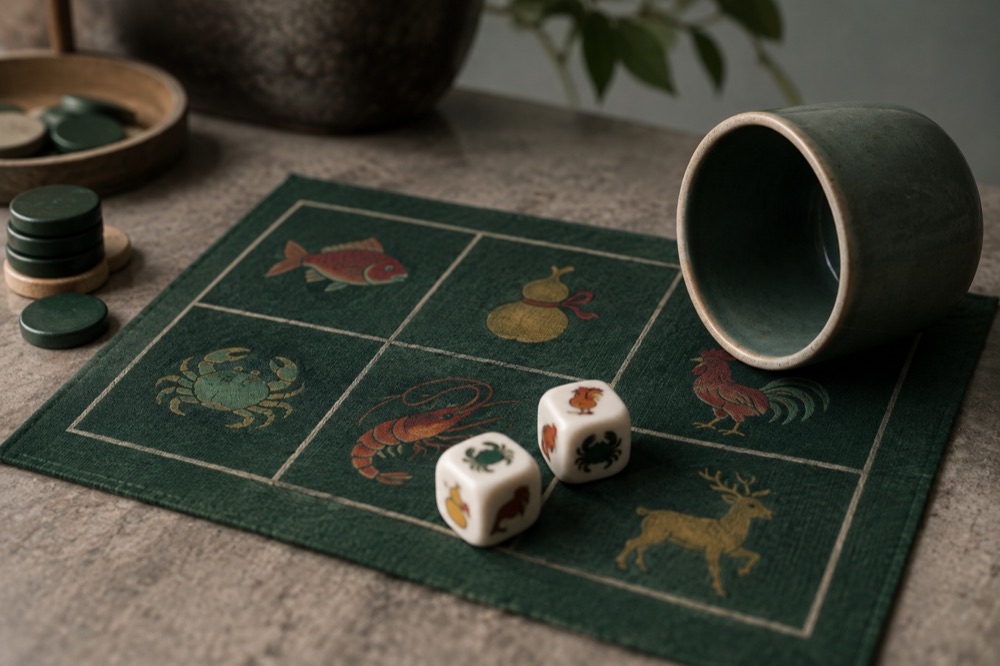
The dealer must cover and activate the dice tumbler so the dice tumble at least three times for the game to be valid5.
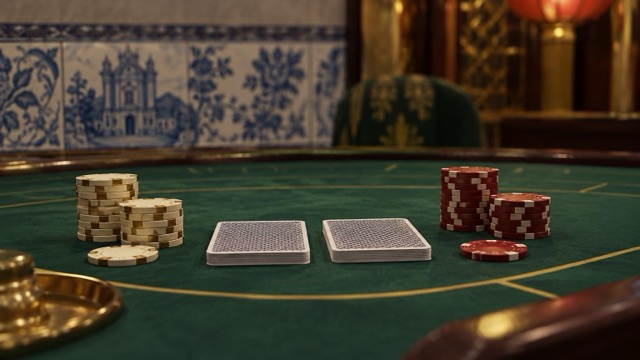
The table itself is printed with betting areas, sometimes on plaques, sometimes on an electronic layout. When the three dice results are shown, the winning areas on the table light up, and the dealer announces the winning combination based on the illuminated lights6. That lighting matters: on a busy table it is the fastest way to check whether your chips won.
Each sic bo table has two dealers who exchange chips, monitor the bets and keep the game moving1. To buy chips, place your money on the table and a dealer will exchange it; you never hand money directly to a dealer. For more on chips and cashiers generally, see buying and cashing chips.
How a round works
A round is quick. You begin by placing bets on one or more of the betting areas on the table, and you may keep placing chips until the game operator announces "No More Bets"7. Once all bets are placed, the dealer calls no more bets and gives the dice box a gentle shake8.
The rule on timing is strict: wagers must be placed before the dealer signals the closing of wagers and announces "No more bets". Anything placed after that call is not accepted, and you are not entitled to any winnings from it9.
After the shake, the dealer lifts the cover and the three dice are read from their uppermost faces. The dice must rest flat on the platform of the dice tumbler for the result to count5. Losing bets are collected and all winning bets are paid based on the odds printed on the specific area6.
One quirk worth knowing: if the lid is lifted and a die is stacked on another or leaning unevenly, the dealer declares the round void and a new round begins immediately. You cannot cancel your bets, but you can bet again4.
When you win, collect your winnings from the table before the next round starts, or you could end up placing a bet you did not intend1.
Bet types: singles, combinations and triples
There are six main categories of bets: single number bets, two number combinations, three number total bets, triple bets, pair bets, and big and small bets1. Here is what each involves.
Single number bets. You pick one number, 1 through 6. If it appears on one die, you are paid 1 to 1; on two dice, 2 to 1; on all three dice, 3 to 12. Some tables list this as 1 pays 1, 1 pays 2 and 1 pays 3 for one, two and three matching dice7.
Two dice combinations. Here you bet on the chance of two specific numbers appearing among the three dice1. A bet on two matching dice, for example 1 and 2, pays 1 pays 57. A dice combination bet on two specific numbers pays 6 to 1 under the classic rules2.
Specific doubles. A bet that a chosen number appears on exactly two dice pays 10 to 12. Some layouts list a pair bet at 1:810.
Any triple. You win if all three dice show the same number, any number. This pays 1:24, listed on some tables as "Any Three Jewels"7.
Specific triple. You pick one number and win only if all three dice show it. This is the headline bet: 1 pays 150 at many tables7, 150:1 to 180:1 depending on the house3, and 180 to 1 under the classic rules2.
Three single number combination. A bet that three specific different numbers appear pays 30:13, listed at some tables as 1 pays 30 for combinations such as 1-2-6, 1-3-5, 2-3-4, 2-5-6 or 3-4-67.
Four number combination. A bet that the three dice match three of the four numbers in a set such as 1-2-3-4 pays 7 to 12, listed as 1 pays 7 at some tables7.
Even and odd. A bet that the total of the three dice will be even or odd, paying 1:13. The odd bet wins on totals of 5, 7, 9, 11, 13, 15 or 17, and the even bet on 4, 6, 8, 10, 12, 14 or 1611.
You are not limited to one bet. You can place chips on several areas at once, and spreading bets across different sections of the table is a common way to decrease risk and improve your chances of winning something on each roll8.
Big and Small: the even-money bets
Big and Small are the simplest bets on the layout and the ones most players gravitate to.
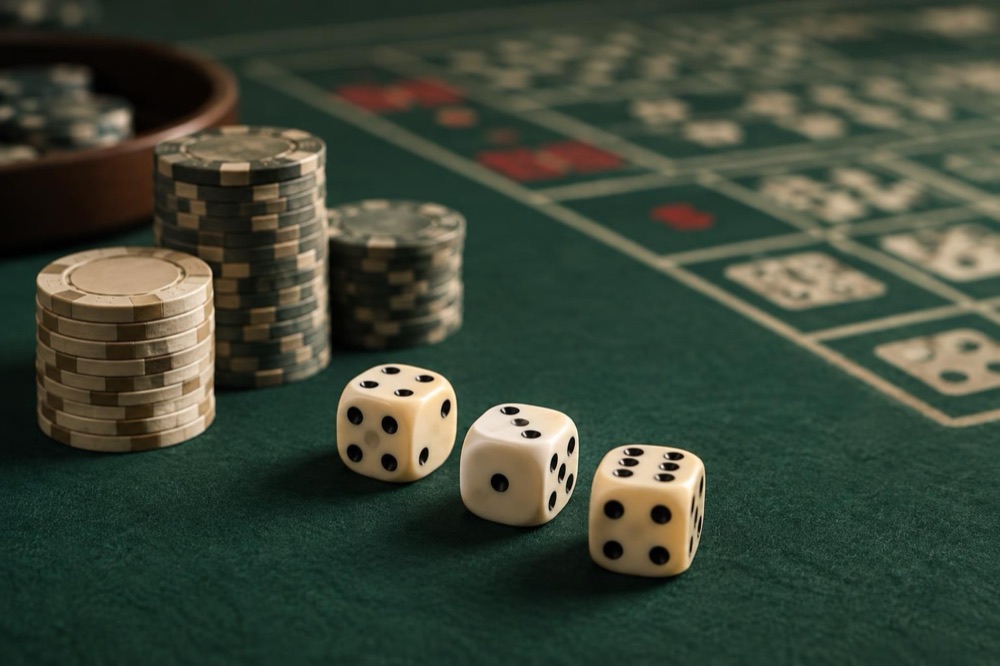
- Small wins if the total of the three dice is between 4 and 101.
- Big wins if the total is between 11 and 171.
Both pay even money, 1 to 16. In Vietnamese-language layouts the Big bet is called "Tài", winning when the total runs from 11 to 1711, and Thai layouts describe it the same way12.
There is one catch, and it is important: if all three dice show the same number, a triple, both Big and Small lose. This is the rule in Macau, where a triple beats all Big and Small wagers4, and it is stated plainly in other house rules too8. That single exception is what gives the house its edge on these bets.
Total number bets and their odds
Instead of Big or Small, you can bet on the exact total of the three dice. Totals run from 3 (all ones) to 18 (all sixes), and the payouts climb steeply as the totals get rarer. The classic schedule, still used in Macau and in the UK's old statutory rules, is2:
| Total | Payout |
|---|---|
| 4 or 17 | 60 to 1 |
| 5 or 16 | 30 to 1 |
| 6 or 15 | 18 to 1 |
| 7 or 14 | 12 to 1 |
| 8 or 13 | 8 to 1 |
| 9 or 12 | 7 to 1 |
| 10 or 11 | 6 to 1 |
Individual casinos trim some of these. At Paradise City in Incheon the schedule is 4 and 17 at 1:50, 5 and 16 at 1:30, 6 and 15 at 1:18, 7 and 14 at 1:12, 8 and 13 at 1:8, and 9, 10, 11 and 12 at 1:610. At Casino Corona in Vietnam, 4 or 17 pays 1 pays 50, 6 or 15 pays 1 pays 14, 8 or 13 pays 1 pays 12, and 9, 10, 11 or 12 pays 1 pays 67. At NUSTAR Resort in Cebu, a total of 6 or 15 pays 14 to 1 and 7 or 14 pays 12 to 16. Online versions list 4 or 17 at 50:1 to 60:1 and 5 or 16 at 18:1 to 30:1, depending on the operator3.
The lesson: always check the printed odds on the specific table before betting totals, because the same bet can pay noticeably different amounts a few meters apart.
Payouts at a glance
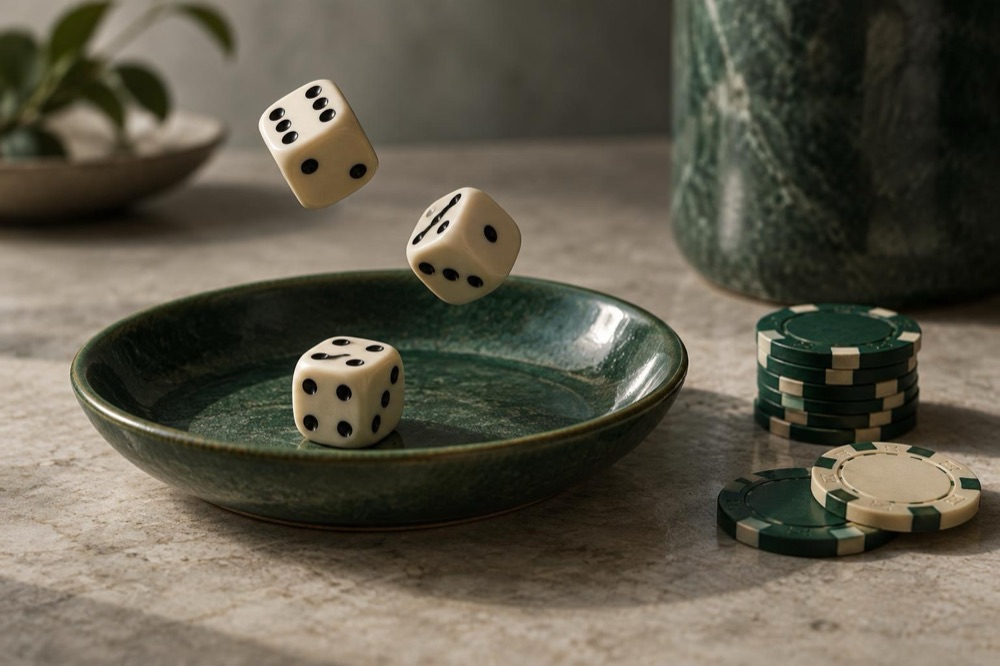
Here is the full menu in one table, using the ranges you will actually meet on the floor:
| Bet | What wins | Typical payout |
|---|---|---|
| Small | Total 4 to 10 | 1:13 |
| Big | Total 11 to 17 | 1:13 |
| Even / Odd | Total is even / odd | 1:13 |
| Single number | Number on 1 / 2 / 3 dice | 1:1 / 2:1 / 3:12 |
| Two dice combination | Two specific numbers appear | 5:1 to 6:17 |
| Four number combination | Three of four chosen numbers | 7:12 |
| Any triple | Any three of a kind | 24:17 |
| Specific double | Chosen number on two dice | 8:1 to 10:12 |
| Three single combination | Three specific different numbers | 30:13 |
| Total 4 or 17 | Exact total | 50:1 to 60:13 |
| Specific triple | All three dice show chosen number | 150:1 to 180:13 |
The general rule of thumb: the higher the payout odds, the less likely the outcome will occur, and the lower the payout, the greater your chances of winning1. Okada Manila markets the game on exactly that hook, a chance to win up to 180x your wager13.
House edge and RTP: what 2.78% means
Big and Small bets pay 1:1 on totals 4 to 10 and 11 to 17, and they offer the lowest house edge in the game, around 2.78%3. That figure is worth putting in context: it is close to the 2.7% edge on a European roulette wheel, and far better than the long-shot bets on the same sic bo table.
The 2.78% comes from the triple rule described earlier. Big and Small would be fair even-money bets if triples pushed, but because six of the 216 possible rolls are triples that beat both sides, the house keeps a small margin on everything else.
Return to player, or RTP, is simply the flip side of the house edge: whatever the edge leaves behind is, in theory, what flows back to players over time. Other bets on the table carry higher edges, so if the house edge is what guides your play, the even-money end of the layout is where the math is friendliest. For a comparison across games, see casino house edge explained.
The odds behind the game: 216 outcomes
Three six-sided dice give 216 ordered outcomes, assuming fair and independent dice. That single number explains every payout on the table.
Of those 216 rolls, 120 show three all-different numbers, 90 show exactly one pair, and only 6 show three of a kind. This is why a specific triple pays 150:1 or more: there is exactly one winning roll out of 216 for any chosen triple, so even 180:1 leaves the house a healthy margin. It is also why the single number bet is so gentle: with three dice, your chosen number has a good chance of appearing at least once.
Total bets follow the same bell curve. Totals of 10 and 11 are the most common results, which is why they pay the least, at 6 to 1, with totals of 9 and 12 paying 7 to 12. Totals of 4 and 17 can only happen one way each (1-1-1 and 6-6-6), which is why they pay the most, up to 60:12. Once you see the table as a map of how often each total comes up, the payout schedule stops looking arbitrary.
Electronic and live sic bo
Not every sic bo game is dealt by hand. Electronic versions roll the dice with a machine, and the betting layout is often a screen rather than felt. Players place their bets on the different symbols on the electronic layout, and the result is displayed the same way6.
Online casinos have taken this further. Super Sic Bo adds a random multiplier of up to 1000x per round, turning even a modest bet into a large payout when the multiplier lands14. There is also a first-person RNG version offering a 3D experience where you control the pace of play yourself3.
Live dealer sic bo, streamed from a studio, follows the same rules as the table game: three dice, the same betting areas, the same "no more bets" call. One practical difference: if your connection drops mid-round, your bet ticket is kept and settled on the round's result, and you can check it in your bet history11. For more on the machines and stadium versions found in Asian casinos, see electronic table games.
Where you can play sic bo in Asia
Sic bo is a fixture of the Asian casino floor. In Macau it is one of the core games, governed by official rules and dealt in casinos across the city4; you can read more about playing in Macau. In the Philippines, Okada Manila runs sic bo tables alongside its other dice and card games13, and NUSTAR Resort in Cebu deals it with its own published odds6. In Vietnam, Casino Corona offers the game with its Vietnamese-style layout7, and Hoiana, the resort near Hoi An, runs sic bo with an electronic dice tumbler5. In South Korea, Paradise City in Incheon publishes a full sic bo rulebook in Korean for its tables10.
Japan is the newest addition. Gambling there is basically illegal, though some forms are legal under separate laws, either as everyday entertainment or to return proceeds to social welfare15. Under the enforcement rules for the country's new integrated resorts, sic bo is on the list of permitted casino games16, so it will appear in the Japanese casino market as those resorts open. Japanese residents should also check the casino entry fee for Japanese residents before a visit.
Wherever you play, the etiquette is the same. Sic bo is a fast-paced game that requires some quick thinking, so act in a timely fashion and respect other players' time17. Be aware of those around you and make sure everyone can place their chips where they want17. If you are new to casinos generally, our guide to casinos and integrated resorts in Asia covers entry, dress and table limits.
Common Questions
What does 'sic bo' mean in Chinese?
The name is generally translated as a pair of dice, precious dice or jewel dice. The game is an ancient Chinese dice game, originally pronounced 'SEE-BO', and it remains one of the most popular table games in Macau and across the Asia-Pacific.
How many dice are used in sic bo?
Three standard six-sided dice are used, and no more, at every throw. Each die is marked 1 to 6, with opposite faces summing to 7. Players bet on the outcome of the roll of all three dice.
What is the highest payout in sic bo?
A specific triple, where all three dice show one chosen number, pays 150:1 at some tables and up to 180:1 at others. Online variants such as Super Sic Bo add random multipliers that can reach 1000x in a single round.
What is the house edge in sic bo?
It varies a lot by bet. Big and Small carry the lowest house edge, around 2.78%, which is comparable to European roulette. Long-shot bets such as specific triples carry a much higher edge.
When can I no longer place bets in a sic bo round?
Bets may be placed until the dealer signals the closing of wagers and announces 'No more bets'. Anything placed after that call is not accepted, and you are not entitled to winnings from it.
Can I place more than one bet at a time?
Yes. You can place chips on several betting areas at once, and many players do, spreading risk across different sections of the table. Just be sure to collect your winnings before the next round starts.
Sources17 sources
- How to Play Sic Bo, PlaySmart, 2026
- The Gaming Clubs (Bankers' Games) (Amendment) Regulations 2002, OPSI, 2002
- Sic Bo, CoinPoker, 2026
- Rules of Cussec (Sic Bo), DICJ Macao, 2004
- Sic Bo, Hoiana, 2026
- Sic Bo, NUSTAR Resort Cebu, 2026
- Sic Bo, Casino Corona, 2026
- Sic Bo, Deltin, 2026
- Casino Patron Dispute, Gambling Regulatory Authority of Singapore, 2026
- Casino Game Guide, Paradise City, 2026
- Live Casino Rules, FB88, 2026
- Live Casino Rules, FB88, 2026
- Sic Bo, Okada Manila, 2026
- Max88 Casino, Max88, 2026
- 賭博及び富くじに関する罪, Wikipedia, 2026
- Enforcement Rules, Article 3, Japan Casino Regulatory Commission, 2021
- Sic Bo Etiquette, PlaySmart, 2026