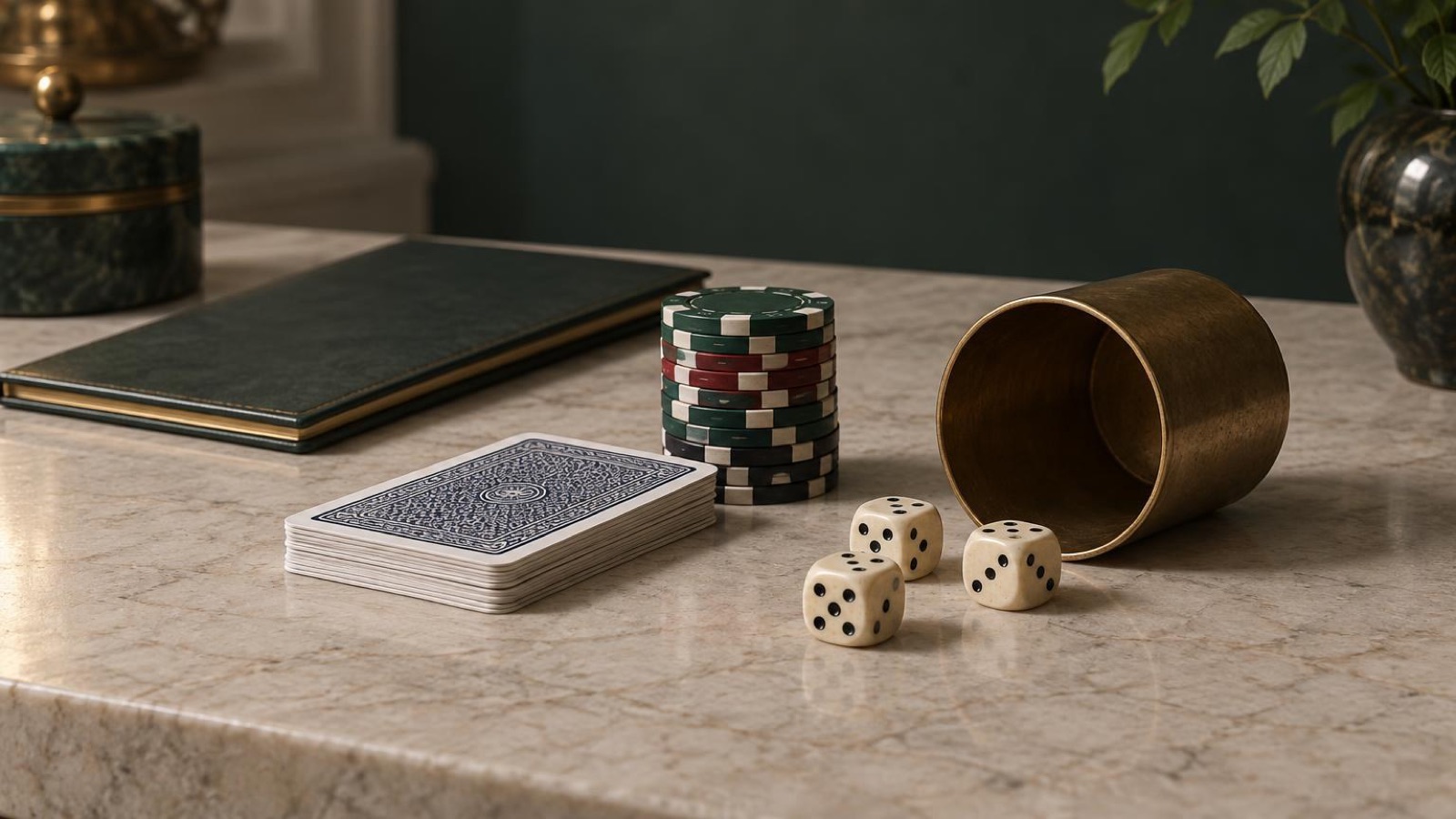
Walk into a licensed casino anywhere in Asia, from Macau to Manila, and the games on the floor will look surprisingly similar. Regulators in each jurisdiction publish or approve a list of what may be offered, and those lists overlap heavily: baccarat everywhere, blackjack almost everywhere, roulette and sic bo in most large venues, and a layer of regionally loved games such as fan tan and pai gow where the customer base is Chinese. This page walks through the games one by one, then looks at how the lists differ by jurisdiction, including the special case of Japan, where casinos exist only inside licensed integrated resorts and Japanese nationals face entry limits that exist nowhere else in the region.
Baccarat: the dominant game across Asian casinos
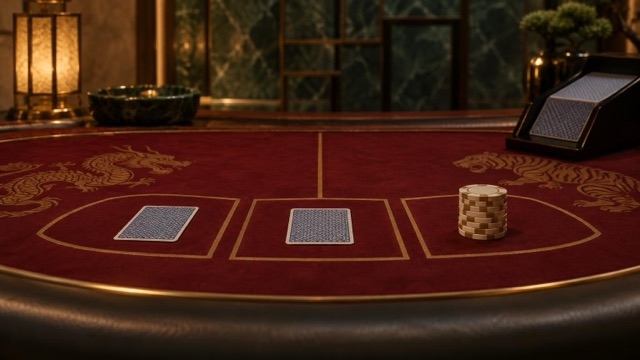
If one game defines gambling in Asia, it is baccarat, also known as punto banco. It is one of the oldest and most popular casino games in the world, and it is especially popular among high-rollers and Asian gamblers6. No other game comes close in the VIP segments of Macau, and even small regional casinos build their floors around it. The casinos on Jeju Island in South Korea, for example, run what operators themselves describe as baccarat-centered operations with Chinese-language service7, and Kangwon Land, the country's largest casino, spreads 93 baccarat tables across its general, VIP and foreigner-only sections5.
The game itself is a pure guessing game. You bet on either the Player hand or the Banker hand, and whichever comes closer to nine wins. Card values are simple: aces count as 1, cards 2 through 9 count at face value, and 10, jack, queen and king count as 0. Only the rightmost digit of a hand's total is used, so a hand of 7 and 8, totaling 15, is worth 5. The highest possible total is nine8.
If either hand is dealt a total of 8 or 9 on the first two cards, that is a natural, no more cards are dealt, and all bets are settled. Otherwise the drawing rules take over: the Player hand draws a third card if its first two cards total 0 to 5 and stands on 6 or 7, and the Banker hand draws according to fixed rules based on its own total and the Player's third card8. You make no decisions after placing your bet, which is a large part of the game's appeal. Baccarat is a game of chance, and there are no skills you can develop to improve your odds of winning8.
The payouts are straightforward. A winning Player bet pays 1 to 1. A winning Banker bet also pays 1 to 1, minus a 5 percent commission that the dealer collects, which is how the house takes its edge on the best bet on the table. A winning tie bet is paid at 8 to 19. The game is normally dealt from eight decks of 52 cards without jokers, with cutting cards inserted near the back of the stack9. For the full drawing rules and payout tables, see our page on baccarat rules, and for the no-commission and squeeze versions common in Asia, see baccarat variants.
Blackjack: rules, payouts and house edge
Blackjack, also known as 21, is the other universal table game in Asian casinos. The object is to beat the dealer, not the other players, by holding a higher total up to 21, or by surviving when the dealer busts10. It appears on the approved list in every jurisdiction in the region: it is one of the 24 games named in Macau's gaming law2, it is among the game categories approved for Marina Bay Sands in Singapore11, and it is a fixture at Korean casinos from Kangwon Land, with 62 blackjack tables, to Paradise Casino Busan and the Jeju hotel casinos5.
Unlike baccarat, blackjack involves real decisions, and South Korean authorities classify it as a game of both chance and skill, alongside poker14. A natural blackjack, an ace plus a 10-value card, is the top payout: it pays 3 to 2, so a $10 bet returns $1516. Every other winning hand at the base game pays even money: if you bet $10, you win $10. The house edge varies with the rules in force, generally between 1 and 3 percent, and playing correct basic strategy brings it down to about 1 percent17. Card counting can lower it a further 1 to 2 percent, though casinos watch for it.
Local rule variations matter. In Macau, the statutory rules of blackjack, or twenty-one, allow a player to surrender, forfeiting half the stake, but only when the dealer's face-up card is not an ace18. Casinos elsewhere in Asia add their own touches on doubling, splitting and insurance. Our blackjack rules page covers the versions you will actually meet in Asian casinos.
Roulette: European and American wheels
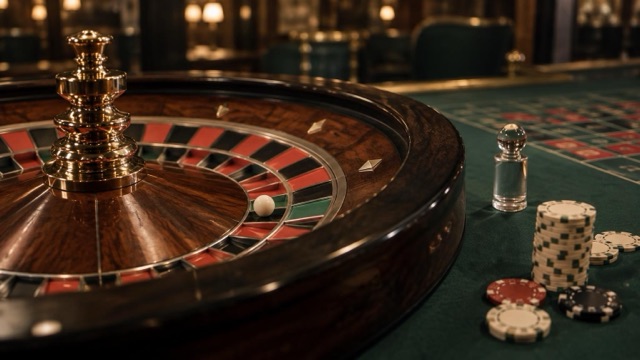
Roulette is on the approved list in Macau, Singapore, Japan and the Philippines, and it is a standard offering at Korean foreigner-only casinos. Jeju Shilla Hotel Casino offers roulette alongside blackjack, baccarat and slots19, Seven Luck Casino Busan Lotte lists roulette among its games20, and Paradise City in Incheon spreads both European and American roulette along with blackjack, Texas Hold'em poker, Tai Sai and Big Wheel7. Kangwon Land runs 13 roulette tables, 12 of them in the VIP section5.
The two wheel versions differ in layout and odds, and both are found in Asia. European roulette, with its distinctive wheel and betting layout, is still offered in many casinos as an alternative to the American version21. The practical difference for a player is the house edge, which makes roulette a middling game by Asian casino standards, cheaper than slots but far more expensive than baccarat or well-played blackjack8. For the bet types and the full payout table, see roulette rules.
Sic Bo: the three-dice game and its payouts
Sic bo is the great regional crossover: a Chinese dice game that has made it onto the approved lists of nearly every jurisdiction in Asia. It is one of Macau's 24 permitted games of fortune, listed there under its Portuguese name cussec, and the law separately permits the fish-prawn-crab variant, a pictorial version of the same three-dice game2. It is on Japan's approved casino list3, it appears among the games at Seven Luck Casino Busan20, and live sic bo tables are offered on offshore sites serving Japanese players23.
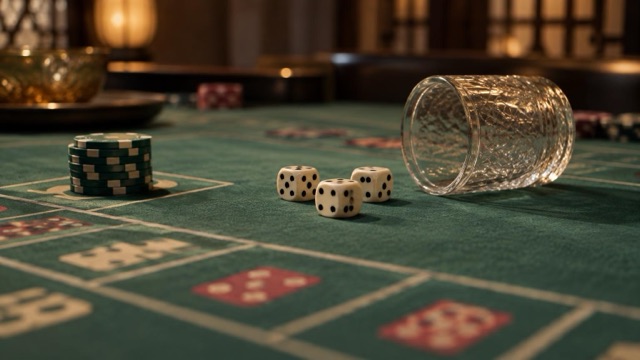
The game is played with three dice, and players bet on the outcome of each roll24. In Macau the equipment is prescribed in detail by regulation: three dice of equal weight, each pair of opposite faces summing to seven, shaken in a special dice cup with a black opaque base, a glass cover and a removable lid, on a table plaque printed with the betting options25. Bets range from big and small, which pay even money, to specific triples, which pay the biggest odds on the layout. The full betting grid and payouts are on our sic bo rules page.
House edge compared: which games cost the least
If you are choosing a game by cost, the ranking is fairly stable across the region. The banker bet in baccarat is the cheapest major bet in the casino, with a house edge of only about 1.06 percent1. Blackjack follows: with basic strategy the edge is about 1 percent, though sloppy play can push it to 3 percent17. Slot machines average a house edge of about 8 percent with optimal play26, and the way slots are built, with each reel weighted separately, makes them less favorable than table games such as fortune pai gow poker, blackjack and roulette in terms of return to player26.
At the expensive end, the baccarat tie bet carries a house edge of 14.36 percent8, and Japanese sources that track effective edges across gambling games put baccarat overall at roughly 1 to 14 percent depending on the bet and the venue, with blackjack at 1 to 3 percent17. The comparison table on our house edge page puts these numbers side by side.
Japan: casinos legal only in licensed integrated resorts
What makes Japan unusual is not the games but who may play them and how often. The Penal Code's gambling provisions do not apply to licensed casino acts within the licensed casino area of an approved resort4, but in exchange the law layers on entry controls that no other Asian jurisdiction imposes on its own citizens. Japanese nationals gambling at casinos abroad, by contrast, have long been considered beyond the reach of Japanese criminal law, since the acts occur entirely overseas27.
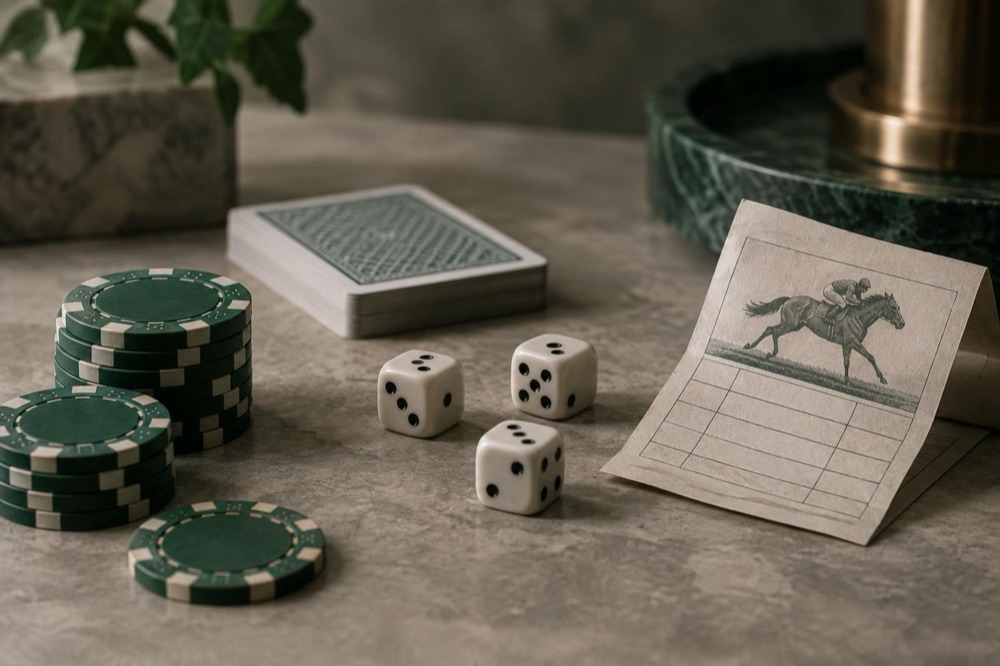
Entry levy: 6,000 yen per entry for Japanese nationals
Japanese patrons entering a casino must pay admission fees of 3,000 yen each to the national government and the local government, 6,000 yen in total, valid for 24 hours28. The law sets this as 3,000 yen per entry, in 24-hour units, for each of the two fees4. The levy applies to Japanese nationals and other restricted entrants; foreign visitors pay nothing and face no visit limits.
The idea is borrowed from Singapore, which pioneered the casino entry levy. Singapore citizens and permanent residents must pay a daily levy or hold an annual pass, and the annual levy was raised from S$2,000 to S$3,000 in the 2024 amendment to the Casino Control Act29. Japan adopted the same principle with its own numbers. Our dedicated page on the casino entry fee for Japanese residents has the details.
Who is barred from Japanese casinos
Four categories of people are banned from entering or staying in casino facilities in Japan31:
- persons under 20
- members of organized crime groups (boryokudan) and similar persons
- those who have not paid the entry fee
- those who have exceeded the entry frequency limits
The minimum age of 20 contrasts with South Korea, where the entry age is 197, and Singapore, where it is 2130.
Entry is also capped: Japanese nationals may enter at most 3 times in any consecutive 7 days, and at most 10 times in any consecutive 28 days28. Because casinos may operate around the clock, a player who wanted to stay 72 hours straight would burn through all three weekly entries back to back, so the rolling caps close the door on habitual daily visits. Enforcement is technological rather than honor-based: when you enter or leave the casino gaming area, staff confirm your identity and that you are not in a banned category using a My Number Card or similar official identification, and the same system counts your entries31. The card's public personal authentication function is required by law for Japanese nationals4.
Where baccarat is the only game: Macau VIP rooms
For all the variety on Macau's legal list of 24 games, the rooms where the biggest money moves offer exactly one. Regardless of how extensive and personalized the services are, baccarat is typically the only game offered in VIP rooms, and it is the preferred game among Chinese players1. A high-roller who wants blackjack or fan tan must walk out to the main floor.
This is worth knowing before your first visit, because the VIP experience and the mass experience are different products. The VIP rooms run on credit and agents, with private tables and personal service, while the main floors of Macau's casinos, open 24 hours32, spread the full legal menu from craps and fan tan to mahjong pai gow and the fish-prawn-crab dice game2. Our page on VIP rooms and private gaming explains how the junket world works, and the Asian table games page covers fan tan, pai gow and niu niu in detail.
Quick guide: games by jurisdiction
The table below sums up what you will actually find on the floor in each major jurisdiction, and who is allowed in.
| Jurisdiction | Games on offer | Who may enter |
|---|---|---|
| Macau | 24 games of fortune by law: baccarat, chemin de fer, blackjack, craps, sic bo (cussec), fan tan, twelve numbers, fish-prawn-crab sic bo, thirteen-card poker, mahjong, mahjong baccarat, mahjong pai gow, pachinko, pai gow, small pai gow, three-card poker, five-card poker, roulette, Taiwan pai gow, san gong baccarat and more2 | Locals and foreigners; casinos open 24 hours32 |
| Singapore | Baccarat, blackjack and pontoon, dice games, poker, roulette, semi-automated electronic table games and other approved categories at Marina Bay Sands11 | Everyone 21 and older30; citizens and permanent residents pay a levy29 |
| South Korea | Baccarat, blackjack, roulette, sic bo, poker, slots and video games at Seven Luck Busan20; baccarat-centered floors at Jeju casinos7; 93 baccarat and 62 blackjack tables at Kangwon Land5 | Foreigner-only casinos require a passport and admit no Koreans7; Kangwon Land admits Koreans, age 19+7 |
| Japan | Approved list under the IR enforcement regulations, including sic bo3; first resort opens by 2030 | Foreign visitors freely; Japanese nationals 20+, with levy and visit caps28 |
| Philippines | Regulator-licensed table games including baccarat and blackjack, plus licensed electronic table games33 | Locals and foreigners at Entertainment City resorts |
| Vietnam | Casinos licensed under decree rules, with entry tickets for Vietnamese citizens of VND 1,000,000 per 24 hours or VND 25,000,000 per month | Locals and foreigners, with a ticket system for citizens |
Two patterns stand out. First, the shorter the approved list, the newer the jurisdiction: Macau's 24-game list reflects a century of Chinese gaming tradition, while Japan and Singapore approve games regulator by regulator. Second, of the games that appear everywhere, baccarat and blackjack are the ones with the lowest house edges and the fastest play, which is no accident. If you are planning a first visit, start with our overview of casinos and integrated resorts in Asia, and for choosing between destinations, see Asia's casino destinations compared.
Common Questions
What is the house edge on a banker bet in baccarat?
About 1.06 percent, which is one of the lowest edges of any bet in the casino. The banker bet pays 1 to 1 minus a 5 percent commission, which is where the house gets its advantage.
How many decks are used in baccarat and blackjack?
Baccarat is typically played with eight decks of 52 cards without jokers. Blackjack also uses multiple decks, and the exact number varies by casino and table.
What is the minimum age to enter a casino in Japan?
You must be at least 20 years old. Persons under 20 are banned from entering or staying in casino facilities, along with organized crime members and people who have not paid the entry fee.
How often can Japanese nationals visit a casino?
Entry is limited to a maximum of 3 times in any consecutive 7 days, or 10 times in any consecutive 28 days. A single entry covers only 24 hours, so a 72-hour stay would use up the full weekly allowance of three entries.
What identification is needed to enter a Japanese casino?
A My Number Card or similar official identification. It is used at the entrance and exit of the gaming area to confirm your identity, check you are not in a banned category, and count your visits.
What does a tie bet pay in baccarat?
A winning tie bet is paid at odds of 8 to 1. It is a popular bet because of the big payout, but it carries a house edge of 14.36 percent, far worse than the player or banker bets.
Is blackjack a game of skill or luck?
Both. South Korean authorities classify it as a game of chance and skill, alongside poker. Your decisions on hitting, standing and splitting affect the outcome, and basic strategy can bring the house edge down to about 1 percent.
What is the difference between European and American roulette?
The two versions use different wheels with different numbers of pockets, which changes the odds. European roulette is still offered in many casinos as an alternative to the American version, and both can be found at major Asian resorts.
Sources34 sources
- The Transformation of Macao's Gaming Industry, University of Macau repository, 2026
- Law 16/2001, games of fortune permitted in casinos, Imprensa Oficial de Macau, 2015
- Casino Enforcement Regulations, Article 3, Japan Casino Regulatory Commission, 2021
- Act on Development of Specified Integrated Resort Areas, Japanese Wikipedia, 2026
- Kangwon Land casino table games, Kangwon Land, 2026
- Baccarat, Wizard of Odds, 2026
- Korean casinos guide, Readers Eden, 2025
- How to play baccarat, GameSense, 2025
- GGPoker house rules, Live Casino Baccarat, GGPoker, 2026
- Blackjack how to play, PlaySmart, 2026
- Game rules for casinos (MBS)), Gambling Regulatory Authority, 2026
- Seven Luck Casino Busan Lotte Branch, Visit Korea, 2026
- Jeju Oriental Hotel Casino, Visit Korea, 2026
- KCycle clinic FAQ, Korea Cycling Association, 2026
- KBoat clinic FAQ, Korea Boat Race Association, 2026
- How to play blackjack, GameSense, 2020
- House edge list, Japanese Wikipedia, Japanese Wikipedia, 2026
- Statutory Rules of Black Jack or Twenty-One, Boletim Oficial de Macau, 2009
- Jeju Shilla Hotel Casino, Visit Korea, 2026
- Paradise Casino Busan Lotte, Visit Korea, 2026
- Roulette how to play, PlaySmart, 2026
- Law No. 16/2001, Article 3, Imprensa Oficial de Macau, 2001
- Best online casinos for players from Japan, Wizard of Odds, 2026
- Sic Bo how to play, PlaySmart, 2026
- Cussec rules, DICJ Macau, 2004
- How do slot machines work, GameSense, 2021
- NPA policy paper on gambling abroad, National Police Agency of Japan, 2026
- Casino regulation in Japan, Japan Casino Regulatory Commission, 2026
- Casino Control (Amendment) Bill 24/2024-bill-24-2024.pdf?sfvrsn=a1ba5608_1), Parliament of Singapore, 2024
- GRA FAQ, Gambling Regulatory Authority, 2026
- Casino entry confirmation rules, Japan Casino Regulatory Commission, 2026
- Gaming in Macau, Macao Government Tourism Office, 2021
- PAGCOR approved games, JILI, PAGCOR, 2026
- PAGCOR approved games, Playtech Live, PAGCOR, 2026