Blackjack, also called 21, is the one casino card game where your decisions genuinely change your odds. Unlike baccarat, where you simply bet on a side and watch, in blackjack you choose whether to draw, stand, double or split on every hand. That makes it worth learning the rules properly before you sit down at a table in Macau, Manila, Singapore or Incheon. Here is how the game works, option by option, and how the tables you will actually find in Asia differ from one another.
Objective and card values
The object of the game is to beat the dealer, not the other players. You do that by getting a hand with a higher total than the dealer's, up to a maximum of 21, or by not busting before the dealer does1. If your cards add up to more than 21, you lose immediately, even if the dealer later busts too.
Card values are simple:
- Numbered cards from 2 to 10 are worth their face value1
- Picture cards, the King, Queen and Jack, are each worth 10 points1
- The Ace is worth either 1 or 11 points, your choice, depending on which is better for the hand1
A hand containing an Ace counted as 11 is called "soft" because it cannot bust on the next card: if you draw a card that would push it over 21, the Ace simply counts as 1 instead. A "hard" hand has no Ace, or an Ace that can only count as 1.
A "blackjack" or "natural" is the best possible starting hand: an Ace plus any 10-value card on your first two cards5. This is the hand that pays the premium 3:2 rate at most tables.
The initial deal: what you and the dealer get
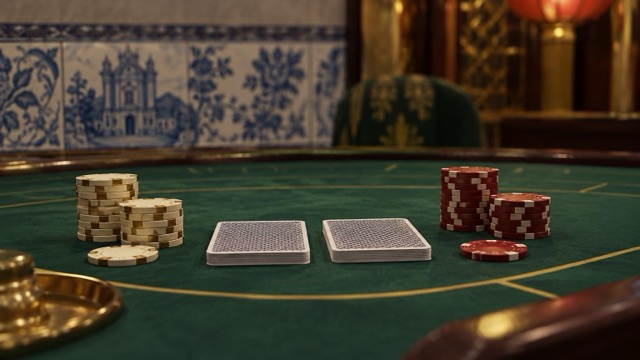
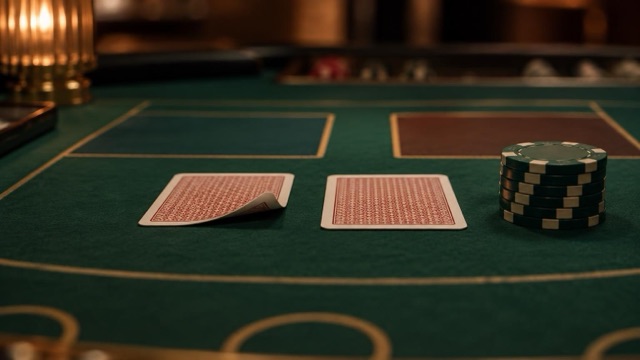
Each player at the table places a bet in the betting box in front of their seat, and the dealer deals two cards face up to each player, plus two cards to the house: one face up and one face down2. The dealer's face-down card is called the hole card.
Before play continues, the dealer checks the hole card if the up card is a 10 or an Ace. If the two cards make 21, the dealer has blackjack, the round is over, and all players lose automatically unless they also have blackjack, in which case they keep their original bet1. This early check is standard at American-style tables, which is what you will mostly find in Asia; at tables where the dealer takes the hole card later, a player who has doubled or split can lose more than the original bet if the dealer turns out to have blackjack. At Hoiana in Vietnam, for example, the house rule protects you: if the dealer gets blackjack, you lose only your original wager6.
Tables seat up to seven players on one side with the dealer on the other7, and Macau's official rules call for a gaming table with at least six seats8, with the house free to limit how many boxes one player may bet on. If you are new, look for a table with a low minimum and a few empty seats so you can play at your own pace.
Player options: hit, stand, double down, split and surrender
Once you have your first two cards, you have a set of choices, and the order matters. In most versions you can hit, stand, double down, split pairs, take insurance, and surrender if the table allows it9.
Hit means take another card. You can keep hitting as long as your total is under 21. At tables where you must act on very low totals, a hand of 11 or less must be hit, while hands of 12 through 20 are your choice10.
Stand means you are happy with your total and take no more cards. At Paradise Casino tables in South Korea, for instance, you are prompted to hit or stay, and you must stay on at least 12 points11.
Double down means doubling your initial bet in return for exactly one more card, and only one. You can only double after your first two cards and before drawing any other card; you signal it by placing a chip next to your original bet1. At Hoiana, the added bet can be equal to or lower than the original6. Some tables restrict doubling to certain totals: in Pontoon, you may only double on 9 to 1112.
Split applies when your first two cards are a pair or, at many Asian tables, any two cards of the same value. You separate them into two hands and must place another bet equal to the original on the second hand1. The dealer gives the first hand a second card, which you can hit, stand or double, before moving to the second hand1. How many times you can split varies:
- At Hoiana and in American-style blackjack, you can split up to three times for a maximum of four hands6
- At Deltin's tables in Goa, you can split up to three times to make four hands13
- At City of Dreams Manila's Dream Blackjack, you can split up to twice for a maximum of three hands14
- At some live tables, pairs, including aces, may only be split once7
Splitting aces has its own rule almost everywhere: each ace receives only one further card, and a 10 plus an ace after splitting counts as 21 points, not as a blackjack, so it does not get the 3:2 payout1. At Hoiana, aces can only be split once6.
Surrender lets you give up the hand after the initial deal and lose only half your wager. It is allowed only on your first two cards, and typically only if the dealer's up card is not an Ace: at Deltin and Dream Blackjack you cannot surrender when the dealer shows an ace13. At Hoiana, surrender is offered after the initial deal when the dealer's card is not an Ace6. Some variants go further: in Super Fun 21, you can take late surrender on any number of cards, not just the first two15.
Insurance: when it is offered and what it pays
Insurance is a side bet that the dealer has blackjack, and it is offered when the dealer's up card is an Ace1. It is treated independently of your main wager: you are betting that the dealer's hole card is worth 102.
The size of the bet is capped. Insurance can be up to half your original wager6, or at some tables equal to or less than half your initial bet13. If the dealer does have blackjack, the insurance bet pays 2:1, meaning two dollars for every dollar bet1. Because you lose your main bet in that case, the insurance payout roughly covers it. If the dealer does not have blackjack, the insurance bet loses and the hand continues normally14.
Basic strategy is blunt on this point: never take insurance, and never take "even money" on your own blackjack when it is offered16. The odds of the dealer holding a 10-value hole card do not justify the price over the long run.
Dealer rules: when the dealer draws and stands
The dealer has no choices. The house rules fix exactly what the dealer does, and the most common rule across Asian tables is: draw to 16, stand on 17. You will see this at GGPoker's live tables7, at Hoiana6, at 888casino's live blackjack17, and at Paradise Casino in South Korea, where the dealer must keep drawing until reaching 17 or greater if the initial two cards total 16 or less11. The Hippodrome's rules say the same: the dealer must draw until reaching 17 or more18.
Some tables specify that the dealer stands on any 17, hard or soft19, while others have the dealer hit soft 17. This one rule changes the house edge, so it is worth checking the sign on the table or asking.
Two more dealer details matter. First, the dealer's first Ace counts as 11 unless it would bust the hand; any subsequent aces count as 113. Second, if the dealer busts by going over 21, all remaining players automatically win11.
Payouts: 3:2 blackjack, even money wins and side bets
The payout structure is the same almost everywhere:
| Result | Payout |
|---|---|
| Natural blackjack (Ace + 10-value card on first two cards) | 3:2 |
| Any other winning hand | 1:1 (even money) |
| Tie (push) | Bet returned |
| Insurance win | 2:1 |
A natural blackjack pays 3:2, so a $20 bet wins $304. Any other winning hand pays even money: bet $10, win $1020. The same structure appears at live tables from Neon Blackjack to Power Blackjack21 and at Pragmatic Play's live blackjack lobby22. At Paradise Casino, a player blackjack pays 3 to 2 and cannot lose; if the dealer also has blackjack, it is a push and you keep your bet11.
Watch out for 6:5 tables. Some tables pay 6:5 on blackjack instead of 3:2, so that same $10 bet wins only $12 rather than $15, which meaningfully raises the house edge over a session20. The payout is printed on the felt or the table sign, so check before you sit down.
Side bets add variety but cost more in house edge. Insurance, covered above, is the most common. Others you may see include Match the Dealer, where you win for each of your initial two cards that matches the dealer's up card, with a match in both rank and suit paying more than rank alone23. In Vietnam, the local game Xì Dách adds a hand called Ngũ Linh: five cards without busting beats a regular 2124. Even money is offered at some tables, including Paradise City in Incheon, when you hold a blackjack against a dealer Ace25.
House edge and RTP: what basic strategy is worth
Blackjack played with correct decisions has one of the lowest house edges in the casino, while careless play hands that edge back20. The numbers:
- With basic strategy, the house edge drops to roughly 0.5%, giving you a long-term winning chance of about 49.5%4
- That corresponds to a return to player of about 99.5% when you know the ideal move in every scenario26
- Standard blackjack with optimal play runs about 0.4%27, and specific live games post figures like 0.46% for Gameplay Interactive tables16 and 0.57% for Stake's own blackjack28
- Without basic strategy, the edge against a casual player can run 1 to 3%29
Basic strategy is a published chart of the statistically best play for every hand total against every dealer up card. A few examples from the standard four-to-eight-deck chart: never take insurance or even money; surrender hard 16 (but not a pair of 8s) against a dealer 9, 10 or Ace, and hard 15 against a 10; split 6s against a dealer 3 through 6; double soft 15 or 16 against a dealer 4 through 616. The chart shifts slightly with the number of decks: in single-deck blackjack you would normally stand on 12 against a 4, but if your 12 is made of a 10 and a 2, the odds favor hitting instead30.
Unlike other table games, skill genuinely improves your odds at blackjack31. You do not need to count cards; just following the chart gets you most of the way to the minimum edge. For a comparison across games, see our casino house edge page.
Pontoon: the no-10s variant played in the Philippines and Asia
Pontoon is blackjack's close cousin, and the name turns up across Asia, including in Philippine casinos. The key difference from standard blackjack: pontoon excludes the 10 cards from the deck5. The face cards, Jack, Queen and King, stay in, but the four 10s per deck are removed. This changes the odds of drawing to 21 and is the reason Pontoon strategy differs from blackjack strategy.
The Australian version of Pontoon, which sets the template for the game elsewhere, has a few other twists:
- The dealer does not take a hole card12
- A player 21 or blackjack wins immediately12
- You may double only on totals of 9 to 1112
- In Adelaide, players may now split twice12
Because there is no hole card, the dealer cannot check for blackjack early, which changes how doubling and splitting play out. Spanish 21, a related no-10s game, goes further and rewards the player: reach a hand total of 21 and you always win, even if the dealer has a natural blackjack32. For more on that family of games, see our casino games overview.
Where the rules differ: table limits and house variations
Every blackjack table layout is essentially the same, but betting limits, payouts and house variations differ between tables and between casinos, so it always pays to read the table sign before you buy in33. The things that vary:
Number of decks. American-style blackjack uses six to eight decks34, European-style games often use two3, and the game can run anywhere from one to eight decks20. Live tables at fb88 use eight35, as do One Blackjack and most VIP live tables19.
Dealer soft 17 rule. Whether the dealer stands on all 17s or hits soft 17 changes the edge; most Asian tables stand on 177.
Split and double limits. As covered above, splits range from one to three times, and doubling may be restricted to certain totals. Dream Blackjack at City of Dreams Manila, for example, allows only two splits and three hands14, while Hoiana allows three splits and four hands6.
Payout rate. 3:2 versus 6:5 on blackjack is the single biggest difference you will find between otherwise identical tables20.
Table limits. All wagers must fall within the table's posted minimum and maximum11. Our casino table limits page covers what minimums to expect across Asia.
Variants on the floor. Beyond standard blackjack and Pontoon, Asian casinos offer several twists. Blackjack Switch deals you two hands and lets you swap the second card dealt to each1. Zappit follows the standard rules with one twist: under the right circumstances, you can exchange your opening cards for new ones1. Super Fun 21 pays even money on most blackjacks but 2 to 1 on a blackjack in diamonds15. New Jersey's gaming regulations cover a 6:5 blackjack variation with no more than six betting areas per table36, and Macau's standard rules state plainly that a player whose points exceed 21 loses the bet even if the dealer also exceeds 2137.
A practical note for your first visit: buy your chips at the table or the cage, keep your hands off the cards at shoe games (the cards are dealt face up for exactly this reason), and use hand signals rather than words so the cameras record your decisions. If you want to compare blackjack against the other games on an Asian floor, see our guides to baccarat rules, roulette and sic bo.
Common Questions
What happens if the dealer's first card is an Ace?
The dealer checks the face-down card for blackjack before players act. You are offered insurance, a side bet of up to half your wager that pays 2:1 if the dealer has blackjack. Surrender is usually not available when the dealer shows an Ace.
How many times can you split in blackjack?
It depends on the table. Many Asian casinos allow up to three splits for four hands, while some live tables allow only one split. Aces can usually be split just once, and each ace gets only one more card.
What is the difference between a 3:2 and a 6:5 blackjack table?
A 3:2 table pays $30 on a $20 blackjack; a 6:5 table pays $24 on the same bet. The lower payout meaningfully raises the house edge over a session, so check the felt or the table sign before you sit down.
Can you surrender on any two cards?
No. Surrender is only offered on your first two cards, before you draw, and usually not when the dealer's up card is an Ace. You give up the hand and lose half your wager.
Why does Pontoon have no 10s in the deck?
Pontoon removes the four 10-value cards from each deck, keeping the face cards. This changes the odds of drawing to 21 and is part of what makes Pontoon a distinct game from standard blackjack.
What is the maximum insurance bet?
Insurance is capped at half your original wager. If the dealer has blackjack it pays 2:1, which covers your main bet; if not, the insurance bet loses.
How many decks do casinos use for blackjack?
Most live and casino-floor tables use six to eight decks dealt from a shoe. European-style games may use two decks, and some variants use a single deck, which slightly changes strategy.
Sources37 sources
- How to play Blackjack, PlaySmart, 2026
- How to play Blackjack, PlaySmart, 2026
- Blackjack, Stake, 2026
- Blackjack odds, CoinPoker, 2025
- How to play popular casino games, NUSTAR, 2025
- Blackjack at Hoiana Resort & Golf, Hoiana, 2026
- House rules, GGPoker, 2026
- Statutory Rules of Black Jack or Twenty-One, Boletim Oficial de Macau, 2009
- Blackjack, 888casino, 2026
- Hustler Casino Blackjack rules, California Attorney General, 2021
- BlackJack game manual, Paradise Casino, 2026
- Australian Pontoon, Wizard of Odds, 2026
- Blackjack, Deltin, 2026
- Dream Blackjack, City of Dreams Manila, 2026
- Super Fun 21, Wizard of Odds, 2026
- 4-deck to 8-deck blackjack basic strategy, Wizard of Odds, 2026
- Live Blackjack, 888casino, 2026
- Blackjack, Hippodrome Casino, 2026
- Live Blackjack, CoinPoker, 2026
- How to play blackjack, Shuffle, 2026
- Ethereum blackjack, CoinPoker, 2026
- Pragmatic Play Live Blackjack Lobby, Stake, 2026
- Spanish 21, Wizard of Odds, 2026
- Xì Dách history, Xoviet, 2026
- Casino game guide, Paradise City, 2026
- How to play blackjack, GameSense, 2020
- How to play details, PlaySmart, 2026
- Stake Blackjack, Stake, 2026
- ブラックジャック, Wikipedia, 2026
- Blackjack appendix 15, Wizard of Odds, 2026
- Table games, PlaySmart, 2026
- Spanish 21, PlaySmart, 2026
- How to play craps, PlaySmart, 2026
- How to play blackjack, Las Atlantis, 2026
- Live casino rules, FB88, 2026
- Chapter 69E regulations, New Jersey Division of Gaming Enforcement, 2016
- Black Jack or Twenty-One rules, DICJ Macau, 2004