How the reels, paylines and the random number generator actually work
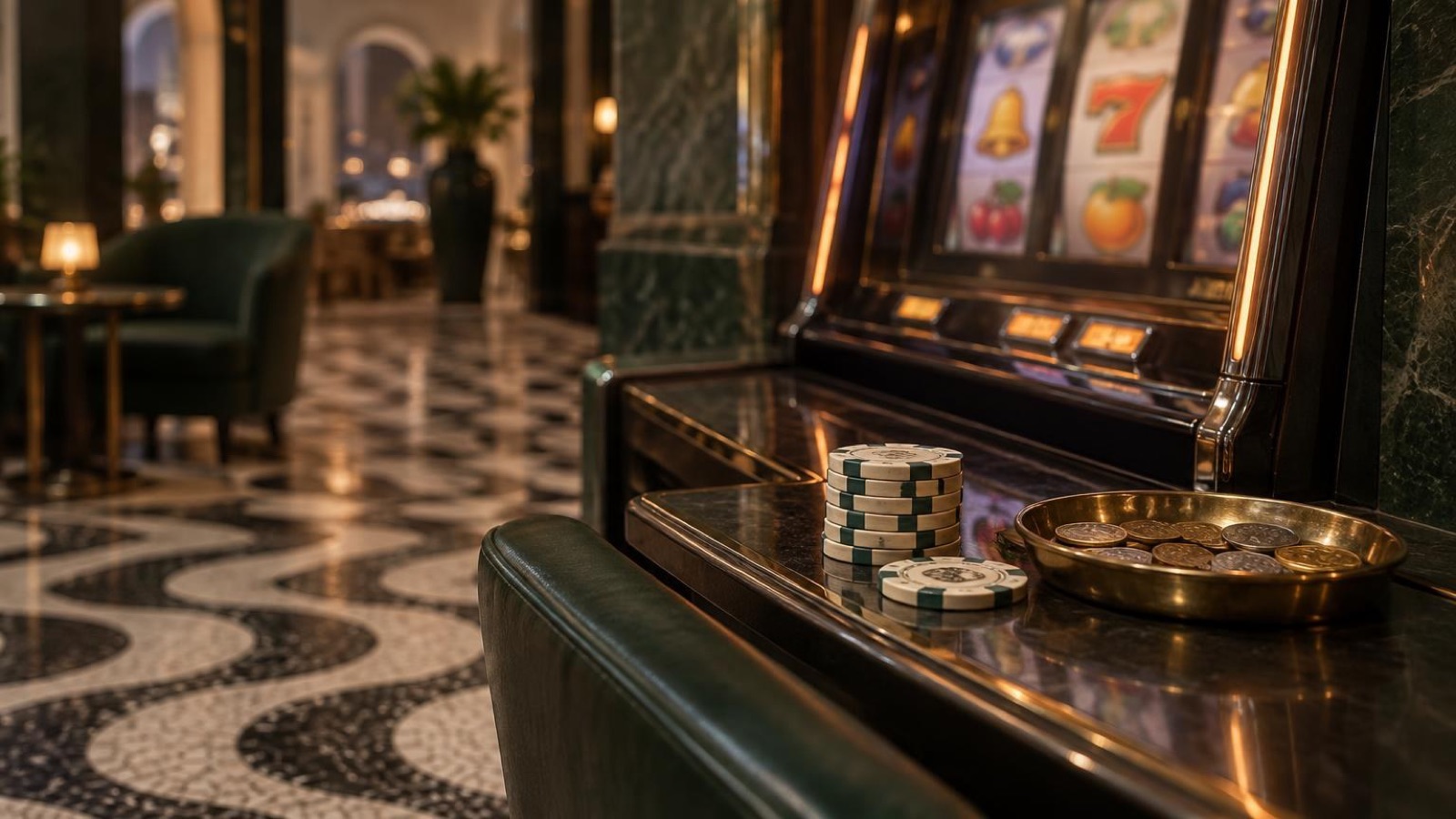
A slot machine looks like a mechanical device with spinning reels, but the reels are just a display. The outcome of every spin is decided by a random number generator inside the machine, which picks the result before the reels stop. This is true even when you press the stop button yourself: pressing it may let you see the result faster, but it has no effect at all on what that result is4.
The win itself comes from paylines. A payline is a line running across the reels, horizontally or diagonally, and when matching symbols land on that line you win. A simple Japanese parlor machine may have just 5 lines, horizontal and diagonal, and lining up the right symbols on one of them gives the big win5. Casino video slots can have far more: one popular underwater-themed slot runs 40 paylines6. You choose how many lines to activate and how much to bet on each, and only wins on the lines you paid for count.
Two myths are worth clearing up before you sit down, because you will hear both from other players. First, machines do not depend on arrangement or location, and how often a machine has been played has nothing to do with whether it will pay out on the next play7. Second, machines never "come due to win" and do not "freeze" after paying out; the payouts are set by the machine's preset odds, and the internal mechanism cannot predict or respond to what just happened7. Every spin is independent.
What a spin costs: denominations and minimum bets
The range of stakes across Asia is remarkably wide, and slots are almost always the cheapest game in the building.
| Venue or setting | Minimum bet | Maximum bet |
|---|---|---|
| City of Dreams Casino gaming machines, Macau | HK$0.05 per game | HK$5,000 per game |
| Japanese pachislot parlor | JPY 60 per play (3 medals) | Set by medal count |
| GDC Lucky Club, Vietnam | USD deposited directly into machines | Varies by machine |
At City of Dreams in Macau, guests can play the gaming machines from as little as HK$0.05 per game, up to HK$5,000 on the same floor8. For comparison, the main table gaming floor at the same casino starts at HK$50 per bet, so the machines are genuinely the low-stakes option. In Japan, slot machines run at medal rates of 20 yen or 5 yen per medal, so the cost per spin depends on the machine's rate. At the GDC Lucky Club in Vietnam, players exchange money for Cashin Ticker cards at the cashier in corresponding denominations, or deposit USD directly into the machines9.
Not all machines are the same, and this matters when you pick one. Some machines have more frequent small prizes and bonus games, while others pay less often but with bigger prizes7. Neither is better in an objective sense; it is a question of whether you want many small hits or a rare large one.
Why higher-denomination machines tend to pay more
Casinos can afford to give back more on higher-denomination machines because each play generates more revenue, and this shows up in the published settings of Japanese machines in particular.
Japanese pachislot and pachinko machines have multiple payout settings that the parlor chooses, and the difference between them is large. On the 4.1-generation machines, machines at high settings commonly published payout rates exceeding 120 to 130%, meaning the machine returned more medals than players put in over the measured cycle10. Even on a single machine, the settings differ: the GeGeGe no Kitaro SP, for instance, pays out at 108.0% on its highest setting, with jackpot odds of 1/275 and bonus odds of 1/496 at that level11.
The same logic applies in casinos. A machine taking HK$5,000 a game can run on a thinner margin than one taking HK$0.05, because the casino still earns more per hour from it. It is also worth knowing that smaller prizes are much more likely than the top prize on any slot machine7. The headline jackpot is real, but the bread-and-butter of slot play is small and medium wins.
Return to player: what the percentage means for you
Return to Player, or RTP, is a percentage that shows how much a slot is built to pay back over a very long time6. The average house edge on slot machines is 8%, which means that over millions of spins, the machine keeps an average of 8% of the money wagered and returns the rest.
One figure is worth knowing. The average house edge on slot machines is 8%1. Machines with higher denominations tend to have better payout percentages than machines with lower denominations, so the return can vary from machine to machine within the same casino.
The phrase "over a very long time" is the part people miss. RTP is measured across the entire life of the machine, across every player and every spin. It is not a promise about your session. On any given evening you can be well above or well below the average, which is exactly why slots feel streaky even though every spin is independent.
House edge compared with other games
The house edge is simply the flip side of return to player: what the house keeps. A typical average house advantage for slot machines is 8%1, though the range is wide. Japanese references put slot machines generally at 3 to 15%, and pachinko and pachislo at an average of 10 to 15%12.
How does that compare with the rest of the casino?
| Game | House edge |
|---|---|
| Slot machines | 8% average; 3 to 15% range |
| Pachinko and pachislo | 10 to 15% average |
| Baccarat | around 1 to 14%, depending on the bet |
| Poker (with optimal play) | 2 to 3.5% |
| Caribbean Stud Poker | 5.2% |
| Craps | about 0 to 16.6%, depending on the bet |
| Japanese lottery | 55% |
Baccarat runs at roughly 1 to 14% depending on the casino and the limits12, and poker played optimally carries a house edge of 2 to 3.5%13. Caribbean Stud Poker sits at 5.2%14. Craps varies enormously by where you place the bet12. Japanese lottery is the worst value on the list at 55%12. You can read more about how these games compare in our guide to the house edge of casino games.
Slots sit between table games and lottery on value. They carry a higher house edge than a well-played table game and a lower one than lottery, with an average edge of 8%1. What you trade for the higher edge is the low minimum bet and the chance at a large jackpot from a small stake.
Jackpots: how rare the big win is
Jackpot odds vary enormously from machine to machine, and the published figures for Japanese machines give a good sense of the spread. These are the odds of hitting the top prize in the machine's low-probability mode:
| Machine | Jackpot odds (low probability) |
|---|---|
| CR Gyoza no Ohsho F2 | 1/19 |
| CR Gyoza no Ohsho M2 | 1/23 |
| CR Gyoza no Ohsho X | 1/27 |
| CR Nakamori Akina: Amai Sasayaki ni Kotaetai | 1/100.25 |
| CR Nakamori Akina: Ai no Message Tsutaetai | 1/199.25 |
| CR Nakamori Akina: Koi mo Nidome nara | 1/296.75 |
| CR Shin Seiki Evangelion: Shito, Futatabi YF | 1/128.5 |
| CR Shin Seiki Evangelion: Shito, Futatabi SFW | 1/346.8 |
| CR Hokuto no Ken S | 1/318.5 |
| CR SL Monogatari | 1/84.25 |
The Gyoza no Ohsho series machines hit their jackpots as often as 1 in 19 to 1 in 27 spins15, while the Evangelion machines range from 1 in 128.5 to 1 in 346.816 and the Hokuto machine sits around 1 in 300 or rarer17. Note that these are pachinko-style jackpots, which pay out in extended play rather than a single life-changing sum; casino progressive jackpots, where machines are linked and a small share of every bet feeds a growing prize, have odds far longer than any of these, in exchange for prizes that can reach seven or eight figures.
One detail about how jackpots work inside the machine: on Japanese machines, whether a jackpot triggers a probability variation mode (kakuhen), where your odds improve for a stretch of play, is already fixed at the moment the spin starts. The machine does not re-draw at the moment the jackpot lands18.
Wilds, scatters and bonus rounds
Modern slot machines are rarely just three reels and matching symbols. Three special features do most of the work of making the game interesting.
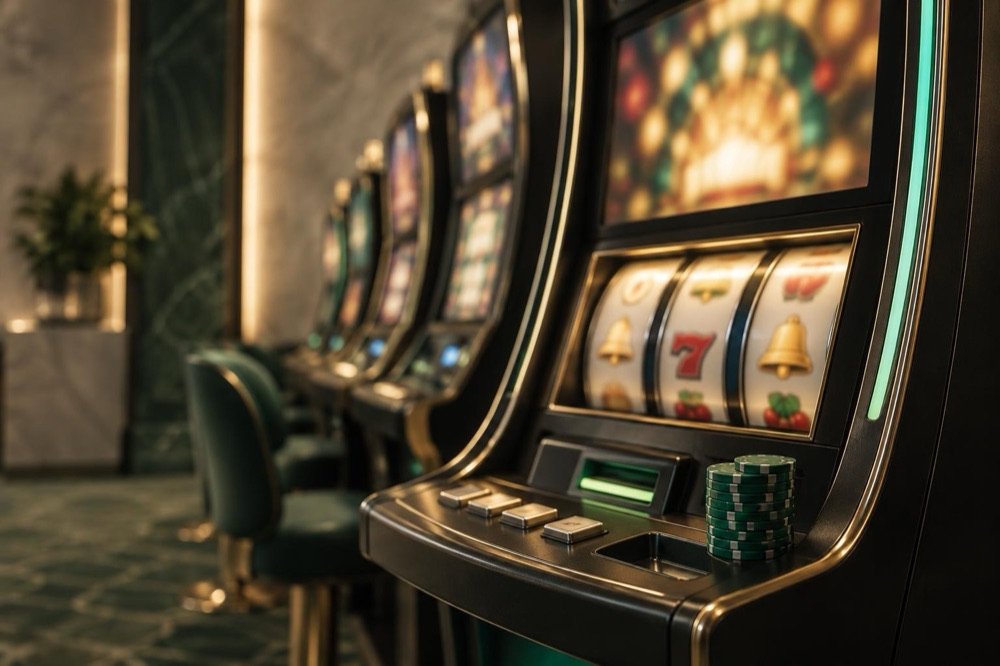
Wilds are symbols that substitute for others, completing lines that would otherwise just miss. Scatters are symbols that pay or trigger features regardless of where they land on the lines, and they are usually what launches the bonus round. Bonus rounds are separate mini-games with their own payouts. On Japanese parlor machines, the trigger is explicit: lining up 3 bonus symbols on an active line starts a bonus game, and the game content and payout depend on which symbols you lined up and the type of machine5.
Scatter-style games have reached Asian casino floors too. MAHJONG WINS SUPER SCATTER, a slot licensed through the Philippine regulator's official game register, is one example of the scatter-mechanic titles now common on Asian floors19.
Bonus rounds are also the one place where skill enters slot play, in a limited way. Most slot play is purely luck, but on some machines the bonus game offers a chance to influence the outcome through arcade-style interaction. Even then, the random number generator usually determines whether you get to play the bonus game and how much money is available to win, so luck remains the dominant factor7.
Pachislot in Japan: how it is different
Japan's slot machines, called pachislo or pachislot, are a distinct species. They live not in casinos but in pachinko parlors, the brightly lit halls found in every Japanese city, and they sit alongside the pachinko ball machines. Public racing gambling such as horse racing and bicycle racing, and games such as pachinko and pachislot, are the main forms of gambling in Japan20. The parlors operate through workarounds on transactions and a cultural carve-out rather than a conventional casino licensing system21.
The mechanics differ from casino slots in several ways that matter on your first visit:
- You play with medals, not cash. Slot machines run at medal rates of 20 yen or 5 yen per medal. You buy medals at the counter, play, and exchange winnings back.
- The exchange rate is capped. In Osaka Prefecture, the highest rate for slot machines is JPY 100 per 5.6 medals, about JPY 17.86 per medal22.
- Card-based systems are spreading. Smart pachislo machines (sumasuro) do away with physical medals entirely: your medal count and credits are managed by a dedicated card reader unit connected to the machine, and you insert cash or an IC card to transfer credits in23. The DISC UP ULTRAREMIX is an example of this new generation of smart slot machines24.
- You stop the reels yourself. Unlike casino slots, pachislo reels stop when you press the button, and this creates the game's signature skill element. When the display shows "bonus confirmed," that only indicates the state where bonus symbols can be aligned; you must stop the bonus symbols manually, by eye, to actually claim it18. The outcome of the spin was still decided in advance; your timing determines whether you collect.
- Cashing out is simple. At automatic ticket machines, insert the winning ticket and press the SEISAN (settlement) button, and the money comes out25.
Parlor etiquette is worth knowing. If you take a break, leave your balls or medals on the upper tray to show the seat is in use, and if you will be away for ten minutes or more, press the call button and tell the staff so they can note it and hold the machine for you.
Where to find slots
Slot machines are spread across the region in several distinct settings.
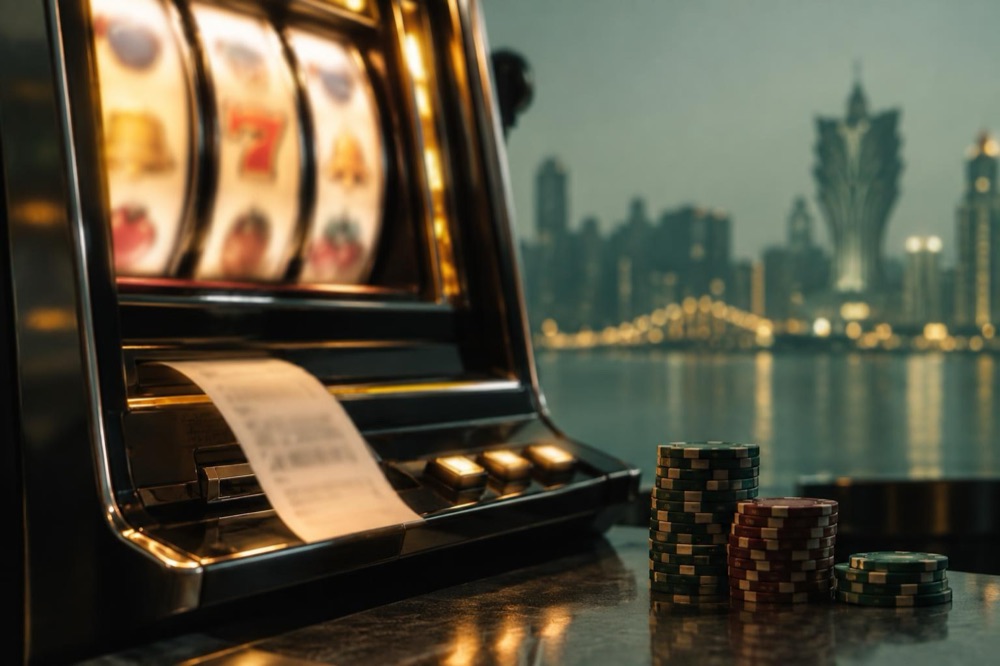
Macau has dedicated slot lounges, standalone slot venues apart from the casinos, offering the newest machine games, in addition to the machine floors inside the major resort casinos26. City of Dreams Casino is one of the largest venues, with machines ranging from HK$0.05 to HK$5,000 per game8. For more on the resort scene, see our guide to casinos and integrated resorts in Asia.
The Philippines licenses slot content through its regulator, with titles like MAHJONG WINS SUPER SCATTER appearing on the official game register19, and the big Entertainment City resorts run large machine floors.
South Korea offers slots in the foreigner-only casinos. Paradise Casino Busan has blackjack, baccarat, roulette and slot machines among its gaming facilities27, and the Jeju casinos combined run more than 200 slot machines, mostly in small, baccarat-centered venues with Chinese-language service2.
Japan has the densest slot coverage in Asia: pachinko and slot parlors are found in every city and town, with new halls opening regularly and new machine models installed on a rolling schedule. This is the only country in the region where slot-style play is available to residents as well as visitors, through the parlor system described above20.
Vietnam has licensed casino slot floors, and smaller venues also operate machine clubs; at the GDC Lucky Club, players exchange money for Cashin Ticker cards at the cashier or deposit USD directly into the machines9.
Before you sit down
A few practical points will make a first visit smoother, wherever you are playing.
Bring cash or a plan for it. Machine play is cash-driven. In Vietnam's machine clubs you may need USD notes to deposit directly9. Check whether the venue takes cards before you assume it does.
Set your machine budget before you play. Because every spin is independent and the house edge averages around 8%1, the long-run expectation is that the machine keeps a share of what you wager. Decide what you are comfortable spending as entertainment, the same way you would budget for a show or a dinner.
Pick a machine that matches what you want. Some machines pay frequently in small amounts, others rarely in large amounts7. Neither is a better bet; they are different experiences. If you want your money to last longer, the frequent-small-prize style suits; if you want the shot at a big hit, the rare-large-prize style does.
Ignore the myths. A machine that just paid is not cold, a machine that has not paid in hours is not due, and the machine's position in the room has nothing to do with its odds7. Pressing the stop button faster does not change the result4. There is no system that beats the random number generator.
Know how to cash out before you start. In a casino, machine credits go to a ticket or card you redeem at the cage; see our guide to buying and cashing chips for how the cage works. In a Japanese parlor, press the payout button, take your medals or ticket to the counter, and at ticket machines press the SEISAN button to settle25.
Take breaks properly. In Japanese parlors, mark your seat with your tray and tell the staff if you will be gone more than ten minutes. In casinos, ask an attendant to hold your machine if the venue allows it.
Slots are the most accessible game in any Asian casino: the lowest entry price, no skill requirement, no dealer to face, and a clear set of rules printed on the machine. Understanding the paylines, the RTP and the independence of each spin will not change your odds, but it will change your expectations, and that is what makes the difference between a fun evening and a frustrating one.
Common Questions
Do slot machines pay out in cash or credits?
In most Asian casinos the machine credits your win to the machine or a card, and you cash out at the cage or a ticket machine. In Japan, pachislot wins come as medals you exchange at a counter, or as credits on a card in card-based systems.
What is a payline and how does betting per line work?
A payline is a line across the reels, horizontal or diagonal, where matching symbols must land for a win. Some machines have just a few lines, others have 40 or more, and you choose how many lines and how much to bet on each.
Are slot machine results affected by previous spins?
No. Each spin is decided by randomly generated numbers, independently of what came before. A machine that just paid out is neither 'due' for a loss nor 'frozen', and a machine that has not paid in a while is not due for a win.
Do I need any skill to play slots?
Most slot play is pure luck. On some machines a bonus game lets you influence the outcome a little through arcade-style interaction, but the random number generator usually decides whether you reach the bonus and what there is to win.
What is the minimum bet at City of Dreams Casino in Macau?
Macau gaming machines run very low. At City of Dreams Casino, for example, guests can play the machines from as little as HK$0.05 per game, up to a maximum of HK$5,000 per game on the same floor.
How do I cash out of a Japanese pachislot machine?
Press the payout button to convert your credits into medals, then take them to the exchange counter. In card-based systems, insert your card into the reader unit and settle there. At ticket machines, insert the ticket and press the SEISAN button.
What should I do with my seat if I take a break at a Japanese parlor?
Leave your balls or medals on the upper tray to show the seat is in use. If you plan to be away for ten minutes or more, press the call button and tell the staff, who will note your absence and hold the machine for you.
Sources27 sources
- How do slot machines work?, GameSense, 2021
- Jeju casinos, Readers Eden, 2025
- パロット (パチスロ)), Wikipedia, 2026
- Gambling myths, Responsible Gambling Council, 2026
- Slot machines, Niraku, 2026
- Best payout slots for players from Hong Kong, Wizard of Odds, 2026
- How slots work, GameSense, 2026
- City of Dreams Casino, City of Dreams Macau, 2026
- Khanh Hoa: many foreigners arrested for illegal gambling under hotel basement, Ministry of Public Security, 2026
- パチスロ用語の一覧, Wikipedia, 2026
- ゲゲゲの鬼太郎SP, Wikipedia, 2026
- 控除率, Wikipedia, 2026
- Baccarat, PlaySmart, 2025
- Caribbean Stud Poker, PlaySmart, 2026
- CR中森明菜・歌姫伝説〜恋も二度目なら〜, Wikipedia, 2026
- CR新世紀エヴァンゲリオン〜使徒、再び〜, Wikipedia, 2026
- CR餃子の王将, Wikipedia, 2026
- CR SL物語, Wikipedia, 2026
- PAGCOR game register, PAGCOR, 2025
- Paradise Casino Busan, Visit Korea, 2026
- Best online casinos for players from Japan, Wizard of Odds, 2026
- パチスロ, Wikipedia, 2026
- スマスロ, Wikipedia, 2026
- ディスクアップウルトライミックス, Wikipedia, 2026
- How to bet, Sonoda, 2026
- Gaming and casinos, Macao Government Tourism Office, 2026
- Gambling warning notice, NCASA Japan, 2026