How slot payouts are decided: the RNG and the paytable
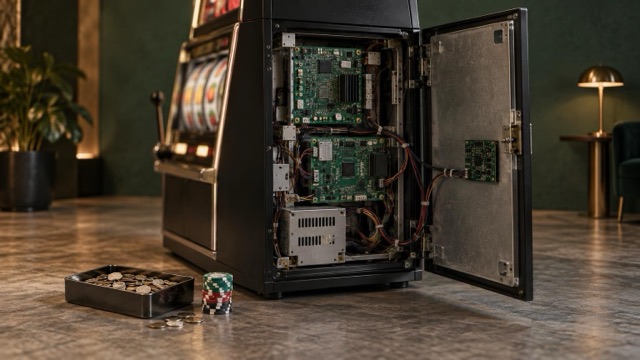
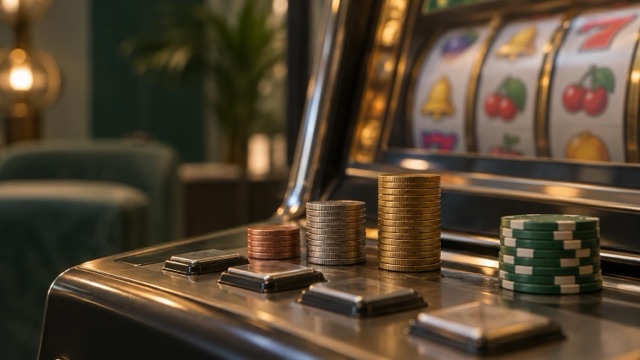
Every spin on a modern slot is decided the moment you press the button. A random number generator picks the result, and the paytable tells the machine what that result is worth. Nothing about your session, your seat or the last ten spins feeds into that decision.
This is why the two most common slot beliefs fall apart. The first is that a machine can be "due." Machines never "come due to win" and do not "freeze" after a win, and the internal mechanism cannot predict the outcome2. A machine that just paid a jackpot is not cooling down, and a machine that has eaten a hundred spins is not warming up.
The second belief is that the machine is reacting to you. It is not. The result is drawn from the same pool of outcomes on every spin, whether you have been sitting there for five minutes or five hours.
What does vary is the game itself. Not all slot machines are the same: some have more frequent prizes and bonus games, while others pay less often but with bigger prizes2. That is a design choice baked into the paytable, not something that changes while you play. On most machines, smaller prizes are more likely than the top prize2.
Most slot play is purely luck. On some machines a bonus game offers a chance to influence the outcome through arcade-style interaction, but the random number generator usually determines whether you play the bonus game and how much money is available to win, so luck remains the important factor2.
If you want the mechanics in more detail, see how slot machines work and how to read a slot paytable.
What return to player (RTP) means and what it does not
Return to Player, or RTP, is a percentage that shows how much a slot is built to pay back over a very long time4. It is a design figure for the game, not a promise about your session.
The word doing the work there is "long." An RTP of, say, 96 percent describes what the machine returns across millions of spins. It says nothing about the next hundred. You can play a 96 percent game for an hour and lose everything you put in, and that is not the machine malfunctioning. It is the normal spread of results.
RTP also is not fixed across every copy of a game. The same slot title can sometimes exist in different RTP versions, so it is worth checking the RTP inside the game's info screen4. Two casinos can run the same title on different settings, which is one reason two players can have very different experiences on what looks like the same machine. We cover this in can the same slot have different RTP versions and slot return to player and house edge.
The practical takeaway: RTP tells you which game is built to give back more over the long run. It does not tell you when, and it does not improve with time on the machine.
Does playing longer improve your odds?
No. Length of play does not impact the odds of winning1. This is the single most useful fact on this page, because it kills the whole family of "if I just keep going" theories.
What longer play does change is your exposure. Over time, you will lose more often than you win3. Over the long run you are likely to lose more than you win5. Every spin is a fresh roll of the same dice, and the house edge sits on each one. Ten spins give it ten chances. A thousand spins give it a thousand.
That is why "I'll play until I get it back" is the most expensive plan in the building. It does not raise your odds of a comeback. It just adds more spins to a game that is built to keep a slice of each one.
The same logic applies to systems. Do not rely on "lucky" strategies, because they do not increase your chances of winning5. There is no sequence of bet sizes, no pattern of pressing spin at the right moment, and no ritual that changes the underlying math.
If you want to see how the edge plays out over a session, a cost-to-play calculator built on game rules and house edge can show you what a given stake and spin count looks like in expectation. Those figures are calculated from one jurisdiction's rules and house edge, but the results are still helpful when gambling elsewhere6.
Does where you sit matter: machine placement myths
No. Slot machines do not depend on arrangement or location, and how often a machine is played is not related to whether it will pay out on the next play2.
This covers every version of the placement theory. The machine by the door. The machine near the cashier. The aisle end. The one that "always looks busy." None of it is wired to the payout. A machine's position on the floor is a layout decision, not a setting.
The related myth is that a machine which has not paid in a while is "overdue." It is not. How often a machine is played has no bearing on the next result2. A machine that sat untouched all day and a machine that ran nonstop since opening have the same odds on the next spin.
What genuinely differs between machines is the game, not the geography. Some titles pay smaller prizes more often, others chase bigger prizes with longer dry spells2. If you prefer frequent small hits over rare big ones, that is a game choice, and you can read more in slot volatility and hit frequency.
One thing that does vary by venue is the paytable itself. Some rules and pay tables may vary slightly by casino7. So the same title at two different casinos can be configured differently. That is a property of the game version, not of where the cabinet stands.
Banked bonuses and progressive features: how they change the picture
There is one situation where the state of a machine genuinely matters, and it is not about hot or cold. It is about money that has already accumulated.
A banked bonus game lets an unclaimed bonus carry over and build for the next player. These games were hot commodities in live casinos in the late 1990s and early 2000s, but have largely faded from the scene, and online slots with building bonuses have no carryover between players9. So if you are looking for a machine with a pot left by the last player, you are looking for older equipment in a live casino, and it is rare.
Progressive jackpots are the more common version of the same idea. They start with a base amount and increase by a fixed amount or as a percentage of sales, and the pot keeps growing until a player wins, and it may be split among multiple winners10. Some games offer a growing jackpot on select single-price or multi-price games, with estimated jackpot amounts shown on the top screen and varying starting amounts depending on the game theme and version11. Others offer a progressive jackpot that increases with every play, while other games have a fixed top prize independent of the number of games played12.
Does chasing a big jackpot improve your return? Sometimes, in theory. The payback percentage rises if you play only when the jackpot is high, but it rarely reaches 100 percent, and players lack the information to know if a jackpot gives an edge9. There is a documented case of a progressive slot whose expected value exceeded 100 percent during a period when the jackpot had gone a long time with no winner13. That is the exception, and it depended on knowing the exact jackpot size and the exact odds. In practice, players do not have the necessary information to know if a jackpot is big enough to give them an edge9.
Some video poker machines offer progressive jackpots and other unique bonuses to encourage players to play more coins or play more often14. Video poker is worth separating out here: like a slot machine, it offers instant gameplay, instant payouts and the option to pay by coin, bill or card, but it has an element of skill7. That skill element is real, and it is the one place in this family of games where your decisions change the expected return. See does skill matter in slots for where that line sits.
What the data can and cannot tell you
Here is what the numbers can do. They can tell you a game's RTP, its volatility, and roughly what a session costs in expectation. They can tell you that a progressive is worth more when the pot is large. They can tell you that a machine with frequent small prizes behaves differently from one chasing a rare big one.
Here is what they cannot do.
- They cannot tell you what the next spin will be.
- They cannot tell you whether this machine, right now, is about to pay.
- They cannot tell you whether a given jackpot is large enough to flip the edge in your favor, because you do not have the necessary information to know that9.
That gap is where most slot myths live. The data describes the game over millions of spins. You are playing a few hundred. The two are not the same thing, and no amount of time on the machine closes the distance.
One more practical note on bonuses, since they are often sold as a way to play longer for less. Wagering requirements are usually weighted heavily toward slots. Most or all allowed slots count 100 percent toward the requirement, while blackjack or video poker count much less, sometimes as little as 5 percent15. So a bonus that looks generous can lock you into slot play for a long time, which is exactly the kind of extended play this page is warning about. If you are playing in a jurisdiction where slots are restricted, check the country guides first, such as slots in Asia and can I gamble in Japan.
For the Japanese arcade-style machines, the payout mechanics are their own thing.
| Feature | How it works |
|---|---|
| Bonus confirmed display | On pachislo machines with digital displays, showing "bonus confirmed" only indicates the state where bonus symbols can be aligned, and the player must stop the bonus symbols manually by eye16 |
| Replay feature | A replay feature lets the next game be played with the bet count of the previous game maintained, so play can continue without consuming coins until a replay fails17 |
| Payout cap | The payout per game is capped at 15 coins, so a cherry paying 8 coins stopped on the top and bottom row pays 15 coins, not 1618 |
None of that changes with how long you sit there, but it does mean the machine rewards attention rather than patience. See is pachinko the same as slots for how these differ from standard slots.
Common Questions
Do slot machines get hot or cold?
No. Machines never come due to win and do not freeze after a win. Each spin is decided by the machine's preset odds, and the internal mechanism cannot predict the outcome. A machine that just paid a jackpot is no more or less likely to pay again on the next spin.
Is it better to play one machine for hours or switch machines?
Neither changes your odds. Length of play does not impact the odds of winning, and machines do not depend on arrangement or location. Switching can change the type of game you are playing, since some machines pay smaller prizes more often and others pay rarely but bigger.
Do slots pay more at night or on weekends?
The time of day does not change a machine's odds. What does change on weekends is promotions: some operators run Saturday slots tournaments and Sunday live casino tournaments with a prize pool. That is a scheduled event, not a machine paying better after dark.
What is a banked bonus slot?
A banked bonus game lets an unclaimed bonus carry over and build for the next player. These were common in live casinos in the late 1990s and early 2000s but have largely faded, and online slots with building bonuses have no carryover between players.
Does the maximum bet pay more than smaller bets?
A bigger bet can unlock a bigger prize, but it does not improve your odds. Higher payout odds always come with a less likely outcome, and lower payout odds come with a greater chance of winning. You are risking more per spin for the same underlying chance.
Can a casino change a machine's payout remotely?
Paytables are set per game and can vary slightly by casino, so two venues may run the same title on different settings. That is a configuration choice made in advance, not a switch flipped mid-session to make your machine go cold.
Sources18 sources
- Play on Demand Etiquette, PlaySmart
- How Slots Work, GameSense
- Safer Gambling Tips, Responsible Gambling
- Best Payout Slots: Hong Kong, Wizard of Odds
- Safer Gambling Tips (Chinese), Responsible Gambling
- Cost2Play, Responsible Gambling
- Video Poker: How to Play, PlaySmart
- Ultimate Texas Hold'em, PlaySmart
- Maximizing Slot Payouts, 888casino
- Bingo: How to Play, PlaySmart
- TAP 'N PLAY: How to Play, PlaySmart
- Play on Demand: How to Play, PlaySmart
- Payout Rate, Wikipedia
- Video Poker, Wikipedia
- No Deposit Bonus Codes: Thailand, Wizard of Odds
- Reach (Pachinko)), Wikipedia
- Replay (Pachislo)), Wikipedia
- Cherry (Pachislo)), Wikipedia