
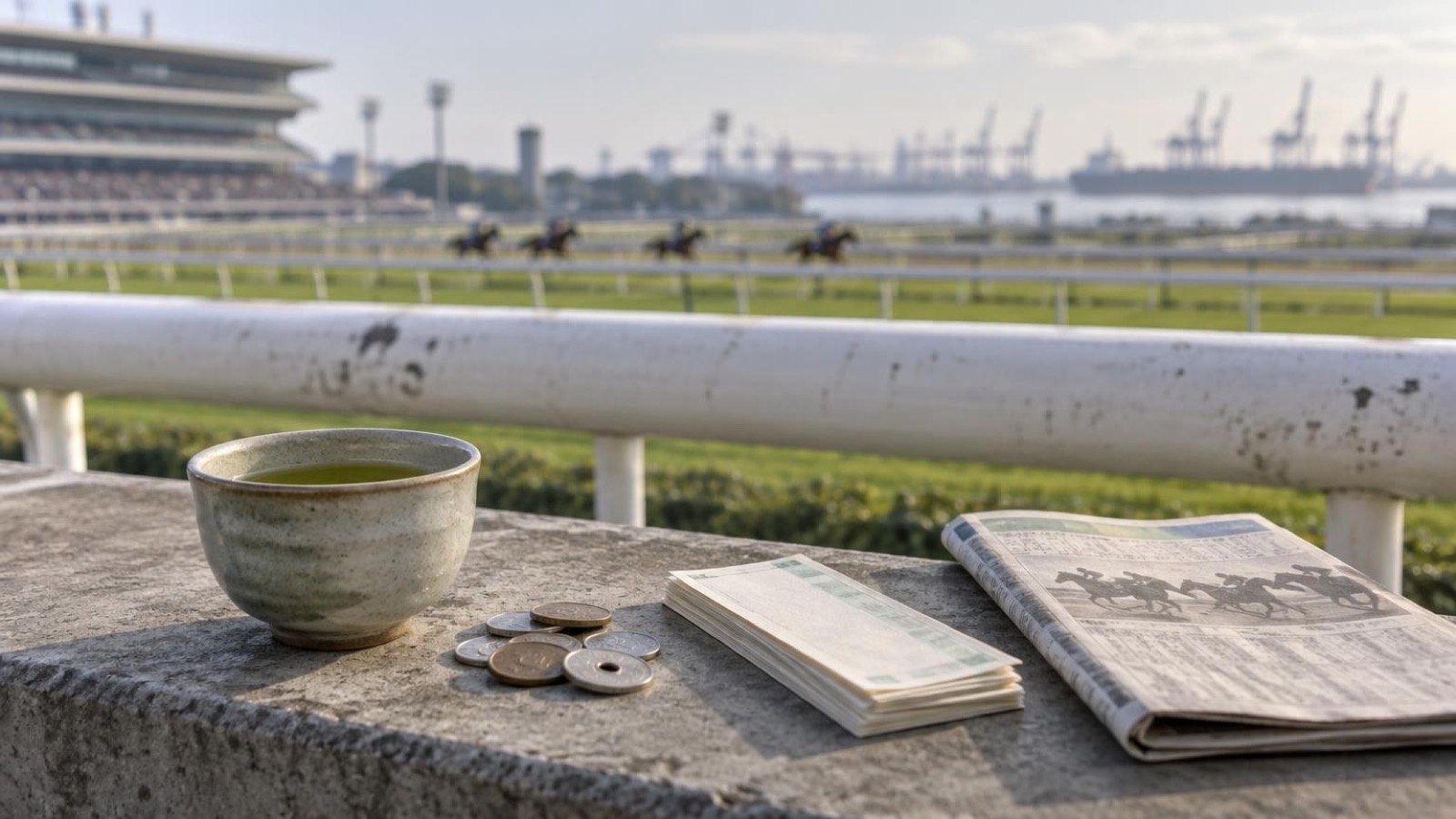
The first western-style race: Yokohama, 1860
The first western-style horse race in Japan was held at Yokohama around 1860. The port had just opened to foreign trade, and a large Western community of merchants, diplomats, ships' officers and their families had settled there. They brought their own sporting habits with them, and a race meeting on British lines was one of the first things they organized1.
It is worth being precise about what "western-style" means here. The novelty was not the horse or the speed. It was the format: a club meeting with a printed card of races, owners and riders entered in advance, a course marked out and measured, and wagering among those present on which horse would win. That package arrived with the treaty port community, and Yokohama is where it took hold1.
The early meetings were small, informal affairs by later standards. They were run by and for the foreign residents rather than by any Japanese authority, and they were a social occasion as much as a sporting one. But they set the template that Japanese racing would eventually adopt and scale up.
Racing before the western era
It would be wrong to read 1860 as the beginning of horse racing in Japan. Japanese records of racing go back many centuries, and the practice has deep roots in court ceremony, shrine festivals and the equestrian training of the samurai class1.
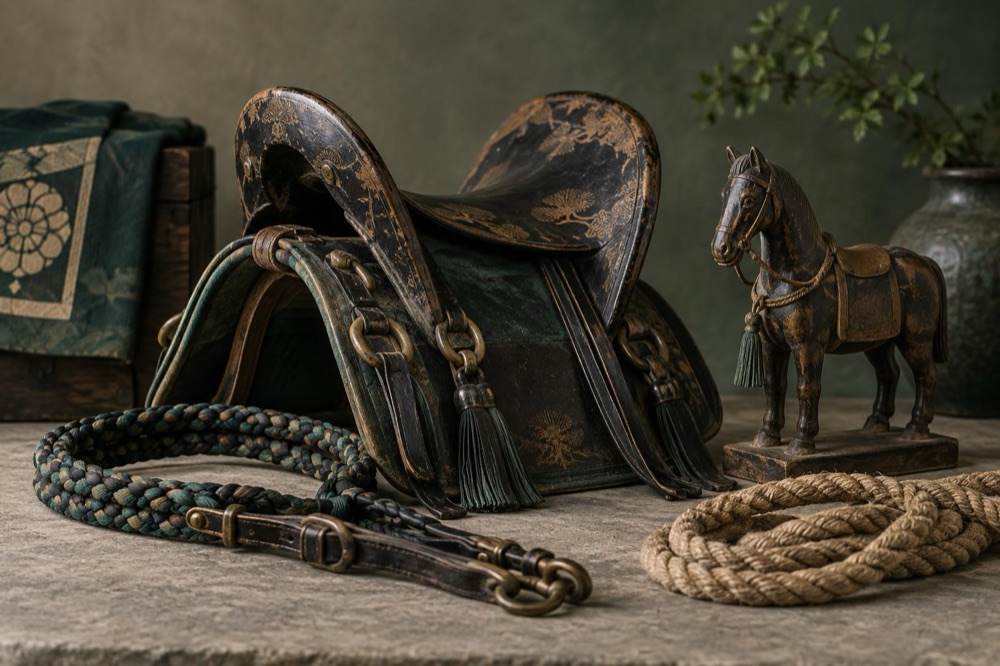
That older tradition survives in several forms. Shrine festivals still stage races as part of their annual observances, and ceremonial equestrian events keep the older styles of riding and horsemanship alive. These are not betting events in the modern sense. They are performances of skill, devotion and local identity, and they are often the highlight of a village or district calendar.
So Japan had two racing cultures running in parallel for a long time: an indigenous tradition of festival and ceremonial racing, and the imported club-and-wager model that arrived at Yokohama. The second one is the ancestor of the sport you can watch and bet on today.
First betting tickets: 1888 in Yokohama
The oldest bet type still sold in Japan is the win bet, a wager on which horse finishes first. It dates from 1923, and it remains the simplest way to have a stake on a race2. If you have ever stood at a Japanese racecourse window and asked for a single horse to win, you were using a product that is now more than a century old.
The mechanics have changed enormously since 1888, but the principle has not. You buy a ticket that names a race and a horse, and it pays out if your selection finishes where it needs to. Everything else, the machines, the screens, the odds boards, is a faster version of the same idea.
From ban to Racecourse Law: betting's legal ups and downs
Betting in Japan has moved between restriction and permission more than once. The modern framework dates from 1948, when a new Horse Racing Act replaced the earlier Japan Racing Society with government-controlled racing6. The Japan Racing Association was established in 1954 under its own law to take over the running of the sport3.
The 1948 Act is the reason Japanese racing looks the way it does. Under it, only the Japan Racing Association, prefectures and designated municipalities may hold horse racing, and all wagers must be pari-mutuel, meaning bets go into a pool and the payout is calculated from what is in it4. No private bookmaker sets the price.
The stated purpose of the law is not entertainment. Racing is permitted on the basis that it contributes to the improvement and breeding of horses, to the promotion of the livestock industry, and to the finances of local government, and that it is run properly and fairly by a neutral body7. That framing explains a lot about how the sport is presented in Japan: as a public activity with a public purpose, not simply a gambling product.
Horse racing today: 25 racecourses and five legal public sports
Japanese racing splits into two systems. Central racing is run by the Japan Racing Association, and regional racing is run by prefectures or designated cities5. Between them they cover the country from Hokkaido in the north to Kyushu in the south.
The JRA operates 10 racecourses: Sapporo, Hakodate, Fukushima, Niigata, Nakayama, Tokyo, Chukyo, Kyoto, Hanshin and Kokura4. It also runs 38 off-course betting facilities called WINS, so you do not have to travel to a track to have a bet3. The JRA's own guide puts the count of its racecourses at 10, from Hokkaido to Kyushu8.
Regional racing adds 15 more tracks run by local authorities. These are smaller, often more relaxed venues, and they run their own schedules. Some regional tracks also host J-PLACE betting windows, where you can bet on central racing and on designated overseas races9.
| System | Who runs it | Tracks | Where to bet |
|---|---|---|---|
| Central racing | Japan Racing Association | 10 racecourses | Racecourses and 38 WINS shops3 |
| Regional racing | Prefectures and designated cities | 15 racecourses | Regional tracks and J-PLACE windows9 |
Horse racing is one of five legal public sports in Japan, alongside boat racing, bicycle racing, motorcycle racing and the lottery-style sports betting known as toto. Boat racing alone has 24 racetracks around the country, many of them near popular tourist spots, and it works on the same publicly managed, pari-mutuel model10.
What a day at the races looks like
A Japanese racecourse is a full day out rather than a quick stop. The gates typically open well before the first race, and a meeting runs through a card of races at roughly half-hour intervals. Between races you can watch the horses in the parade ring, study form in the stands, or eat at one of the food outlets on site.
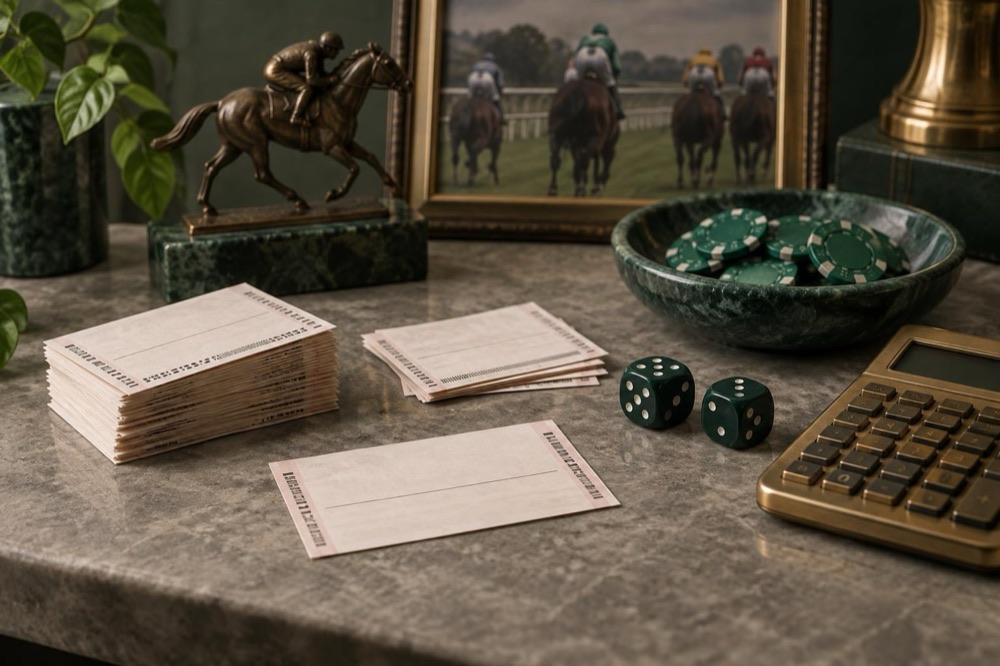
The betting itself is straightforward once you have done it once. You choose a race, choose a bet type, choose your horse or horses, and choose your stake. The minimum face value on a JRA win ticket is JPY 10, which makes it cheap to try12. At a regional track you can buy a win bet on a single horse for a few hundred yen and follow it around the track.
Take a worked example from an official beginner's guide. At Sonoda Racecourse, buying a win bet on horse number 1 in race 11 for JPY 1,800 is a single transaction at the window: you name the race, the bet type, the horse and the amount13. The ticket prints, you keep it, and you check it on the spot.
That last point matters. At Nagoya Keiba and other J-PLACE venues, the rule is that you check your ticket immediately after purchase for the date, track name, race number, horse or bracket number and amount. Claims made later are not exchanged14. It takes five seconds and saves a lot of argument.
Payouts depend on the pool. In a worked example from the JRA's own app guide, a win bet on horse 8 in the 12th race at Tokyo Racecourse is shown at odds of 189.6, so a JPY 100 stake would return a payout set by those odds15. Long shots like that are rare, but they are the reason the pari-mutuel pool exists: the price is set by how much money is on each horse, not by a bookmaker.
If you want a bet that lands more often, the place bet (fukusho) pays if your horse finishes in the top three, or the top two when there are seven or fewer runners13. It pays less than a win, but it comes in far more often, which is why it is a common choice for a first visit.
Where to bet away from the track
You do not need to be at a racecourse to have a bet in Japan. The JRA's WINS shops are dedicated off-course betting facilities, 38 of them nationwide3. They show the races on screens, take bets at the windows and pay out winnings, and they are usually close to major stations.
Regional racing has its own off-course network. J-PLACE venues are betting windows, often inside existing facilities, where you can bet on central racing and on designated overseas races9. The J-PLACE network has been running since February 21, 2015, which is February 21 in Heisei 2716.
One practical wrinkle at regional tracks: not every ticket is accepted everywhere. At DASH Yokawa, for example, payouts are handled for regional racing tickets bought at Sonoda Racecourse, Himeji Racecourse, DASH Yokawa or DASH Wakayama, and for regional tickets bought in other districts through Fujitsu betting machines18. If you are carrying a ticket from a different track, check before you queue.
The racing calendar and the big races
Japanese racing runs through the year, with the biggest meetings drawing crowds in the tens of thousands. The JRA publishes its race schedule in advance, and the pattern of Grade 1 races is fixed well ahead of time.
Some races have long histories. The Yasuda Kinen was first run in 1951 as the Yasuda Sho and was renamed the Yasuda Kinen in 195819. It is now one of the country's flagship mile races and a fixture of the early summer calendar.
Jump racing has its own showcase. The Nakayama Daishogai is run at Nakayama Racecourse and is the country's most demanding steeplechase, a test that draws a specialist field every year20.
Regional racing has its own feature days. At Kanazawa Racecourse, for instance, the 1900-meter program includes a named race, the Kanazawa Castle Nezumi Gate Prize, run over that distance21. Distances at regional tracks vary widely: the Hyogo Queen Cup at Sonoda is run over 1870 meters for fillies and mares aged three and up22, and the second West Japan Classic is also run over 1870 meters23.
Who can take part
You must be 20 or older to buy or receive a pari-mutuel betting ticket in Japan5. That applies at racecourses and at off-course betting shops alike17. The age rule is enforced at the window, so bring identification if you look young.
Venues also run an entry restriction system. You, or a family member, can ask for your access to racecourses and off-course betting shops to be restricted, based on a self-declaration or a family declaration17. It is a voluntary scheme rather than a ban, and it is handled at the venue.
The practical risk is the same as anywhere: betting is a way to spend money on a day out, not a way to make money, and the pari-mutuel pool means the house takes its share before payouts. Set a budget for the day and treat the stake as spent.
Practical tips for a first visit
- Go early. Gates open well before the first race, and the parade ring and paddock are worth an hour on their own.
- Start with a win or place bet. They are the simplest to understand and the cheapest to try, with a minimum face value of JPY 10 on a JRA win ticket12.
- Check your ticket at the window. Date, track, race number, horse number and amount. Later claims are not exchanged14.
- Bring cash. Betting windows take cash, and the smaller regional tracks are the least likely to have card facilities.
- Dress for the weather. Much of a Japanese racecourse is open-air stands and concourse, and meetings run in rain and heat alike.
- Keep your tickets. You need the physical ticket to collect a payout, and there is no way to reconstruct it if it is lost.
If you want to see how racing fits into the wider picture of gambling in the country, start with gambling in Japan. The older festival traditions that predate Yokohama are covered in Saiten Keiba, horse racing at shrine festivals and the armored horse racing at Soma Nomaoi. For the wider regional story, see gambling culture and history in Asia.
Common Questions
Where in Yokohama was the first western-style race meeting held?
It was held in the foreign settlement at Yokohama, the treaty port south of Tokyo where most Western residents lived in the 1860s. The settlement's open ground and its concentration of merchants, diplomats and ships' officers made it the natural place for a race meeting run on British lines.
Who organized the first western-style horse races in Japan?
Foreign residents of the Yokohama settlement, mainly British traders and other Westerners living in the treaty port. They brought the racing customs of home with them, including the idea of a club meeting with a card of races and wagering among those present.
When did betting tickets first go on sale in Japan?
Betting tickets went on sale in Yokohama in 1888. The win bet, a wager on which horse finishes first, dates from 1923 and is the oldest bet type still sold in Japan today.
Was horse racing held in Japan before westerners arrived?
Yes. Japanese records of horse racing go back many centuries, and racing has long been tied to shrine festivals and samurai equestrian skills. What arrived in 1860 was a different format: a club meeting with a card of races and betting on the result.
When was betting on horse racing banned and legalized again?
Betting has been restricted and permitted in cycles. The modern framework dates from 1948, when a new Horse Racing Act replaced the earlier Japan Racing Society with government-controlled racing. The Japan Racing Association was established in 1954 to run the central racing program.
How many racecourses are there in Japan now?
There are 10 JRA racecourses running central racing, from Hokkaido in the north to Kyushu in the south, plus 15 regional racecourses run by prefectures and designated cities. The JRA also operates 38 off-course betting facilities called WINS.
How old do you have to be to buy a betting ticket in Japan?
You must be 20 or older to buy or receive a pari-mutuel betting ticket in Japan. Venues also operate a self-exclusion system where you or a family member can ask for your access to racecourses and off-course betting shops to be restricted.
Sources23 sources
- A Study of Horse Racing in Japan, National Diet Library, July 2014
- Glossary of Racing Terms, Japan Racing Association, 2026
- Japan Racing Guidebook 2026, Japan Racing Association, 2026
- Act on Control and Organization of Horse Racing, e-Gov, 2026
- Horse Racing Law, Japan Racing Association, 2026
- Horse Racing Law, Japan Racing Association, 2026
- On the Legitimate Purpose of Horse Racing, National Police Agency, 2026
- Go Racing: A Guide to Japanese Racing, Japan Racing Association, 2026
- J-PLACE, Local Government Racing, 2026
- Local Off-Course Betting, Japan Racing Association, 2026
- Boat Race Guide, Boat Race, 2026
- Research on Pari-Mutuel Betting Tickets, National Tax Agency, June 2025
- Beginner's Guide to Betting, Sonoda Himeji Racecourse, 2026
- Ticket Rules, Nagoya Keiba, 2026
- How to Use the JRA App, Japan Racing Association, 2026
- Yasuda Kinen, Japan Racing Association, 2026
- Basic Plan on Gambling Addiction Countermeasures, Cabinet Secretariat, March 21, 2025
- DASH Yokawa, Sonoda Himeji Racecourse, 2026
- Nakayama Daishogai, Japan Racing Association, 2026
- Kanazawa Racecourse Course Guide, Kanazawa Keiba, 2026
- Heavy Prize Race Schedule, May 2025, Local Government Racing, May 2025
- Heavy Prize Race Schedule, October 2025, Local Government Racing, October 2025
- Japan Racing Guide (Chinese), Japan Racing Association, 2026















