
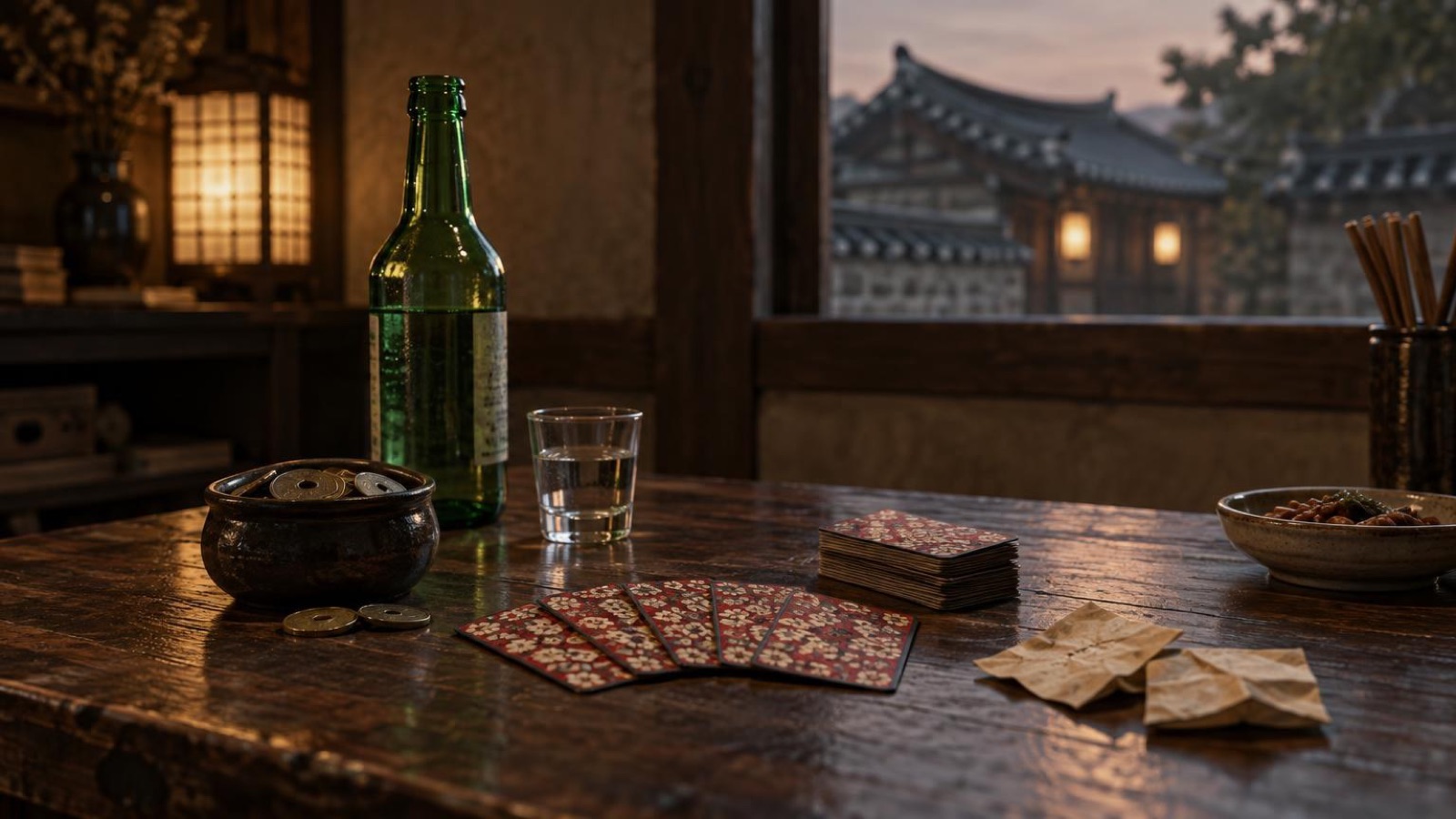
What Tazza: The High Rollers Is About
The film follows Goni, a young man from a modest background who scrapes together his savings and sits down at a hwatu table. He is cheated out of everything by a group of card sharks. Penniless and humiliated, he goes looking for the man who taught him to play, a legendary gambler known as a tazza, and asks to be trained properly. What follows is a story about learning to read people, learning to cheat, and learning how far the underground gambling world will go to protect itself1.
The title word tazza refers to a master gambler or card sharp, someone who has mastered both the game and the psychology of the table. It is not a game name and not a bet amount. In Korean usage it carries a mix of respect and wariness, the same way "shark" or "sharp" does in English.
The film is a crime drama first and a gambling film second. The card games are the setting, but the tension comes from the cons, the double-crosses and the question of who is playing whom. If you have seen Western poker films, the structure will feel familiar, but the specific game and the specific cheating methods are Korean.
The Game at the Center: Hwatu
Hwatu, also called Go-Stop, is played with a deck of flower cards. Each card shows a plant or animal tied to a month of the year. Players match cards from their hand to cards on the table, and the goal is to collect combinations worth points. The game moves fast, involves a lot of small decisions, and is easy to learn but hard to master3.
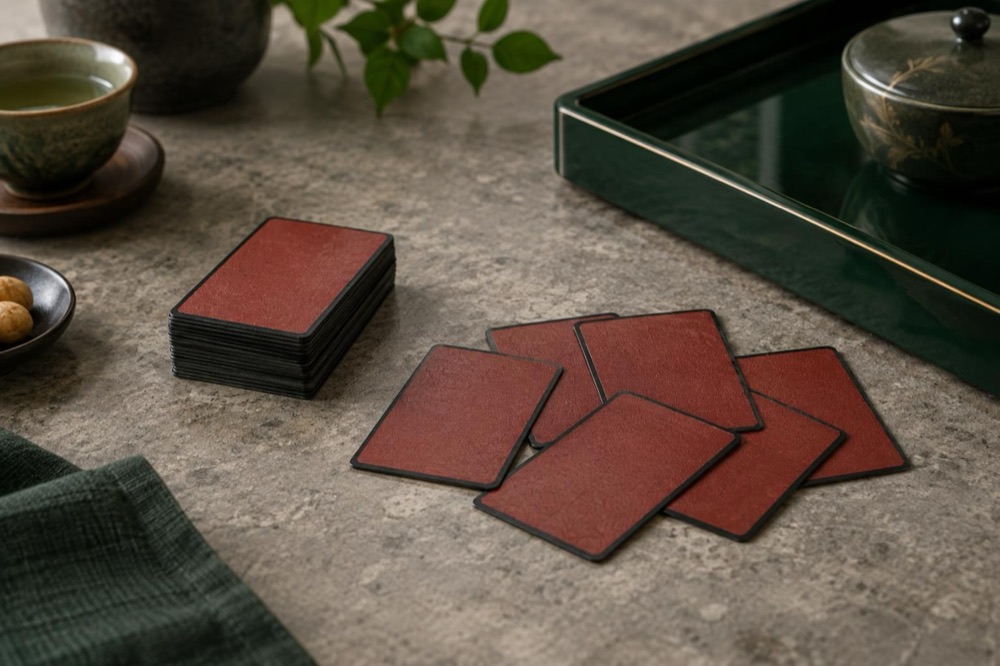
In the film, hwatu is played for money in back rooms, bars and private games. The cheating methods shown include marked cards, stacked decks, sleight of hand and reading opponents. Some of these are dramatized for effect, but the general idea that hwatu games can be rigged is grounded in reality. Hwatu is a social game in Korea, played at home and in bars for small stakes, and it is also one of the games listed among illegal gambling forms when money is involved6.
If you want to understand the film, it helps to know that hwatu is not a casino game. It is a card game played anywhere, which is exactly why the underground gambling world in the film can exist outside of regulated casinos.
Gambling in South Korea: What the Law Allows
South Korea allows a narrow set of gambling activities. The legal forms are:
- Casinos
- Horse racing
- Cycling racing
- Powerboat racing
- Lotteries
- Sports promotion voting tickets
- Bullfighting6
Everything else, including internet gambling, hwatu for money, poker and adult arcades, is treated as illegal gambling6.
That list matters for understanding the film. The hwatu games in Tazza are not taking place in a legal venue. They are underground, and the characters know it. The film does not spend time on the law, but the tension of playing outside the rules is part of the atmosphere.
For a visitor or a resident, the practical picture is simpler than the law might suggest. There are legal casinos, legal betting on a few sports, and a national lottery. There is also a large illegal market, which is what the film depicts.
Resident or Visitor: Which Rules Apply to You
The rules differ sharply depending on who you are.
Foreign visitors can enter the 16 foreigner-only casinos. These are open only to foreign visitors, and you need your passport to get in4. You must be 19 or older5.
Korean citizens are barred from those same casinos. They can only enter Kangwon Land, the one casino in the country where Koreans are allowed7. They can also bet legally on horse racing, cycling, boat racing, lotteries and Sports Toto6.
Foreign residents of South Korea are in a middle position. They are not tourists, but they are also not Korean citizens. In practice, foreign residents can use the foreigner-only casinos with their passport and alien registration card, though the casinos are set up for visitors.
The key point is that the foreigner-only casino system exists specifically to keep Korean citizens out of most casino floors. That is why the film's underground games exist: for Korean citizens who want to gamble beyond what the law allows, there is no legal casino option outside Kangwon Land.
Kangwon Land: The One Casino Koreans May Enter
Kangwon Land is the only casino in South Korea where Korean citizens are allowed to enter7. It is located in a former mining area that was designated for redevelopment, and the casino was part of that plan. Both Koreans and foreigners may enter8.

For Korean citizens, Kangwon Land is the only legal casino option. It is not in Seoul. It is in Gangwon Province, in the mountains, and getting there takes a bus or a car. The casino is part of a larger resort complex with a hotel, a ski area and other facilities.
For foreign visitors, Kangwon Land is also an option, but most visitors use the foreigner-only casinos in Seoul, Busan and Jeju instead. Those are easier to reach and are set up for international guests.
The 16 Foreigner-Only Casinos and How to Visit Them
South Korea has 16 casinos that are open only to foreign visitors4. They are spread across the country, with clusters in Seoul, Busan and Jeju. Some are in hotels, like the Hyatt Regency casino9, the Jeju KAL Hotel Casino10, the Alpensia Casino11, the Jeju Oriental Hotel Casino12 and the Paradise Casino Jeju Grand13. Paradise City, near Incheon Airport, is another foreigner-only property14.
These casinos require a passport for entry. Koreans are not admitted14. The business model depends on international visitors, and in recent years the sector has been boosted by the return of Chinese tourists4.
For a visitor, the practical details are straightforward. Bring your passport. You must be 19 or older5. The games are the standard casino mix: table games and slots. The casinos are in hotels, so you can walk in from the lobby.
Sports Toto: The Only Legal Sports Betting
Sports Toto is the legal sports betting system in South Korea. It covers soccer, baseball, basketball, volleyball, golf and a combined game called Toto UO15. You can buy tickets at retail locations and online through the official site16.

The system is run by the government, and the warning message on the materials is about illegal gambling17. That tells you the official position: Sports Toto is the legal channel, and anything else is not.
For a visitor, Sports Toto is accessible. You can buy a ticket at a shop and watch the results. The minimum bet is small, and the games are simple. Mini Toto, for example, asks you to pick five matches18.
Penalties for Players
Playing on offshore casino websites is illegal in South Korea, and players have been prosecuted5. The same applies to hwatu for money, poker and other forms of illegal gambling6.
The practical risk is real. If you are a Korean citizen and you gamble online, you are breaking the law. If you are a foreign visitor, the foreigner-only casinos are the legal option, and using an offshore site is not.
Taxes on Winnings and the KRW 100,000 Threshold
Taxes on gambling winnings in South Korea depend on the amount and the type of game.
For lottery winnings, the thresholds are clear:
| Winnings | Tax rate | Breakdown |
|---|---|---|
| KRW 2,000,000 or less | Tax-free | Tax-free19 |
| Over KRW 2,000,000 and up to KRW 300,000,000 | 22 percent | 20 percent income tax plus 2 percent resident tax19 |
| Over KRW 300,000,000 | 33 percent | 30 percent income tax plus 3 percent resident tax19 |
For other betting, the rules are different. Refunds of KRW 100,100 to KRW 2,000,000 per individual bet are taxed when the payout rate is over 100 times20. Refunds of up to KRW 100,000 per individual bet are not taxed when the payout rate is 100 times or less20.
The KRW 100,000 threshold is the line where small refunds stay untaxed. If you are betting small amounts and getting small refunds, you are below the threshold. If you hit a large payout, the tax applies.
The Entry Levy and Citizen Access to Casinos
Foreign visitors do not pay the entry levy at the foreigner-only casinos. The levy is part of the system that controls citizen access to casinos. It is a small amount, but it is a reminder that the rules are different depending on who you are.
For a visitor, the practical takeaway is simple: bring your passport, expect no entry levy, and remember that the casino is open only to non-Koreans.
What the Film Gets Right and What It Changes
Tazza: The High Rollers is a dramatized version of a real gambling underworld. The hwatu games, the cheating methods and the social dynamics are grounded in Korean gambling culture. The film does not pretend to be a documentary, but it captures the atmosphere of illegal gambling in a way that legal casino play does not.
The film also shows why the legal system is so restrictive. The underground games in the film are exactly the kind of activity the law is designed to prevent. For a viewer, that context makes the film richer. For a visitor to South Korea, it is a reminder that the legal casinos are a narrow exception in a country that otherwise treats gambling as a controlled activity.
If you want to see the real thing, the foreigner-only casinos are open to you. If you want to understand the film, the hwatu table is the place to start.
Common Questions
What is the movie Tazza: The High Rollers about?
It follows Goni, a young man who loses his savings to card sharks in a hwatu game, then trains under a legendary gambler to win it back. The film mixes con-artist thrills with a look at Korea's underground gambling world.
Is Tazza: The High Rollers based on a true story?
It is adapted from a comic book by Huh Young-man, which was itself based on the memoir of a real gambler. The characters and events are dramatized, but the hwatu games and cheating techniques shown are grounded in real practice.
What game do they play in Tazza?
The main game is hwatu, also called Go-Stop, a Korean card game played with flower cards. Players bet on matching cards, and the film shows elaborate cheating methods used to rig games.
Can you gamble legally in South Korea?
Korean citizens can only gamble at Kangwon Land, the one casino open to them, plus legal betting on horse racing, cycling, boat racing, lotteries and Sports Toto. Foreign visitors can use the 16 foreigner-only casinos. Online gambling is illegal for Korean citizens.
How old do you have to be to gamble in South Korea?
You must be at least 19 to enter a casino in South Korea. Foreign visitors must show a passport at foreigner-only casinos. Korean citizens face additional restrictions and can only enter Kangwon Land.
What is the minimum bet in Tazza?
In the film, games range from small street bets to high-stakes tables where players wager millions of won. The title tazza refers to a master gambler or card sharp, not a specific bet amount.
Sources20 sources
- KBOAT FAQ, KBOAT, 2026
- Best Online Casinos for Players from South Korea, Wizard of Odds, 2026
- Kangwon Land Casino, Visit Korea, 2026
- South Korea's foreigner-only casinos hit jackpot as Chinese tourists return, SCMP, 2026
- Kangwon Land Casino, Visit Korea, 2026
- KBOAT FAQ, KBOAT, 2026
- Kangwon Land Casino, Visit Korea, 2026
- Hyatt Regency Casino, Visit Korea, 2026
- Jeju KAL Hotel Casino, Visit Korea, 2026
- Alpensia Casino, Visit Korea, 2026
- Jeju Oriental Hotel Casino, Visit Korea, 2026
- Paradise Casino Jeju Grand, Visit Korea, 2026
- Paradise City, Reader's Eden, 2025
- Sports Toto, Sports Toto, 2026
- Sports Toto Soccer Match, Sports Toto, 2026
- Sports Lottery 2026, JPNSport, 2026
- Sports Toto, JPNSport, 2026
- Ticket Refund, KBOAT, 2026
- Lottery Winnings Tax, Bokgwon, 2026
- Gambling Control Act 2022, Law.go.kr, 2024















