
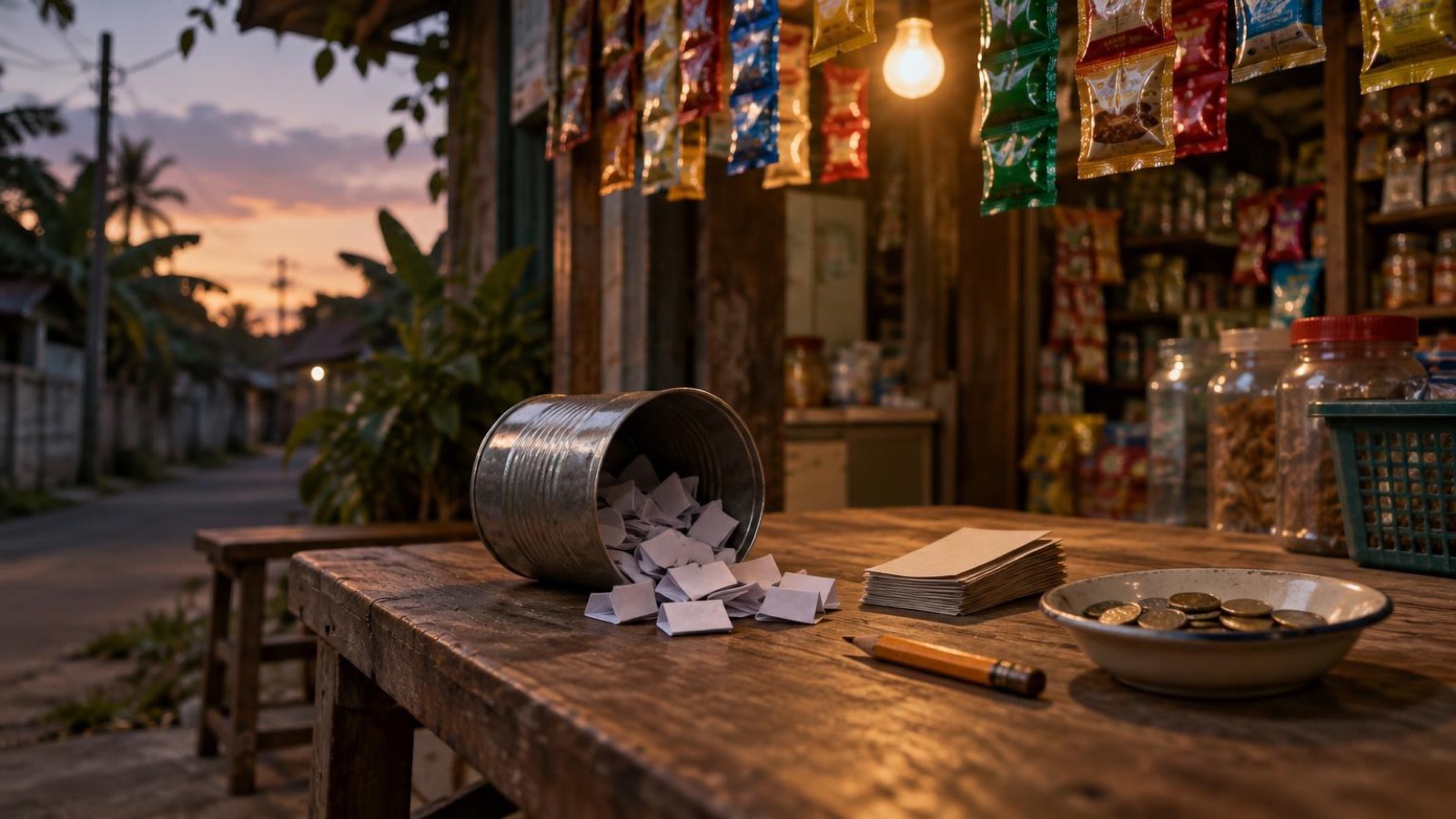
What masiao is and where its numbers come from
Masiao is a numbers game played in the Philippines in which bets are placed on two digits, with a draw held once a week to settle them. It sits in the same family as the informal numbers games found across Asia, where players pick digits, pay a small stake and wait for a result that is announced rather than published on a board. Because it is not licensed, there is no official schedule, no printed odds and no venue you can walk into. The game lives in the same space as other unlicensed betting: arranged between people who know each other, settled in cash, and outside any regulator's reach.
The name and the mechanics belong to the Philippines specifically, but the idea of a two digit draw is not unique to the country. Numbers games of this shape turn up wherever people want a small stake and a fast result, and the appeal is the same everywhere: a low buy in, a simple choice, and a result you can check in seconds.
Where masiao's numbers come from is a question with two answers, and it is worth separating them. The first is the draw itself: in an unlicensed game there is no central machine, no published drum and no audited process, so the numbers come from whoever runs the game. The second is the wider lottery tradition the game borrows from. The Philippines has a long history of legal number draws, and the launch of the country's first on-line lottery in January 1995, when the PCSO introduced Lotto 6/42 under Chairman Manuel L. Morato, put a government-run numbers game in front of the public. Masiao is the informal cousin of that tradition: same instinct, no license.
If you are interested in how numbers get chosen in the first place, the rituals around picking them are covered in dream numbers and asking spirits for numbers, both of which describe practices that show up across the region.
The lottery connection: from Spanish-era draws to the First On-Line lottery
The Philippines has drawn numbers for money for a long time, and the legal lottery is the part of that history you can actually take part in today. The turning point was January 1995, when the Philippine Charity Sweepstakes Office launched Lotto 6/42, the first on-line lottery in the country. That moved the national draw from paper and agents to a networked system, and it set the template that later games followed.

Legal number games in the region share a common structure, and it helps to see how they work because it explains what masiao is imitating.
| Game | Country | How the draw or prize works |
|---|---|---|
| Loto 6 | Japan | The draw is streamed live on the internet so players can watch the numbers come out7 |
| Super Lotto | China | The first prize goes to a ticket matching five front zone numbers and two back zone numbers, and a ticket wins if the drawn numbers match in any order8 |
| Toto | Singapore | Pays out from a match of at least three winning numbers10 |
| Da Ma Cai | Malaysia | Draws ten six-digit numbers from six number drums to form its consolation prizes11 |
The pattern across all of them is the same: a published draw, a defined match condition, a fixed set of prize tiers, and a regulator or operator who stands behind the result. That is exactly what an unlicensed game like masiao cannot offer. There is no live stream, no published match rule and no one to complain to if the result is disputed.
One more point from the region is worth knowing, because it explains why governments treat informal number games so seriously. China's sports authority has warned that lottery tickets bought through the internet are likely to be linked to illegal lottery, private lottery, illegal gambling or fraud, and that buying them may make the buyer a participant in criminal activity12. The concern is not the numbers themselves. It is that an unregulated draw has no way to prove it paid anyone.
Legal alternatives: PAGCOR-licensed games, casinos and sabong
If you want to play for money in the Philippines, the licensed side of the market is broad, and it covers far more than table games.
PAGCOR, the Philippine Amusement and Gaming Corporation, is the regulator in charge of monitoring gambling and issuing licenses13. It was created in 1977 under Presidential Decree No. 1067-A to centralize the right and authority to operate games of chance in one government-controlled entity2, and it has been regulating games of chance for about 49 years14. Its authority covers gambling casinos, gaming clubs and similar recreation or amusement places, gaming pools such as basketball, football and bingo, on land or at sea, within Philippine territory15. That authority does not extend to games covered by existing franchises, other regulatory bodies or special laws, or to cockfighting licensed and regulated by local government units15.
The games you will find at PAGCOR-licensed venues include traditional bingo, electronic bingo, electronic casino games, sports betting, specialty games, numeric games and online poker, along with any further games PAGCOR may allow5. Bingo is worth a note here: Philippine courts have held that bingo as a game of chance is not illegal in itself, and only becomes illegal gambling if it lacks the required license or breaks the regulator's rules16. That is the dividing line across the whole market. The game is not the problem; the license is.
Poker has its own licensed footprint. Beyond the land-based casinos, there are licensed gaming sites around the country offering poker games3.
Sabong, or betting on live cockfighting, is an established Philippine tradition that dates back as far as 3,000 years and is described as a national pastime4. Online betting on it, known as e-sabong, is a regulated PAGCOR product4. The picture for the physical sport is different: the Games and Amusements Board no longer issues or renews licenses for local cockfighting, expired licenses will not be renewed, and pending renewal applications are denied for lack of legal basis6. If you want to bet on sabong through a licensed channel, e-sabong is the route; the local cockfight licensing track is closed.
For the wider picture of what is on offer across the country, see gambling in the Philippines.
Who can play: age 21 and excluded groups
The minimum age for gambling in the Philippines is 2113. PAGCOR states plainly that gambling is for those 21 years old and above only17, and the same age applies to holding a betting account: an eligible account owner must be at least 21 years old18. You will come across international sites that set their own limit at 18, usually European-based operators, but Filipino players are still expected to respect the local age of 2113. In practice, venues check identification at the door.
Age is only part of it. Philippine gaming venues are required to refuse entry, stay or play to a defined list of people5:
- Government officials and employees connected directly with the operation of the government or any of its agencies
- Members of the Armed Forces of the Philippines, including the Army, Navy and Air Force, and the Philippine National Police
- Anyone under 21
- Students of any school, college or university in the Philippines
- Individuals on the National Database of Restricted Persons
- Unregistered players
Banning orders apply nationwide, and they can arise in three ways: self-exclusion, family exclusion, or a licensee-emanating ban5. Self-exclusion is a formal request to be kept out, and the same principle appears across the region: in Macau, for example, applicants using responsible gambling information kiosks must be 21 or above19. Operators are also restricted in how they market: materials must not be directed at children or feature people who are or appear to be under 21, and text blast promotions are not permitted except to an existing pool of registered players5.
The practical risk of an unlicensed game is worth one sentence, said once. Because masiao is named in Philippine law as an illegal numbers game1, and because only gambling regulated by PAGCOR is treated as legal20, taking part in it puts you outside any licensed framework: no published rules, no dispute process, and no protection if the draw is not paid.
Where legal play happens: PAGCOR's 10 major casinos, plus mini-casinos, arcades, clubs and licensed poker sites
PAGCOR operates 10 major casinos across the country, along with mini-casinos, slot machine arcades and PAGCOR clubs2. That mix matters if you are choosing where to go. A major casino gives you the full floor: table games, electronic machines, bingo and food and drink under one roof. A mini-casino or slot arcade is a smaller footprint, often in a mall or a hotel, and is the easier option if you want an hour of play rather than an evening. A PAGCOR club is smaller still.
Beyond the casinos, licensed gaming sites around the country offer poker3, and e-sabong runs as a regulated online betting product4. For residents, there is one structural point to know: players in the Philippines cannot join local online casino sites, but they are allowed to use offshore-based casinos, and players are not fined for joining offshore operators13. Cryptocurrency transactions are completely legal in the Philippines13, and the central bank has issued policy on online gambling payment services15, so payment methods for offshore play are a live regulatory area rather than a gray one.
If you are comparing the country with its neighbors, gambling in Macau and gambling in Singapore show how different the licensed models can look, and why many Asian countries restrict gambling explains the attitudes behind the rules.
A few practical notes for a first visit. Bring photo identification, because entry checks are standard and the age rule is enforced at the door. Dress is smart casual at the major casinos, and the smaller arcades are more relaxed. Cash is widely used, and chips are bought at the cage or from a dealer. If you are a student or you work for a government agency connected to its operations, or you serve in the military or police, the venue will turn you away regardless of your age, so it is worth knowing before you travel.
Common Questions
Is masiao legal in the Philippines?
No. Masiao is named in Philippine law as an illegal numbers game, and only gambling regulated by PAGCOR is treated as legal. Taking part in an unlicensed numbers game carries legal risk for players and operators alike, and the game is not offered through any licensed channel.
What is PAGCOR?
The Philippine Amusement and Gaming Corporation is the government body that regulates gambling and issues licenses in the Philippines. It was created in 1977 and has regulated games of chance for about 49 years. It operates major casinos, mini-casinos, slot arcades and PAGCOR clubs, and licenses poker rooms and e-sabong.
What is the legal gambling age in the Philippines?
You must be 21 or older to gamble at PAGCOR-licensed venues and to hold a betting account. Some international sites set their own limit at 18, but Philippine residents are still expected to follow the local age of 21. Venues check identification at entry.
Can government officials or students gamble in the Philippines?
No. Government officials and employees connected directly with government operations, members of the Armed Forces and the Philippine National Police, students of any school, college or university, and anyone under 21 may not enter, stay or play at gaming venues. Banning orders apply nationwide.
Is cockfighting (sabong) legal in the Philippines?
Sabong is an established tradition dating back as far as 3,000 years, and online betting on it, known as e-sabong, is a regulated PAGCOR product. However, the Games and Amusements Board no longer issues or renews licenses for local cockfighting, and pending renewal applications are denied.
How many casinos are there in the Philippines?
PAGCOR operates 10 major casinos around the country, along with mini-casinos, slot machine arcades and PAGCOR clubs. Beyond those, there are licensed gaming sites offering poker, and offshore online casinos that accept Filipino players, though residents cannot join local online casino sites.
Sources20 sources
- Republic Act No. 9287, LawPhil, April 2, 2004
- G.R. No. 248583, Leonen, LawPhil, February 3, 2025
- Poker, PAGCOR, September 25, 2026
- E-Sabong Regulatory Framework, PAGCOR, April 27, 2022
- Regulatory Framework for Gaming Venue Operations, PAGCOR, 2025
- Terminating the Issuance and/or Renewal of Licenses for Use in Local Cockfights, Games and Amusements Board, August 2024
- Loto 6 Features, Takarakuji Official, September 25, 2026
- Super Lotto Draw Results, Zhcw, September 26, 2026
- Super Lotto Draw Rules, China Lottery, September 27, 2026
- Toto Prize Structure, Singapore Pools, September 26, 2026
- How Is the Draw Conducted?, Da Ma Cai, September 25, 2026
- Guidance on Buying Lottery Tickets Online, General Administration of Sport of China, December 10, 2024
- Bitcoin Casinos in the Philippines, Wizard of Odds, September 26, 2026
- G.R. No. 207118, Lazaro-Javier, LawPhil, April 22, 2025
- Republic Act No. 9487, LawPhil, June 20, 2007
- G.R. No. 207118, Leonen, LawPhil, April 2025
- Exclusion, PAGCOR, September 25, 2026
- Exposure Draft: Regulations on Online Gambling Payment Services, Bangko Sentral ng Pilipinas, 2025
- Responsible Gambling Information Kiosks, DICJ Macau, 2026
- Online Gambling, Iskomunidad, University of the Philippines Diliman, 2026















