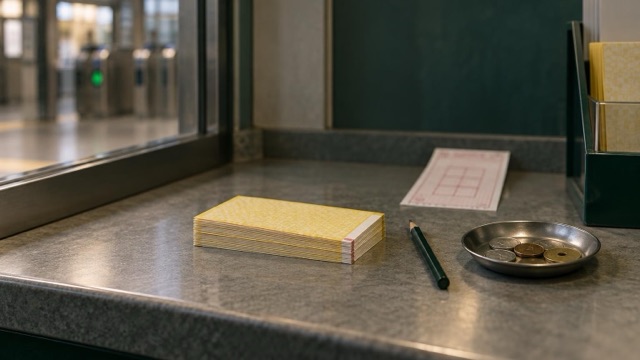
Loto 6 is the number-selection lottery most people in Japan think of when they hear the word "lottery" alongside the big seasonal Jumbo draws. It runs all year, it draws twice a week, and its jackpot can grow larger than its own headline prize. If you want one line for JPY 200 and a shot at a nine-figure payout, this is the game. This page covers how it works, what it costs, where to buy tickets, how prizes are paid, and what the numbers actually say about your chances.
What Loto 6 is and how the game works
Loto 6 is a number-selection lottery: you choose six different numbers from 1 to 43, and at the draw, six main numbers plus a bonus number are drawn. How many of your numbers match the drawn numbers decides which prize grade, if any, you win3.
The prize structure has five grades. The amounts for the top grades are not fixed sums printed on the ticket; they depend on the prize pool and the number of winners, so the official figures are given as theoretical values2.
| Grade | Prize | Basis |
|---|---|---|
| First | JPY 200,000,000 | Theoretical value |
| Second | Around JPY 10,000,000 | Theoretical value |
| Third | JPY 300,000 | Theoretical value |
| Fourth | JPY 6,800 | Theoretical value |
| Fifth | JPY 1,000 | Fixed as a rule |
That structure means the small prizes are quite small. The real attraction of Loto 6 is the top of the table: a first prize that starts at a theoretical JPY 200,000,000 and, as explained below, can climb to JPY 600,000,000 when a carryover builds up2.
Each entry is one set of six numbers and costs JPY 2001. There is no minimum or maximum number of entries; a casual player buys one or two lines, and a serious one fills a card with more. The game sits in the middle of Japan's number-lottery family: Loto 7 has a bigger number field and a bigger top prize, Mini Loto is the smaller, cheaper sibling, and Numbers 3 and Numbers 4 are the daily digit games. You can read about the whole family on the Japan lottery page.
Choosing your six numbers
When you buy a Loto 6 ticket, you mark six different numbers from 1 to 43 on the entry card. The numbers must be different from each other, but there is no other restriction: birthdays, favorite numbers, patterns on the card, or anything else you like3.
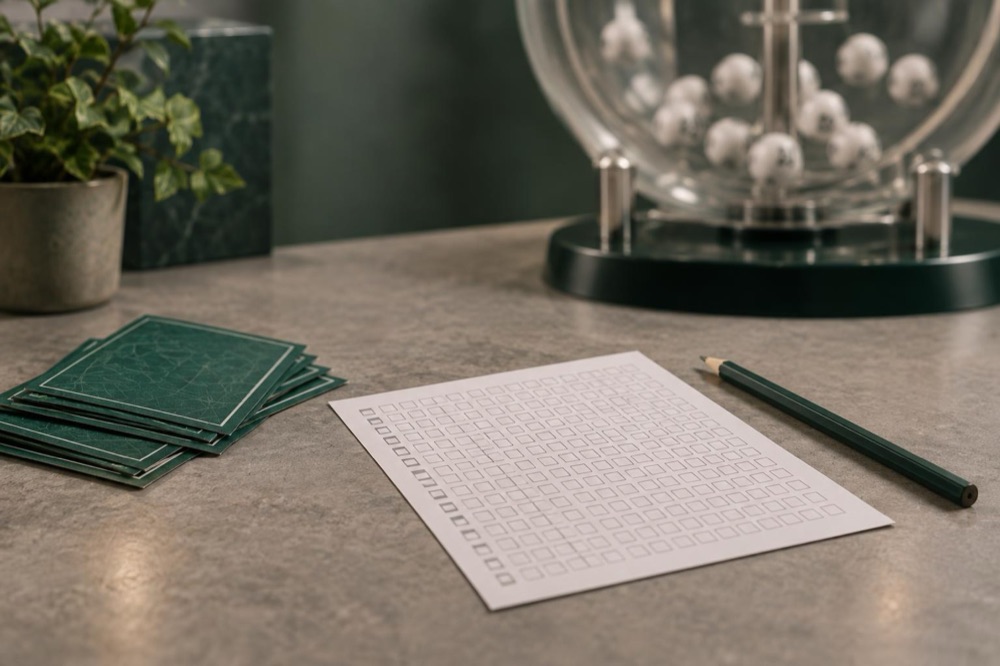
If you do not want to choose, there is Quick Pick, in which the computer selects the numbers for you at the time of purchase. Quick Pick is offered across Japan's number-selection lotteries, and it is the standard route for players who have no numbers of their own or who simply want a fast transaction at a busy counter4.
Two practical points make playing easier:
- Multiple entries. You can buy several sets of numbers on one card, each at JPY 200 per entry1.
- Continuous purchase. Since January 2012, Loto 6 has allowed continuous purchase of up to 10 draws at once, so one transaction can cover five weeks of Monday and Thursday draws without you returning to the counter5.
A common approach among regular players is to combine the two: buy a few lines with Quick Pick and a few with chosen numbers, and set the purchase to run for several draws so a missed trip to the booth does not mean a missed draw.
Carryover: how the top prize can exceed JPY 200,000,000
The headline first prize of JPY 200,000,000 is a theoretical value, not a ceiling. Loto 6 has a carryover rule: when a grade has no winners, the entire prize money for that grade is carried over and added to the next draw's first prize. The same applies when a grade's per-entry prize would exceed its preset maximum: the excess amount is also carried over to the next draw's first prize2.
The effect is that a run of draws with no first-prize winner pushes the jackpot higher and higher. The maximum first prize when a carryover occurs is JPY 600,000,000, three times the theoretical base2.
Carryovers are a big part of the game's rhythm. A draw with a large carryover attracts more players, which grows the prize pool further, and the official results announcements make a point of flagging when a carryover is in play. If you see Loto 6 in the news in Japan, it is usually because the top prize has built toward that JPY 600,000,000 ceiling.
Note that the carryover rule applies to any grade with no winners, not just the first. In practice, the lower grades almost always have winners somewhere in the country, so the carryover you see is nearly always money flowing into the top prize.
Draw days and online buying hours
Loto 6 draws are held every Monday and Thursday3. The draw takes place at the Tokyo Takarakuji Dream Hall as a rule, and for limited periods at the Osaka Takarakuji Dream Hall, and the draw event is streamed live on the internet, so you can watch the balls come out in real time2.
If you buy online through the official takarakuji website, the timing rules are worth knowing. For number-selection lotteries, purchases made between 18:20 and 8:00 the next morning on a draw day, or between 19:50 and 8:00 the next morning on a non-draw day, are shown as "issuance reserved" and change to "waiting for draw" after 8:00 the next morning6. In plain terms, an evening purchase is not issued instantly; it is queued overnight and processed the next morning, then entered into the applicable draw.
For the seasonal ordinary lotteries such as the Jumbo draws, the official site sells from the start of the reservation sale period until 23:50 on the final sale date, which gives a sense of how late the online channel stays open in general6. Sale times differ among lottery booths, the online channel, ATMs and convenience stores, so the cutoff for a Monday or Thursday draw depends on where you buy3.
Where and how to buy tickets
Loto 6 can be bought year-round, in principle, at four kinds of places: lottery booths (takarakuji uriba), online, the ATMs of some banks, and some convenience stores2. That is a wider net than most Japanese gambling products, and it is one of the reasons the game is so widely played.
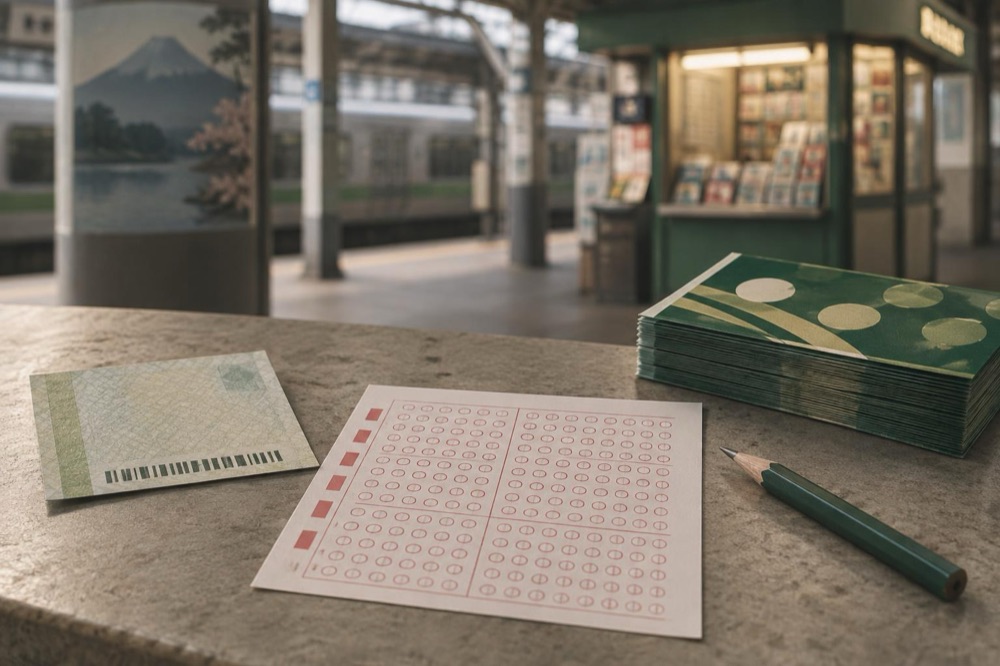
- Lottery booths. The dedicated counters found in and around train stations, shopping arcades and department stores. An example is the Takarakuji Loto Shop in the Sotetsu Joinus building in Yokohama, on the first floor at 1-5-1 Minamisaiwai, Nishi-ku, which is typical of the station-front locations these booths occupy7. Booths handle the full range of takarakuji products, from Loto 6 to the Jumbo draws.
- Online. Internet sales of the Loto games began in January 2016, and the official takarakuji website now sells the whole number-selection lineup: Loto 7, Loto 6, Mini Loto, Bingo 5, Numbers 4, Numbers 3 and more8. Buying online requires registration, and prizes are paid straight to your account (see below).
- Bank ATMs. Some banks sell number-selection lottery tickets through their ATM screens, using the same account registration as online purchases1.
- Convenience stores. Some convenience stores sell Loto 6, which is the most casual way in: you walk in, mark a card at the counter, pay and walk out1.
The takarakuji official site is the umbrella for all of this; it carries the game rules, the draw schedule and the results for every lottery in the family, and it is the natural first stop if you want to check anything about the game9.
Checking results and collecting a prize
Winning numbers can be checked through Mizuho Bank's winning number announcement service, which is the traditional channel, and of course through the official site after each Monday and Thursday draw1.
How you collect a prize depends on how you bought the ticket, and this is the one part of Loto 6 that genuinely differs by purchase channel1:
- Bought at a booth or convenience store. Winnings are collected at a lottery stand or at Mizuho Bank, depending on the amount. Small prizes are paid on the spot at the booth; larger ones require a bank visit7.
- Bought online through the official lottery website. Winnings are automatically transferred to the prize collection account you registered, so there is nothing to claim in person7.
- Bought online through a lottery sales site of an internet banking financial institution. Winnings are automatically transferred to the account you used to buy the ticket7.
One point worth flagging: for tickets bought at a shop, winnings are not automatically transferred, so it is on you to check the results and collect. A JPY 1,000 fifth prize that sits unclaimed on a ticket in a drawer is the classic small loss of the casual player7.
The prize table and what it means for players
The honest way to talk about Loto 6 odds is to start with the prize table and work down. The first prize is a theoretical JPY 200,000,000, the second around JPY 10,000,000, the third JPY 300,000, the fourth JPY 6,800 and the fifth a fixed JPY 1,0002. The fifth prize is the only one that is fixed as a rule; the others move with the pool and the number of winners in each grade.
What the numbers say, practically, is this. Most Loto 6 players most of the time win nothing. A small share win the fixed JPY 1,000 fifth prize, which returns five times the ticket price. Everything above that is rare, and the first prize is rare enough that a carryover is a normal event rather than an anomaly, which is exactly why the JPY 600,000,000 maximum exists2. If you treat the game as a JPY 200 ticket to a twice-weekly draw with a live-streamed event and a possible life-changing payout, the expected value math is what it is; if you treat it as an investment, the numbers are not on your side.
A short history
Loto 6's modern shape came together in the 2010s. Three dated changes mark the timeline:
- April 2011: draws increased to twice a week, Monday and Thursday, the schedule that still runs today5.
- January 2012: continuous purchase of up to 10 draws became possible, letting players cover five weeks of draws in one transaction5.
- January 2016: internet sales of the Loto games began, opening the online and bank ATM channels that now sit alongside booths and convenience stores5.
Before those changes, Loto 6 was a once-a-week, counter-only game. Since then it has become the most accessible big-prize lottery in the country: buyable almost anywhere, drawable twice a week, and watchable live on the internet2. The game is part of the wider takarakuji ecosystem alongside the seasonal Jumbo lotteries and the sports-promotion lotteries such as toto, and it shares with them the Mizuho Bank infrastructure that runs sales and payouts1.
Common Questions
How much does a Loto 6 ticket cost?
Each entry (one set of six numbers) costs JPY 200. You can buy as many entries as you like, and you can also set up a continuous purchase covering up to 10 draws at once.
When are the Loto 6 draws held?
Draws are held twice a week, every Monday and Thursday. The draw takes place at the Tokyo Takarakuji Dream Hall as a rule, and for limited periods at the Osaka Takarakuji Dream Hall, and it is streamed live on the internet.
What is the bonus number used for?
After the six main numbers are drawn, a bonus number is drawn as well. It is used only to decide some of the lower winning grades, so it can lift a ticket that just missed the top prize into a lower prize tier.
Can I buy Loto 6 tickets online or at an ATM?
Yes. Loto 6 can be bought at lottery booths, online, at the ATMs of some banks, and at some convenience stores. Online sales run year-round, and winnings on online tickets are transferred automatically to your account.
What is the biggest Loto 6 prize ever possible?
The theoretical first prize is JPY 200,000,000. When a carryover occurs, because no one won the top prize in the previous draw, the first prize can rise to a maximum of JPY 600,000,000.
How late can I buy tickets on a draw day?
It depends on the channel. At the official takarakuji website, purchases made between 18:20 and 8:00 the next morning on a draw day are held as reserved issuances and enter the next applicable draw. Booth, ATM and convenience store hours vary.
What is Quick Pick?
Quick Pick is an option where the computer randomly selects your numbers for you instead of you marking them yourself. It is a common way to buy number-selection lotteries like Loto 6 when you do not have favorite numbers.
Sources9 sources
- Loto 6 official page, Takarakuji Official Site, 2026
- Loto 6 features and rules, Takarakuji Official Site, 2026
- Loto 6 game overview, Takarakuji Official Site, 2026
- How to buy number-selection lotteries, Takarakuji Official Site, 2026
- History of the lottery, 2011 to 2016, Takarakuji Official Site, 2026
- Takarakuji official site FAQ: purchase timing, Takarakuji Official Site, 2026
- Loto 6 how to receive winnings, Takarakuji Official Site, 2026
- Takarakuji official site FAQ: games offered, Takarakuji Official Site, 2026
- Takarakuji Official Site, Takarakuji Official Site, 2026