Gambling in the Philippines in brief
Gambling in the Philippines is old, widespread and unusually commercial. Long before there were casinos, Filipinos were betting on cockfights, card games and numbers draws, and several of those traditions survive today. What makes the country distinct is that the modern industry is largely run by the state itself: the Philippine Amusement and Gaming Corporation (PAGCOR) both operates its own casinos and licenses private ones, while the Philippine Charity Sweepstakes Office (PCSO) runs the national lotto and sweepstakes, with the profits earmarked for charity and health programs1.
The result is a layered scene:
- In Manila and a few other cities you can play baccarat at large integrated resorts
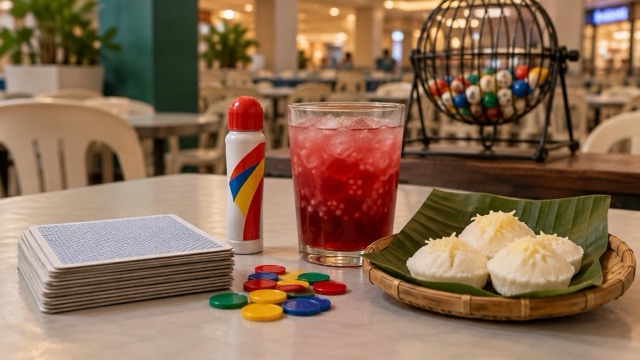
- In malls you can play bingo
- At almost any corner store you can buy a lotto ticket
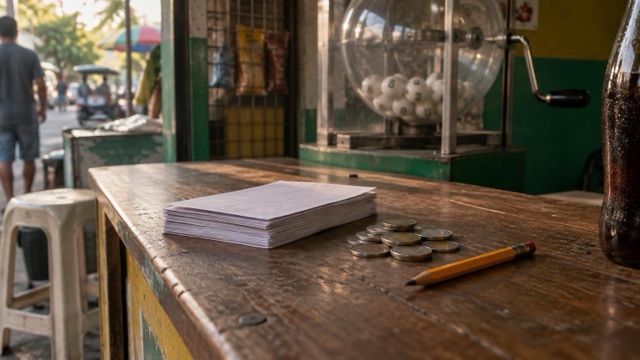
- In barangays across the islands, unlicensed numbers games like jueteng still circulate despite more than a century of bans3
This page walks through how that mix came to be, from the Spanish colonial era to today's online gaming.
Before the casinos: sabong, colonial games and the 1907 ban
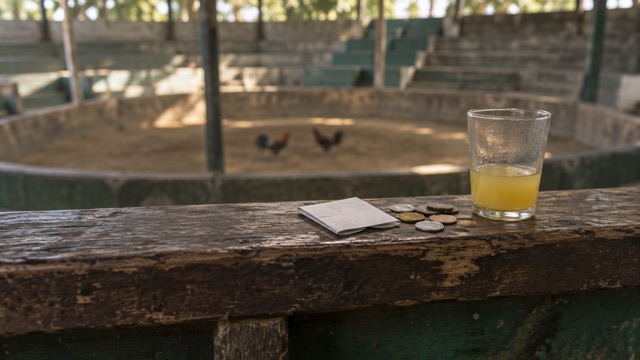
The oldest gambling tradition in the Philippines is sabong, betting on live cockfighting, which PAGCOR describes as an established pastime dating back around 3,000 years4. It remains a living part of Filipino culture, with legal cockpits and, since 2022, a regulated online version.
Numbers games arrived later, and the government eventually took them over rather than banning them. The Philippine Charity Sweepstakes Office (PCSO), a state lottery company under the direct supervision of the Office of the President, was founded in 1934 to raise funds for health programs, medical assistance and services, and charities of national character5. It got its start with a Php250,000.00 loan from the National Treasury, and today its revenue comes from the Sweepstakes Draw, National Lotteries (Lotto), Small Town Lotteries and horse racing6.
That 1907 framework still shapes the law today: chance-based gambling is prohibited unless the government has authorized it, while the state keeps the authority to run games itself. Everything that follows in Philippine gambling history, from the PCSO to PAGCOR, flows from that basic bargain.
Jueteng: how the illegal numbers game works
Jueteng has outlived every ban aimed at it. Under Philippine law it is defined as an illegal numbers game that involves the combination of thirty-seven numbers against thirty-seven numbers from 1 to 37, or thirty-eight numbers in some areas, with bets placed per combination; the law also names its variants, including masiao and last two, as illegal numbers games3.
The mechanics are simple, which is why it has endured. Bettors choose a combination of two numbers from 1 to 37 (or 38 in some areas) and hand their bet, sometimes as little as ₱0.25, to a local collector known as a cabug or kabo. The collectors pass the bets up a chain to a banker who runs the draw. Because the game is illegal, of course, a winner has no recourse if a banker simply disappears.
The legal definition of illegal gambling is broad. Executive Order No. 13 of 2017 defines it as taking part, directly or indirectly, in any game scheme with wagers at stake that is not authorized or licensed by the government agency empowered by law, or that violates the terms of that license7. The Supreme Court has applied this to jueteng cases, and has also held that bingo, by contrast, is not illegal in itself and only becomes illegal gambling when run without the required license8. The government's licensed answer to jueteng is the PCSO's Small Town Lottery, which offers a similar numbers product legally; you can read more about that in our page on jueteng and the Small Town Lottery.
Bingo everywhere: casino halls, eBingo and barangay fundraisers
Bingo has a claim to being the Philippines' most social form of gambling. The game traces its lineage back through the Italian lotto, and in the Philippines it settled into two very different worlds.
The first is commercial. PAGCOR's Casino Filipino branches regularly hold bingo sessions on a daily, bi-weekly or monthly basis, and charity bingo sessions quarterly, semi-annually or annually9. Licensed operators also run electronic bingo, or eBingo, as a major product: PAGCOR's registers list companies such as Bet Bingo Philippines, offering eBingo alongside eCasino games and sports betting through domains like www.betbingo.com, and PhilWeb Corporation, accredited for electronic bingo and electronic casino games10. Traditional bingo, electronic bingo, electronic casino games, sports betting, specialty games and numeric games are all listed among the offerings PAGCOR may allow at licensed gaming venues12.
The second world is the barangay fundraiser, and here the law is unusually permissive. The Supreme Court ruled in 2025 that barangays can conduct fundraising activities through bingo games without securing permits from the national government or any local government office, outside PAGCOR's regulatory authority8. Bingo is also fine as a parlor game or home entertainment, provided it is not held in places habitually used for gambling and the betting is not disguised to defeat the intent of the law13. That is why church fundraisers, school events and fiestas across the country can run bingo nights without anyone applying to PAGCOR. For where to play today, see our page on bingo in the Philippines.
The Philippine Charity Sweepstakes Office: charity through lotto since 1934
The PCSO is the older of the two state gaming bodies. It was created in 1934, and the new organization was authorized to secure a loan of ₱250,000 from the National Treasury to get started14. Its purpose from the beginning was to raise money for charity through gambling: sweepstakes draws first, later lotto.
Its modern legal basis is Republic Act 1169, which authorizes the PCSO to hold and conduct charity sweepstakes races, lotteries and other similar activities15. The main sources of PCSO funds are the Sweepstakes and the Lottery games16. Over the decades the office grew into a nationwide network; as of the end of 2019 it had 68 branches across the country16. Its head office sits at the Sun Plaza Building and Conservatory Shaw Plaza Building in Mandaluyong City17.
The PCSO's operations have not been uninterrupted. In March 2020, at the start of the Luzon lockdowns, it announced the temporary suspension of draws for lotto games, digit games and Keno nationwide, and of Small Town Lottery operations in Luzon, closing its outlets until restrictions eased18. The draws and outlets later resumed, and the lotto returned to its place as a daily ritual for millions of Filipinos. Today the PCSO runs the full range of jackpot games and digit games, covered in detail on our pages on the Philippines lottery and the PCSO jackpot games.
PAGCOR: the state casino company born under martial law
Casinos came to the Philippines through the state, and under martial law. In 1977, President Ferdinand Marcos created the Philippine Amusement and Gaming Corporation under Presidential Decree No. 1067-A, to centralize and integrate the right and authority to operate and conduct games of chance into one government-controlled corporate entity19. The decree empowered it to establish and operate clubs and casinos, sports gaming pools for basketball, football and the like, and other games of chance allowed by law20. A companion franchise decree, P.D. No. 1067-B, took effect on January 1, 1977, granting PAGCOR a franchise for 25 years, renewable for another 2521. The charter was later amended and consolidated under Presidential Decree No. 1869, and PAGCOR's legal basis today is PD 1869 as amended by Republic Act No. 948722.
The corporation's structure has shifted over time. Early on, PAGCOR was 60 percent owned by the government and 40 percent by entities acceptable to its Board of Directors, and it was granted tax exemptions in lieu of a franchise tax of 5 percent of gross revenue from its casino operations24. Today it is a 100 percent government-owned and controlled corporation under the Office of the President1.
PAGCOR's franchise allows gambling activities on land or water anywhere within Philippine territory, and floating casinos may dock wherever vessels are authorized under customs and maritime laws25. That power was used from the start: one early concessionaire, PCOC, ran a floating casino off Manila Bay and a casino at the PIRC building in Parañaque City under contract with PAGCOR26. By 2008, the state-run firm operated 13 PAGCOR branches in major cities across the three major islands plus 23 members-only VIP clubs, offering baccarat, blackjack, roulette, craps, big and small, pai gow, stud poker, slot machines, Super 6, Pontoon, War, Genuine Pairs and in-house bingo27. Today PAGCOR operates 10 major casinos as well as mini-casinos, slot machine arcades and PAGCOR clubs19.
The integrated resort era grew out of that foundation, with large private complexes at Entertainment City in Manila Bay, where foreign visitors are allowed entry to the casinos28. You can read about those venues in our pages on casinos in the Philippines and Entertainment City Manila.
Online gambling and eSabong under PAGCOR
The newest layer of Philippine gambling is online, and it is regulated by the same state corporation. The regulation of online sabong, or eSabong, is handled by PAGCOR pursuant to its charter4. E-Sabong takes the 3,000-year-old tradition of cockfight betting and puts it on licensed online platforms, where bettors watch live matches and place wagers remotely29.
Beyond eSabong, PAGCOR licenses a wide range of online products. Its regulatory website publishes lists of accredited gaming system administrators, licensed casinos' online gaming platforms, service providers and registered domains, so the public can see which brands and URLs are legitimate30. The offerings available at licensed venues include traditional and electronic bingo, electronic casino games, sports betting, specialty games, numeric games and online poker12.
Because online gambling attracts imitators, PAGCOR puts real effort into helping the public tell licensed sites from fake ones. It has launched an online verification facility that lets anyone check whether an online gaming provider is licensed31, and it repeatedly advises the public to verify licensed operators through its official website, www.pagcor.ph32. It has warned about websites using the PAGCOR logo without permission, which may pose risks to personal and financial information33, and about sites displaying counterfeit PAGCOR certificates that may exploit financial information or use personal details to scam others34. It has also warned against letters and text messages circulating the claim that Philippine offshore gaming operators (POGOs) will reopen, following their ban1. The POGO story is covered in our page on POGOs and the 2024 ban, and licensed online options in PAGCOR-licensed online casinos.
What the PCSO lotto pays and how prizes are claimed
The practical side of the lotto is straightforward. A standard ticket now costs ₱25, an increase from the old ₱20 price that took effect in February 20252. Draws happen on set days for each game, and the PCSO also offers an official online platform, the PCSO e-Lotto, through which bettors can buy tickets online2.
Claiming depends on how much you win:
| Prize amount | Where to claim |
|---|---|
| ₱20 up to ₱10,000 | Any authorized PCSO lotto outlet or PCSO branch office |
| ₱10,001 up to ₱300,000 | PCSO branch office in your area, or the PCSO Main Office |
| ₱300,000.01 and above, including jackpots | PCSO Main Office, Shaw Boulevard, Mandaluyong City |
Prizes of ₱10,000 and below are payable in cash at outlets, branch offices or the Treasury Department of the Main Office35. Whatever the amount, sign the back of your winning ticket with your name and signature, and bring two valid government-issued IDs with your photo and signature for verification2.
On tax: Philippine Charity Sweepstakes and Lotto winnings are exempt from the 20 percent final tax that applies to most other prizes and winnings from Philippine sources36. PAGCOR, on the other hand, pays 5 percent of winnings to the Bureau of Internal Revenue as franchise tax1. The details are in our page on the tax on gambling winnings in the Philippines.
The state of play today
Put it all together and the pattern set in 1907 still holds: gambling and games of chance not under the authority of PAGCOR or the PCSO, and not otherwise authorized under any special law, are illegal13. Within that boundary, the legal market is broad. PAGCOR licenses and operates casinos, eBingo halls, electronic casino games, sports betting and online products including eSabong; the PCSO runs the lotto, digit games, Keno and the Small Town Lottery; barangays run bingo fundraisers; and games of skill sit outside the chance-based definition of gambling altogether5.
For players, the practical safeguards are real. PAGCOR's regulatory framework disallows access to gaming venues by minors and financially vulnerable persons37, and it offers self-exclusion: patrons who feel they or a relative are developing a problem can apply to be barred, and the order is enforced in all PAGCOR operated and regulated gaming facilities, with names posted in a national database of Restricted Personalities38. PAGCOR keeps information gathered in exclusion applications confidential38. For assistance, PAGCOR's responsible gaming helpline is (02) 8248-9568, and self-exclusion inquiries go to ResponsibleGaming@pagcor.ph39.
The through-line of the whole story is continuity. Sabong predates every government that tried to regulate it; jueteng has survived a century of prohibition; bingo moved from church fundraisers to licensed eBingo platforms; and the state, having monopolized the legal market through PAGCOR and the PCSO, now runs one of the most varied gambling scenes in Asia. For what you can play and where today, start with our guide to gambling in the Philippines.
Common Questions
Is jueteng legal in the Philippines?
No. Jueteng is defined in Philippine law as an illegal numbers game, and playing it or acting as a collector or agent is punishable. The government's licensed alternative is the PCSO Small Town Lottery, which draws numbers openly.
How much does a jueteng bet pay?
Press reports describe payouts of ₱700 to ₱900 for every ₱1 bet on the winning combination, so a winning ₱10 bet earns ₱7,000 to ₱9,000. Bets can start as low as ₱0.25. Since the game is illegal, there is no guarantee of payment.
Who owns PAGCOR?
PAGCOR is a 100 percent government-owned and controlled corporation under the Office of the President of the Philippines. It both operates its own casinos and licenses and regulates private gaming venues.
What is the tax on lotto winnings in the Philippines?
Philippine Charity Sweepstakes and Lotto winnings are exempt from the 20 percent final tax that applies to most other prizes. PAGCOR, separately, pays 5 percent of winnings to the Bureau of Internal Revenue as franchise tax.
Where can I claim a PCSO prize?
Prizes up to ₱10,000 are paid in cash at any authorized outlet. Prizes up to ₱300,000 are claimed at a PCSO branch office, and anything above that, including jackpots, at the PCSO Main Office on Shaw Boulevard, Mandaluyong City.
Is bingo legal in the Philippines?
Yes, when licensed. Bingo is not illegal in itself and only becomes illegal gambling if run without the required license. Barangays may also hold bingo fundraisers without national permits, and bingo is fine as a home or parlor game.
How can I verify a PAGCOR-licensed operator?
Check PAGCOR's official website, www.pagcor.ph, which lists licensed operators and accredited service providers, and use its online verification facility for online gaming providers. PAGCOR regularly warns about fake sites using its logo.
Sources39 sources
- PAGCOR Annual Report 2024, Philippine Amusement and Gaming Corporation, 2024
- Can I buy PCSO lotto tickets online?, Lotto PCSO, 2026
- Republic Act No. 9287, LawPhil, April 2, 2004
- E-Sabong, Philippine Amusement and Gaming Corporation, 2026
- GR L-6941, March 1913, LawPhil, March 1913
- Act No. 1757, 1907, LawPhil, October 9, 1907
- Executive Order No. 13, 2017, LawPhil, February 2, 2017
- GR 207118, Leonen, LawPhil, April 2025
- PAGCOR to give away ₱12.4M in Shower of Million Bingo, Philippine Amusement and Gaming Corporation, 2026
- List of Service Providers and Registered Domains, Philippine Amusement and Gaming Corporation, March 18, 2025
- List of PAGCOR-accredited Gaming System Administrators and registered Brands and Sub-brands, Philippine Amusement and Gaming Corporation, December 4, 2025
- Regulatory Framework for Gaming Venue Operations, Philippine Amusement and Gaming Corporation, November 6, 2025
- DILG to Cordi LGUs: beef up efforts vs bingo ops, DILG CAR, July 27, 2023
- PCSO History, Philippine Charity Sweepstakes Office, archived June 25, 2017
- PCSO Charter, Philippine Charity Sweepstakes Office
- Executive Summary 2019, Philippine Charity Sweepstakes Office, December 31, 2019
- Executive Summary 2018, Philippine Charity Sweepstakes Office, 2018
- PCSO suspends lotto draws nationwide, Philippine News Agency, March 17, 2020
- GR 248583, Leonen, LawPhil, February 3, 2025
- Presidential Decree No. 1067-A, Chan Robles
- GR 228234, April 2023, LawPhil, April 2023
- PAGCOR Legal Opinion, APECO, Philippine Amusement and Gaming Corporation
- PAGCOR Code of Practice, Philippine Amusement and Gaming Corporation, 2026
- GR 230818, Leonen, LawPhil, February 14, 2023
- Presidential Decree No. 1399, 1978, LawPhil, June 2, 1978
- GR 132929, March 2000, LawPhil, March 27, 2000
- PAGCOR Annual Report 2008, Philippine Amusement and Gaming Corporation, 2008
- Supreme Court of Korea precedent 80921, Korea Law Service Center, September 25, 2001
- E-Sabong Regulatory Framework, Philippine Amusement and Gaming Corporation, April 27, 2022
- Approved brands and domain names/URLs, Philippine Amusement and Gaming Corporation, August 22, 2025
- PAGCOR to launch app to protect online gaming players, Philippine Amusement and Gaming Corporation, August 25, 2026
- PAGCOR warns public against illegal offshore gaming site, Philippine Amusement and Gaming Corporation, June 29, 2025
- PAGCOR warns vs fake online gaming sites, Philippine Amusement and Gaming Corporation, September 12, 2023
- Notice to the public: reported websites, Philippine Amusement and Gaming Corporation, 2024
- 2025 PCSO Citizen's Charter, Philippine Charity Sweepstakes Office, 2025
- GR 177387, November 2016, LawPhil, November 9, 2016
- PAGCOR casinos, Philippine Amusement and Gaming Corporation, 2026
- PAGCOR exclusion program, Philippine Amusement and Gaming Corporation, 2026
- PAGCOR responsible gaming, Philippine Amusement and Gaming Corporation, 2026