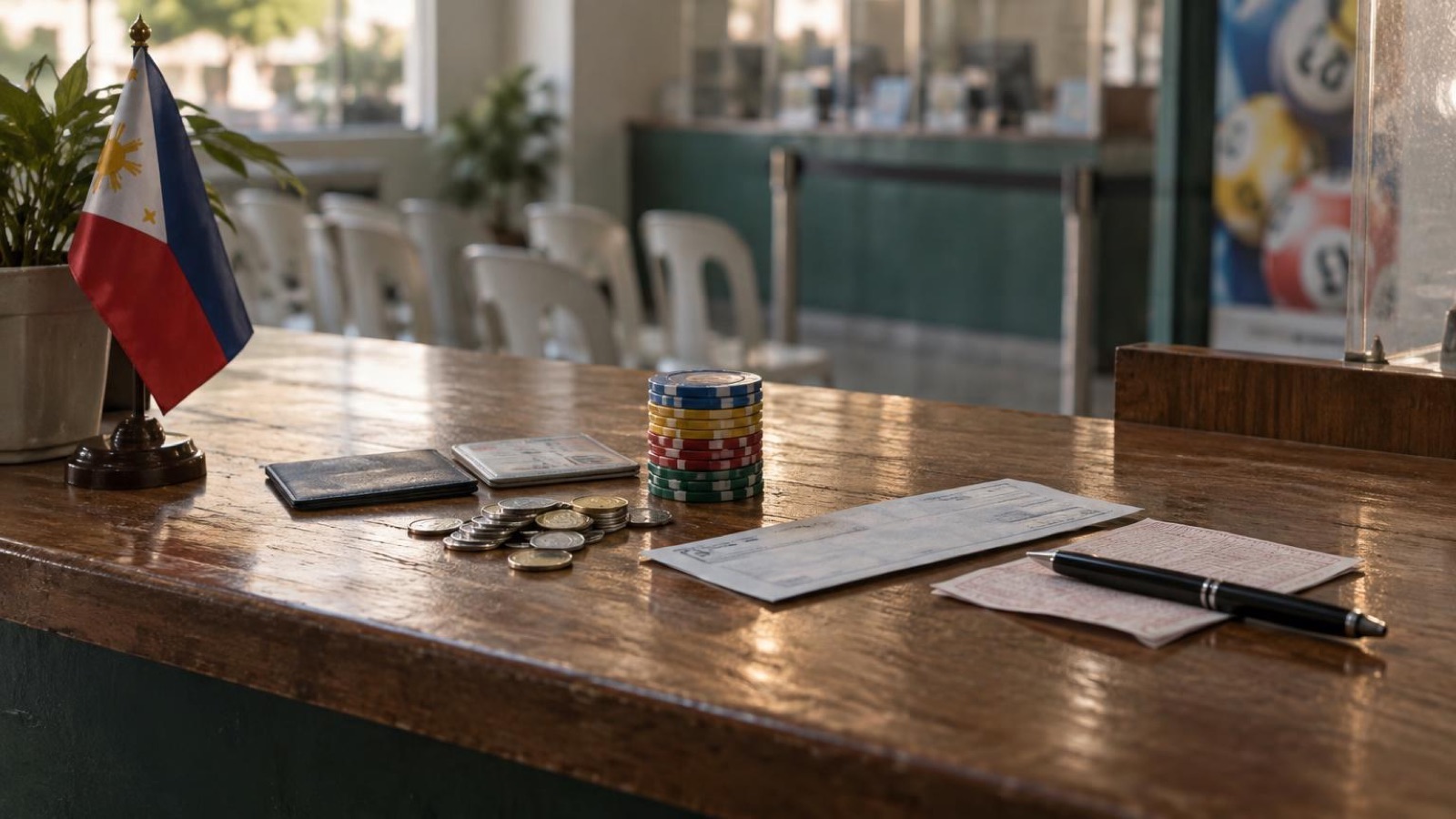
Tax on gambling winnings in the Philippines: the 20% final withholding tax
The single number to remember is 20 percent. Prizes and other winnings from sources within the Philippines carry a final tax of 20 percent, with exceptions written into the law: prizes amounting to ₱10,000 or less, and, at the time the provision was framed, Philippine Charity Sweepstakes and Lotto winnings3. Horse racing winnings are also outside the 20 percent rule, since they carry a separate 10 percent tax under RA 79534. The PCSO exception mattered before 2018, but the Tax Reform Acceleration and Inclusion (TRAIN) Law, RA 10963, changed the picture for lotto players: today PCSO prizes above ₱10,000 have the 20 percent deducted, and the PCSO pays you net1.
The key practical point is that this is a withholding tax, not something you settle later. The payer, whether the PCSO, a casino operator or an online platform, deducts the 20 percent and hands over the remainder. PCSO prizes above ₱10,000 up to ₱60,000 are paid in cash, net of the 20 percent final tax, and prizes above that are paid by check, also net of the tax1. So if you win ₱100,000 on a lotto ticket, you walk away with ₱80,000. You do not file anything extra for that prize; the tax is final.
The same 20 percent threshold shows up in online gambling. PAGCOR's rules for online poker operators require a 20 percent withholding tax deducted from individual payouts above ₱10,0005. So a big tournament score or a jackpot on a licensed poker site is taxed the same way a lotto prize is: the platform withholds, you receive the net.
Casino winnings follow the same 20 percent rule on prizes above ₱10,0003. Separately, at the industry level, 5 percent of winnings goes to the Bureau of Internal Revenue as franchise tax, which is a cost the operator bears rather than one deducted from your payout6.
Horse racing has its own older rate. Under RA 7953, every person who wins in horse racing pays a tax of 10 percent of their winnings or dividends, based on the actual amount paid for each winning ticket after deducting the cost of the ticket4. So if you bet on the races, expect a smaller bite than the 20 percent that applies to lotto and casino prizes.
Who does this apply to? The withholding applies to anyone claiming a prize from a Philippine source, whether you are a Filipino citizen, a foreign resident or a visitor holding a winning ticket. The deduction happens at the counter, so your status does not change the arithmetic.
PCSO lotto games and jackpots: products, minimum jackpots and draw schedules
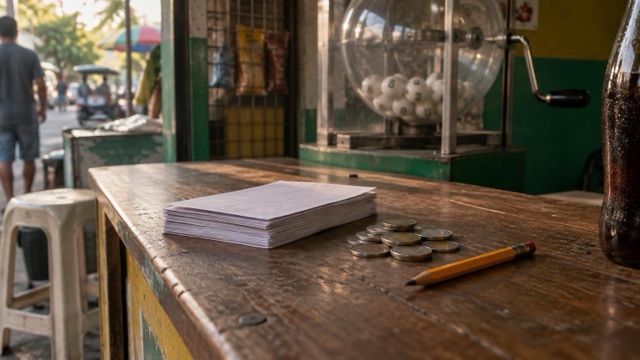
The Philippine Charity Sweepstakes Office (PCSO) runs the national lottery, and its game products are lotto, sweepstakes and the Small Town Lottery (STL)7. Its revenue lines are the Sweepstakes Draw, the National Lotteries (Lotto), Small Town Lotteries and horse racing8. The lotto side is what most players know: a family of number-draw games with rolling jackpots that grow until someone hits them.

Tickets cost ₱25 each, an increase from the old ₱20 price that took effect in February 20252. That same price revision raised the minimum jackpots across the main games2:
| Game | Minimum jackpot | 2nd prize (5 of 6) | 3rd prize (4 of 6) |
|---|---|---|---|
| Lotto 6/42 | ₱10 million | ₱1.1 million (shared) | ₱1.0 million (shared) |
| Mega Lotto 6/45 | ₱15 million | ₱1.2 million (shared) | ₱1.1 million (shared) |
| Super Lotto 6/49 | ₱25 million | ₱1.3 million (shared) | ₱1.2 million (shared) |
| Grand Lotto 6/55 | ₱45 million | ₱1.4 million (shared) | ₱1.3 million (shared) |
| Ultra Lotto 6/58 | ₱75 million | ₱1.5 million (shared) | ₱1.4 million (shared) |
The two headline games answer the most common jackpot question directly: Ultra Lotto 6/58 now starts at ₱75 million, up from ₱50 million, and Grand Lotto 6/55 starts at ₱45 million, up from ₱30 million2. When no one wins, the pot rolls and can climb far above the minimum. In December 2023 the PCSO raised both the 6/55 and 6/58 jackpots to ₱500 million each, a combined ₱1 billion, after a long roll9. A recent 6/58 draw on September 25, 2026 carried a jackpot of ₱330,176,341.8810. Grand Lotto 6/55 runs on a shared-prize consolation system, with the jackpot amount varying based on ticket sales2.
Where to claim depends on the size of the prize2:
| Prize amount | Where to claim |
|---|---|
| Up to ₱10,000 | Any authorized lotto outlet or PCSO branch office |
| ₱10,001 to ₱300,000 | PCSO branch office in your area, or the PCSO Main Office |
| Above ₱300,000, including jackpots | PCSO Main Office, Shaw Blvd., Mandaluyong City |
Prizes of ₱10,000 and below are payable in cash at outlets, branch offices or the Treasury Department of the main office, and because they sit at or under the threshold, they arrive untaxed1. Anything above ₱10,000 is paid net of the 20 percent final tax, in cash up to ₱60,000 and by check beyond that1.
For a jackpot claim at the main office, write your full name and sign the back of the original winning ticket, and bring two valid government-issued IDs with your photo and signature2. Accepted IDs are broad2.
- PhilID or ePhilID
- SSS
- GSIS
- UMID
- Driver's license
- PRC ID
- PhilHealth ID
- TIN ID
- Postal ID
- Passport
- Voter's ID or voter's certificate
- Senior citizen ID
- NBI or police clearance
- Seaman's book
- Government office and GOCC IDs
- For foreign nationals, an Alien Certificate of Registration ID card or DOLE work permit
The whole claim process at the main office takes about one working day, with the Treasury Department stage alone set at four hours1.
If you want to watch the draws, they are broadcast live on PCSO's official Facebook page and YouTube channel, with results also posted on the PCSO website and lotto results pages2. During the 2020 catch-up draws, coverage ran live on the PCSO and PTV Facebook pages and YouTube channels, with a delayed telecast on PTV411. You can also buy tickets without visiting a kiosk: the PCSO e-Lotto is the official online platform for buying lotto tickets, which began as a one-year test run on December 15, 20232. The traditional network it complements spans about 4,600 kiosks nationwide9.
Suspensions and resumptions of PCSO operations: what happened and current status
PCSO operations have been shut down more than once in recent years, and each shutdown stopped ticket sales, ticket validation and prize claiming at every outlet. Knowing the history helps you make sense of older news stories, and it is a reminder that lotto play in the Philippines can pause without much notice.
The first big halt came in 2019, when President Rodrigo Duterte suspended PCSO gaming over corruption concerns. The suspension of the lotto numbers game was lifted within days and outlets were allowed to remove their closed signs and resume selling12. However, other PCSO games, including the Small Town Lottery, Keno and Peryahan ng Bayan, remained suspended longer12.
The second shutdown was far longer. On March 17, 2020, with the enhanced community quarantine in place, the PCSO announced the temporary suspension of the draws for lotto games and the operations of its outlets nationwide, covering lotto, Keno and the other digit games13. All of the agency's games stopped on that date15. No tickets were sold, no tickets were validated and no prizes were claimed for the duration.
Regular gaming operations remained suspended until further notice through the spring and early summer of 2020, even as the PCSO requested approval from the Office of the President to resume11. In late July 2020, the PCSO ran catch-up draws for the missed dates: 15 days of draws, two per day, broadcast live on the PCSO and PTV Facebook pages and YouTube channels and on delayed telecast on PTV415. During the catch-up period, all lotto outlets stayed closed, with no selling, ticket validation or prize claiming16. There were no jackpot winners in the catch-up draws held for March 16 and 1715.
Normal service returned on August 4, 2020, when the PCSO resumed operating lotto games, with ticket sales restarting in selected areas depending on the community quarantine category and lockdown status set by each local government unit15. Since then, lotto draws and outlet sales have continued, and the e-Lotto platform has added an online channel on top of the kiosk network9.
Legal online gambling in the Philippines: PAGCOR-regulated sites and international casinos
Online gambling in the Philippines is built around one regulator: the Philippine Amusement and Gaming Corporation (PAGCOR). Only games and gambling activities regulated under PAGCOR are considered legal, and everything outside its jurisdiction is considered illegal18. For Philippine residents, that means the only sites you can legally join are those operated by PAGCOR; other operators in the country cannot obtain a license, and it is illegal for them to offer online gambling19. PAGCOR-licensed platforms are the only ones that may legally accept Filipino players, whether the product is casino games, poker or sports betting20.

In practice, that means looking for a platform that states it is PAGCOR licensed. BingoPlus, for example, describes itself as a PAGCOR licensed online gaming platform operating legally in the Philippines22, and Casino Plus confirms the same licensing on its site23. Online poker follows the identical rule: legal only on platforms licensed and regulated by PAGCOR20. Sports betting guidance for Filipinos likewise notes that the law only allows operating platforms with a PAGCOR license21.
What about international casinos based outside the country? Players from the Philippines are free to place bets across international online casinos that accept players from the Philippines19. Some of those sites, usually European-based ones, set their age limit at 18, but Filipinos are still expected to respect their own country's legal gambling age of 2119. The practical difference is that a PAGCOR-licensed site is regulated locally and pays taxes locally, while an offshore site sits outside that system.
The age rule is strict and consistent. The legal gambling age in the Philippines is 21 or older19, a figure echoed across the industry: PAGCOR's own rules bar persons under 21 and students of any Philippine school, college or university, regardless of their age24. Licensed platforms enforce it at sign-up; Casino Plus requires users to confirm they are 21 or older26, and BingoPlus states users must be 21+27. Land-based casinos apply the same entry rule28. Online poker operators must likewise verify that registrants are at least 21 and are not among those disqualified by law, such as public officials and members of the Philippine National Police and the Armed Forces5.
One caution worth a sentence: regulators have noted weaknesses in parts of the e-gaming sector, observing that anybody, even minors, could once open an e-gaming account using a fake name and age, which is part of why verification on licensed platforms has tightened29. If you want the wider picture of legal and illegal gambling in the country, see our page on gambling in the Philippines, and for the licensed platforms themselves, see PAGCOR-licensed online casinos.
Common Questions
How much tax do I pay on casino jackpot winnings in the Philippines?
Prizes and winnings from Philippine sources above ₱10,000 carry a 20 percent final tax. On licensed online poker platforms, the same 20 percent is withheld from individual payouts above ₱10,000 before the money reaches you.
Is the tax taken before or after I receive my prize?
Before. The 20 percent is a final withholding tax, so the operator or PCSO deducts it and pays you the net amount. A ₱100,000 lotto prize, for example, arrives as ₱80,000.
Do I pay tax on lotto winnings from the PCSO?
Yes. Under the TRAIN Law, PCSO prizes above ₱10,000 have 20 percent withheld. Prizes of ₱10,000 or below are paid in full, in cash, at outlets or branch offices.
Where can I claim a PCSO prize of P10,000 to P300,000?
At any PCSO branch office in your area, or at the PCSO Main Office on Shaw Boulevard in Mandaluyong City. Prizes above ₱300,000, including jackpots, can only be claimed at the main office.
What documents do jackpot winners need to claim at the PCSO main office?
Sign the back of your original winning ticket with your full name, and bring two valid government-issued IDs with your photo and signature, such as a passport, driver's license, UMID or PhilID. The whole claim process takes about one working day.
What is the minimum age for online gambling in the Philippines?
21. PAGCOR-licensed platforms require players to be at least 21, and students of any Philippine school, college or university are barred regardless of age. Some international sites accept 18-year-olds, but Filipinos are still bound by the local age of 21.
Sources29 sources
- 2025 PCSO Citizen's Charter 2nd Edition, Philippine Charity Sweepstakes Office, 2025
- Can I buy PCSO lotto tickets online?, LottoPCSO, September 13, 2026
- GR No. 177387, LawPhil, November 9, 2016
- Republic Act No. 7953, The Corpus Juris, March 30, 1995
- Implementing rules and guidelines for online poker operators, PAGCOR, March 23, 2023
- PAGCOR Annual Report 2024, Philippine Amusement and Gaming Corporation, 2024
- PCSO Newsletter June 2017, Philippine Charity Sweepstakes Office, June 2017
- Tanggapan sa Charity Sweepstakes ng Pilipinas, Wikipedia, 2026
- PCSO starts one-year test run of e-Lotto, Cebu Daily News, December 17, 2023
- PCSO lotto results, Philippine Charity Sweepstakes Office, 2026
- PCSO conducts catch-up draws starting Monday, Manila Bulletin, July 20, 2020
- Lotto outlets may now remove closed signs, Inquirer, July 30, 2019
- PCSO suspends lotto draws nationwide, Philippine News Agency, March 17, 2020
- Drug war: lotto games suspended, Philippine Star, March 18, 2020
- PCSO to resume lotto games operation August 4, Philippine Star, July 21, 2020
- PCSO lotto operations still suspended, Inquirer, July 21, 2020
- PCSO gaming operations not resumed, Philippine News Agency, July 21, 2020
- Online Gambling, Iskomunidad UP Diliman, September 25, 2026
- Philippines banking page, Wizard of Odds, September 26, 2026
- Online poker in the Philippines, SoMuchPoker, May 7, 2026
- Legal aspects of football betting in the Philippines, OKBet Sports, September 25, 2026
- BingoPlus Philippines, BingoPlus, September 26, 2026
- How to reach the official Casino Plus site, Casino Plus, September 26, 2026
- Memorandum Circular No. 20, 1986, LawPhil, October 8, 1986
- RG Code of Practice Version 4.0, PAGCOR, December 2015
- Newport World Resorts responsible gaming program, Newport World Resorts, 2026
- BingoPlus PH, BingoPlus, September 26, 2026
- NUSTAR responsible gaming, NUSTAR Resort and Casino, March 4, 2026
- E-gaming regulation news, Philippine News Agency, September 12, 2024