
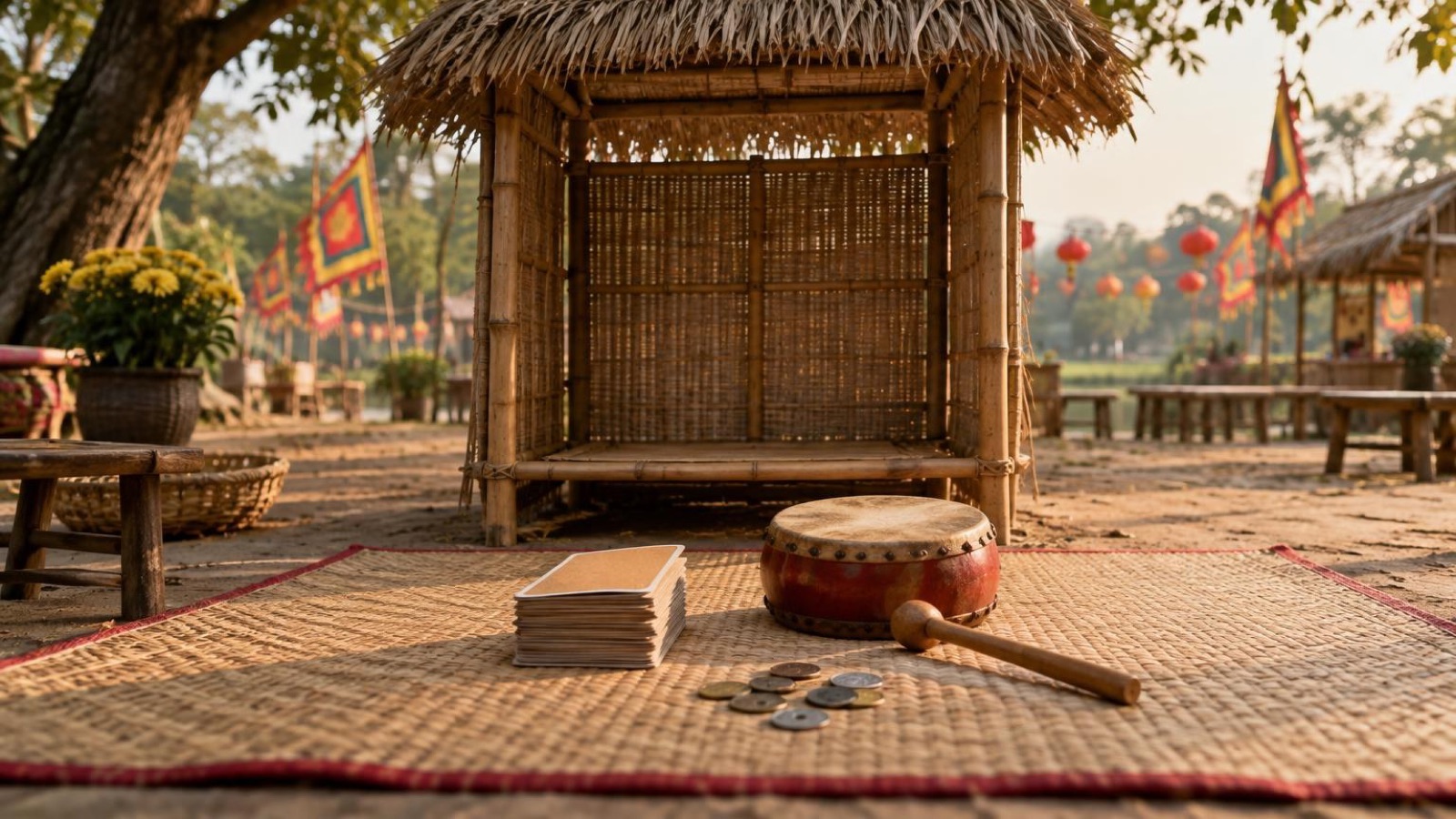
What heritage recognition actually covers
When a game is added to a heritage list, what gets protected is the practice, not the wager. For Bai Choi, that means the singing, the deck, the huts, the festival calendar and the people who make and use the cards. It does not mean the government has carved out a legal right to gamble.
This distinction matters if you are planning to play. A game can be heritage and still be restricted the moment money changes hands outside the recognized setting. Vietnam's public security ministry has repeatedly broken up organized gambling operations disguised as entertainment, including operations run under the cover of a shopping center play area7. The heritage label on the game does not shield the operator.
The same pattern shows up across the region. Thailand legalized gambling under the traditional Buffalo Racing Festival, with permitted hours between 6 PM and 6 AM2. That is a narrow, time-boxed permission tied to a specific festival, not a general green light for traditional games.
If you want the wider picture of how these traditions sit alongside modern rules, the gambling culture and history in Asia hub is a good starting point.
Where Bai Choi is played today
Bai Choi is a central Vietnamese tradition, strongest in Binh Dinh, Quang Nam and Da Nang. You will see it at village festivals, temple grounds and Lunar New Year celebrations, where a caller stands on a raised platform and players sit in small huts arranged around them.
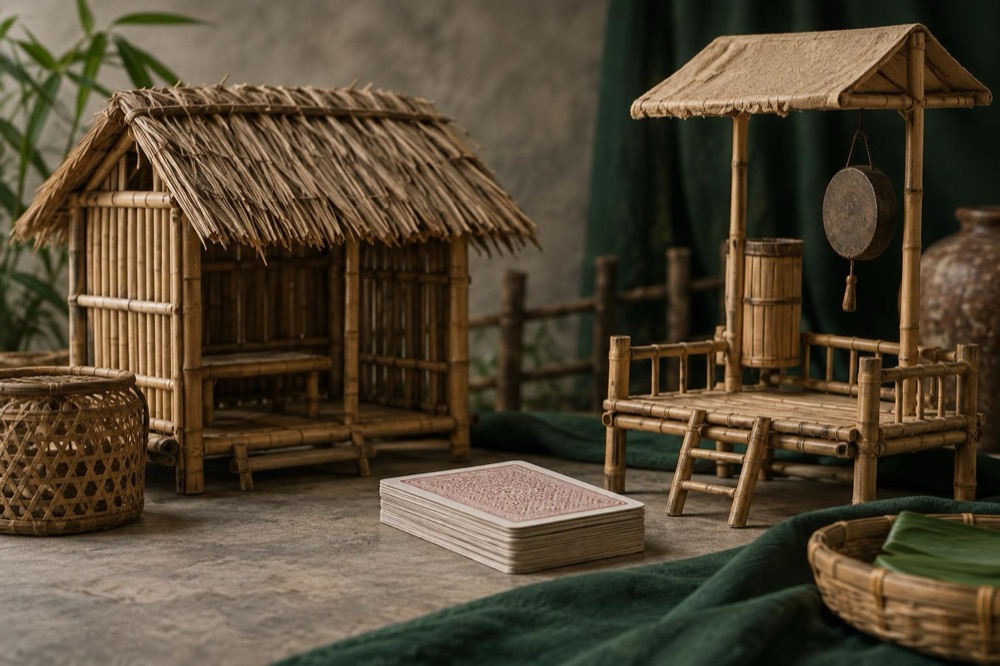
The game travels with the community. Outside Vietnam, Bai Choi turns up at Vietnamese cultural festivals and community events, usually as a demonstration rather than a cash game. If you are a visitor, the easiest way to see it is at a spring festival in central Vietnam, where the singing is the main event and the card game runs alongside it.
For a visitor, the practical points are simple.
- You do not need to bring anything.
- You do not pay to watch.
- If you are invited to sit in a hut, the stake is usually small and the point is the round, not the money.
Foreign residents and visitors are welcome as spectators at public festivals; playing in a private cash game is a different matter and falls under Vietnam's gambling rules.
If you want the full story of how the game reached the heritage list, see when UNESCO recognized Bai Choi.
How a Bai Choi game works: cards, huts and winning
The mechanics are easy to follow once you have watched one round.
Each player sits in a small hut, which is really a wooden frame with a roof, open at the front. The caller sits or stands at a platform in the middle, often with a small drum or a set of cards. The caller draws a card and sings its name, and the players check their own cards.
The deck is specific to the game. It has 30 cards split into three suits of ten, and the cards carry names rather than the suits and ranks you would see in a Western deck. Each player holds three cards. When your three cards match the three the caller has drawn, you call out "tới" to claim the round. The caller checks your cards, and the prize is handed over.
The singing is not decoration. The caller's lines are traditional verses, and a good caller stretches the reveal out, drops hints and works the crowd. That is why the game is listed as a performing art as much as a card game.
For comparison, the card games that ended up in Macau's casinos are a different lineage. Macau's law permits 24 named games of fortune in casinos, and the list includes mahjong, mahjong baccarat, mahjong pai gow, pai gow, small pai gow, Taiwan pai gow, fan tan and Chinese poker6. Those are the games that made the jump from teahouse to licensed floor. Bai Choi did not, and it stayed a festival game.
If you are curious how Bai Choi compares with Vietnam's other traditional card game, Bai Choi vs Tam Cúc walks through the differences.
Where Bai Choi came from: land reclamation and crop guarding
The game grew out of agricultural life in central Vietnam. Farmers working reclaimed land and guarding crops needed something to pass the long hours, and the card game and the sung verses developed together. The huts echo the field shelters the workers used.
That origin explains the shape of the game. It is played outdoors, in daylight, in a group, with a caller who keeps everyone engaged. It is not a quiet table game. The verses carry local references, jokes and news, and different villages have their own versions.
The same pattern of work, song and small stakes shows up in other Asian traditions. In China, card games spread through teahouses and country gatherings, and by the late nineteenth century games such as gan mo ziang were popular enough in the Ningbo area to be called a fashion9. In Jinling, the countryside saw men and women of all ages sitting together under tea sheds playing leaf games with names like guo he, bi gun and gan mo ziang9. Those games were social first and gambling second, which is exactly the space Bai Choi occupies.
Who keeps the tradition alive: performers and card makers
Bai Choi survives because people choose to keep it going. The caller is the key figure: a performer who knows the verses, can improvise, and can hold a crowd for a full session. Callers are often older members of a community who learned from their own elders.
Card makers matter too. The 30-card deck is not a mass-market product, and the cards are made in small batches for festivals. If the deck stops being made, the game stops being played in its traditional form.
Village committees, cultural associations and schools do much of the organizing. Festivals are usually run by the community rather than a commercial operator, which is why the stakes stay small and the singing stays central.
For a visitor, this is the practical takeaway: if you want to see Bai Choi, go to a community festival, not a commercial venue. The heritage version is the one run by the people who make the cards and sing the verses.
What UNESCO listing does and does not cover
Listing brings recognition, funding and a reason for communities to keep the practice alive. It can support teaching, documentation and festival organization. That is the upside.

What it does not do is change gambling law. A heritage listing is a cultural designation, not a licensing decision. If you play Bai Choi for money in a setting that Vietnam treats as organized gambling, the heritage status of the game is irrelevant to how that is handled. Vietnam's police have shut down operations that used entertainment venues as cover for organized betting5.
The same principle applies elsewhere. China's rules draw a line at profit and scale: recreational activities with small stakes and no profit motive are not treated as gambling, and chess and card rooms that charge only normal venue and service fees are not treated as gambling either3. Among relatives, mahjong or poker with money stakes and no profit motive is not punished, and small stakes among non-relatives are usually not treated as gambling4. That is a practical line about scale and intent, not a heritage exemption.
Thailand's festival permission is another example of a narrow carve-out. Buffalo racing and traditional card games were legalized under the festival, with hours set between 6 PM and 6 AM2. Step outside those hours or that setting and the permission does not follow you.
In Macau, the licensed floor is a closed list. Casino games of fortune are limited to the 24 named games, and interactive gaming is not open to casino concessionaires in any form6. Traditional games that are not on the list do not get played for money in a licensed casino.
So the honest answer to "does heritage status make it legal to bet" is no. It makes the game worth protecting. It does not make the wager legal.
Quick reference: what is recognized and what it means
| Game or tradition | Recognized as | Where it is played | Can you bet on it? |
|---|---|---|---|
| Bai Choi | Intangible cultural heritage | Central Vietnam festivals | Small stakes at community festivals; organized cash play falls under gambling law1 |
| Buffalo racing and traditional card games | Legalized under festival rules | Thailand | Yes, between 6 PM and 6 AM during the festival2 |
| Mahjong and poker among relatives | Not treated as gambling | China | Small stakes, no profit motive, not punished4 |
| Mahjong, pai gow, fan tan | Licensed casino games | Macau | Yes, on the licensed floor, within the 24 named games6 |
If you are planning a trip and want to know what is legal where you are going, the country guides are the place to start: Vietnam, Thailand, China and Macau.
Common Questions
How many cards does each player get in Bai Choi?
In the festival version, players sit in front of small huts and hold three cards each. The caller draws from a deck and sings out the card name. You win the round when your three cards match the three cards the caller has drawn.
When are Bai Choi festivals held?
Bai Choi is played mainly around Lunar New Year, in the spring festival season, in central Vietnam. The biggest gatherings are in Binh Dinh, Quang Nam and Da Nang provinces, where villages set up their huts in a public yard or temple ground.
How many huts are set up at a Bai Choi festival?
A village festival typically sets up eight to ten huts, though larger events can run more. Each hut holds one player, and the huts are arranged in a row or a circle facing the caller's platform in the middle.
Who is credited with inventing Bai Choi singing?
There is no single inventor. Bai Choi grew out of work songs and folk singing in central Vietnam, and the game and the singing developed together over generations. UNESCO recognized the art form as a community tradition rather than crediting one person.
What is a 'tới' in Bai Choi?
A 'tới' is the moment you complete your hand and win the round. When your three cards match the three the caller has drawn, you call out 'tới' to claim the win. The caller then verifies your cards before the prize is handed over.
Which deck is Bai Choi based on?
Bai Choi uses a 30-card deck divided into three suits of ten. The cards carry names rather than the suits and ranks of a Western deck. The deck is specific to the game and is not used for anything else.
Is Bai Choi a form of gambling or a pastime?
It is both, depending on the setting. At a village festival the stakes are small and the point is the singing and the crowd. The same cards played for cash in a private setting fall under Vietnam's gambling rules, which treat organized play for money differently.
Sources11 sources
- Mahjongg Before and After Mahjongg, Part 2, The Mahjong Tile Set
- Thailand Legalizes Buffalo Racing and Traditional Card Games Under New Gambling Rules, TPN National, October 12, 2024
- Interpretation on Gambling Criminal Cases Article 9, Chinese Embassy in Mali, August 12, 2026
- Notice on Applying the Law in Gambling Violation Cases Article 9, Shanwei Chengqu
- Cong an Lang Son triet pha tu diem to chuc danh bac, Ministry of Public Security, Vietnam
- Law 16/2001 on Games of Fortune, DICJ Macau
- Triet pha nhom to chuc danh bac tra hinh bang may ban ca, Ministry of Public Security, Vietnam
- Law 16/2001 Article 3(3), Macau Legal Affairs
- Mahjong Terms 1780-1920, The Mahjong Tile Set
- Interpretation on Several Issues Concerning the Specific Application of Law in Handling Criminal Gambling Cases, Chinese Embassy in Angola, April 14, 2026
- Ministry of Public Security Notice Article 9, Anyang Government















