
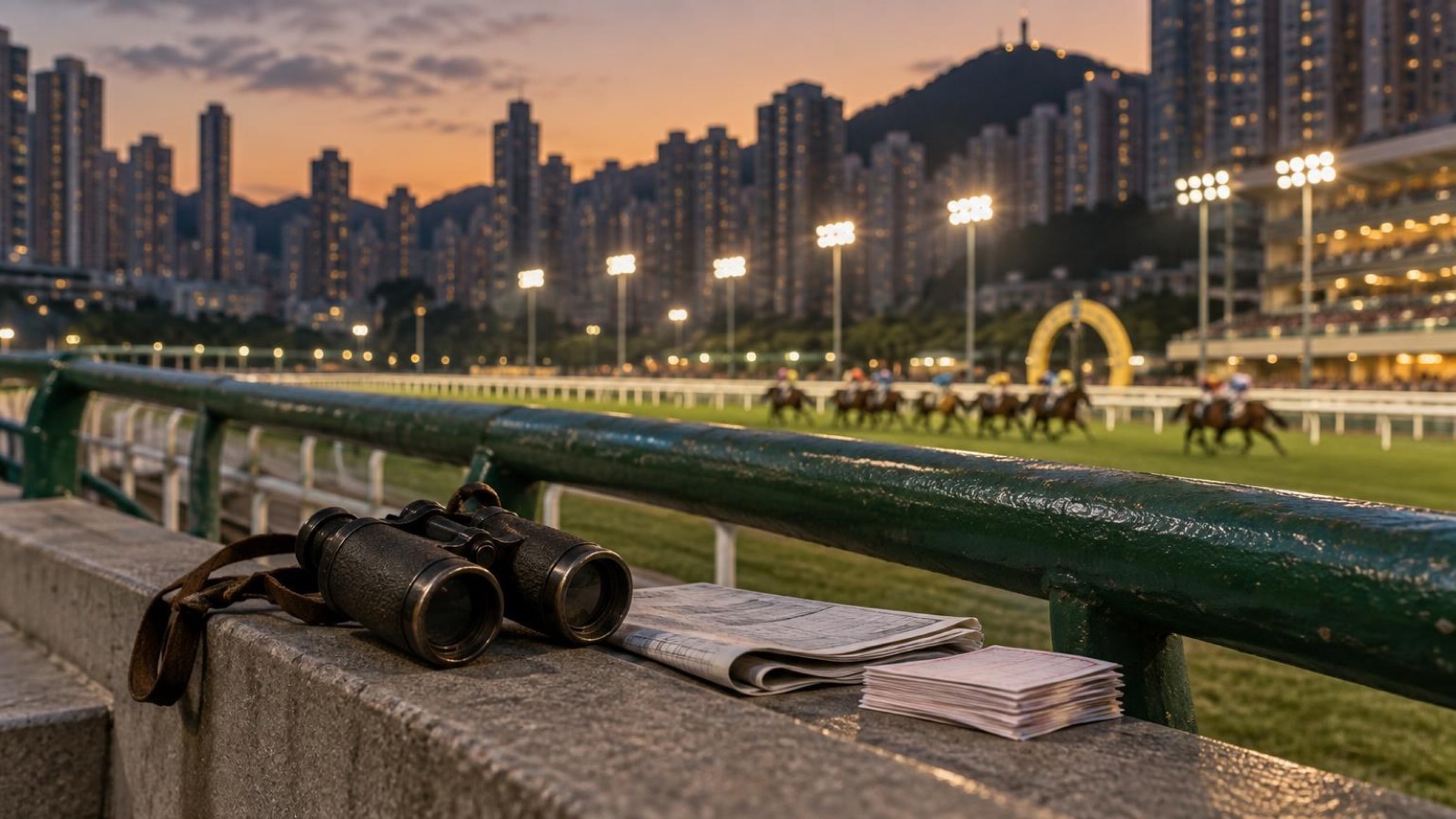
Hong Kong Racing Museum: what you'll find at Happy Valley
The Hong Kong Racing Museum is the single most useful stop for anyone curious about how gambling shaped a modern Asian city. It sits inside the Hong Kong Jockey Club's headquarters building at 1 Sports Road, Happy Valley, on Hong Kong Island1. That address matters because it puts the museum right beside the thing it documents: Happy Valley Racecourse, which runs along Wong Nai Chung Road and is the city's original racetrack3.
Inside, the museum covers the arc of Hong Kong racing: the horses, the jockeys, the trainers, the trophies and the betting culture that grew around them. You get silks, old photographs, race films and interactive displays, and the whole thing is compact enough to walk through in an hour or two without feeling rushed. It is a museum about a working sport, not a casino floor, so there is nothing to bet on inside and no pressure to spend.
The wider context is worth knowing before you go. The Jockey Club is a non-profit organization, and after deducting betting duty and profit tax, its racing proceeds go to social services and charity projects2. That single fact explains a lot of what you see: the museum, the racecourse and much of the surrounding infrastructure exist because racing money is recycled into public goods. The Club runs horse race betting, football betting and the Mark Six lottery, and it is the only body licensed to do so in Hong Kong6.
If you want to pair the museum with a race day, the two racecourses are Sha Tin and Happy Valley, and the Club also operates off-course betting centers and approved online betting sites1. For a visitor, the Happy Valley night meeting is the classic experience, and the museum is a natural warm-up before the gates open.
Hong Kong Racing Museum: hours, address and getting there
The museum is open daily from 12:00 noon1. Closing time is the part that catches people out. On ordinary days it shuts in the late afternoon or early evening, while on night race days at Happy Valley it stays open later, until around 9:00 pm1. If you are planning your day around it, treat the race-day hours as the ones you want, and check ahead if you are visiting on a quiet weekday.
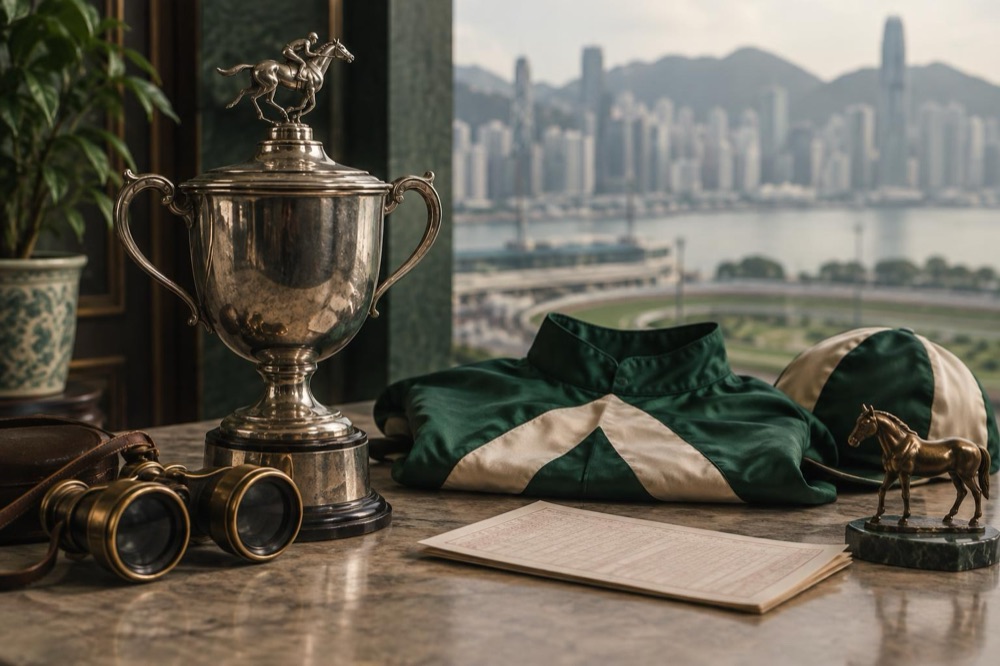
Getting there is straightforward. The museum is at 1 Sports Road, Happy Valley, Hong Kong Island, which is the Jockey Club's headquarters address7. Happy Valley Racecourse is on Wong Nai Chung Road3. The nearest MTR station is Causeway Bay, and from there it is a short walk or a quick taxi ride into Happy Valley. Trams and buses also serve the area, and the tram ride into Happy Valley is one of the more pleasant ways to arrive.
A few practical points:
- Entry to the museum is free, and there is no betting inside.
- The racecourse next door charges a HK$10 entrance fee on race days and other activity days2.
- Bring a Octopus card for transport and small purchases.
- The Club enforces access controls at its racecourses, off-course betting branches and betting websites, so expect to show ID where required8.
- If you want to bet on a race day, note that the Club does not accept credit betting9.
The museum is run by the Jockey Club, so the same organization that operates the sport also runs the heritage side of it. That is unusual by international standards and it is part of why the collection is as complete as it is.
When weather closes the museum: typhoon signal No. 8 and black rain rules
Hong Kong's weather is the one thing that will genuinely disrupt a museum visit. When the Observatory hoists typhoon signal No. 8 or issues a black rainstorm warning, the city largely shuts down: transport thins out, offices close and attractions stop admitting visitors. If you are in Hong Kong during the summer typhoon season, build flexibility into your plans and treat any outdoor or waterfront day as movable.
The practical approach is simple. Check the weather forecast the night before, and if a signal is expected, plan an indoor alternative or push the museum to another day. The museum sits inside a working Jockey Club building, so its hours can also shift around race meetings, and race meetings themselves are canceled or rescheduled in bad weather. If you have come specifically for a night at Happy Valley, a washed-out meeting is a real possibility between June and September.
For anyone combining the museum with a race day, the safest pattern is to visit the museum on a settled day and keep the race meeting as a separate outing. That way a typhoon costs you one plan, not both.
Guangzhou Racecourse: a 380,000-square-meter site waiting on redevelopment
The old Guangzhou Racecourse is the region's great piece of gambling heritage that you cannot visit as a museum. The site covers 380,000 square meters, and after racing ended it sat as a large, underused piece of urban land while its future was debated4. It is a reminder that not every gambling landmark in Asia has been preserved, and that some of the biggest ones have simply been left to wait.
Guangzhou's gambling history runs deeper than the racecourse. In the Tongzhi period, roughly 1861 to 1875, the city had more than a hundred fantan houses4. Fantan was the dominant Chinese gambling game of the era, and its density in Guangzhou shows how thoroughly gambling was woven into urban life before modern restrictions took hold. The racecourse was a later layer on top of that older gambling culture.
If you are interested in this side of the region's history, the surviving evidence is mostly in archives, old photographs and the physical footprint of the site itself rather than in a curated attraction. That makes it a different kind of visit: you go to understand what was there, not to see exhibits.
From racecourse to car city: how the Machang site has been used since 1992
After racing stopped, the Guangzhou Racecourse site, known locally as Machang, was put to commercial use rather than demolished. A car city and home furnishing businesses operated on the land, using the open space and the existing structures while the site waited on redevelopment4. For years, locals knew it less as a racecourse than as a place to buy a car or furniture.
That interim use is a common pattern for large former gambling sites in Asia. The land is too valuable to leave empty and too complicated to redevelop quickly, so it gets rented out for whatever needs space: markets, showrooms, warehouses, parking. The gambling history fades from public memory, and the site becomes ordinary.
For a visitor, the practical takeaway is that there is no museum, no preserved grandstand and no formal heritage trail at the Guangzhou Racecourse. If you are in the city and interested in the history, you are looking at a piece of land and a story rather than an attraction. The same is true of many former race clubs and gambling halls across the region: the buildings survive, but the gambling connection does not.
Race Course Fire Memorial: the Grade 1 monument at Happy Valley
The memorial stands at Happy Valley, close to the racecourse that is still in use today. Its inscriptions record the dead and the circumstances of the disaster, and the characters on it serve as a record rather than a celebration. Visiting it is a quiet experience: you read the names, you look at the track, and you understand that the sport's history includes real tragedy.
For anyone doing a gambling heritage day in Hong Kong, the memorial and the museum pair naturally. You can see the sport as it is now, then walk a short distance and see what it cost. It is the kind of stop that takes fifteen minutes but stays with you.
Thailand's racing heritage: the first horse races
Thailand's racing history begins with a royal celebration. A horse race was staged at Thung Phra Meru in December B.E. 2440, held as part of the events marking King Chulalongkorn's return from Europe, and it used a temporary racecourse5. That first race was an exhibition rather than a betting operation, but it introduced organized horse racing to the country.
The first formal race meeting followed in January B.E. 2446, run by the Royal Sport Club with eight racing lanes and a mix of Thai and foreign horse owners5. From there, racing settled into two licensed venues in the early period: the Royal Turf Club Sara Pathum, known as the foreigners' course, and the Royal Turf Club, known as the Thai course5. That split between a foreign club and a Thai club is a common colonial-era pattern across Asia, and it shaped who raced, who bet and where.
Today, Thailand's racing heritage survives mainly in these club histories and in the buildings and grounds that hosted the meetings. There is no single national racing museum equivalent to Hong Kong's, so if you want to trace the story you are working from club records, old photographs and the sites themselves.
What these sites tell you about gambling's place in Asia
Taken together, these sites show three different fates for gambling heritage in Asia.
| Site | Fate |
|---|---|
| Hong Kong Racing Museum | Curated and open to the public |
| Race Course Fire Memorial | Memorialised |
| Guangzhou Racecourse | Reused and forgotten |
The pattern is not random. Places where gambling is legal, regulated and profitable tend to preserve their history, because the operator has an interest in telling the story and the money to do it. Places where gambling was restricted or shut down tend to lose the physical record, because nobody is paying to keep it. Hong Kong's museum exists because the Jockey Club is a large, licensed, non-profit operator with a public-service mandate2. Guangzhou's racecourse is a car city because racing there ended.
For a visitor, that means the practical map of gambling heritage in Asia is uneven. Hong Kong is the reliable stop, with a free museum, a working racecourse and a Grade 1 memorial all within walking distance of each other. Elsewhere, you are mostly looking at buildings, sites and archives rather than attractions.
If you want to go deeper into the culture around these places, the wider history of gambling culture and history in Asia covers traditions, superstitions and famous venues, and the story of the 1918 disaster is told in full in the 1918 Happy Valley Racecourse fire. For the track itself, see Happy Valley Racecourse: history of Hong Kong's first racetrack, and for the city's other venue, when Sha Tin Racecourse opened and how it was built. Shanghai's former Chinese race club track is covered in Jiangwan Racecourse, and if you want to know whether the Hong Kong museum runs guided tours, that is answered in does the Hong Kong Racing Museum offer guided tours.
Common Questions
Where exactly is the Hong Kong Racing Museum and how do I get there by MTR or bus?
The museum sits at the Hong Kong Jockey Club headquarters building, 1 Sports Road, Happy Valley, on Hong Kong Island. Happy Valley Racecourse itself is on Wong Nai Chung Road. The nearest MTR station is Causeway Bay, from where it is a short walk or taxi ride. Buses and trams also serve the Happy Valley area.
What are the Hong Kong Racing Museum's opening hours on race days?
The museum generally opens from noon. On ordinary days it closes in the late afternoon or early evening, and on night race days at Happy Valley it stays open later, until around 9:00 pm. Hours can change, so check before you travel.
Is there a phone number for the Hong Kong Racing Museum?
The museum is run by the Hong Kong Jockey Club, whose headquarters is at 1 Sports Road, Happy Valley. If you need to report illegal gambling rather than ask about the museum, the Hong Kong Police illegal gambling hotline is 2860-8366, or 999 in an emergency.
How big is the Hong Kong Racing Museum and how many exhibits does it have?
The museum is a compact, free attraction spread over a few floors inside the Jockey Club headquarters building at Happy Valley. It holds racing memorabilia, trophies, silks and interactive displays. It is small enough to see comfortably in an hour or two.
What happened to the car city and home furnishing businesses on the Guangzhou Racecourse site?
After racing at the Guangzhou Racecourse ended in the 1990s, the 380,000-square-meter site was reused for commercial purposes, including a car city and home furnishing businesses, while it waited on redevelopment. The site has remained a large piece of underused urban land.
What do the characters on the Race Course Fire Memorial mean?
The Race Course Fire Memorial at Happy Valley commemorates the victims of the 1918 racecourse fire. Its inscriptions record the dead and the circumstances of the disaster. The monument is a Grade 1 historic structure and stands as a memorial rather than a gambling attraction.
When was the first horse race held in Thailand?
A horse race was staged at Thung Phra Meru in December B.E. 2440 as part of celebrations for King Chulalongkorn's return from Europe. Thailand's first formal race meeting followed in January B.E. 2446, run by the Royal Sport Club with eight racing lanes.
Sources9 sources
- Betting Facilities Rule 1 (Chinese), Hong Kong Jockey Club, 2026
- Consultation on Private Recreational Leases, Government of Hong Kong, March 2018
- Hong Kong Horse Racing, Discover Hong Kong, 2026
- Fantan Houses in Guangzhou, National Library of Medicine, May 31, 2024
- History of Thai Horse Racing, Thapra University, 2016
- Gambling Policy, Home and Youth Affairs Bureau, 2026
- Betting Facilities Rule 1 (English), Hong Kong Jockey Club, 2020
- Protecting Yourself, Hong Kong Jockey Club, 2026
- Government Press Release on Betting, Government of Hong Kong, June 4, 2025















