
How the site was built: the development timeline from 1964
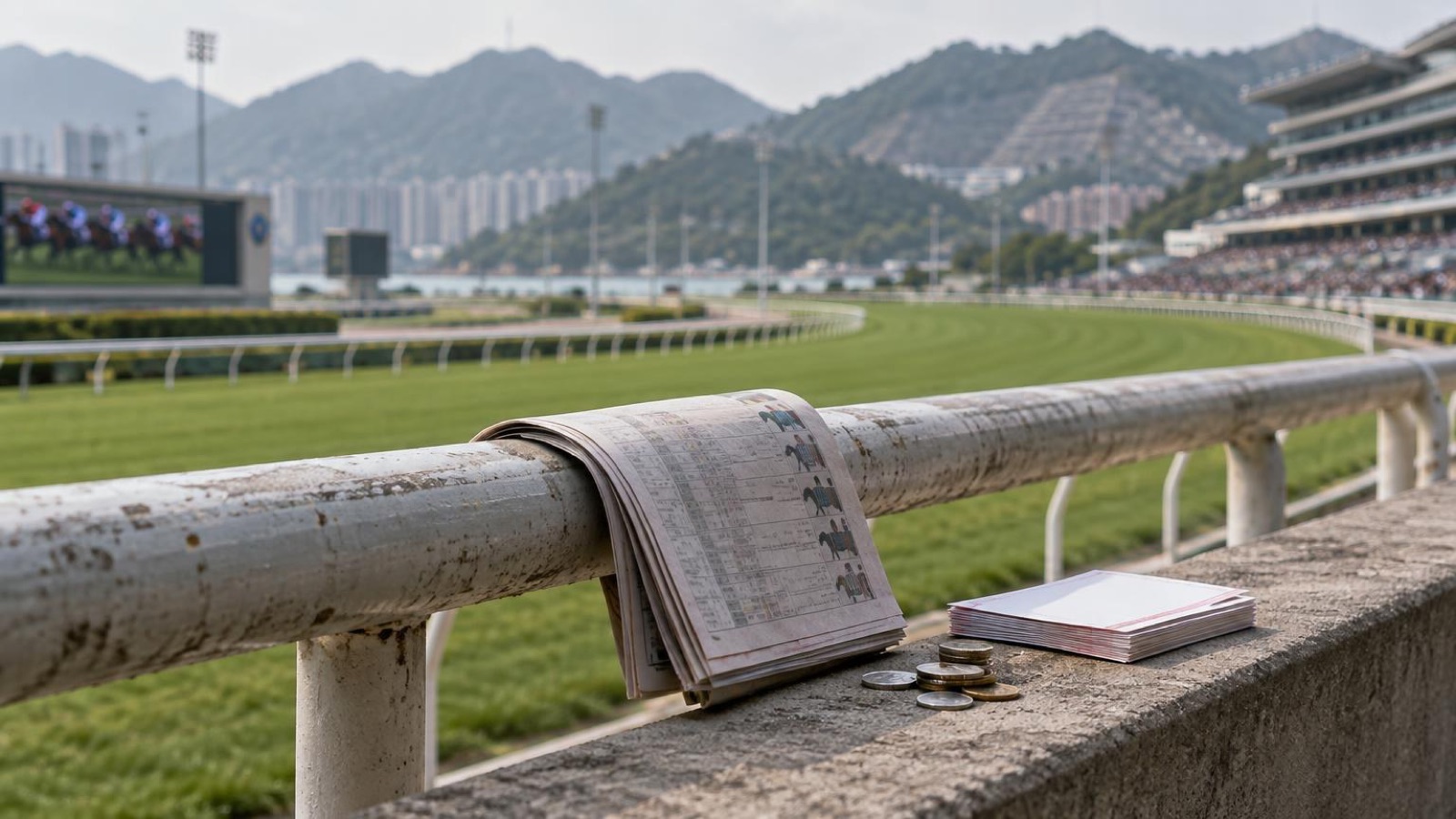
Sha Tin Racecourse did not exist as a piece of flat land until the Club made it. The site sits on a stretch of water in Sha Tin that was filled in, with hills nearby cut down to provide the material. The Club describes the work as moving hills and reclaiming sea in the Sha Tin section of water to build Hong Kong's second racecourse, and dates the project to the 1970s1.
That is the short version. The longer version is that Hong Kong's racing had outgrown its first home. Happy Valley, on Hong Kong Island, had been the city's only track, and by the late 1960s the Club was looking at a second venue across the harbor in the New Territories. The Sha Tin reclamation gave it the room to build a course with a far bigger footprint than Happy Valley could offer, plus space for training gallops, stabling and the grandstand complex that stands there now.
The development timeline runs across the early 1970s. Reclamation and site preparation came first, then the track, the stands and the supporting facilities. The course opened for racing in the 1970s and has been in near-continuous use since, with the physical plant upgraded repeatedly rather than replaced.
If you are trying to place Sha Tin against other tracks in the region, the comparison is useful. Japan's Hanshin Racecourse was first built on its present location in 1949, and Korea's Ttukseom Racecourse, whose construction began during the war, was completed in May 19542. Sha Tin is a later generation of track than both, and it was built at a scale that reflects Hong Kong's density: a course designed to move very large crowds through a very small territory.
What you see on the ground today is the result of that original decision. The track itself, the parade ring, the grandstands and the betting halls all sit on land that was water in 1964. The Club has kept building on it since, which is why the venue now reads as a layered site rather than a single construction project.
Owner and operator: The Hong Kong Jockey Club
Sha Tin is owned and operated by The Hong Kong Jockey Club, the same body that runs Happy Valley. The Club presents racing at both tracks, and its own materials describe them as the two world-class racecourses in Happy Valley and Sha Tin2. If you are looking for who to contact about a meeting, a ticket or a dining package, it is the Club, not a private operator or a government department.
That single-operator structure shapes what a visit feels like. There is one racecard, one set of entry rules and one betting system across both tracks, so the practical details you learn at Sha Tin carry over to Happy Valley and the other way round. The Club also runs the city's betting operation and its responsible gambling materials, which is why the same branding appears on the track, the betting halls and the public information3.
For a visitor, the useful consequence is that you do not need to work out which company runs which venue. Everything at Sha Tin, from the parade ring to the public betting halls, is the Club's. The members' areas are the Club's too, and they are the one part of the site that general admission does not reach.
The Club's role also explains the venue's event calendar. Sha Tin hosts the city's biggest international race days, and the Club is the body that stages them, publishes the race conditions and sets the entry rules for each meeting4. When you read a racecard or a conditions page for a Sha Tin race, you are reading the operator's own document.
Capacity and growth: from a HKD 1.9 billion complex to a HKD 4 billion upgrade
Sha Tin has grown through a series of expansions rather than one rebuild. A new complex at the racecourse was built at a cost of HKD 1.9 billion5. The most recent phase of work has been reported at around HKD 4 billion, covering an upgrade of the facilities into a world-class sports and entertainment center6. The venue also hosts top-level racing, including the 2024 Hong Kong Classic Mile over 1600 m7.
Sha Tin was built to hold a crowd that Happy Valley could not, and the venue has grown well beyond its early footprint through a series of expansions rather than one rebuild. A new complex at the racecourse was built at a cost of HKD 1.9 billion5. The most recent phase of work has been reported at around HKD 4 billion, covering an upgrade of the facilities into a world-class sports and entertainment center6.
You can see the growth in the small things as well as the big ones. In the summer of 2010 the Club widened a large color screen at the course so it could show more race and betting information in the new season, an upgrade that sounds minor until you are standing in a crowd trying to read the odds8. The parade ring has also been reworked, including a movable roof canopy over the ring, which is what lets the venue stage opening performances and presentations there in the rain.
The racing itself has expanded alongside the buildings. Sha Tin is home to many Group 1 and major events, along with regular races on weekends and public holidays2. The four-year-old classic series runs through the course, including the 2024 Hong Kong Classic Mile over 1600 meters9. International day races such as the Hong Kong Cup and the Hong Kong Sprint are run at Sha Tin, and the race conditions for those meetings list the venue simply as Sha Tin10.
The practical effect of all this growth is that a race day at Sha Tin is a large-scale event, not a country track afternoon. Gates see queues, the card runs full, and the crowd builds through the afternoon. The facilities are built for it: multiple betting halls, several levels of stands, and food and drink spread across the site. A new color big screen was widened during the summer 2010 holidays to show more race and betting information in the new season12.
What a race day looks like: meetings, opening times and major events
Sha Tin races on weekends and public holidays, and the Club also runs occasional midweek meetings. A recent example is a Wednesday night card of eight races on the all-weather track, with the next Hong Kong meeting scheduled for the evening at Sha Tin13. Night racing under lights is a different experience from a Sunday afternoon, and the all-weather surface means the card goes ahead in weather that would trouble the turf.
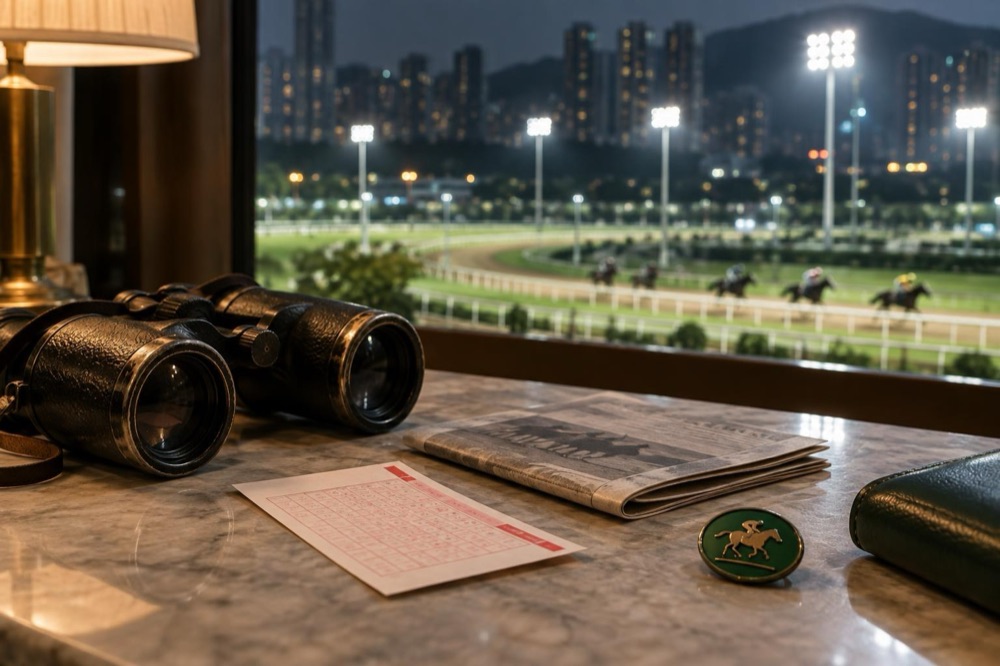
Opening times vary by meeting, so check the racecard for your date rather than assuming. Recent cards list gates opening at 10:25 am, 10:30 am and 11:00 am, with the first race often around 12:25 pm4. On a big international day the gates may open at 10:30 am to allow for an opening show, and the parade ring program starts before the first race7.
The shape of the day is consistent.
- Gates open, the parade ring fills.
- The opening performance or presentation runs.
- The card begins and races follow at roughly half-hour intervals.
- Between races you can move between the stands, the betting halls and the food areas.
The last race usually finishes in the late afternoon or, for a night meeting, in the evening.
The major events are worth planning around if you want the full atmosphere.
| Meeting | When | Features |
|---|---|---|
| International race day | December | The biggest, with the Hong Kong Cup, Hong Kong Sprint, Hong Kong Vase and Hong Kong Mile among the features10 |
| Champions Day | Spring | Its own card and an opening performance at the parade ring7 |
| Other feature meetings | Through the season | The Hong Kong Gold Cup, the Chairman's Sprint Prize, the Centenary Sprint Cup, the Stewards' Cup and the Champions Charter Cup5 |
For a first visit, a regular Sunday meeting is the easier introduction. The crowd is smaller than on an international day, the gates are less crowded, and you can work out the layout without fighting through it. Once you know where the parade ring, the main betting hall and the exits are, an international day becomes much more manageable.
Who can enter: the 18-year minimum and entry rules
Anyone aged 18 or above can enter Sha Tin on a race day. The minimum age is stated plainly on the Club's event pages: racecourse entrants must be aged 18 or above2. That applies to all visitors, whether you are a Hong Kong resident, a foreign resident or a tourist in town for the week. There is no separate rule for visitors, and no membership requirement for general admission.
The one place non-members cannot go is the members' premises. Only Club members, staff and holders of valid badges may enter members' premises20. That covers the owner boxes, member boxes, private boxes and the members' stands. If you are not a member and not a guest of one, you will be in the public areas, which is where most of the crowd is anyway.
There are a few practical rules to know before you go. Tripods, folding stools, ladders and anything the Club considers a safety hazard are not allowed, and smoking is banned inside the racecourse21. Bags may be checked at the gate, so travel light and leave the camera tripod at home.
Queuing is the other thing that shapes the day. The Club does not provide an overnight queuing area, citing safety6. If an opening performance is scheduled, a public queue zone is set up near Entrance 1, and the queue forms in the morning rather than the night before6. For a normal race day there is no queue zone at all; people arrive after the gates open.
For the wider picture of what gambling is and is not allowed in the city, see Can I Gamble in Hong Kong?. If you want the story of the city's first track, Happy Valley Racecourse: History of Hong Kong's First Racetrack covers it, and Does the Hong Kong Racing Museum Offer Guided Tours? explains where to see the sport's history up close.
Common Questions
Where is Sha Tin Racecourse located?
It sits in Sha Tin in the New Territories, on land the Hong Kong Jockey Club created by reclaiming a section of water in the 1970s. It is the city's second racecourse, after Happy Valley on Hong Kong Island, and it is the larger of the two.
What is the address of Sha Tin Racecourse?
The address is 6001 Tai Po Road, Sha Tin, New Territories. It is served by the MTR and by buses along Tai Po Road, and taxis drop off at the course entrances on race days.
What time does Sha Tin Racecourse open on a race day?
Opening time varies by meeting. Recent cards list 10:25 am, 10:30 am and 11:00 am, with the first race often around 12:25 pm. Check the racecard for your date, because the gate time is set meeting by meeting.
Is there overnight queuing before an event day?
No. The Club does not provide an overnight queuing area, citing safety. If an opening performance is scheduled, a public queue zone is set up near Entrance 1, and you should arrive in the morning rather than the night before.
What items are prohibited at the racecourse?
Tripods, folding stools, ladders and anything the Club considers a safety hazard are not allowed. Smoking is also banned inside the racecourse. Bags may be checked at the gate, so travel light.
Can non-members enter the members' premises?
No. Only Club members, staff and holders of valid badges may enter members' premises. General admission areas, public betting halls and the parade ring are open to any ticketed visitor aged 18 or above.
Sources22 sources
- 馬會新聞稿, The Hong Kong Jockey Club, December 3, 2011
- Hong Kong Horse Racing, Discover Hong Kong, 2026
- Responsible Gambling, The Hong Kong Jockey Club, 2026
- 12月8日沙田賽事開賽時間, The Hong Kong Jockey Club, December 2, 2024
- Stewards' Cup, The Hong Kong Jockey Club, 2026
- Longines Hong Kong International Races, The Hong Kong Jockey Club, 2026
- FWD Champions Day, The Hong Kong Jockey Club, 2026
- 行政總裁網誌, The Hong Kong Jockey Club, July 23, 2018
- 香港經典一哩賽簡介, The Hong Kong Jockey Club, 2024
- Longines Hong Kong Cup, The Hong Kong Jockey Club, 2026
- Longines Hong Kong Sprint, The Hong Kong Jockey Club, 2026
- Hong Kong Gold Cup, The Hong Kong Jockey Club, 2026
- 馬會新聞, The Hong Kong Jockey Club, May 28, 2017
- Champions Charter Cup, The Hong Kong Jockey Club, 2026
- Centenary Sprint Cup, The Hong Kong Jockey Club, 2026
- 香港金盃賽事條件, The Hong Kong Jockey Club, 2011
- 香港短途錦標賽事條件, The Hong Kong Jockey Club, 2011
- 主席短途獎賽事條件, The Hong Kong Jockey Club, 2011
- 香港瓶賽事條件, The Hong Kong Jockey Club, 2014
- 香港國際賽事, The Hong Kong Jockey Club, 2026
- 香港國際賽事活動資訊, The Hong Kong Jockey Club, 2026
- 賽馬日特別安排, The Hong Kong Jockey Club, April 13, 2021















