
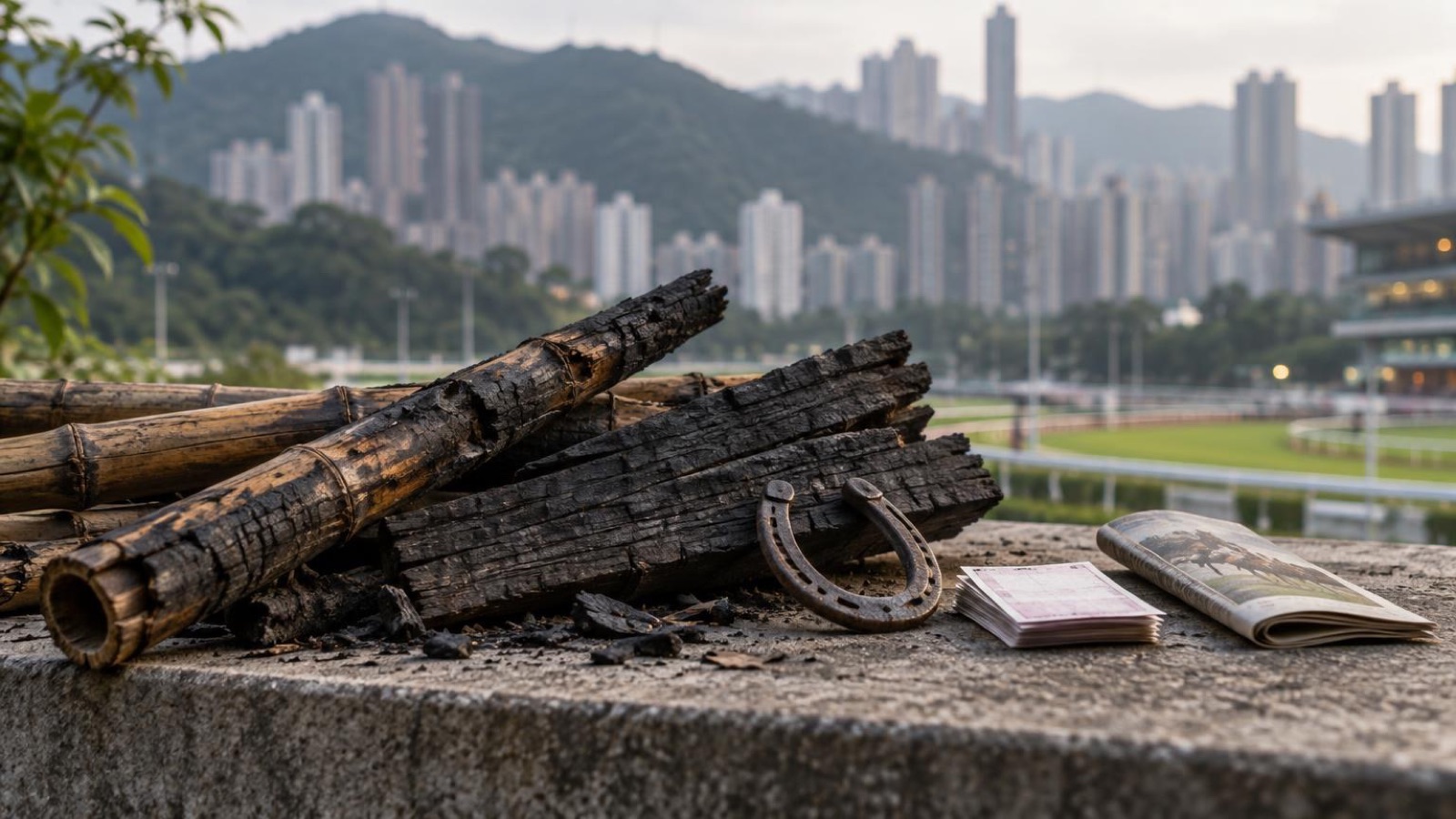
What happened at Happy Valley on 26 February 1918
Happy Valley Racecourse sits on Wong Nai Chung Road on Hong Kong Island, on land that was drained and turned into a track in the 1840s1. By 1918 it was the established home of Hong Kong racing, and race days drew a cross-section of the city: British colonial officials, Chinese merchants, clerks, laborers and families, all packed into the same enclosure to watch the horses.
On 26 February 1918, the course was hosting an ordinary race meeting. This was not the Hong Kong Derby or any flagship fixture, just a regular card in the middle of the season. That matters, because it explains the crowd. A normal race day at Happy Valley could pull in thousands of spectators, and the temporary stands built to hold them were designed for capacity, not for safety.
The meeting that day ran through the afternoon. Races at Happy Valley were the main organized sport in the colony, and betting on them was already a mass pastime. The stands were full, the ground level was crowded, and the space under and around the structures was busy with vendors, food stalls and the small open fires used for cooking.
Then, in the middle of the card, one of the stands came down.
How the fire started: the collapse of stand No. 9
The grandstands at Happy Valley in 1918 were not the permanent, steel-and-concrete structures you see at racecourses today. Many were temporary or semi-permanent, thrown up for the season and built from the cheapest materials available: bamboo scaffolding, timber frames, matting and canvas. They were quick to erect and cheap to replace, and they went up in tiers so that more spectators could see the track.
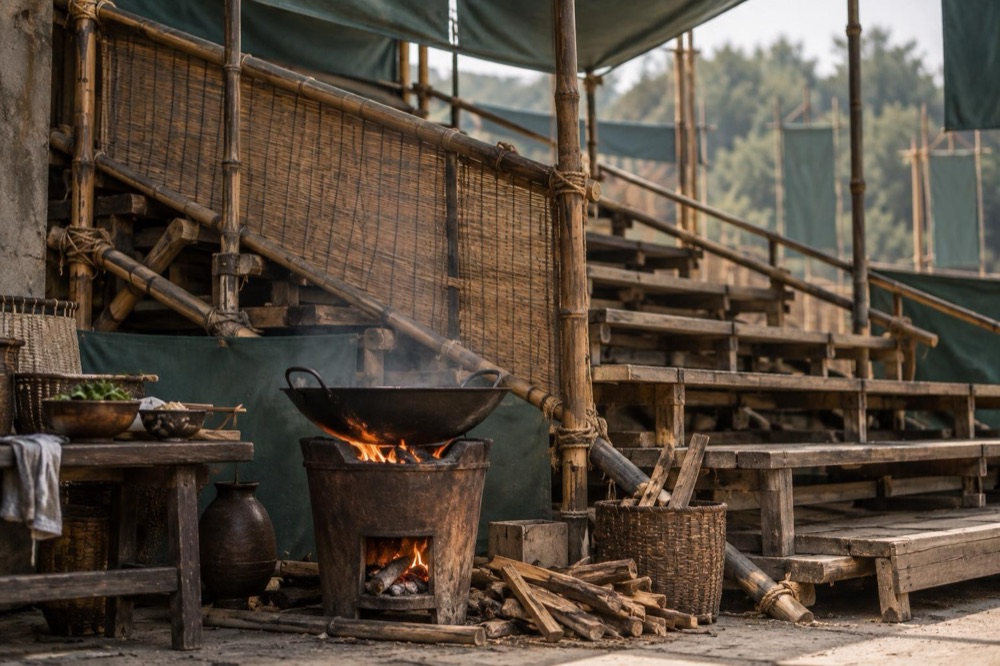
Stand No. 9 was one of these temporary structures. It was packed with spectators when it collapsed. The exact sequence has been debated for more than a century, but the practical picture is clear enough: a wooden and bamboo stand, crowded beyond what it could safely hold, gave way.
Underneath and beside the stands, vendors cooked food over open fires. This was normal at the time. Race days were as much a market as a sporting event, and the smell of cooking drifted through the enclosures all afternoon. When stand No. 9 came down, those open flames met a structure made almost entirely of dry bamboo, timber and matting.
The result was not a slow burn. It was closer to an explosion of fire through the wreckage.
Over 600 dead: Hong Kong's deadliest fire
More than 600 people died. That figure has stood for over a century and remains the highest death toll of any fire in Hong Kong's history.
The number is horrifying, and part of why it is so high is the nature of the crowd. The stands were packed shoulder to shoulder. When the structure collapsed, people at the bottom were trapped under timber and bamboo, and people above them had nowhere to go. The fire then moved through the same wreckage, and the combination of crush injuries and burns killed people within minutes.
There was also no effective way to count the dead precisely. Many spectators were not ticketed in any way that could be traced. Some were visitors, some were laborers who had come in from the surrounding districts, and some were children. The final figure of "over 600" is the accepted one, but it has always been an estimate rather than an exact register.
For a city the size of Hong Kong in 1918, losing more than 600 people in a single afternoon was a catastrophe on a scale that touched almost every community in the colony.
The grandstands: bamboo, wood and cooking fires
To understand why the fire was so deadly, it helps to picture what a racecourse stand was actually made of in 1918.
The materials were cheap and combustible. Bamboo poles formed the frame. Timber planks made the floors and the seating tiers. Matting and canvas provided shade and walls. None of it was fire-resistant, and all of it was dry after weeks of Hong Kong's winter weather.
The layout made things worse. Stands were built in tiers, one behind another, so that spectators at the back could see over the heads of those in front. That meant the structures were tall, closely packed and connected. A fire in one stand had a clear path into the next.
Then there were the cooking fires. Food vendors worked under and around the stands, using open flames to cook. This was not considered unusual or reckless at the time. It was simply how a race day operated. But it meant that open fire was present in the same space as thousands of people and a structure built from tinder.
Modern racecourse grandstands are a different world. Today's stands are permanent buildings with concrete, steel, sprinkler systems, marked exits and fire regulations. At Tokyo Racecourse, for example, the Memorial 60 Grandstand includes a first-aid station, accessible restrooms, a nursing room and clearly signed facilities across its floors3. At Nagoya Racecourse, the grandstand's first floor has a nursing space and multipurpose toilets, designed so that families can attend comfortably2. None of that existed at Happy Valley in 1918.
45 minutes: how the fire unfolded
The worst of the fire was over in roughly 45 minutes. That short window is the key to the death toll.
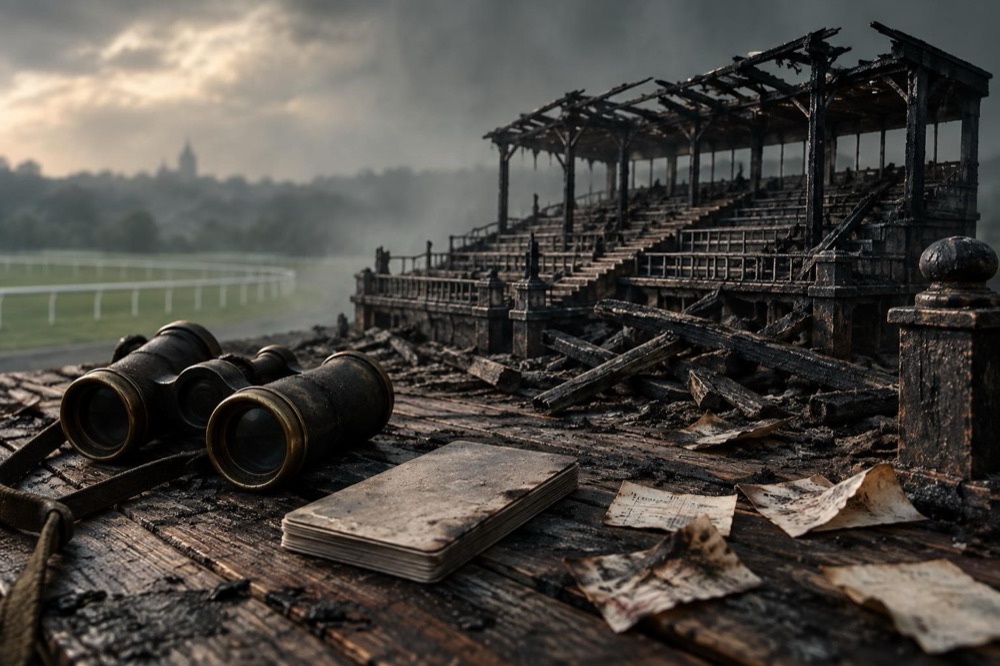
When stand No. 9 collapsed, the fire started almost immediately in the wreckage. Dry bamboo and timber catch fast, and the tiers of stands gave the flames a route upward and sideways. Within minutes, the fire was moving through the packed enclosures rather than staying in one place.
The crowd had very little time and very few options. The exits from a temporary stand were narrow, and many were blocked by the collapse itself. People at the back of the stands had to move through the same narrow gaps as everyone in front of them. Smoke and heat filled the space faster than people could move.
In 45 minutes, a crowded race meeting turned into the worst fire in the city's history. By the time the blaze burned out, the temporary stands were gone and the death toll was already in the hundreds.
Horse racing in Hong Kong after the disaster
Racing did not stop. Happy Valley was rebuilt, and the track has operated continuously since, becoming one of the most famous racecourses in Asia.
The modern Happy Valley is a very different place from the 1918 course. It has a capacity of 55,000, and on race nights it draws fans by the thousands4. Meetings are held on Wednesday nights, when the horses thunder down the track under floodlights1. The midweek fixture has grown into a full event: Happy Wednesday blends horse racing with live music and dining, and the operator describes it as the largest outdoor party in Hong Kong2.
The racing itself is world class.
| Race | Detail |
|---|---|
| Cathay Pacific Hong Kong Mile | Run at the December international meeting; billed as the world's highest prize money mile turf race7 |
| International Jockeys' Championship | Staged at Happy Valley, drawing top riders from around the world for a night meeting that runs from 7:00 pm to midnight8 |
| January Cup | A Group 3 handicap, also run at Happy Valley on the turf11 |
If you want to visit, the practical details are straightforward:
- The racecourse is on Wong Nai Chung Road in Happy Valley, on Hong Kong Island1.
- Wednesday night meetings are the main draw for visitors1.
- You must be 18 or older to enter the racecourse or buy a betting ticket5.
Betting on horse racing is legal in Hong Kong and is one of the few forms of gambling the government explicitly permits. The Hong Kong Jockey Club runs authorized horse racing, authorized football betting and the Mark Six Lottery under the Betting Duty Ordinance (Cap. 108)12. Casino-style gambling, including land-based casinos and online casino games, is generally not legal in Hong Kong14. The government has also approved the Jockey Club's proposals to increase non-local horse race betting activities15.
For a visitor, the simplest way to take part is to go to a Wednesday night meeting at Happy Valley, pay the entry, and bet at the track. The minimum age is 18, and identification is required at the gate. The Hong Kong Jockey Club publishes responsible gambling information for anyone who wants to understand the limits before they bet16.
The 1918 fire is remembered as the moment Hong Kong's racing tradition was tested and survived. The track that opened in 1845 is still running, and the Wednesday night crowds at Happy Valley are, in a sense, the answer to the disaster: the same sport, in the same valley, on ground that has been rebuilt and made safe.
Common Questions
When did the Happy Valley racecourse fire happen?
It happened on 26 February 1918, during a race meeting at the Happy Valley Racecourse on Hong Kong Island. The track had opened in 1845, so the disaster struck a venue that was already more than seventy years old and well established as the center of Hong Kong racing.
How many people died in the Happy Valley fire?
More than 600 people died, making it the deadliest fire in Hong Kong's history. The exact total has never been settled because the stands were packed with spectators, many of whom were not registered or ticketed in any way that could be counted afterward.
What caused the Happy Valley racecourse fire?
The fire began when a temporary grandstand, known as stand No. 9, collapsed. The stands were built from bamboo and wood, and cooking fires were in use underneath them. When the structure came down, those open flames reached the tinder-dry materials and the blaze spread almost instantly.
How long did the fire last?
The worst of it was over in roughly 45 minutes. In that short window the fire moved through the packed wooden stands, and most of the deaths happened in that period. The speed of the collapse and the density of the crowd left almost no time to escape.
Was the fire on Derby Day?
No. The 1918 disaster happened during an ordinary race meeting, not the Hong Kong Derby. It fell on 26 February, a date in the middle of the local racing season, when the course was crowded for a regular card rather than a flagship fixture.
Is horse racing betting legal in Hong Kong today?
Yes. Horse racing betting is one of the few forms of gambling the government explicitly permits, and it is run through the Hong Kong Jockey Club. You must be 18 or older to enter a racecourse or buy a betting ticket, and casino-style gambling remains illegal.
Sources16 sources
- Happy Valley Racecourse, Discover Hong Kong, 2026
- Nagoya Racecourse information, Nagoya Keiba, 2026
- Tokyo Racecourse Memorial 60 Grandstand, Japan Racing Association, 2026
- Horse racing at Happy Valley lives up to hype, The Star, March 23, 2012
- 競馬, Wikipedia, 2026
- Happy Wednesday, Hong Kong Jockey Club, 2015
- Cathay Pacific Hong Kong Mile, Hong Kong Jockey Club, 2011
- International Jockeys' Championship, Hong Kong Jockey Club, 2007
- 2011 Cathay Pacific International Jockeys' Championship, Hong Kong Jockey Club, November 25, 2011
- Cathay Pacific International Jockey Championship, Hong Kong Jockey Club, November 29, 2011
- January Cup (Handicap), Hong Kong Jockey Club, 2011
- Gambling policy, Home and Youth Affairs Bureau, 2026
- Gambling Duties Ordinance, Government of Hong Kong, April 2, 2025
- Hong Kong gambling, Wizard of Odds, 2026
- Betting Facilities Rule, Hong Kong Jockey Club, March 30, 2026
- Responsible gambling, Hong Kong Jockey Club, 2026















