

Why organized crime and gambling grew up together in Asia
Gambling has always needed three things: players, money and someone willing to run the game when the law says no. In much of Asia, that third role fell to organized groups. They had the capital to cover losses, the muscle to collect debts, and the local knowledge to move a game to a new neighborhood the week after a raid.
Japan's bakuto were the clearest early example. These were gambling gangs whose name comes from the cards and dice they ran, and their dens were not friendly neighborhood games. In games like tabu, a dice game thought to have been born in Kyushu, it is considered normal for organized crime to be involved in opening the gambling den or to take part as players, unlike casual games such as chinchirorin6. That distinction matters: the bakuto were not players who happened to be criminals. They were the house.
The same pattern repeated across the region. In Mumbai, matka moved from cotton-price betting into a network of bookies with runners on the street. In the Philippines, jueteng turned into a franchise system with collectors at the barangay level and financiers above them. In each case the game itself was simple. The organization around it was what made it durable.
Japan: yakuza roots in the world's biggest gambling market
Japan has one of the longest continuous gambling traditions in Asia. The recorded history of racing in the country goes back to 701 A.D., during the reign of the Emperor Mommu, and an early dice game of Chinese origin called hakugi was played at court in 685, when the Emperor Tenmu invited high-ranking aristocrats to play and awarded them clothes as winnings4.

That courtly beginning did not last. By the Edo period, gambling had moved to the streets, and the bakuto ran it. When Western-style horse racing arrived in 1861, introduced in Yokohama by foreign residents through the Yokohama Race Club, betting followed quickly: in 1888 the Japan Racing Club put one-dollar betting tickets on sale for club-sponsored races, the first in Japan7.
The backlash came in 1908, when legislation once again prohibited the sale of betting tickets after a public and media outcry against the betting frenzy and the overt involvement of bakuchiuchi, the gambling professionals4. That cycle, legalize, boom, scandal, ban, has repeated in Japan ever since, and it is why the country's legal gambling today is a narrow list of exceptions rather than an open market.
Pachinko: 10 times more machines per capita than the US
Pachinko is the clearest case of a game that sits just inside the law while the money around it does not. At the peak of its popularity in 1994, as many as 30 million people could be described as regular patrons, and by 1999 Japan's 16,000 plus pachinko parlors took in an astonishing 30 trillion yen in bets4.
That scale is hard to picture. It is roughly ten times more machines per capita than the United States, and it made pachinko the biggest gambling market in the world by turnover for decades. The parlors themselves are legal. The prizes are exchanged for cash through separate operators, a workaround that has kept the industry running while leaving the surrounding trade in a gray zone.
For a visitor, the practical point is simple: you can walk into a pachinko parlor and play. You do not need to be a resident, and there is no membership. What you cannot do is treat the cash exchange as a formal, protected transaction. It is not.
Japan's legal exceptions: racing, boat racing and the lottery
Japan's legal betting is built on a set of named exceptions. Betting on horse racing would normally constitute the crime of gambling, but it is authorized by the Horse Racing Act as a special law, and betting by methods other than those prescribed in that special law constitutes the crime of gambling8. The same logic covers the other public racing sports.
Here is what an ordinary visitor can actually do:
| Type of gambling | Legal? | Where | Minimum age |
|---|---|---|---|
| Horse racing (JRA and local) | Yes | 25 racecourses nationwide | 20 |
| Boat racing | Yes | Publicly managed sports betting venues | 20 |
| Keirin (cycling) | Yes | Licensed velodromes | 20 |
| Lottery (takarakuji) | Yes | Official ticket booths and kiosks | 20 |
| toto (soccer) | Yes | Online and retail | 20 |
| Pachinko | Yes, with cash exchange in a gray zone | Parlors nationwide | 18 to enter, 20 to exchange |
| Online casinos | No | None | Not applicable |
There are 25 racecourses in Japan, 15 run by local government and 10 by the JRA, and night races are conducted at four of them9. Racing is not a niche hobby: the JRA sells several bet types, from the win bet, which has been on sale since 1923 and is the oldest type still sold, to the sanrentan, which offers the chance of high payouts10. Payout rates vary by bet type, running from 70.00 percent to 80.00 percent under the JRA's betting method regulations12.
If you want to try it, the mechanics are straightforward. You buy a betting ticket at the track or through an account, and the minimum stake is small. A bracket quinella bet of 100 yen can pay out 1,600 yen on a 1-2 combination7. Odds viewing is free, and with a JRA-UMACA card you can use the odds ticket service up to 20 times a day at no charge10.
The lottery is even easier. The Jumbo Lottery is sold five times a year, and it is the large-scale lottery that draws the biggest headlines13. MEGA BIG, a sports lottery, claims the highest amount in Japanese lottery history excluding public sports racing15. Sports lottery proceeds also fund grants: the Japan Sport Council publishes annual examples of Sports Promotion Lottery grants to organizations across the country16.
- For toto, the soccer betting game, a bet costs 100 yen per entry, and winnings on the au Jibun Bank toto site are transferred to an au Jibun Bank account17.
- Boat racing is described by its operator as publicly managed sports betting, which is the phrase to remember if you are checking whether a venue is legitimate18.
- Keirin publishes its own user policy for online betting, and the maximum purchase limit is 99,900 yen per bet19.
One warning belongs here and nowhere else. Playing on offshore casino websites is illegal in Japan, and players have been prosecuted: connecting to an online casino from within Japan and gambling there is a crime even if the casino is legally operated overseas, and people who used online casinos as customers have been arrested for the crime of gambling1. Enforcement has been strengthened, with police instructed to act thoroughly against operators including payment agents and affiliates20.
Matka in Mumbai: Rattan Khatri's nationwide network
Matka is the Indian numbers game with the most colorful origin story. It began as a form of betting on the opening and closing rates of cotton from the New York Cotton Exchange, with those rates transmitted to the Bombay Cotton Exchange and local bettors wagering on the numbers3. It was then known as Ankada Jugar, and it was a form of betting and lottery rather than a casino game21.
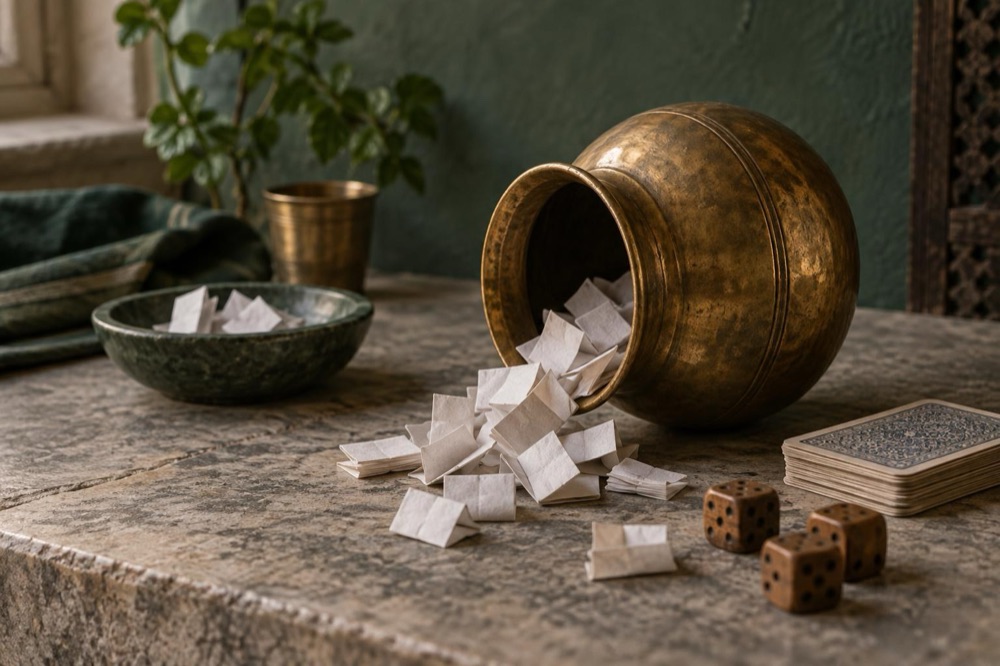
The man who turned it into an industry was Ratan Khatri. He initially worked under Kalyanji Bhagat, another significant figure in matka who is known for the Worli Matka, before revolutionizing the matka gambling system in Mumbai in 19623. Under Khatri's influence the game evolved into a large-scale, nationwide gambling network, and he became widely known as the Matka King3.
The geography mattered. Central Mumbai became the hub of the matka business as bookies opened shops in and around the mill areas where mill workers played matka21. Those workers wanted a small, fast bet with a big potential return, and matka gave it to them without a casino, a racecourse or a membership. Khatri remained a dominant figure in the gambling scene until his retirement in the early 1990s3.
The name itself comes from the clay pots used to draw numbers. A person who wins a great deal of money from matka gambling is known as a Matka King, a title that outlived the game's peak21. If you want the full story of the man and the network, see Ratan Khatri, the Matka King of Bombay, and for the game's origins in more detail, When and Where Did Matka Gambling Originate?.
Jueteng in the Philippines: an illegal numbers game since the Spanish era
Jueteng is the oldest surviving illegal numbers game in the Philippines, and it has outlasted Spanish rule, American administration and every administration since independence. Philippine law defines it plainly: jueteng is an illegal numbers game that involves the combination of 37 numbers against 37 numbers from 1 to 37, or 38 numbers in some areas, a local lottery with bets per combination, and its variants2.
The prohibition is not new. An act from 1907 prohibited the playing at and the conducting of any game of monte, jueteng, or any form of lottery or policy or any banking or percentage game, and it made acting as an agent no defense22. More than a century later, the definition was restated in the same terms, with jueteng, masiao and Last Two all listed as illegal numbers games2.
The modern rule is broader than the game itself. A game scheme is illegal when it is not authorized or licensed by the government agency duly empowered by law, or when it is conducted in violation of the terms and conditions prescribed by that agency23. That is the test to apply to anything you are offered in the Philippines: if the operator cannot point to a license from the authorized agency, the game is illegal.
That applies to online play too. Betting on illegal gambling activities is not only a criminal act, and the regulator has warned the public against playing on illegal online gambling sites24. A separate review found that anyone, even minors, can open an e-gaming account using a fake name and age, which is one reason the regulator has been weighing a ban on online play while counting the revenue it would lose25.
Legal gambling in the Philippines is licensed and specific. The franchise holder for casino operations may conduct gambling activities or games of chance on land or water within the territorial jurisdiction of the Republic of the Philippines, and floating casinos may dock anywhere vessels are authorized under customs and maritime laws26. If you are on a licensed casino floor or a licensed online platform, you are inside the system. If you are handing money to a runner on the street, you are not.
How jueteng is run: kubrador, kabo and jueteng lords
Jueteng survives because it is a franchise, not a single operation. The structure has three layers, and each one has a local name.

At the bottom are the kubrador, the collectors who walk routes and take small bets from players, often door to door. Above them are the kabo, the local financiers or operators who bankroll a territory and settle with the collectors. At the top are the jueteng lords, the financiers who control multiple territories and provide the capital and protection that keep the game running.
The economics explain the persistence. Bets are tiny, so the game reaches people who would never walk into a casino. Payouts are large relative to the stake, which keeps players coming back. And because the money moves in cash through personal networks, there is no paper trail for enforcement to follow.
The same logic applies to masiao, another illegal numbers game listed in Philippine law2. If you want to understand how that one works, see What Numbers Game Is Masiao Based On?.
Enforcement in practice: why these games survive
Raids happen, arrests happen, and the games come back. The reason is structural rather than legal. A jueteng operation can be rebuilt in a week with a new set of collectors, because the players already know the game and the odds. A matka network can move its bookies to a new set of shops. A pachinko parlor can change its prize exchange arrangement without closing.
Japan's approach has been to legalize a narrow set of games and enforce hard against everything else. The casino business is prohibited under the Penal Code and is exceptionally permitted as a privilege under the IR Development Law, which is why the country's casino resorts are a licensed exception rather than an open market27. The permitted casino games are listed by regulation, and they include sic bo among others28.
Macau took a different route: it formalized the middleman. The territory licenses corporate gaming promoters, known as junkets, by name, and the published register lists companies such as 九鼎博彩中介人一人有限公司, 金駿博彩中介有限公司 and 德晉博彩中介股份有限公司 among many others5. That is the same role the kabo plays in jueteng, moved into a licensed, auditable structure.
For a visitor or resident in Asia, the practical takeaway is the same everywhere. Legal gambling is the gambling that runs through a licensed operator, a state racing body or a national lottery. Everything else, however familiar and however long it has been running, is the part of the market that organized crime has always filled, and the risk sits with the player.
Common Questions
What does the word 'matka' actually mean?
Matka means 'pot' in Hindi, and the name comes from the clay pots early operators used to draw the winning numbers. A person who wins a great deal of money from matka gambling is known as a Matka King. The game itself was once called Ankada Jugar.
Who was Rattan Khatri?
Ratan Khatri was a Mumbai bookmaker widely known as the Matka King. He worked under Kalyanji Bhagat before revolutionizing the matka system in Mumbai in 1962, and he remained a dominant figure in the gambling scene until his retirement in the early 1990s.
How much can a jueteng bet pay out?
Payouts vary by operator and by the amount staked. Reported figures put a winning bet at roughly 700 to 900 times the stake, so a small bet can return a large sum. Because jueteng is illegal, no official body publishes or guarantees these rates.
Is jueteng legal anywhere in the Philippines?
No. Jueteng is defined in Philippine law as an illegal numbers game, alongside masiao and Last Two. Playing or conducting it is prohibited, and acting as an agent is not a defense. Only games licensed by the authorized government agency are legal.
How often are jueteng numbers drawn?
Jueteng draws are run by the operators themselves rather than on a fixed public schedule, and they typically take place daily in the areas where the game operates. There is no official published draw calendar because the game is illegal.
Can players be arrested for gambling online in Japan?
Yes. Connecting to an online casino from within Japan and gambling there is a crime, even if the casino is legally operated overseas. Players who used online casinos as customers have been arrested for the crime of gambling, and enforcement has been strengthened.
What was matka's original connection to the New York Cotton Exchange?
Matka began as a form of betting on the opening and closing rates of cotton from the New York Cotton Exchange. Those rates were transmitted to the Bombay Cotton Exchange, and local bettors wagered on the numbers before the game evolved into a standalone lottery.
Sources28 sources
- 消費者庁注意喚起, Consumer Affairs Agency, 2026
- Republic Act No. 9287, LawPhil, April 2, 2004
- Who is Ratan Khatri? All about the legendary Matka King, The Statesman, June 27, 2024
- Gambling in Japan, Oxford Brookes University, September 2007
- 博彩中介人牌照登記, DICJ Macau, January 20, 2015
- タブ (賭博)), Wikipedia, 2026
- Go Racing in Japan, Japan Racing Association, 2026
- 国税庁研究論文, National Tax Agency, June 2025
- Local Racing in Japan, Japan Racing Association, September 25, 2026
- JRA用語集, Japan Racing Association, September 25, 2026
- JRA Beginners Book, Japan Racing Association, 2024
- JRA馬券, Japan Racing Association, June 7, 2026
- ジャンボ宝くじ, Takarakuji Official, September 25, 2026
- ジャンボ宝くじブランド, Takarakuji Official, 2026
- 当せん金の受け取り, toto, September 25, 2026
- スポーツくじ助成事例, Japan Sport Council, 2026
- totoについて, toto, September 25, 2026
- Boat Race official site, Boat Race, September 25, 2026
- KEIRINユーザーポリシー, Keirin, May 1, 2026
- ギャンブル等依存症対策基本計画, Cabinet Secretariat, March 21, 2025
- What is Satta Matka: origin of matka gambling, India Today, October 9, 2023
- Act No. 1757, LawPhil, October 9, 1907
- Executive Order No. 13, LawPhil, February 2, 2017
- PAGCOR warns public against playing in illegal online gambling sites, PAGCOR, December 28, 2022
- PNA article on e-gaming regulation, Philippine News Agency, September 12, 2024
- Presidential Decree No. 1399, LawPhil, June 2, 1978
- IR Development Law materials, Japan Tourism Agency, December 18, 2020
- JCRC資料, Japan Casino Regulatory Commission, July 2021















