
What a mahjong parlor is and how it works
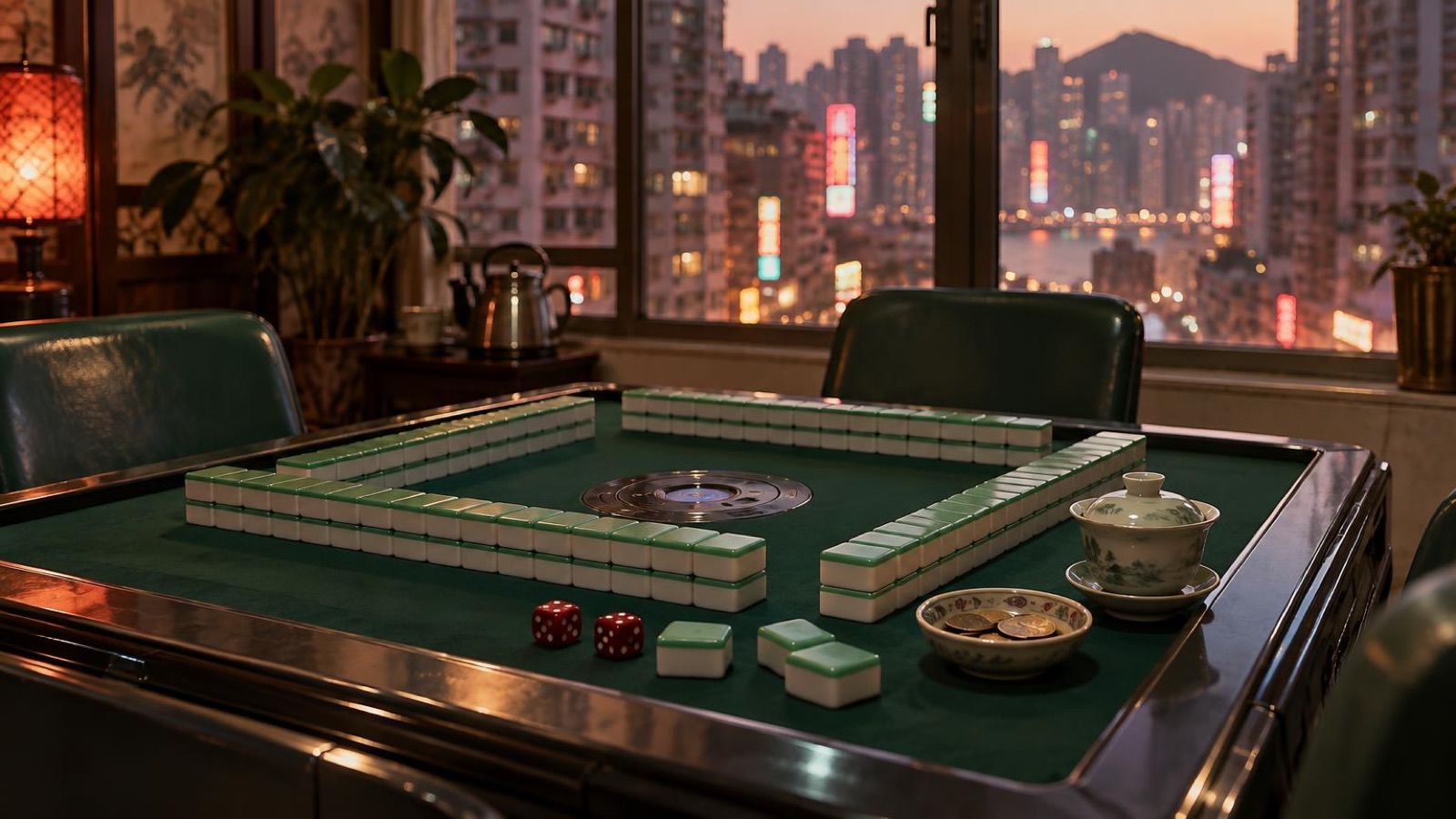
A mahjong parlor is a room full of square tables, each set for four. You walk in, ask for a table, and pay by the hour for the use of it. The house supplies the tiles, the racks, the dice and usually the automatic shuffling table that stacks the walls for you. Tea and a bowl of noodles are rarely far away.
The game itself is Cantonese mahjong, played with 144 tiles: three suits of circles, bamboos and characters, plus winds, dragons, flowers and seasons. Four players take turns drawing and discarding, building a hand of fourteen tiles into four sets and a pair. A set is either three of a kind or three in sequence. The first player to complete a legal hand wins the deal, and the other three pay according to how valuable that hand is.
What makes the parlor version different from a family game at home is the speed and the money. Parlors run what players call "fast" tables, where the stakes are small but the hands come quickly, and the automatic table does the tedious part. A typical session is three or four hours. You buy chips or agree a value per point before the first hand, and at the end of the session the four players settle the difference in cash.
The fee structure is the key thing to understand. The parlor does not take a rake from the pot and does not bet against you. It charges rent. That is what makes it a licensed amusement rather than a casino, and it is why the parlor has no interest in who wins.
Why the name "zhu guan" stuck
Zhu guan is an old Cantonese term for a gambling house, the kind of establishment that took bets on cards, tiles and dice long before mahjong existed. The word carried a slightly disreputable air, the way "bookmaker's" or "betting shop" does in English. When mahjong spread through Guangdong and Hong Kong in the early twentieth century, the rooms that hosted it inherited the name.
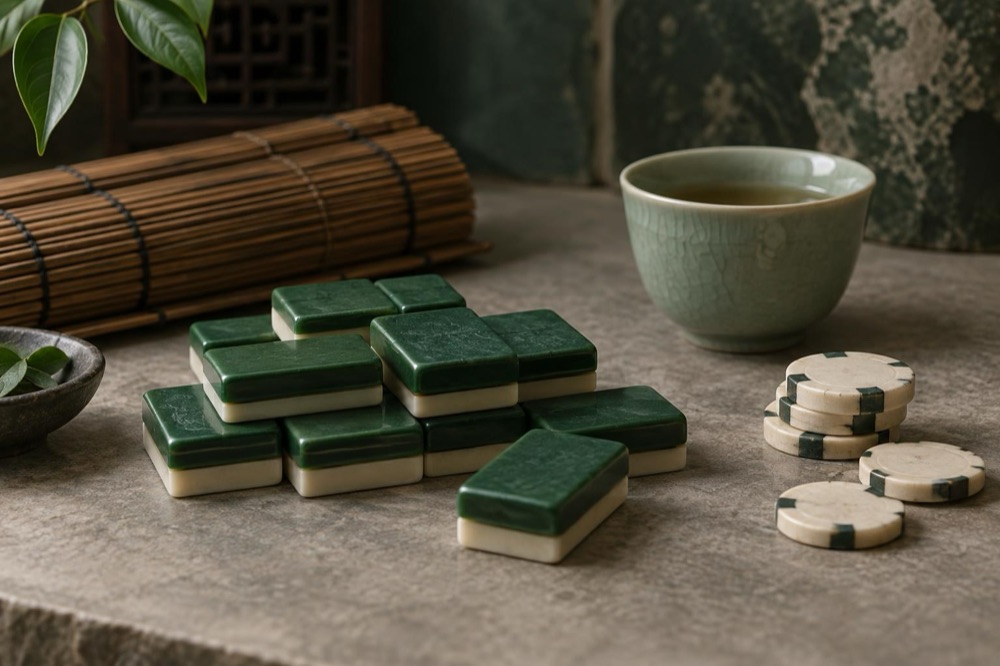
The game's own name is a clue to how it traveled. Mahjong comes from ma que, literally "hemp bird," which in its bonded form means sparrow5. The tiles were already known in Ningbo and Shanghai by the late 1880s under a local pronunciation, mo ziang, and the game had not yet reached Suzhou in the early 1880s, where a different tile game called tongqi held the field6. As the game moved south and picked up Cantonese speakers, the rooms that ran it were simply called by the old word for a gambling den.
So the name is not a description of mahjong. It is a description of the building. A zhu guan was a place where money changed hands over a game, and mahjong became the game that filled it. In modern Hong Kong the term survives mostly in older signage and in the speech of players who grew up with it. Younger players tend to say mahjong parlor, or just the name of the shop.
Mahjong parlors under the Gambling Ordinance (Cap. 148)
Hong Kong's gambling law is short and blunt. The Gambling Ordinance (Cap. 148) makes all gambling illegal, then carves out a small list of exceptions1.
| Exception | Basis |
|---|---|
| Horse racing, football betting and the Mark Six lottery | Approved under the Betting Duty Ordinance1 |
| Activities licensed by a public officer appointed for the purpose | Where mahjong parlors sit1 |
| Social gambling among friends at home | Exempted under section 3 of the Ordinance1 |
That last exemption matters more than it sounds. A private game in your own flat, with no house taking a cut, is not a crime. A game in a room that charges rent and is not licensed is. The line between the two is the license, not the stakes.
The Ordinance also reaches offshore operators. People in Hong Kong who take part in running a gambling website based outside the territory can offend under the Ordinance even though the site itself sits abroad1. That is aimed at unlicensed online operations, not at the parlors on the street.
For a visitor, the practical version is simple. Licensed parlors are legal and open. Unlicensed ones are not, and the ones you will find advertised to tourists are licensed. If you are unsure, ask to see the license; every licensed room displays one.
What stays legal: the Jockey Club monopoly
The Hong Kong Jockey Club is the only operator authorized by the government to run horse racing and football betting, and it administers the Mark Six lottery on the government's behalf7. Its license limits it to those three products: horse racing, Mark Six and football4. Nothing else. No casino games, no slots, no table games.
That is why Hong Kong has no casinos. Macau is an hour away by ferry and has them in abundance, but on Hong Kong soil the legal gambling menu is racing, football, lottery and licensed mahjong. The Jockey Club's betting halls and its online accounts are the only places to place a racing or football bet, and its outlets are the only places to buy a Mark Six ticket.
The Club's operations run under the Gambling Ordinance and under licensing conditions set by the government4. One of those conditions is that it must not accept bets from minors, a rule written into its licenses for racing, football and the lottery8. The Club also limits its sites to its own betting and lottery services, so you will not find third-party games on a Jockey Club account2.
For a visitor, the Jockey Club is the easy entry point to Hong Kong gambling. You need your passport or ID to open an account, you can bet in cash at a branch, and the minimum stakes are low. Wednesday night racing at Happy Valley is the classic introduction, and it is a social event as much as a betting one.
Who may play: the 18-year minimum age
Eighteen is the line in Hong Kong. Gambling is restricted to those aged 18 and above, and licensed establishments are prohibited by law from accepting or allowing anyone younger to take part2. The Jockey Club applies the same rule across all its betting, and no one under 18 may bet or even enter premises where bets are accepted9.
Mahjong parlors follow the same rule. A licensed room will not seat anyone under 18, and staff will ask for ID if you look young. This applies to visitors and residents alike; there is no tourist exemption and no family exception. If you are traveling with teenagers, they wait outside.
The rule is enforced at the door rather than at the table, which is why parlors check ID on entry. Bring your passport if you are visiting. A Hong Kong identity card works for residents, and a passport works for everyone else.
Money, winnings and tax
Everything in a Hong Kong mahjong parlor is in Hong Kong dollars. Table fees are quoted per hour, winnings are settled in cash, and there is no foreign currency counter. The Jockey Club is the same: all football bets must be made and settled in Hong Kong currency10.
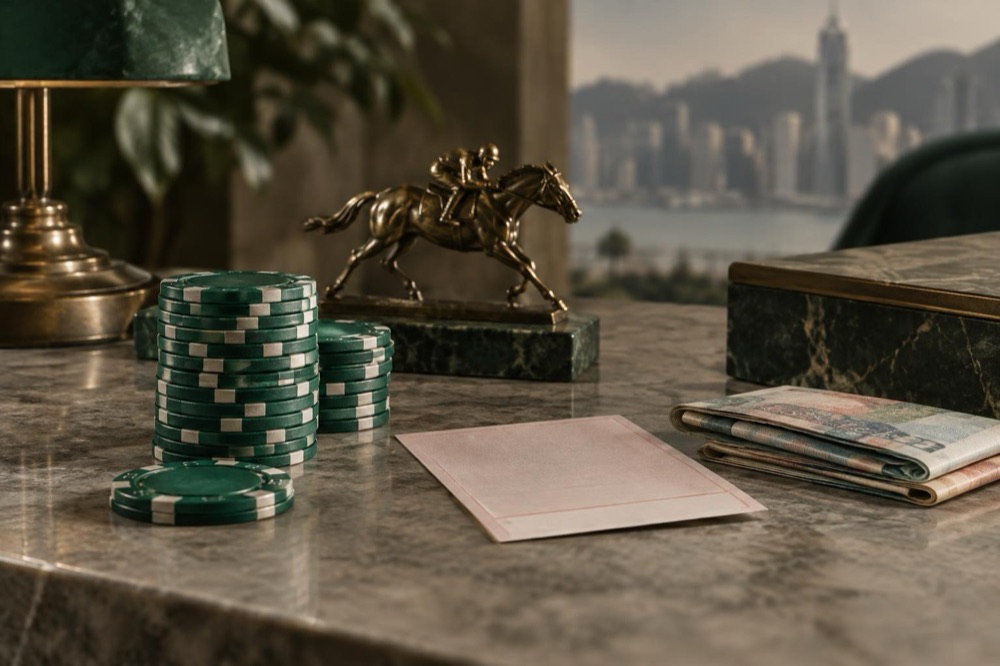
The Jockey Club takes cash and account-based bets only. It does not extend credit and does not accept credit cards for betting4. That is a deliberate policy, not a technical limitation, and it applies across its betting halls and online accounts. Bring cash or fund your account in advance.
On tax, the position is straightforward. Winners do not pay betting duty. The duty is charged to the licensed operator, not to the punter, and legal operators are required to pay it and to earmark part of their revenue for charity11. The Inland Revenue Department does not issue betting duty documents to winners of ordinary lucky draws, and does not levy betting duty on them3. If you win at mahjong, the money is yours.
What you will pay is the table fee, which is the parlor's entire revenue from your game. Rates vary by district and by the quality of the room, and a session of three or four hours is the normal unit. Agree the rate before you sit down, and agree the value of a point with the other three players before the first tile is drawn.
What to expect on a first visit
The room is bright, air-conditioned and loud. Tiles clatter, the automatic tables hum, and someone is always calling a hand. Smoking rules vary by venue; many rooms are non-smoking now, some have a separate area. Dress is casual. There is no dress code and no minimum spend beyond the table fee.
You do not need to bring opponents. Most parlors will seat you with other players if you arrive alone, and regulars are used to filling a fourth seat. If you would rather play only with your own group, say so when you ask for a table; a group of four gets its own table without question.
Before you go, there are three things to sort out:
- Bring cash for the table fee and for settling up.
- Bring your ID.
- Learn the basic hand shapes before you go, because the pace at a parlor table is faster than a home game and nobody will slow down for a newcomer.
If you want a gentler introduction, ask for a slower table or go earlier in the day, when the room is quieter.
For the wider picture of what is legal and where, see gambling in Hong Kong. If you are interested in how mahjong fits into the region's betting culture more broadly, gambling culture and history in Asia covers the traditions, the superstitions and the venues.
Common Questions
Are mahjong parlors legal in Hong Kong?
Yes. Mahjong parlors are among the few gambling venues licensed by the government, alongside the Jockey Club's racing, football and Mark Six operations. Everything else is illegal unless it counts as private social gambling among friends at home.
What does "zhu guan" literally mean?
Zhu guan is an old Cantonese term for a gambling house, the kind of place that took bets on cards, tiles and dice. When mahjong spread through Guangdong in the early 1900s, the name carried over to the rooms where it was played.
Can tourists visit a Hong Kong mahjong parlor?
Yes, visitors are welcome at licensed parlors as long as they are 18 or over. You rent a table by the hour, bring cash, and play with the people you came with or with players the house pairs you with.
What is the legal gambling age in Hong Kong?
Eighteen. Licensed establishments are barred by law from letting anyone under 18 take part in gambling, and the Jockey Club applies the same rule to its betting halls and accounts.
Do you pay tax on gambling winnings in Hong Kong?
No. Punters keep what they win. The duty is paid by the licensed operator, not by the player, and the Jockey Club also earmarks part of its revenue for charity.
What gambling is legal in Hong Kong besides mahjong?
Horse racing, football betting and the Mark Six lottery, all run by the Hong Kong Jockey Club, plus social gambling among friends at home that falls under the exemption in the Gambling Ordinance.
What currency do Hong Kong gambling venues use?
Hong Kong dollars. Bets at the Jockey Club must be made and settled in Hong Kong currency, and mahjong parlors quote their table fees and settle winnings in cash in the same currency.
Sources11 sources
- Gambling, Home and Youth Affairs Bureau, 2026
- Bet Limit, Hong Kong Jockey Club, 2026
- Betting Duty FAQ, Inland Revenue Department, 2026
- Responsible Gambling, Hong Kong Jockey Club, 2026
- Flowers and Kings, The Mahjong Tile Set, archived April 2, 2021
- Mahjong Terms 1780-1920, The Mahjong Tile Set, archived February 10, 2021
- Responsible Gambling Introduction, Hong Kong Jockey Club, 2026
- Government press release, Government of Hong Kong SAR, June 4, 2025
- Events, Hong Kong Jockey Club, 2026
- Football Betting Rules, Hong Kong Jockey Club, January 17, 2026
- Government press release, Government of Hong Kong SAR, November 22, 2000















