

The Shanghai racecourse and its pari-mutuel betting
For decades before the war, Shanghai was the place in China where you went to the races. The city's main racecourse sat in the heart of the former International Settlement, an oval of grass surrounded by the club buildings of the Shanghai Race Club, and race days were among the biggest social events in the city's calendar. Expatriates, wealthy Chinese residents and visitors all mingled in the stands, and the track's clock tower became one of the most recognizable landmarks in Shanghai. A second track, Jiangwan Racecourse, later gave the city's Chinese community a race club of its own.
The betting that made the racecourse hum was pari-mutuel, a system that was spreading across Asia's tracks in the early twentieth century. In pari-mutuel betting, every wager on a race goes into a common pool for that bet type. The operator deducts its take, and the remaining pool is divided among everyone who backed the winning combination. Your payout therefore depends not on odds set in advance by a bookmaker, but on how the crowd around you bet. The Hong Kong Jockey Club still describes its racing product as an array of pari-mutuel pools alongside fixed odds bet types2, and most wagering on horse racing in the region remains pari-mutuel today5.
Shanghai was part of a wider pari-mutuel wave. The picture across the region's racing jurisdictions looked like this:
| Jurisdiction | Pari-mutuel position |
|---|---|
| Korea | Racing authorities had the system in place from the sport's inception there in 19236 |
| Japan | The central racing law defines five methods of pari-mutuel betting7 |
| Macau | The permitted pari-mutuels on horse racing grew into a long list: winner, places, quinella, forecast, double win, double quinella, trio, trifecta, triplo vencedor, quarteto and six up8 |
Shanghai's racegoers would have recognized the same family of bets.
One curiosity of old Shanghai is that gambling in the British Concession was formally prohibited as early as 1865, according to the Shanghai concession records9. In practice, racing betting flourished anyway, one of many gaps between the written rules and daily life in the concessions. You can read more about that wider pattern in historic gambling bans in Asia.
How betting worked at the track
If you stood at a pari-mutuel window in old Shanghai, the mechanics would feel familiar to anyone who has bet at Happy Valley or a Japanese track since.

The simplest bet was the win: you picked one horse, and if it finished first, you collected. The next step up was the place bet. In Japan's rules, a place bet wins if your horse finishes in the top three, or in the top two when seven or fewer horses run10. The number of bet types offered on a race depends on the size of the field: at Kanazawa Racecourse, the bet types available are decided by the number of starters at the start of sales and offered in all races11. Japan's betting guide counts ten bet types in total across its tracks12.
Because pari-mutuel payouts come from the pool, the odds you saw on the tote board were always moving. Odds are continuously updated according to how much bettors wager on each horse, right up until the race starts13. A horse heavily backed by the crowd pays little; a horse the crowd ignores pays well if it wins. This is the essential difference from fixed odds betting, where the price you take is locked in at the moment of the bet.
The arithmetic behind the dividend is straightforward. Singapore Pools' horse race betting rules spell it out: winnings are declared per unit bet from the net betting pool divided by the number of unit bets on the winning combination, with the operator able to declare winnings in multiples of S$1, rounded down, or in fractions of a dollar14. Old Shanghai's dividends were computed the same way: divide what is left of the pool by the number of winning tickets.
Operators also kept control of their pools. Under the Hong Kong Jockey Club's race betting rules, the operator may restrict the number or value of a bet, or decline any part of it, without giving a reason15. That kind of house discretion, protecting the pool against manipulation, was standard practice at tracks across the region, and Shanghai would have been no different.
For a sense of how race-day betting culture developed across Asia, including the sweepstakes and horse lotteries that ran alongside track betting in Shanghai itself, see racing sweepstakes in Asia.
The end of racing: gambling banned since 1949
Shanghai's racing did not end with a decree but with the war. As the fighting intensified, racing became impossible to sustain, and after spring 1945 it could no longer continue1. The Race Club's buildings survived, and the former racecourse land was later transformed into People's Square and People's Park, so the physical footprint of old Shanghai racing is still traceable today. Heritage travelers can learn more at gambling museums and heritage sites in Asia.
The political end came in 1949. With the founding of the People's Republic, gambling was prohibited across the mainland, and no successor to the Shanghai racecourse ever opened. Organized racing survived elsewhere in the region, in Hong Kong, Macau, Japan and Korea, but on the mainland the sport and its betting disappeared together. Gambling in China remains illegal under Chinese law3, and Beijing's municipal regulation states that organizing gambling for profit or making a living from gambling is pursued under the Criminal Law of the PRC16. The story of why so many Asian governments took this restrictive path is covered in why many Asian countries restrict gambling.
Gambling on the mainland today: two lotteries and a broad ban
Today the mainland permits exactly two gambling products, both state run: the China Welfare Lottery and the China Sports Lottery. Between them they cover a wide range of game types17:
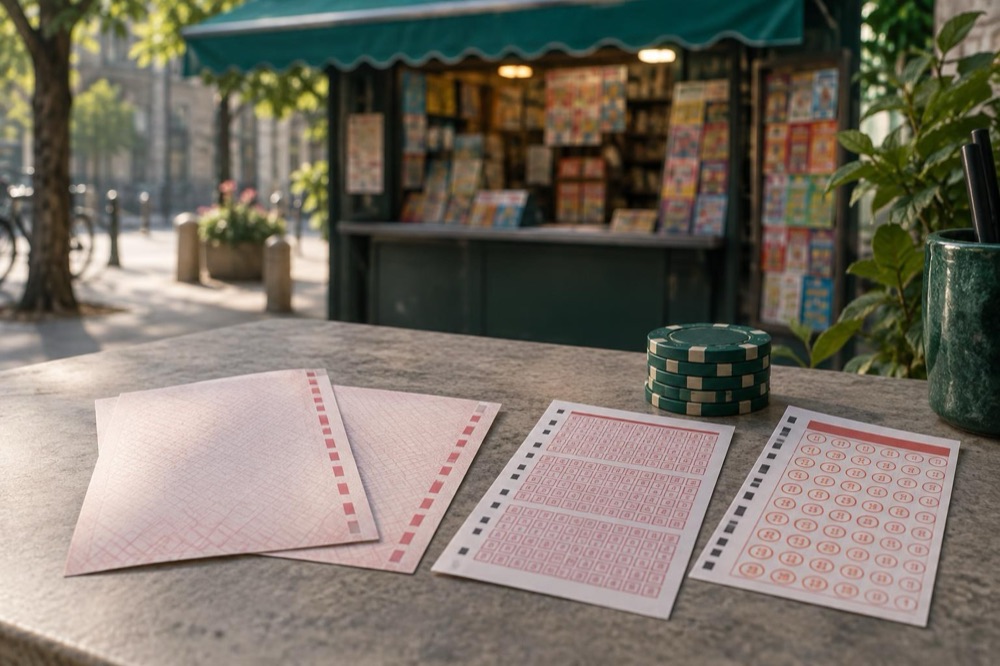
- Lotto
- Numbers
- Sports guessing
- Traditional
- Instant
- Video
- Keno
Foreign lotteries are a different matter. They are banned from issuance and sale anywhere in the People's Republic of China18, and any foreign lottery issued or sold without authorization inside the country counts as an illegal lottery17.
The internet has not opened any side doors. Unauthorized sale of lottery via the internet is resolutely prohibited19, and the China Sports Lottery has never authorized any website, app or mini program to sell its tickets, so any sports lottery sold online is illegal20. Online football betting is treated as a violation of the law21, and authorities have warned that even small bets are illegal22. Cross-border gambling is treated more severely still: participating in cross-border gambling, inside or outside the border, is a criminal and illegal act that public security organs crack down on severely23, and one police bureau described cross-border gambling as strictly prohibited by Chinese law22.
So a visitor to Shanghai today will find no racecourse, no betting shops and no legal online wagering. The two lotteries are the whole of what is on offer, and even those cannot be bought online. For the full picture of what a visitor can and cannot do, see gambling in China. Hong Kong, by contrast, kept the racing tradition that Shanghai lost: gambling in Hong Kong today means horse racing, football betting and the Mark Six lottery, all run by the Jockey Club.
What the ban means for debts and players
The practical consequences of the ban reach into everyday situations.
For players, the stakes are set out in the Public Security Administration Punishments Law. Providing conditions for gambling for profit, or participating in gambling with relatively large stakes, can bring detention of up to 5 days or a fine of up to CNY 1,000; where circumstances are serious, detention of 10 to 15 days plus a fine of CNY 1,000 to 5,0004. This applies to visitors and foreign residents as much as to citizens. Foreigners residing in China may face additional restrictions, including blacklisted status and a ban on re-entry for 10 years3.
For debts, the position is blunt: gambling is prohibited by Chinese laws and regulations24, so gambling debts have no legal standing. A court will not help a lender recover money staked on a bet, and anyone extending credit for gambling does so without protection. That is one reason the region's licensed operators, such as the Hong Kong Jockey Club, accept only cash and account based betting, with no credit facilities at all.
For anyone who develops a problem, the unregulated nature of the market matters. Because the mainland market is not regulated, there are no official channels of support for people experiencing gambling related harm3, and no gambling regulator of the kind found in Britain or Malta exists in China3. Neighboring jurisdictions with legal markets do offer exclusion and support services, but on the mainland itself the ban, not a support system, is the framework.
Common Questions
When was gambling prohibited in mainland China?
Gambling has been prohibited on the Chinese mainland since 1949, when the People's Republic was founded. The only legal forms today are the two state lotteries, the China Welfare Lottery and the China Sports Lottery.
What betting system did the Shanghai racecourse use?
The Shanghai Race Club used pari-mutuel betting, the same pool-based system still used in Hong Kong and Japan today. All bets go into a pool, the house takes a cut, and the rest is shared among winning bettors, so odds shift until the race starts.
How many legal lotteries exist on the Chinese mainland?
Two: the China Welfare Lottery and the China Sports Lottery. Between them they offer lotto, numbers, sports guessing, traditional, instant, video and keno style games. Foreign lotteries may not be sold in China.
Are gambling debts enforceable in China?
No. Gambling is prohibited by Chinese law, so gambling debts have no legal standing and courts will not enforce them. Anyone lending money for betting should expect no protection if it is not repaid.
What happens to foreigners caught gambling in China?
Foreigners face the same penalties as anyone else: up to 5 days detention or a fine up to CNY 1,000, rising to 10 to 15 days detention plus a CNY 1,000 to 5,000 fine in serious cases. Foreign residents may also be blacklisted and banned from re-entry for 10 years.
Is online gambling legal in China?
No. Online gambling of any kind is illegal, including online football betting, and even small bets are treated as violations. Internet lottery sales are also banned, and the China Sports Lottery has never authorized any website or app to sell tickets.
Is there any move to allow gambling on Hainan Island?
There is no sign of licensed casinos or betting on Hainan. The mainland's position remains a broad ban on gambling, with only the two state lotteries permitted, and cross-border gambling is treated as a criminal matter.
Sources24 sources
- Shanghai Race Club history, The Paper, February 27, 2016
- Beginners' guide to racing betting, Hong Kong Jockey Club
- Gambling in China, Wizard of Odds, May 5, 2026
- Public Security Administration Punishments Law Article 82, Embassy of the People's Republic of China, April 14, 2026
- Sports wagering and Mark Six lottery services, Hong Kong Jockey Club
- Korea racing profile, Asian Racing Federation (archived)
- Horse Racing Act, Article 7, Japan Racing Association
- Macau horse racing pari-mutuels, Lexology, May 10, 2024
- Mahjong terms 1780 to 1920, The Mahjong Tile Set
- How to bet at local racecourses, Japan Racing Association
- Betting ticket types, Kanazawa Racecourse
- Beginner's racing course, Japan Racing Association
- Understanding odds, Ontario Racing
- Horse race betting game rules, Singapore Pools, July 6, 2026
- Hong Kong Jockey Club horse race betting rules, Rule 2.5(a), Hong Kong Jockey Club, January 2023
- Beijing Municipal Regulation on Prohibiting Gambling, Beijing Municipal Government, November 3, 2023
- Lottery administration rules, Ministry of Finance, August 16, 2018
- Policy interpretation on foreign lotteries, Ministry of Finance, May 13, 2009
- Internet lottery sales ban, General Administration of Sport, November 23, 2023
- Statement on illegal online sports lottery, China Peace, August 25, 2026
- Online football betting is illegal, Cyberspace Administration of Xizang, August 18, 2026
- Even small bets are illegal, Chifeng Public Security Bureau, February 6, 2026
- Cross-border gambling crackdown, Ministry of Public Security, October 1, 2020
- Gambling prohibited by law, Anyang Municipal Government, January 2025















