
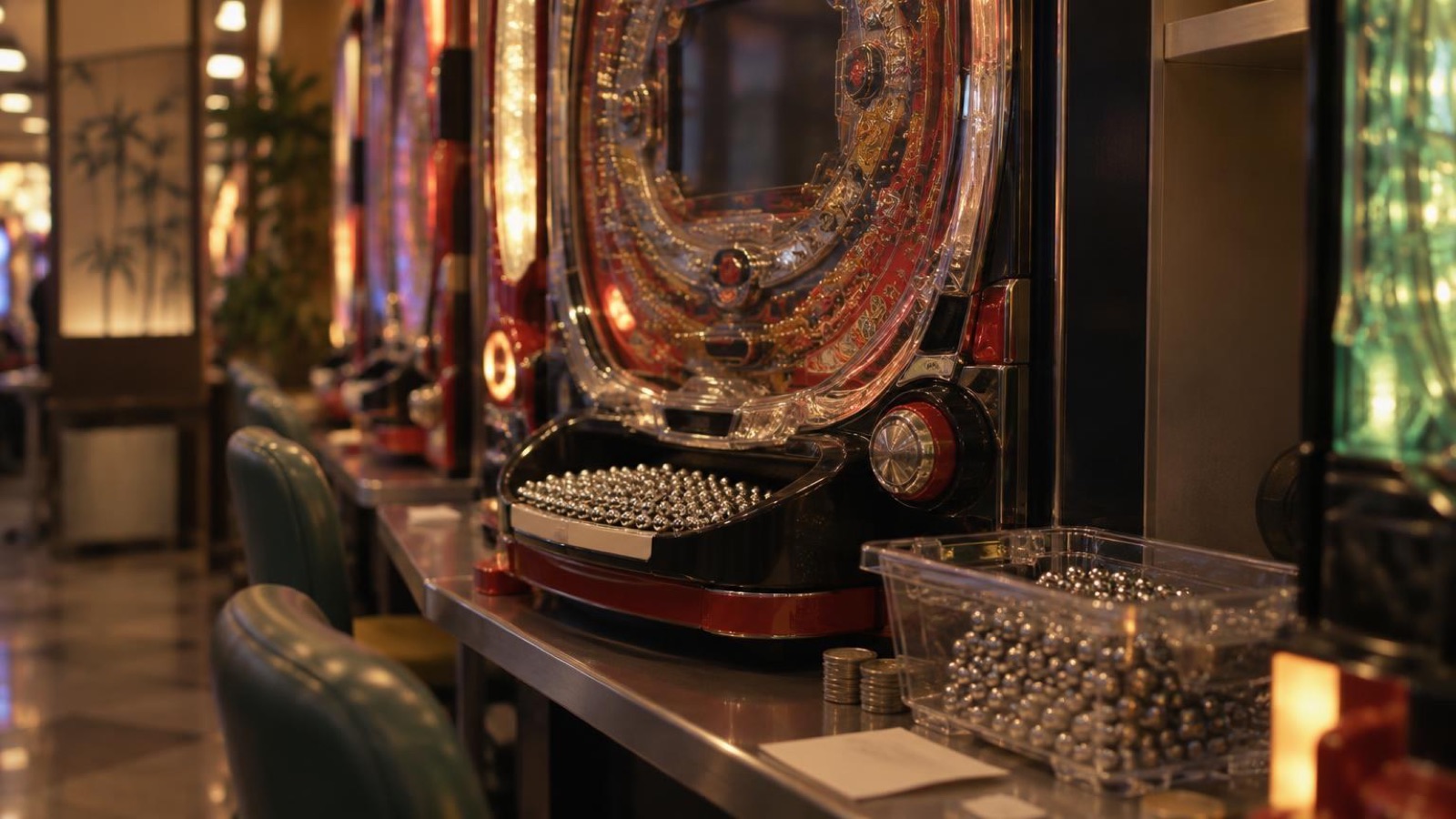
What Pachinko Day marks and why pachinko matters in Japan
November 14 is Pachinko Day, an industry date that plays on the numbers 1, 1 and 4. Read in Japanese, the digits echo the shape and layout of the pins on a pachinko machine, which is why the date was picked rather than any anniversary of a particular event. It is a marker for the game itself rather than a public holiday, and parlors often use the period around it for events and promotions.
Pachinko matters in Japan because of its sheer scale. The industry is worth around ¥21 trillion JPY and employs more than 240,000 people, accounting for nearly a third of the country's entertainment and leisure market2. At its peak in 1994, as many as 30 million people could be described as regular patrons5. Even now, an estimated 40 to 50 million people, more than a quarter of the total population, play at least occasionally5.
The game is Japanese in origin, and that shows in how it is organized. Parlors typically close one day a week, with Monday the regular closing day, or Tuesday when Monday is a national holiday1. That rhythm shapes the week for regular players: weekends are busiest, and the quiet hours fall on weekday mornings.
Pachinko also sits inside a wider culture of small-stakes, everyday entertainment. It is one of the few forms of gambling that Japanese law treats as a legitimate amusement rather than a vice, which is why halls are a normal sight on shopping streets and near train stations rather than tucked away out of view.
Japan: the biggest gambling market in the world
By machine count and by money spent, Japan is one of the largest gambling markets anywhere. The pachinko industry alone turns over around ¥21 trillion JPY a year and supports more than 240,000 jobs2. That figure covers machines, halls, staff and the supply chain behind them.
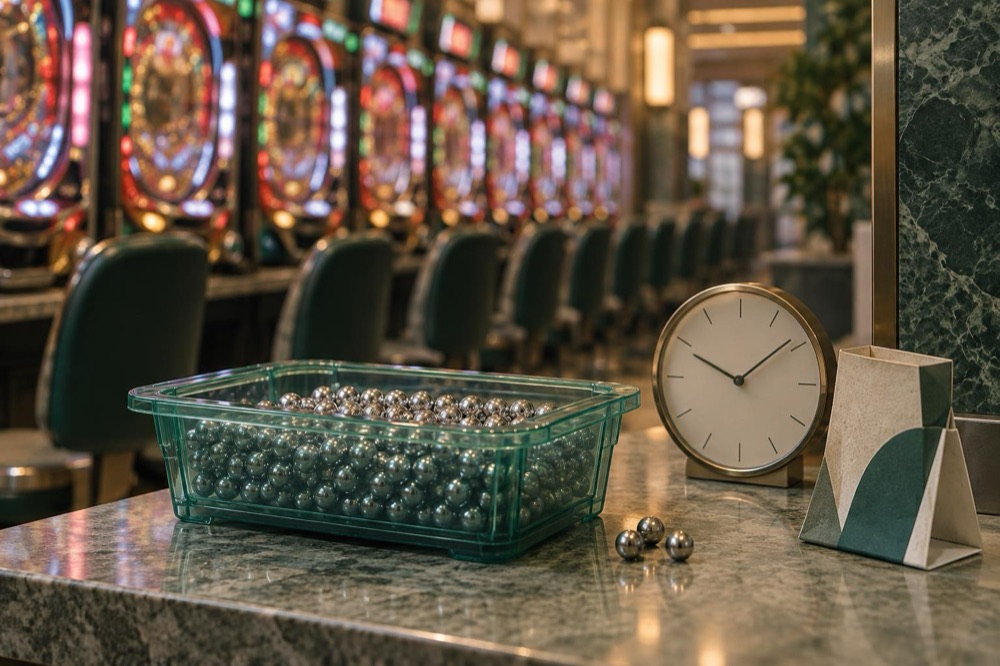
The scale is easier to picture at the level of a single hall. One operator's store in Gunma lists 324 pachinko machines on its floor6. Multiply that across thousands of parlors and the national total runs into the millions of machines.
Pachinko is not the only game in town. Public racing and sports betting add a second layer, and the lottery a third. The BIG lottery game, for example, returns 50 percent of sales as prize money7. That is a useful number to keep in mind: it tells you what share of what players put in comes back out as prizes.
The market has shrunk from its 1990s peak, when regular patronage reached around 30 million people5. Even so, the combination of pachinko, racing, sports lottery and the national lottery keeps Japan near the top of any global ranking by total amount wagered.
Pachinko's place among Japan's legal forms of gambling
Japanese law starts from the position that gambling is basically illegal, but it carves out exceptions for everyday entertainment and for games whose proceeds go to social welfare8. That is why a country with a general prohibition still has a huge, visible gambling industry.
The legal forms fall into two broad groups. Non-cash gaming covers pachinko, shooting galleries and ring toss, regulated under the Entertainment Business Act, along with prize draws and New Year's gift postal cards8. Cash-based forms include derivatives under the Financial Instruments and Exchange Act, the sports lottery under the Sports Promotion Voting Act, and integrated resorts with private casinos under the IR Development Act8.
In practice, the games an ordinary person meets are:
- Pachinko and pachislot, played in dedicated halls, with balls or tokens exchanged for prizes at the counter
- Public racing, including horse racing, keirin (bicycle racing), boat racing and auto racing
- Sports lottery, such as toto and the BIG game
- The national lottery, sold at kiosks and convenience stores
Pachinko's special position comes from the prize-exchange system. Players do not collect cash directly from the machine. They exchange balls for goods or tokens at the parlor counter, and the surrounding trade in those prizes is what makes the game worth playing for money. That structure is what keeps pachinko inside the entertainment category rather than the cash-gambling category.
If you want the longer background, the story of how the game began is covered in when and where pachinko was invented, and the mechanics of the machine itself in what the Masamura gauge is.
How a pachinko machine works
A pachinko machine is a vertical board packed with small pins, with a launch handle at the bottom right. You sit at the machine, buy a tray of steel balls, and turn the handle to fire balls up the right-hand channel. The balls fall through the pins, and where they land decides what happens next.
Most balls drop into losing pockets and disappear. A ball that lands in the right pocket triggers a payout, and the machine releases a set number of balls into the lower tray. Modern machines add a digital screen in the center that runs a slot-style or story-based game when a ball enters the start pocket, and a win on that screen opens a gate that pays out far more balls for a short period.
Pachislot machines work differently. They are slot machines with three reels, played with tokens rather than balls, and they sit in the same halls. Skilled players use techniques such as koyaku kaishuu daho, a method devised so that formed small wins can be collected with 100 percent or near-100 percent probability9. That kind of technique is part of the culture of the game and one reason pachislot has a following distinct from pachinko.
Machine design is a small industry of its own. Some machines are built around a single theme, such as the fourth pachinko machine based on the TV period drama Hissatsu Shigotonin series10. Home versions have existed for decades, including a 1999 PlayStation release published by International Card System that bundled Fever Punch Out DX11.
Who can play: age rules for pachinko and public sports
Age rules differ by game, and they are worth knowing before you walk in.
Pachinko and pachislot are open to anyone aged 18 or older3. Parlors are barred from admitting anyone under 18 as a customer, so halls check at the door and staff will turn away anyone who looks young enough to need checking12. This applies to everyone in the hall, whether you are a Japanese citizen, a foreign resident or a visitor.
Public sports betting is stricter. Horse racing, keirin, boat racing and auto racing all require players to be 20 or older3. The sports lottery games run by the same operator set their own floor: minors under 19 are not allowed to take part or claim prizes13.
For visitors, the practical point is simple. Bring photo identification if you look young, and expect to be asked. There is no separate rule for foreigners at pachinko halls, and no membership requirement. You buy balls at the counter or from a machine, sit down and play.
One thing to keep in mind is that the prize-exchange system means you are not collecting cash from the machine. You exchange balls for prizes at the counter, and what you do with those prizes afterward is a separate matter. That is the structure that makes the game legal, and it is the same for everyone in the hall.
Public racing and sports betting
Racing is the other big legal gambling sector, and it has a long history. Western-style horse racing was introduced to Japan in 1861, when the Yokohama Race Club, formed by foreign residents, held the first race in Yokohama14. In 1888 the Japan Racing Club put one-dollar betting tickets on sale for club-sponsored races, the first in the country14. The recorded history of racing in Japan goes back much further, to 701 A.D. during the reign of the Emperor Mommu14.
Today there are 25 racecourses in Japan, and four of them hold night races14.
That gives racing fans a year-round calendar, with meetings most weeks and a mix of daytime and evening cards.
The other public sports are keirin, boat racing and auto racing. These are run under the same public sports framework and share the 20-and-over age rule3. Boat racing in particular has a strong regional following, with racecourses in most prefectures and a schedule that runs through the year.
Sports lottery games add a lower-stakes option. The BIG game, a 14-match football lottery, returns 50 percent of sales as prize money7. Tickets are cheap, draws are regular, and the games are sold through the same channels as the national lottery.
Casino resorts: what exists and what is planned
Japan has passed a law allowing integrated resorts with private casinos, but no full casino resort is open yet. The framework is set out under the IR Development Act, which is the piece of legislation that created the category8. Until those resorts open, the country's casino-style gambling is limited to pachinko and pachislot halls.
The rules for the planned resorts are already written. Entry for Japanese nationals is limited to a maximum of three times in any consecutive seven days, or a maximum of ten times in any consecutive 28 days4. A three-days-within-any-seven-day-period wording appears in a petition summary rather than as a separate rule, and because the resorts would operate 24 hours a day, a guest could in principle stay for 72 hours continuously15.
Those limits apply to Japanese nationals. Foreign visitors are not subject to the same entry cap, which is the usual pattern for jurisdictions that want local players to face stricter controls than tourists.
For now, if you want to play something in Japan, the realistic options are pachinko, pachislot, public racing, the sports lottery and the national lottery. The casino resorts will add a new category when they open, and the entry rules for Japanese players are already fixed in law.
Practical tips for a first visit to a pachinko parlor
If you have never been inside a pachinko hall, the first few minutes can be overwhelming. The noise is loud, the machines are bright, and the staff mostly speak Japanese. A little preparation makes it much easier.
- Find a hall. They are usually near train stations and on shopping streets, with large signage and automatic doors. Most open in the morning and close late, and many close one day a week, usually Monday1.
- Buy balls at the counter or a machine. You pay in cash, in yen, and receive a tray of steel balls. There is no membership and no need to register.
- Sit at any free machine. Staff will help you find a seat if the hall is busy. You do not need to reserve.
- Turn the handle gently. The launch strength controls where the balls go. Too strong and they miss the top channel; too weak and they fall short. Adjust until balls are entering the play area consistently.
- Watch the tray, not just the screen. Balls that land in the start pocket trigger the digital game. When the screen shows a win, the machine pays out into the lower tray.
- Exchange at the counter when you finish. Take your remaining balls to the counter and swap them for prizes. The staff will count them for you.
- Bring ID if you look young. The 18-and-over rule is enforced at the door12.
A few cultural notes help too. Pachinko halls are not quiet places, and nobody expects you to be silent. Smoking is common in many halls, though separate areas are increasingly available. Staff are used to first-timers and will usually help if you point at what you need.
If you want to understand the wider culture around the game, including the numbers and colors players treat as lucky, the site's gambling culture and history section covers the traditions that sit behind the machines.
Common Questions
What is pachinko and how is it played?
Pachinko is a vertical pinball-style machine played in dedicated parlors. You buy steel balls, feed them into the machine, and try to land them in pockets that trigger more balls. The balls are exchanged for prizes at the counter, and parlors are found in most Japanese towns and cities.
Why was November 14 chosen as Pachinko Day?
The date is a wordplay on the numbers 1, 1 and 4, which resemble the Japanese reading of the pin arrangement on a pachinko machine. The industry adopted it as an annual marker for the game, and it falls in a busy season for parlor promotions and events.
How many gambling machines does Japan have compared with other countries?
Japan has thousands of pachinko parlors, and individual halls can hold hundreds of machines. One operator's hall in Gunma lists 324 pachinko machines alone. That scale makes Japan one of the largest machine-gambling markets in the world by venue count.
What forms of gambling are legal in Japan?
Legal options include pachinko and pachislot, public racing such as horse and bicycle racing, sports lottery games like toto, and the national lottery. Casino resorts are being developed under a separate law, with entry rules for Japanese nationals.
How old do you have to be to play pachinko in Japan?
You must be 18 or older to play pachinko or pachislot, and parlors are barred from admitting anyone under 18 as a customer. Public sports betting such as horse racing and keirin requires players to be 20 or older.
Are there any casinos in Japan yet?
No full casino resorts are open yet. Japan passed a law allowing integrated resorts with private casinos, and development is under way at approved sites. Until they open, pachinko, racing and lottery games remain the main options for residents and visitors.
Sources15 sources
- パチンコ天国, Wikipedia
- Pachinko Business, Maruhan
- ギャンブル依存症パンフレット, SCGA
- Casino Regulation, Japan Casino Regulatory Commission
- Gambling in Japan, Oxford Brookes University
- マルハンヤッタジマ, Minpachi
- BIGについて, Toto Dream
- 賭博及び富くじに関する罪, Wikipedia
- 小役回収打法, Wikipedia
- CRぱちんこ必殺仕事人IV, Wikipedia
- フィーバーパンチアウト, Wikipedia
- ギャンブル等依存症対策基本計画, Cabinet Secretariat
- Sports Toto, Sports Toto Korea
- Local Racing, Japan Racing Association
- カジノ実施法に関する請願, House of Councillors















