
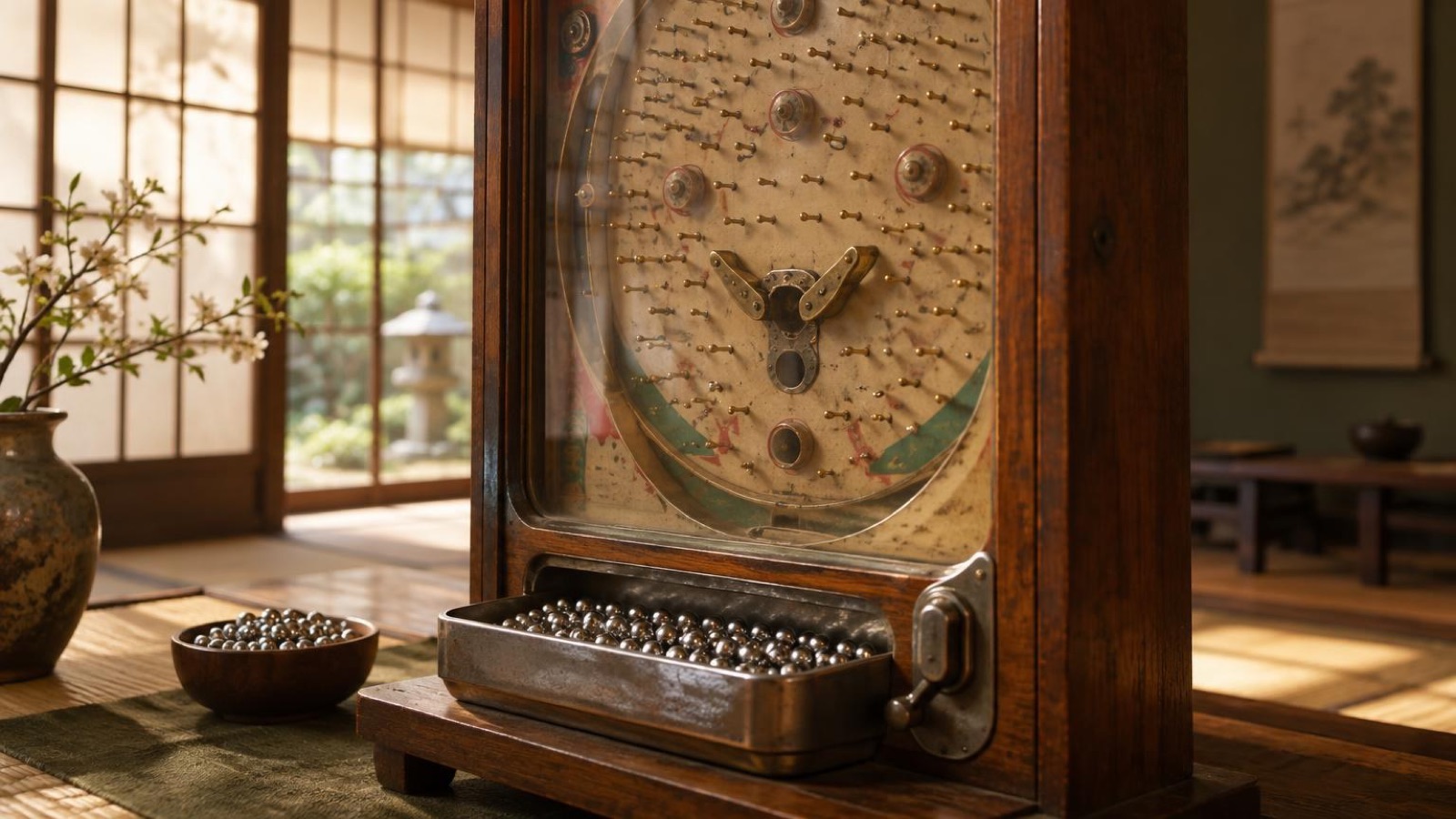
What the Masamura Gauge is
The Masamura Gauge is a pachinko mechanism, a gauge or catch feature that holds and releases balls as they move through the machine. It is one of the design elements that gave pachinko its distinctive feel, and it is still talked about by players and collectors as part of the game's history.
To understand why it matters, it helps to know what a pachinko machine actually is. Pachinko is a type of mechanical ball game resembling pinball. Where pinball uses a larger ball, pachinko uses small steel balls that parlors rent to players3. You sit at a machine, feed balls into the launch mechanism, and watch them fall through a field of pins. Where they land decides whether you win more balls.
The gauge sits in that flow. It is the part that catches and holds balls at a key point, then releases them, which changes how a player aims and how the machine pays out. Machines built around this kind of mechanism are known as hanemono, or wing-type machines, where a central feature opens and closes to let balls through5. Later machines kept the same idea but dressed it up with large character-based mechanisms in the center6.
Modern pachinko has moved on. Many current machines use a probability jackpot system, where a win triggers a run of favorable spins, and on many models that favorable state hits 7 to 8 times out of 107. The Masamura Gauge belongs to an earlier era of mechanical design, which is exactly why people still ask about it.
If you want the wider story of how the game began, see When and Where Was Pachinko Invented?.
Why pachinko sits outside Japan's gambling ban
Japan treats gambling as basically illegal, but not all gambling is illegal. Some forms are legal under other laws, either to respect everyday entertainment or to return proceeds to social welfare8. Pachinko is one of those carve-outs.
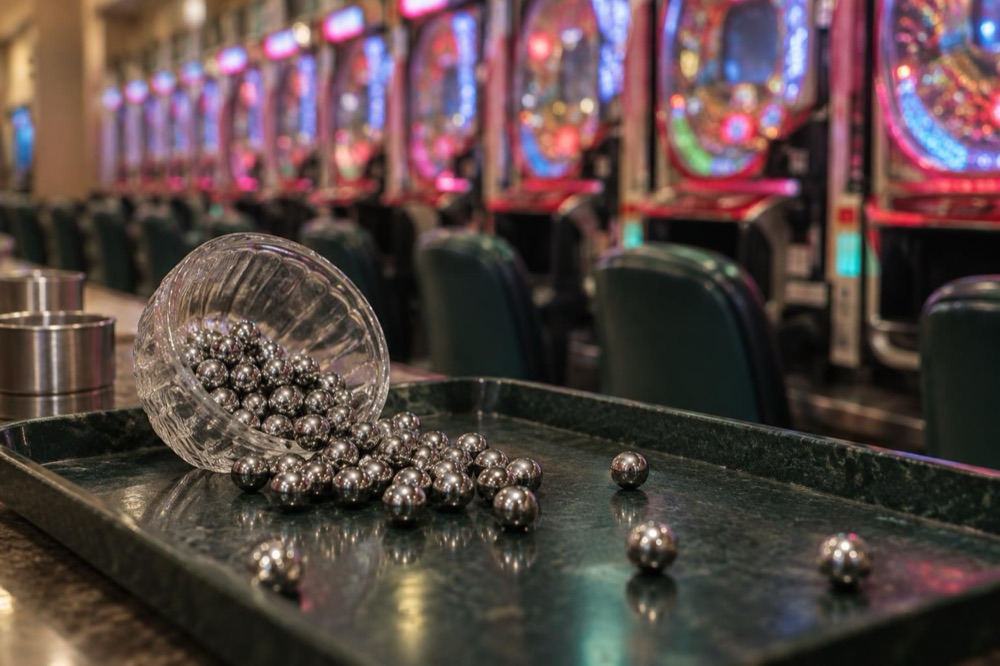
The trick is the prize exchange. Parlors are allowed to work around the gambling laws through careful handling of transactions and a kind of cultural carve-out9. In practice, this runs on what is called the three-store method, or santen hoshiki. Prizes are exchanged for cash at a separate kiosk outside the parlor2. You win balls inside, swap them for prizes inside, then take those prizes to a separate counter outside the parlor to exchange them. Three separate businesses, three separate steps.
That structure is why pachinko parlors can operate openly on main streets across Japan while casino table games cannot. The parlor is not paying you cash for a game of chance. It is selling you balls, and later buying prizes from you.
The same logic covers other legal forms. Public racing and sports gambling such as horse racing and bicycle racing are legal, as are games such as pachinko and pachislot10. The legal basis for non-cash gaming includes the following8:
- The Act against Unjustifiable Premiums and Misleading Representations, for prizes and premiums
- The Entertainment Business Act, for pachinko, shooting galleries and ring toss
- The Act on New Year's Gift Postal Cards, for non-cash forms
Cash-based legal gambling rests on other laws, including the Financial Instruments and Exchange Act for derivatives, the Sports Promotion Voting Act for the sports lottery and soccer toto, and the IR Development Act for integrated resort casinos8.
You do not need to know any of those names to play. What matters is the practical result: pachinko is legal, and it is everywhere.
Pachinko's scale: 10 times more machines per capita than the US
The industry is worth about ¥21 trillion JPY and employs over 240,000 people, accounting for nearly a third of Japan's entertainment and leisure market3. It is not a niche hobby. It is one of the country's largest leisure sectors.
Pachinko draws more than 10 million users11, and in 2016 it had approximately nine million players, making it one of the most popular forms of entertainment in Japan3. The market is highly fragmented, with over 3,400 different operators, ranging from small independent shops to large chains. MARUHAN is the largest of the large operators3.
Individual parlors vary enormously in size. A single store in Gunma lists 600 pachinko machines12. A smaller venue elsewhere lists 61 machines in total13. Some parlors run separate sections at different price points, such as a 4-yen pachinko corner and a 1-yen pachinko corner in the same building14.
That price difference matters more than anything else when you walk in. A 4-yen parlor charges 4 yen per ball, so your money buys four times fewer balls than at a 1-yen parlor. The 1-yen corners are where casual players and first-timers tend to start, because your money lasts longer and the swings are gentler.
Loan rates are not always a clean round number. One parlor lists a 4-yen pachinko cash exchange rate of 27.5 balls per ¥100, which is the rate for turning balls back into money, not the rate at which you buy them15, and another lists a ball rate of 320 balls16. Read the signs at the counter before you buy, because the rate determines how long you can play.
Who can play: age 18 for pachinko, 20 for public sports
Age rules in Japan are simple and they apply the same to citizens, foreign residents and visitors. Nobody gets a tourist exemption.
Pachinko and pachislot are open to anyone aged 18 or older under Japanese law1. Public sports gambling, which covers horse racing, keirin, boat racing and auto racing, requires you to be 20 or older1.
That split is worth remembering if you are planning a day out. Anyone in your group who is 18 or older can play pachinko, but only those who are 20 or older can bet on the races.
| Type of gambling | Legal? | Where | Minimum age |
|---|---|---|---|
| Pachinko | Yes | Pachinko parlors nationwide | 18 |
| Pachislot | Yes | Pachislot parlors nationwide | 18 |
| Horse racing | Yes | Racecourses and off-track betting | 20 |
| Keirin (cycling) | Yes | Keirin velodromes | 20 |
| Boat racing | Yes | Boat race stadiums | 20 |
| Auto racing | Yes | Auto race tracks | 20 |
| Sports lottery and toto | Yes | Authorized sales points | 20 |
| Online casino from Japan | No | Nowhere | Not applicable |
For comparison, other jurisdictions in the region set different bars. Land-based gaming facilities licensed by the Kahnawà:ke Gaming Commission require players to be at least 1817, and PAGCOR casinos and licensed sites in the Philippines admit only those 21 and above18. Japan's 18 for pachinko sits at the lower end.
If you are visiting and want the full picture of what you can and cannot do, start with Can I Gamble in Japan?.
How pachinko fits Japan's wider gambling market
Pachinko is the biggest legal gambling product in Japan by a wide margin, but it is not the only one. Understanding the shape of the market helps you decide what to actually do on a given afternoon.
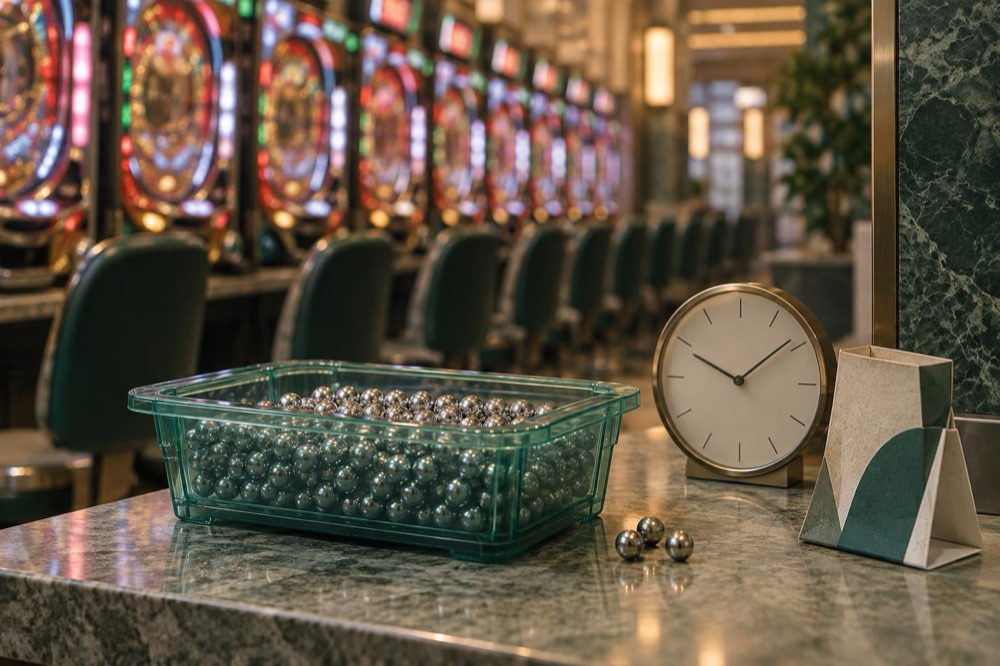
Pachinko and pachislot. These are the volume business. Thousands of parlors, tens of thousands of machines, and a low entry cost. You buy balls or tokens, play, and exchange prizes. No reservation, no dress code, no minimum spend beyond what you choose to put in.
Public sports betting. Horse racing, keirin, boat racing and auto racing are all legal and open to anyone 20 or older1. Racecourses run on scheduled days, and off-track betting points operate in cities. This is a slower, more social day out than a pachinko parlor.
Sports lottery and toto. Soccer toto and the sports lottery fall under the Sports Promotion Voting Act8. You buy at authorized sales points.
Prize draws and premiums. Prize draws run under consumer protection rules covering prizes and premiums8. These are the promotional draws you see attached to products and campaigns, not something you go out to play.
Integrated resort casinos. Japan has no open casino resorts yet. Integrated resort casinos are planned under the IR Development Act8, but none are operating. If you are reading this hoping to play table games in Osaka or Yokohama, that is not available today. Say it plainly: planned, not open.
Online casinos. Playing on offshore casino websites is illegal in Japan, and players have been prosecuted4. This applies even when the casino is legally operated overseas, and it covers free versions and free bonuses too1. The same rule applies to online pachinko, where participants may be charged with gambling offenses19. The police have been instructed to enforce thoroughly against operators, including payment agents and affiliates20. If you are in Japan, do not open an offshore casino account, and do not use a free version to try it out.
That last point is the one people get wrong most often. A foreign license does not make it legal to play from Japan, and being unaware of the law does not excuse it21. The practical risk is real and it applies to visitors as much as to residents.
For the wider regional picture, see Why Many Asian Countries Restrict Gambling.
What to expect on your first visit to a pachinko parlor
If you have never been inside a pachinko parlor, the first minute is overwhelming. The noise is loud, the lights are bright, and nobody is going to walk you through it. Here is the practical sequence.
Before you go. Bring cash. Parlors run on cash and machines take notes and coins. Bring your ID if you look young, since the 18-plus rule is enforced1. There is no dress code and no booking.
Choosing a parlor. Look at the price signs. A 1-yen corner is the cheapest way to learn. A 4-yen corner costs four times as much per ball. Some parlors run both under one roof14.
Buying balls. You put money into the machine or hand it to staff, and you receive balls at the posted rate. Rates vary by parlor and by corner, so check the sign. One parlor lists a 4-yen pachinko cash exchange rate of 27.5 balls per ¥100, which applies when you turn balls back into money rather than when you buy them15, another lists a 320-ball rate16.
Playing. You turn the handle to launch balls. They fall through the pin field. Balls that land in the right place trigger the machine's feature, which on hanemono machines means a central wing mechanism opens and closes5. On modern machines, a jackpot usually starts a run of favorable spins, and on many models that favorable state hits 7 to 8 times out of 107.
Winning and exchanging. Balls you win stay in the machine's lower tray. When you stop, you take them to the counter and exchange them for prizes. Then you take those prizes to the separate exchange counter outside the parlor, which is the third step of the three-store method2.
What it costs. Your only cost is what you put in. There is no entry fee and no membership. A first session at a 1-yen corner with a few thousand yen gives you a long stretch of play and a feel for the machine.
What to bring. Cash, and nothing else. No passport is required for pachinko, though you may be asked for ID if your age is unclear.
Common Questions
What is the Masamura Gauge in pachinko?
It is a classic pachinko mechanism, a gauge or catch feature that holds and releases balls in a way that changed how players aim and how machines pay out. It became one of the most recognizable design elements in pachinko history and is still discussed by players and collectors today.
Is pachinko legal in Japan?
Yes. Pachinko parlors operate legally across Japan. They work around the country's gambling ban through a three-store prize exchange system, where balls are swapped for prizes inside the parlor and those prizes are exchanged for cash at a separate kiosk outside.
How old do you have to be to play pachinko?
You must be 18 or older to play pachinko or pachislot in Japan. Public sports gambling such as horse racing, keirin, boat racing and auto racing requires you to be 20 or older. Age rules apply the same to citizens, residents and visitors.
How many gambling machines does Japan have compared with the United States?
Japan has roughly ten times more gambling machines per capita than the United States. Pachinko alone draws more than 10 million users, and the industry is worth about ¥21 trillion JPY, employing over 240,000 people.
What forms of gambling are legal in Japan?
Legal options include pachinko and pachislot, public racing and sports betting such as horse racing and bicycle racing, the sports lottery and soccer toto, and prize draws run under consumer protection rules. Online casino gambling from Japan is not legal.
Are there any casinos in Japan?
Japan has no open casino resorts yet. Integrated resort casinos are planned under the IR Development Act, but none are operating. For now, casino-style gambling in Japan means pachinko parlors and legal public betting, not table games.
Can players be arrested for gambling online in Japan?
Yes. Playing on offshore casino websites from Japan is illegal, and players have been prosecuted. This applies even when the casino is legally licensed overseas, and it covers free versions and free bonuses too. The same rule applies to citizens, residents and visitors.
Sources21 sources
- Gambling Addiction Pamphlet, SCGA, September 2026
- Gambling in Japan, Oxford Brookes University, September 2007
- Pachinko Business, MARUHAN, 2023
- Caution on Online Casinos, Consumer Affairs Agency, 2026
- Makai-gumi, Wikipedia
- Ponkiddo GP II, Wikipedia
- Shinkakei Pachinko, Wikipedia
- Crimes Related to Gambling and Lotteries, Wikipedia
- Best Online Casinos for Players from Japan, Wizard of Odds, May 6, 2026
- Gambling Signs, NCASA Japan
- What is Pachinko?, RSN Sakura
- Yasudaya Gunma Store, Yasudaya
- Pachinko Tengoku, Wikipedia
- Maruhan Kanuma, P-World
- Maruhan Kuroiso, Minpachi
- Maruhan Ota Shindocho, Minpachi
- Kahnawà:ke Gaming Commission Players, Kahnawà:ke Gaming Commission, September 2026
- Regulatory Exclusion, PAGCOR, September 2026
- RSN Sakura, RSN Sakura, September 2026
- Basic Plan on Gambling Addiction Measures, Cabinet Secretariat, March 21, 2025
- Online Casino Gambling, National Police Agency, 2026















