
Can tourists play mahjong or pachinko
The short version is that pachinko is the easiest local game for a visitor to walk into anywhere in Japan. You do not need a membership, a reservation or a passport. You walk in, buy balls or medals, sit at a machine and play. The parlor does not care whether you are Japanese, a resident or a tourist on a two-week trip.
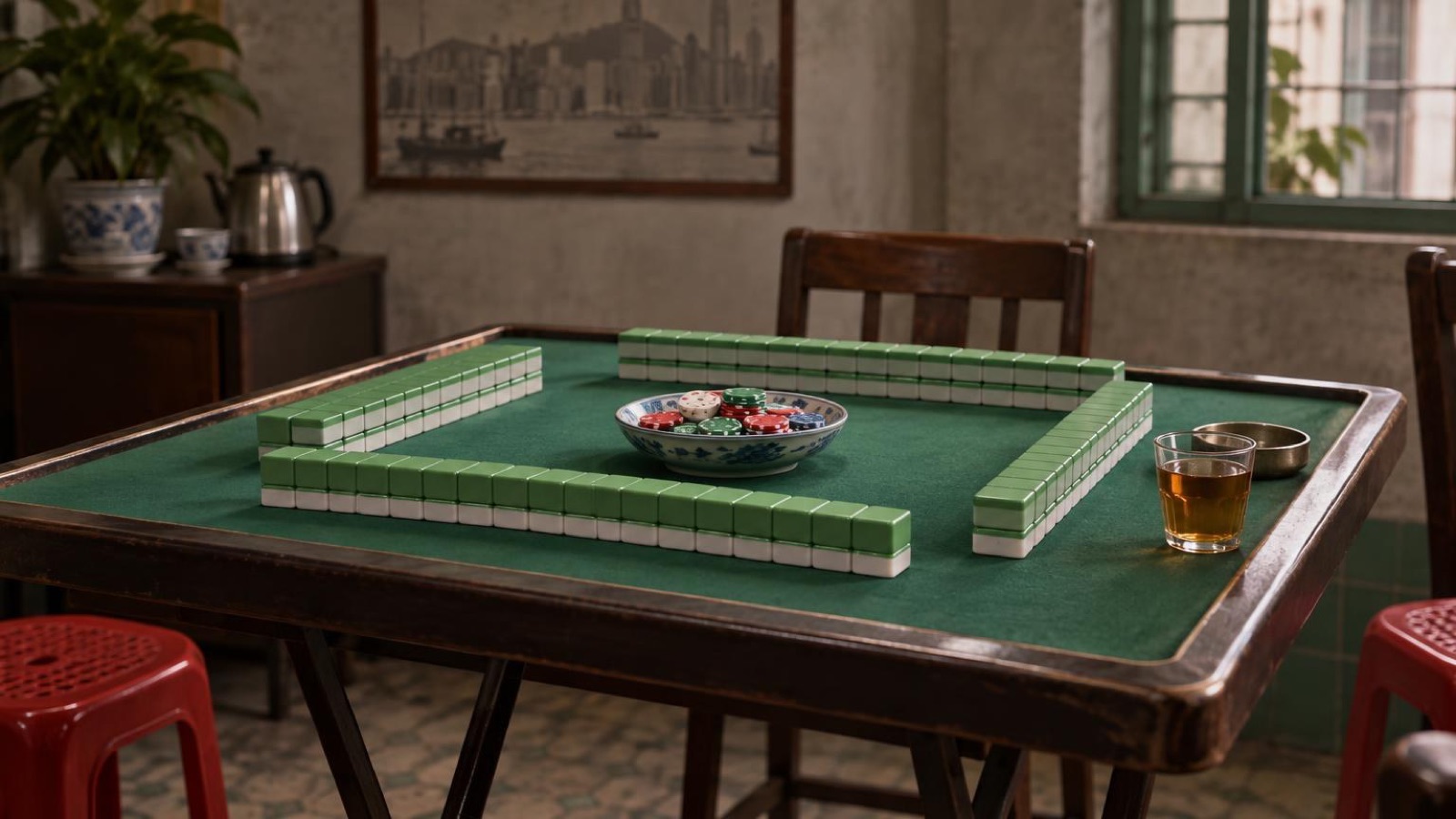
Mahjong is different. In Hong Kong, licensed mahjong parlors exist and take walk-in players, but they are a small and shrinking group4. In mainland China, mahjong is played everywhere as a social game, and the law treats small games among friends as entertainment rather than gambling5. In Korea, Japan and Taiwan, mahjong is mostly played in clubs, at home or online, and the legal line depends on whether money changes hands and how much.
Cockfighting is a third category. In the Philippines cockpits are licensed by city and municipal governments, which decide whether to allow cockfighting within their jurisdiction, and the Games and Amusements Board stopped issuing its own licenses for local cockfights in 20246. Elsewhere in the region it is either banned or confined to specific local events.
The practical rule for a visitor is this: if a game is offered openly at a licensed venue with a front door and a cashier, you can usually walk in. If it is offered in a hotel room, a private apartment or a back room with no license on the wall, stay out. That is where the arrests happen7.
Pachinko in Japan: legal status and the cultural carve-out
Pachinko sits in an unusual legal space. It is not officially classified as gambling for money, which is why it can operate openly across the country8. The machine itself is a game of skill and chance played for prizes, and the prizes are exchanged for cash at a separate counter outside the parlor. That separation is what keeps the whole thing on the right side of the line.
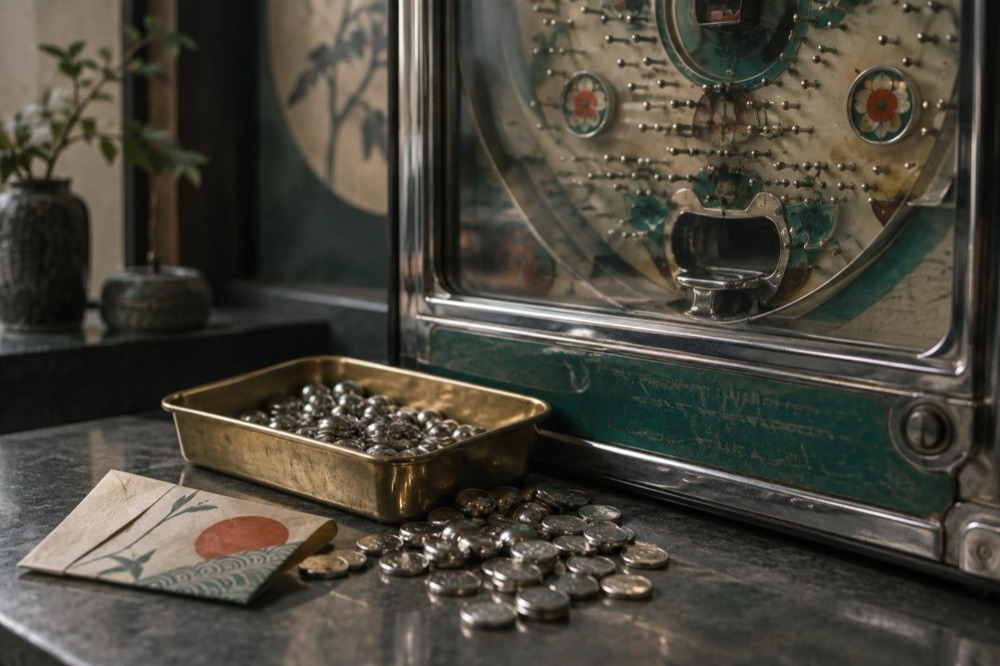
For a visitor, none of that matters at the door. What matters is that pachinko is a normal, everyday activity in Japan. Parlors are everywhere, they are loud, they are brightly lit, and they are open to the public. You do not need to explain yourself or prove anything. You buy balls at the counter or from a machine, take a seat, and play.
The one thing to understand before you go is that pachinko is not a casino game. There are no dealers, no table minimums and no chips. You are playing a machine, alone, at your own pace. The payout comes in the form of balls or medals, which you carry to a prize counter, and then to a separate exchange point if you want cash.
If you are used to casino table games, pachinko will feel strange for the first ten minutes. After that it is simple: keep the balls in play, watch the display, and let the machine do its thing.
Minimum age and ID checks: 18 and over
The minimum age for pachinko in Japan is 18. Under the Entertainment Business Act, parlors are prohibited from letting anyone under 18 enter as a customer1. That is the rule that matters most to a visitor, and it applies to everyone regardless of nationality.
Other games have different ages, and it is worth knowing them before you plan a day out:
| Game | Minimum age | Where | ID needed |
|---|---|---|---|
| Pachinko | 18 | Japan | No, but bring photo ID if you look young1 |
| Horse racing betting (JRA) | 20 | Japan | Yes at the window9 |
| Sports lottery (toto, BIG) | 19 | Japan | Yes at purchase10 |
| Casino table games | 19 | Korea | Passport required2 |
| Casino table games | 21 | Philippines | Passport for foreign visitors12 |
| Casino table games | 21 | Macau | Passport for foreign visitors3 |
| Vietlott lottery | 18 | Vietnam | Yes at the point of sale15 |
The pattern is that Japan sets the pachinko age at 18 but raises it to 20 for horse racing and 19 for the sports lottery1. Korea sets its casino age at 19 and requires a passport to confirm both age and nationality2. The Philippines sets it at 21 and restricts entry to tourists, non-resident foreigners and residents above an income threshold12. Macau sets it at 21 for land-based gaming facilities3.
For a visitor, the practical takeaway is to carry your passport when you plan to enter a casino anywhere in Asia. Pachinko is the exception. You can leave the passport in the hotel safe and still walk into a parlor.
How the prize system works around the gambling ban
The reason pachinko can operate openly is the prize system. You play for balls or medals, and you exchange those for prizes at a counter inside the parlor. The prizes are then exchanged for cash at a separate kiosk outside the parlor. This is known as the three-store method, and it developed specifically to work around the legislation that prohibits gambling for money8.
For a visitor, the process is straightforward:
- Buy balls or medals at the counter or from a dispensing machine.
- Sit at a machine and play. Balls that land in the right places pay out more balls.
- When you are done, carry your remaining balls to the prize counter inside the parlor.
- Choose a prize. Small prizes are snacks, cigarettes or tokens. Larger prizes are gold or silver items.
- Take the prize to the exchange kiosk outside the parlor, where it is bought back for cash.
The exchange rate varies by parlor and by machine type. At the Kanuma, Tochigi parlor, the pachinko 200 yen unit exchanges at 320 medals per exchange16. That is the kind of detail you only need if you are trying to work out what your stack is worth, and the staff at the counter will handle it for you.
The important thing to understand is that the cash does not come from the parlor. It comes from a separate business outside. That is the legal fiction that keeps pachinko running, and it is why you will sometimes see two doors and two counters instead of one.
Where to find a parlor: thousands of venues, 380 in Nagoya alone
Pachinko parlors are not hard to find in Japan. They cluster around train stations, shopping streets and entertainment districts. By the outbreak of World War Two there were already 380 such venues in Nagoya alone, and the number across the country today is far higher8.
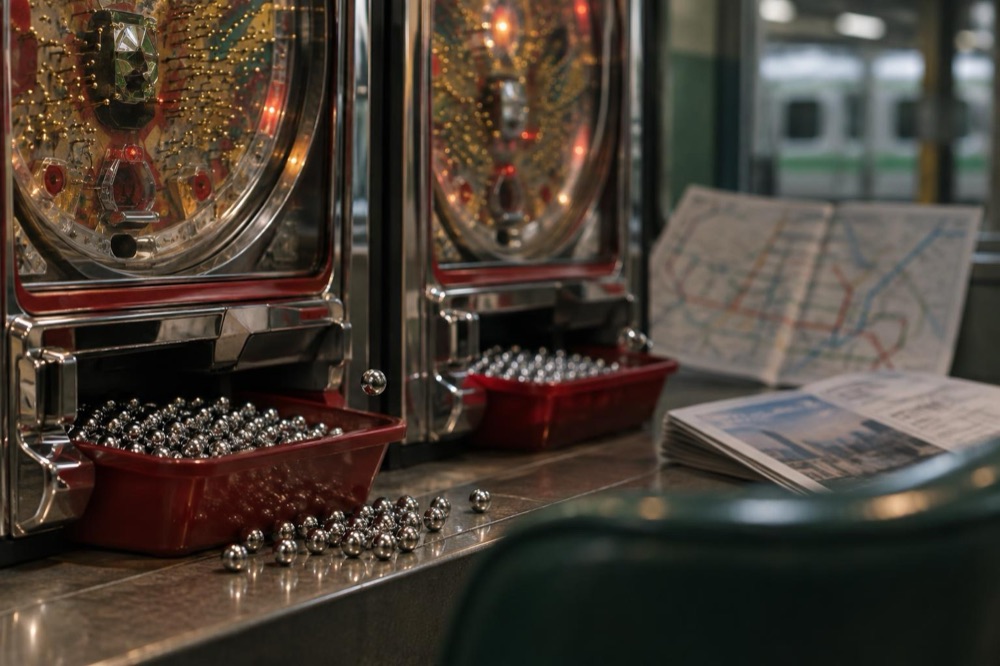
For a visitor, the easiest way to find one is to walk out of any major train station and look for the neon. Parlors are usually within a few minutes of the exit, often on the second or third floor of a commercial building. They open in the morning and run late into the night.
If you want to plan ahead, the P-World directory lists parlors by prefecture with addresses, phone numbers, machine counts and opening hours. It is in Japanese, but the numbers and addresses are readable, and a translation app will get you the rest.
A few things to expect on your first visit:
- The noise is loud. Bring earplugs if you are sensitive.
- The floor is smoky in older parlors, though many now have separate smoking areas.
- Staff will not speak English in most halls. Point at the machine you want and hold up the amount you want to spend.
- You do not need to tip anyone. There is no tipping culture in Japanese parlors.
- If a machine is empty and has a card or a bag on the seat, it is taken. Find another.
Example venue: parlor in Kanuma, Tochigi (hours, address, contact)
To make this concrete, here is a real parlor listing. The parlor in Kanuma, Tochigi is open from 9:00 to 22:5016. That is a long day, and it means you can walk in during the morning or the evening without worrying about a closing time.
The address is listed as 1051-5, Tochigi Prefecture16. The phone number is 0289-76-0717, and the operator website is saotomesp.co.jp16. The page was last updated on 2026/09/26, so the details are current16.
The parlor offers pachinko on 200 yen and 175 yen units, and on 100 yen and 450 yen units, plus slot machines on 1000 yen and 90 yen units, and 500 yen and 225 yen units16. In plain terms, that means there is a range of stakes, from low-cost machines for casual play to higher-denomination machines for regulars.
The pachinko 200 yen unit exchanges at 320 medals per exchange16. If you are playing that unit, that is the number to keep in mind when you carry your balls to the prize counter.
For a visitor staying in the area, this is the kind of parlor you can walk into without a plan. You do not need a reservation, a membership or a minimum spend. You buy balls, you sit down, and you play. If you want to confirm the hours or ask about machine availability, call 0289-76-071716. Staff may not speak English, so keep the question simple.
Smart Pachinko and other recent machine changes
Pachinko machines have changed a lot since the classic ball-and-pin design. The modern floor includes at least three or four variations: hanemono, deji-pachi, kenrimono and pachi-suro, which is essentially a slot machine that uses tokens exchanged for prizes8.
The newest development is Smart Pachinko, also called Sumapachi. These are machines that use a digital display and a different play style from the traditional machine. Newgin released its first Sumapachi machine, e CYBORG 009 RULE OF SACRIFICE, in January 2024, and Sammy followed with e Hokuto no Ken 10 in August 2024. Parlors are adding them gradually, so you may see a mix of old and new machines on the same floor.
For a visitor, the practical difference is small. You still buy balls or medals, you still sit at a machine, and you still exchange prizes at the counter. The display is brighter and the play style is different, but the routine is the same.
One other change worth knowing about is the prize itself. From February 2026, some parlors and exchange counters began handling pendant prizes sealed in card-shaped plastic instead of gold and silver items. If you are handed a small sealed card instead of a metal prize, that is why.
Local card games visitors encounter: Ban-luck and Guandan
Not every local game is played in a parlor or a casino. Two card games come up often when visitors spend time with local friends, especially around the Lunar New Year.
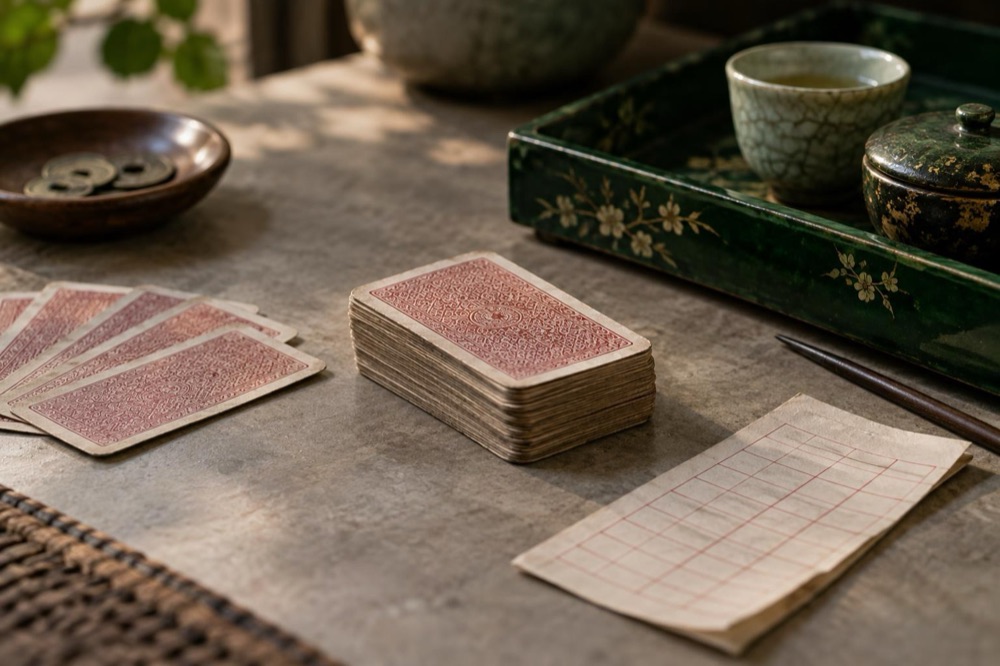
Ban-luck is a Chinese New Year card game, sometimes called Chinese blackjack. It is played with a standard deck and simple draw rules, and it is a social game rather than a casino game. Time Out Singapore published a step-by-step guide to it in February 2026, which tells you how mainstream the game is in the region. If a friend invites you to a Ban-luck table at a family gathering, you are joining a tradition, not a gambling operation.
Guandan is a climbing card game from Jiangsu province that has spread across China. In January 2024, the hashtag about people playing Guandan in first-class high-speed rail seats trended online, which gives you a sense of how popular it has become. It is a partnership game, usually played four to a table, and it is a social activity rather than a betting game.
The legal line for both is the same as for mahjong. In China, small games among friends and relatives without a profit motive are not treated as gambling and are generally not punished5. Games with small stakes among non-relatives are also not punished5. What crosses the line is a game run for profit, with high stakes, or in a venue that charges more than a fixed fee.
For a visitor, the safe approach is to play these games at home, at a club or at a festival, with stakes you would not mind losing, and to avoid any table where the host is taking a cut.
Cockfighting and mahjong: where they sit legally in Asia
Cockpits in the Philippines are licensed by city and municipal governments, which decide whether to allow the operation of licensed cockpits and the conduct of cockfighting within their jurisdiction; the Games and Amusements Board stopped issuing its own licenses for local cockfights in 20246. Whether a licensed cockpit operates near you depends on the local government, and a private event is not a safe substitute.
Mahjong sits in a different place in each jurisdiction:
- In Hong Kong, a small number of mahjong parlors remain licensed to operate legally4. These are the ones you can walk into.
- In mainland China, mahjong is not treated as gambling and is generally not punished if it is not for profit, if the stakes are small, or if a chess and card room charges only a fixed venue and service fee5.
- In Macau, mahjong is one of the games authorized in casinos, alongside baccarat, blackjack, fan-tan and others3.
- In Korea, mahjong is mostly a social game, and the legal line depends on whether money changes hands.
The rules on who can play also differ. In Korea, Kangwon Land Casino is the only casino that admits Korean citizens, and it admits foreign visitors too17. Every other casino in the country is foreigners-only, which means a Korean citizen cannot walk in but a visitor can19. In the Philippines, PAGCOR casinos admit tourists and non-resident foreigners, plus residents above an income threshold, and guests of qualified persons are limited to two13.
For a visitor, the pattern is that casinos in Korea, Macau and the Philippines are the places where you can play table games, and they will check your passport at the door. Mahjong parlors in Hong Kong are the places where you can play tiles, and they are licensed and open to the public. Cockfighting in the Philippines is licensed at the local government level, so whether visitors can watch and bet on fights depends on the city or municipality.
What you cannot do is join a private cash game in a hotel room or a back room. That is illegal in most of the region, and it has led to arrests of foreign nationals7. If someone invites you to a game that is not at a licensed venue, the safe answer is no.
Common Questions
What is the minimum age for pachinko in Japan?
You must be 18 or older to enter a pachinko parlor as a customer. The rule comes from the Entertainment Business Act, and parlors are expected to check. There is no upper age limit and no nationality restriction, so visitors and residents can play on the same terms.
Do I need to bring my passport to a pachinko parlor?
Not usually. Japanese pachinko parlors do not require ID for entry beyond an age check, and most regulars are locals. Bring photo ID anyway if you look young, since staff may ask. In Korea, Macau and the Philippines, casinos do require a passport for foreign visitors.
What are the opening hours of the Kanuma, Tochigi pachinko parlor?
The parlor in Kanuma, Tochigi is open from 9:00 to 22:50. That is a longer day than the traditional 10 a.m. pachinko opening, and it means you can walk in during the morning or the evening. Hours can change, so call ahead.
How do I contact the Kanuma parlor?
The Kanuma, Tochigi parlor lists its phone number as 0289-76-0717 and its website as saotomesp.co.jp. You can call to confirm hours, machine availability or whether the hall is running a morning service event. Staff may not speak English, so keep the question simple.
What is Smart Pachinko?
Smart Pachinko, or Sumapachi, is a newer type of pachinko machine that uses a digital display and a different play style from the traditional ball-and-pin machine. Newgin released its first Sumapachi machine in January 2024, and Sammy followed in August 2024. Parlors are adding them gradually.
What is Ban-luck?
Ban-luck is a Chinese New Year card game, sometimes called Chinese blackjack, played with a standard deck and simple draw rules. It is a social game played at home and in clubs during the holiday, not a casino game. Time Out Singapore published a step-by-step guide to it in February 2026.
Sources21 sources
- Basic Plan for Measures against Gambling Addiction, Cabinet Secretariat, March 21, 2025
- Seven Luck Casino Seoul Dragon City, Visit Korea, September 25, 2026
- Law No. 16/2001, Government of Macau SAR, September 24, 2001
- HKPU Final Report 2009, Home Affairs Bureau, December 2008
- Mahjong entertainment in China, China Peace, May 15, 2023
- DILG Memorandum Circular 2024-109, Department of the Interior and Local Government, August 6, 2024
- Dozen foreign nationals caught illegally gambling at Nha Trang hotel, Vietnam News, April 10, 2026
- Gambling in Japan, Oxford Brookes University, September 2007
- JRA betting tickets, Japan Racing Association, September 25, 2026
- Sports lottery integrity, toto, September 25, 2026
- Paradise Casino Walkerhill, Visit Korea, September 25, 2026
- Regulatory exclusion, PAGCOR, September 25, 2026
- Republic Act No. 9487, PAGCOR, September 26, 2026
- Gaming, Macao Government Tourism Office, October 14, 2026
- KBOAT FAQ, KBOAT, September 25, 2026
- Pachinko parlor in Kanuma, Tochigi, P-World, September 26, 2026
- Kangwon Land Casino, Jeongseon County, December 13, 2016
- Kangwon Land Casino, Visit Korea, September 25, 2026
- Jeju KAL Hotel Casino, Visit Korea, September 25, 2026
- Paradise Casino Jeju Grand, Visit Korea, September 25, 2026
- Paradise Casino Jeju Grand, Visit Korea, September 25, 2026















