What Ban-luck is and the goal of the game
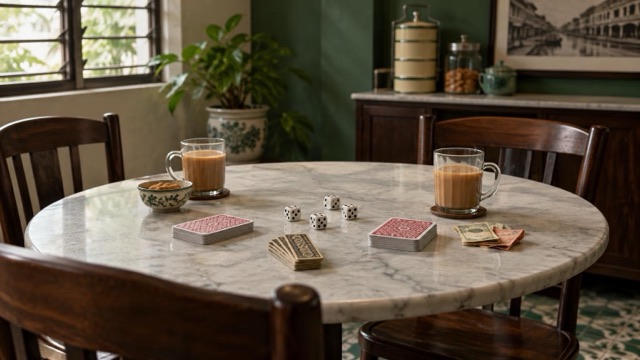
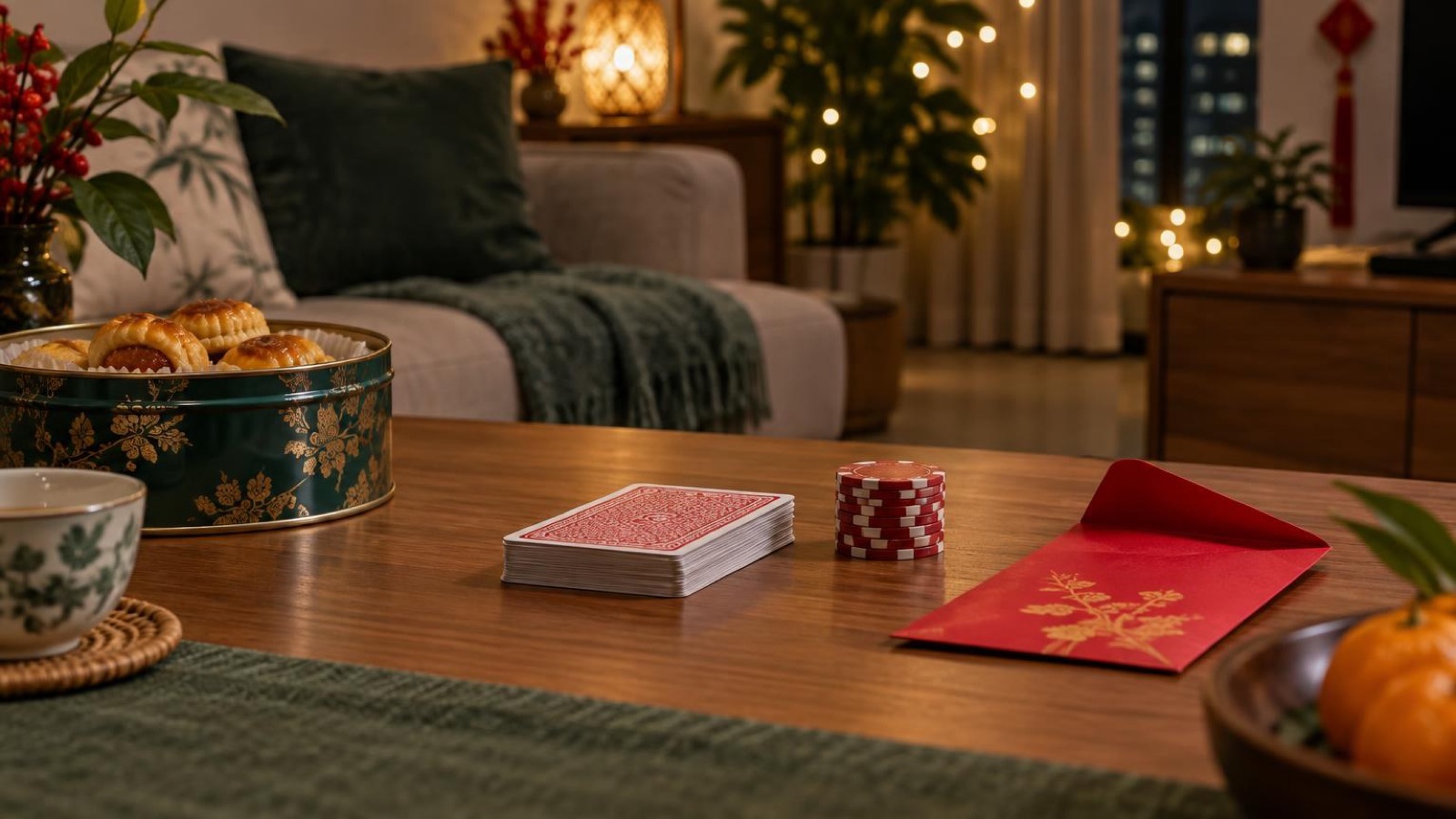
Ban-luck is the Singaporean and Malaysian take on blackjack, played not in casinos but around the living-room table, most famously during the fifteen days of Chinese New Year. You will also hear it called kampung blackjack ("village blackjack") or Chinese blackjack. Where casino blackjack is played against a house with strict table rules, Ban-luck is a Dealer-rotates game: one player acts as the Dealer for a round, then the deal passes on, so everyone takes a turn holding the bank.
The object is the same as ordinary blackjack: beat the Dealer, not the other players, by finishing with a hand worth more points than the Dealer's, up to a maximum of 21, or by still being alive when the Dealer goes over 21 and busts1. What makes Ban-luck its own game is the set of special hands layered on top: two-card bonus hands, a five-card bonus, and a seven-card jackpot, each paying multiples of your stake instead of the plain even money of a normal win.
The game uses one or more standard 52-card decks, and the group agrees on the stakes and the payout multiples before the first deal. Because the Dealer is a friend or relative, not a casino, the exact bonus rates vary from house to house, and it is worth settling them before money hits the table.
Card values: number cards, picture cards and aces
The counting follows standard blackjack values2:
- Number cards (2 through 10) are worth their face value. A 5 is worth 5, a 9 is worth 9.
- Picture cards (jack, queen and king) are each worth 103.
- Aces are worth either 1 or 11, and the choice is yours depending on the hand2. An ace with a 6 can be 7 or 17; an ace with a king is automatically the 21-point Ban-luck hand.
The ace's flexibility is what makes soft hands work. If you hold an ace and later draw cards that would push you past 21 when the ace counts as 11, the ace drops to 1 instead, so a hand of ace, 6 and 9 is 16, not 264. Once the ace is already counting as 1, the hand is a hard total and the next card can take it over: ace, 10 and 10 counts as 21, and any further card busts it4.
Suits do not matter for point values; a 7 of hearts and a 7 of spades are both simply 7 points. The one place suits and ranks matter beyond points is the special hands described below.
The initial deal and minimum value to continue
Each player puts up a stake, and the Dealer gives everyone two cards, usually both face up in home play so the table can see who is on course for a bonus hand. The Dealer's own two cards are checked at the deal, because a Dealer holding Ban-luck or Ban-ban ends the round for everyone before any drawing happens, in the same way a casino Dealer's blackjack ends the hand immediately1.
If nobody holds a two-card bonus hand, play moves around the table starting from the Dealer's left. Each player in turn decides whether to draw more cards or stand. The common house convention follows blackjack logic: you must draw on a total of 11 or less, and you may choose to stand on anything from 12 to 205. Many Singapore groups tighten this and require players to keep drawing until they reach at least 16, which keeps the game moving and pushes more hands toward the five-card and seven-card bonuses. Whichever convention applies, agree on it before the deal.
You keep drawing until you either stand, bust by going over the game's ceiling, or reach the card-count bonuses. Going over at any point ends your hand immediately as a loss, whether you are on your third card or your sixth.
Special hands and payouts: Ban-luck, Ban-ban and five cards
This is where Ban-luck departs from the blackjack you may know. Three special hands pay enhanced multiples of the stake instead of even money, and the rates are set by the group before play. The names and the general structure are fixed; the exact multiples vary.
| Hand | Make-up | Common payout | How it settles |
|---|---|---|---|
| Ban-luck | A two-card hand of 21, made of an ace and any 10-point card, the hand the game is named after | Double the stake | Checked at the deal; you reveal it at once and the hand is settled before any drawing |
| Ban-ban | A starting hand of two aces, rarer than Ban-luck, and the name behind the chant "ban ban ban luck" at the table | Triple the stake | Declared immediately, like Ban-luck |
| Five-card hand | A fifth card drawn with your total still under the game's ceiling | An enhanced rate | You win automatically, no matter what the Dealer later makes, and an ace in the hand keeps you from busting4 |
This is the feature that most changes strategy compared with casino blackjack: in Ban-luck there is a real reason to keep drawing on a safe low total, because reaching five cards without busting is itself a winning hand. The five-card rule rewards patience on soft hands in particular, since an ace in the hand keeps you from busting4.
A worked example: you are dealt a 4 and a 5 (9 points). You draw a 3 (12), then a 2 (14), then a 6 (20). Five cards, 20 points, no bust: you win at the five-card enhanced rate even if the Dealer later makes 21, because the five-card hand beats everything except the Dealer's own bonus hands.
The seven-card hand: 7+7+7 pays seven times the bet
The jackpot of the game is the seven-card hand. If you draw to exactly seven cards without going over the game's ceiling, you win at a high enhanced rate, and if those seven cards happen to be three sevens, a 7+7+7 hand, the payout is seven times your bet. It is the single biggest multiplier in the game and the hand every table talks about for the rest of the year.
Reaching seven cards without busting is rare, because seven cards must stay under the game's ceiling. It usually happens only on hands loaded with aces, 2s and 3s, which is another reason the ace's dual value of 1 or 11 matters so much2. A hand of ace, 2, 2, 3, ace, 3 and 3, for instance, can be counted to land at 15 with seven cards still alive.
The seven-card bonus stacks with the five-card logic: you pass through five cards (already a winning hand) and keep going, because seven cards pays more. Whether a player who reaches five cards may stop and take the smaller bonus, or must draw on toward seven, is a house rule to settle in advance.
Dealer bonus rules: when the Dealer holds Ban-luck or Ban-ban
The Dealer gets the same bonus hands everyone else does, and when the Dealer holds one, the whole table pays. If the Dealer's first two cards make Ban-luck or Ban-ban, the Dealer reveals them at the deal and the round is over before anyone draws, just as a casino round ends immediately when the Dealer turns over blackjack1.
The consequences run in the Dealer's favor:
- Every player pays the Dealer at the enhanced rate for the hand the Dealer holds, so a Dealer's Ban-ban can cost each player several times their stake in one deal.
- A player who also holds a bonus hand is protected: a player with Ban-luck against a Dealer's Ban-luck does not pay the enhanced rate, in the same way a player's blackjack against a Dealer's blackjack in a casino keeps their original bet rather than losing it1.
- Because the deal rotates, the same player who paid out on a Dealer's Ban-ban will hold the bank a few hands later and get the chance to collect the same bonus from everyone else.
This rotation is the social engine of the game. Over an evening the enhanced payouts wash around the table, and the Dealer's turn to hold the bank is the moment the big swings happen.
Settling the bet: win, lose or draw
Once all players have finished drawing, the Dealer completes their own hand, drawing until reaching a stand total, and the bets settle5:
- You win if your total beats the Dealer's, or if the Dealer draws past 21 and busts, in which case every player still alive wins6.
- You lose your stake if you bust, or if the Dealer's finished total is higher than yours.
- A draw (push) happens when your total equals the Dealer's. In most home games a tie means you keep your original stake and nobody pays, the same push treatment as casino blackjack7; some groups instead make ties lose to the Dealer, so confirm which convention applies before the first deal.
- Bonus hands settle at their enhanced multiples rather than even money, as described above.
Payouts for ordinary wins are even money: you win the amount of your stake. Only the special hands pay multiples.
Playing for money at home
Ban-luck is a social game, and in Singapore it belongs to the world of home gambling among friends and family rather than the casino floor. The stakes are usually small, a few dollars a hand, with the real point being the ritual of the New Year table. If you want the wider picture of what you can and cannot play at home, see social gambling and home mahjong in Singapore, and for the casino side of 21, casino games in Singapore.
Two practical habits are worth keeping even at a friendly table. Set a stake you are happy to lose for the whole evening before you sit down and keep to it, the way you would budget for any night out8. And treat the game as luck, not skill: no "lucky" ritual, seat or betting pattern increases your chances of winning, so there is no reason to chase losses or raise stakes to win money back9. If a session stops being fun, the traditional move is simply to give up the seat, watch the round, and rejoin when you feel like it.
Common Questions
What does Ban-luck mean?
Ban-luck is the Singapore and Malaysian name for Chinese blackjack, a version of 21 played at home, especially at Chinese New Year. The name also refers to the best starting hand: an ace plus a picture card or a ten, which pays out at an enhanced rate.
How much do aces count in Ban-luck?
An ace counts as either 1 or 11 points, whichever works better for your hand. If counting it as 11 would push you over 21, it counts as 1. Two aces together make the special Ban-ban hand.
What is the difference between Ban-luck and Ban-ban?
Ban-luck is the name of the game itself, and also the name for a two-card hand of 21 made with an ace and a picture card or ten. Ban-ban is a rarer starting hand of two aces, which pays at a higher enhanced rate agreed before play.
What is the minimum hand value to keep drawing cards?
There is no fixed rule, but the common approach follows blackjack: you must draw on 11 or less and may choose to stand on 12 through 20. Many groups require players to keep drawing until they reach at least 16.
How does the five-card draw procedure work?
If you reach a fifth card without going over 21, you win automatically regardless of the dealer's total, and the hand pays at an enhanced rate. The five-card win is one of the features that separates Ban-luck from ordinary casino blackjack.
What is the highest payout in Ban-luck?
The top payout is for three sevens, a 7+7+7 hand made of exactly seven cards, which pays seven times your bet. Ban-ban and the five-card hand also pay enhanced multiples agreed by the group before the game starts.
Does the Dealer get bonus payouts too?
Yes. If the Dealer turns over Ban-luck or Ban-ban at the deal, every player pays the Dealer at the same enhanced rate a player would receive, so a Dealer's Ban-ban can cost each player several times their stake.
Sources9 sources
- How to play Blackjack, PlaySmart, 2026-09-25
- How to play blackjack, GameSense, 2020
- How to play Blackjack, PlaySmart, 2026-09-25
- Blackjack, 888casino, 2026-09-26
- Hustler Casino Blackjack rules, California Department of Justice, 2021
- How to play blackjack, Shuffle, 2026-08-20
- Poker essentials, GameSense, 2020
- Help with budgeting and finances, GambleAware, 2026-09-25
- Safer gambling tips, Responsible Gambling Council, 2026-09-25