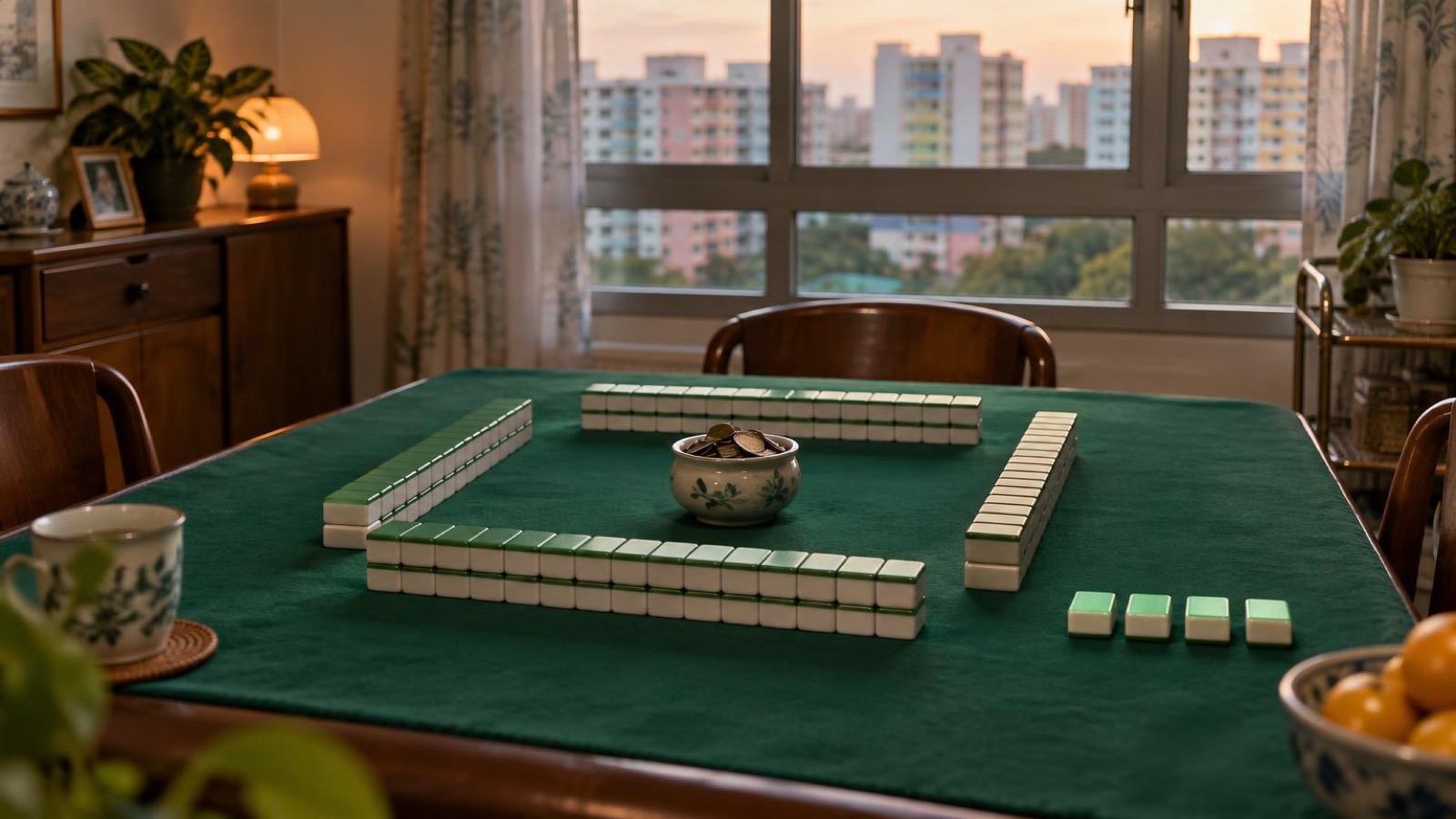
Singapore is one of the few places in Asia where the law names home mahjong directly and protects it. Alongside the big licensed options, the casinos in Singapore, Singapore Pools betting and jackpot machine rooms in private clubs, the Gambling Control Act 2022 contains a specific exemption for social gambling among family and friends in homes5. That exemption is what makes the Chinese New Year mahjong table, the weekend ban luck session and the after-dinner card game with cousins lawful. This page explains what the exemption covers, how the money side of Singapore Style mahjong works, and what to do if your group cannot play at home.
Where social gambling is legal in Singapore
Gambling in Singapore is prohibited unless it is licensed or exempted6. The legalized forms are social gambling, betting with Singapore Pools, casino gambling at Marina Bay Sands and Resorts World Sentosa, and jackpot gambling in private clubs7. Social gambling sits at the small, informal end of that list: it is gambling with family that is not conducted in the course of any business and takes place within the confines of an individual's home7.
The exemption matters because it draws a clean line around the kitchen table. A game among relatives or friends at home is treated completely differently from the same game in a public place, which is illegal even among family and friends2. So the question for any group is never just who is playing, but where.
Gambling at home: the conditions that must all be met
The law sets out a short list of conditions, and every one of them must be satisfied for the game to count as social gambling1. They are:
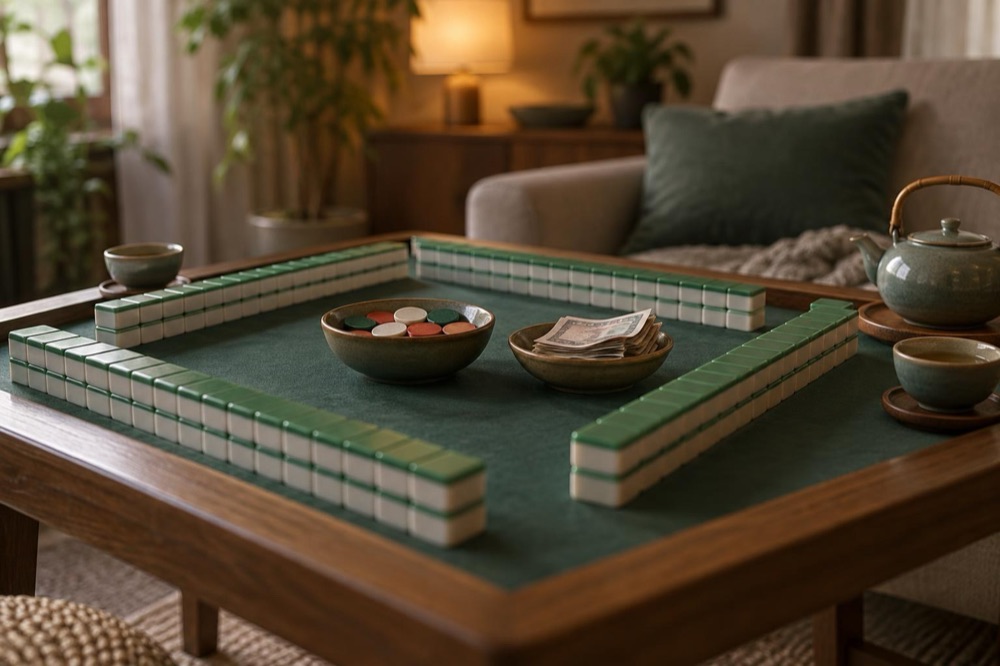
- Place. The gambling takes place in person, in an individual's home2. Not a hotel, not a chalet, not an office, and not any public place.
- People. The participants are family members, or individuals who know each other personally2.
- Spontaneity. The gambling must be substantially spontaneous1. A game that grows out of a family gathering fits; a standing, organized session run like a business does not.
- No private gain. The activity must not be conducted for the private gain of a non-participant or in the course of any business2. No host, organizer or outside party may take a cut.
- No fees. No commission, charges or fee may be sought from the participants2. The person whose house it is cannot charge table money.
- Winners only. No participant should be able to obtain a benefit other than winning2. The only money that moves is money lost by players to other players.
In practice, the ordinary family mahjong session meets all of these without anyone thinking about them. The conditions bite in the situations where a game starts to look organized: a regular session with a rotating host who takes a cut, a friend-of-a-friend who brings a table fee, or a game arranged to generate income for someone who is not playing. Any of those pushes the session outside the exemption.
Who counts as family or a personal acquaintance
The exemption covers two groups: family members, and individuals who know each other personally2. Family needs no definition in practice; parents, siblings, cousins, in-laws and household members all qualify. "Personal acquaintance" is the phrase that does the work for friends: the players must actually know each other. A table of strangers assembled by an organizer, or players recruited through an app or a group chat for the purpose of gambling, does not fit the description.
The distinction is about genuine social connection rather than the size of the group. Four colleagues who eat lunch together every week are personal acquaintances. Four people who met through a gambling group five minutes ago are not, and a game between them at home would not be social gambling.
No minimum age for home games
Singapore's licensed gambling has firm age floors: 21 to enter the casinos8, 21 for most gambling under the Gambling Control Act, and 18 for lottery and sports betting at Singapore Pools' physical outlets5. The home exemption is different. The Gambling Control Act's offenses for underage gambling do not apply to social gambling9, and the exemption itself does not set a minimum age. A teenager joining the family mahjong table at Chinese New Year is not committing an offense by playing.
That said, the age limits at every licensed venue still apply in full. The same teenager cannot buy a TOTO ticket, enter a jackpot machine room or set foot in a casino, and those rules are enforced by the venues themselves.
Online social gambling is prohibited
The home exemption stops at the front door. Social gambling is not permitted on online platforms2, and this is deliberate: when the Gambling Control Act was introduced, the government stated that online social gambling would not be exempted because it would be difficult to establish whether individuals are sufficiently connected5. All forms of online gambling have been forbidden in Singapore since 2014, apart from a small number of lottery and betting products offered by exempt operators10, and the remote gambling law covers everyone from individual gamblers to those who facilitate or provide services11.
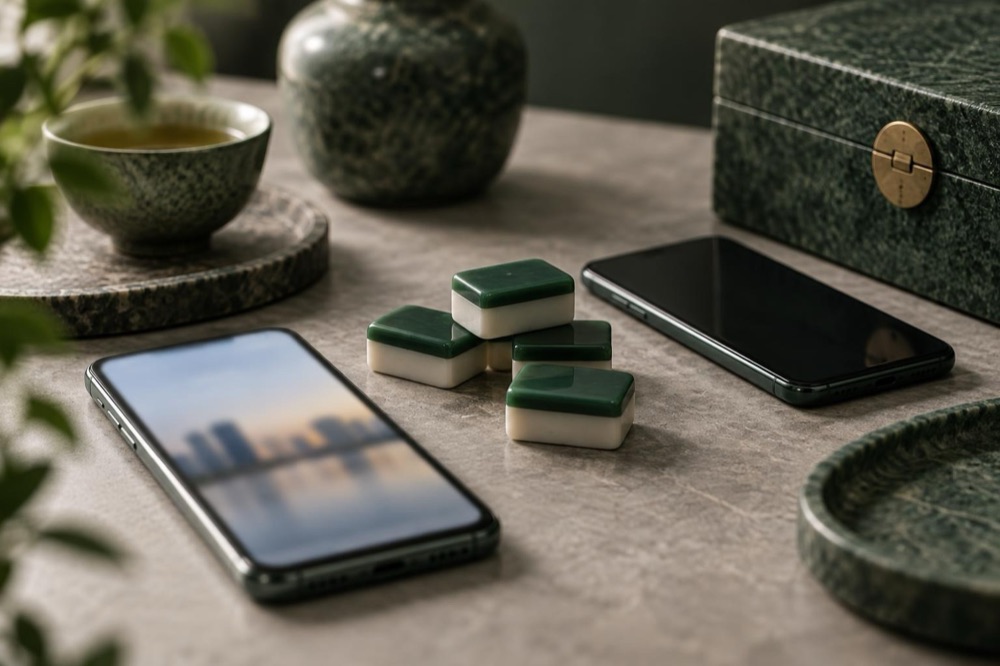
So a video-call mahjong game with your own siblings, played for real money through an app or a payment link, is not covered by the family exemption. The exemption is for gambling that takes place in person, in an individual's home2. If your family cannot be in the same room, the lawful option is to play without money. For the wider picture of what is and is not available online, see online gambling in Singapore.
Payouts: tai, doubles and the limit
Singapore Style mahjong is a small-stakes gambling game, and its money system is built around the tai (台), a unit of score attached to each winning hand12. The table agrees on a cash value per tai before starting, for example 50 cents or one dollar, and the winner collects from the other players according to how many tai the hand is worth.
Several features are specific to the Singapore game:
- Animal tiles. The Singapore set has four animal tiles: cat, rat, cockerel and centipede. Rat and centipede are prey; cat and cockerel are predators. Each animal tile obtained counts as one tai, and a full set of all four counts as five tai12.
- Bites. If a player obtains a corresponding pair of prey and predator, he can collect some payment from all the other players, immediately12.
- Flower pairings. Flower tiles come in two sets, the Four Noble Plants and the Four Seasons. A matching pair of flowers, colloquially known as kau'in, from the Malay kahwin meaning wedding, also triggers an immediate payout12.
- Immediate payout rate. Immediate payouts for pairings, bites and kongs are typically set at twice the rate of one tai, and the payment for a concealed pairing, bite or kong is double that for an exposed one12.
- The limit. The limit, the cap on how many doubles a hand can score, is usually set at five or six doubles12. A hand at the limit pays the maximum the table has agreed.
The same structure of immediate payments applies to special hands such as Big Three Dragons and Big Four Winds12. Because everything is settled player to player, with no house and no rake, the money in a home game simply moves around the table over the evening. If you want the card-game equivalent, see ban luck, the blackjack variant that fills the same role at Chinese New Year gatherings.
Playing outside the home: why hotels, chalets and offices do not qualify
The exemption is written around "an individual's home", and that phrase is read literally. A hotel room, a chalet, a serviced apartment, an office after hours or a rented function room is not an individual's home, and gambling in any public place in Singapore is illegal even among family and friends2. The same applies to a void deck, a park or a coffee shop table.
This catches out visitors and residents alike. A family that books a chalet for a long weekend and brings the mahjong set is outside the exemption, because the chalet is not anyone's home. A group of colleagues playing cards in the office pantry after hours is outside it too. The risk is straightforward: the game is unlawful gambling, and the players can be dealt with as such. If the group cannot use someone's home, the lawful alternative is a licensed club venue, covered next.
Mahjong rooms in private clubs: the Republic of Singapore Yacht Club example
Outside the home, mahjong for money exists in one lawful setting: private clubs. Jackpot gambling in private clubs is one of Singapore's legalized gambling forms7, and some clubs extend the idea to dedicated mahjong rooms run under the Common Gaming Houses (Private Bodies - Exemption Notification). The Republic of Singapore Yacht Club (RSYC) is the clearest example.
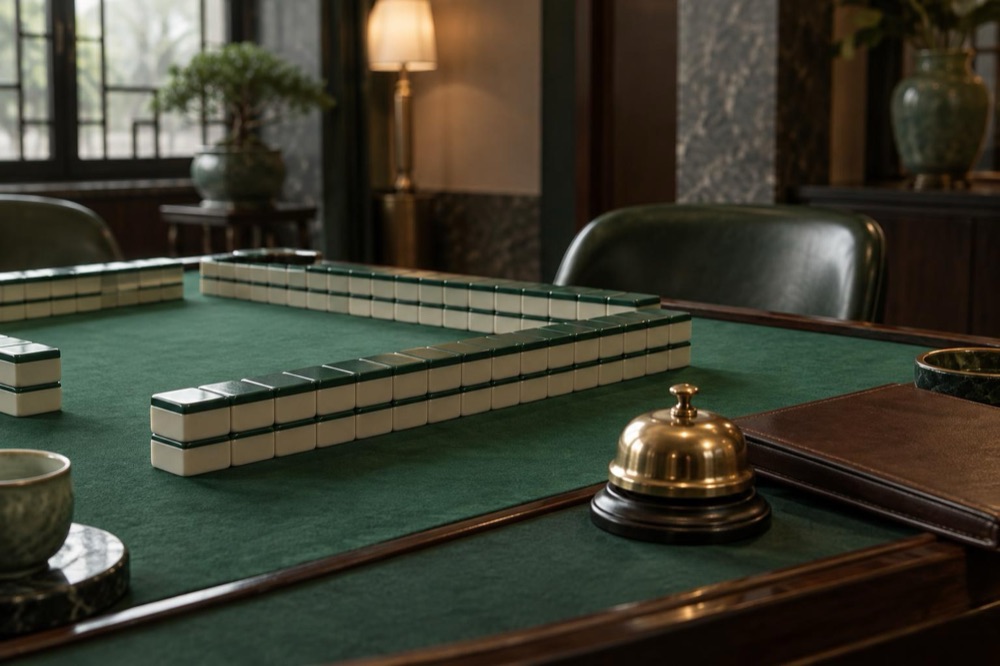
The RSYC mahjong room reopened on 4 July 2020 and runs on these terms4:
| Item | Details |
|---|---|
| Hours | 10AM to 12AM daily |
| Capacity | 4 tables, 16 persons |
| Rate | S$5 per hour, common room rate |
| Booking | One booking per member per day |
| Entry | Members only; no guests or non-members may play or remain in the room |
| Age | Persons below 18 are not allowed to enter or remain |
| Contact | 6768 9288/292 |
The member-only rule is not the club being precious; it is a legal condition. The room operates under conditions 3 and 7 of the Schedule of the Common Gaming Houses (Private Bodies - Exemption Notification), which require the restriction of play to members and the age limit4. Members book the room, bring their own group of fellow members, and settle their own stakes across the table, much as they would at home.
The club's Jackpot Room sits alongside it, with its own rules: members must produce their membership card before signing in, entry is restricted to individuals holding membership terms of at least one year, and payouts of S$5,000 or more are made by PayNow within seven working days13. Ordinary membership also carries a one-time free transfer to an immediate family member, worth S$6,42013. For the full picture of this venue, see the Republic of Singapore Yacht Club Jackpot Room page, and for the wider club scene, jackpot machine rooms in Singapore.
Home table or club room: how they compare
| Home game | RSYC mahjong room | |
|---|---|---|
| Who can play | Family or personal acquaintances | Members only, no guests |
| Cost | Nothing; no fee may be charged | S$5 per hour |
| Age | No age set by the exemption | 18 and over |
| Hours | Whenever the household likes | 10AM to 12AM daily |
| Booking | None | One booking per member per day |
| Stakes | Whatever the players agree | Settled among the players |
The choice usually comes down to space and membership. A home game is free, unrestricted in hours and open to anyone the players genuinely know, which is why it remains the default for Chinese New Year and weekend sessions. The club room suits groups whose members already belong to the club and who want a dedicated table without clearing the dining room. What neither setting allows is a rake: at home it would break the exemption, and in the club room the money moves only between players.
Common Questions
Can I play mahjong for money with friends at home in Singapore?
Yes. Playing mahjong for money at home is lawful when everyone present is family or a personal acquaintance, the game was arranged on the spur of the moment, and nobody takes a cut, fee or commission. Only the players themselves may win money.
Is online mahjong with family exempt from gambling laws?
No. The home exemption covers only gambling that takes place in person, in an individual's home. Social gambling on online platforms is not permitted, even if everyone playing is family.
Can minors take part in social gambling at home?
The home exemption in the Gambling Control Act 2022 does not set a minimum age, so a home game among family does not create an age offense. Licensed gambling venues and Singapore Pools outlets have their own age limits of 18 or 21.
What happens if we play mahjong in a hotel room or chalet?
The exemption applies only to an individual's home. A hotel room, chalet, office or any public place does not qualify, and gambling there is illegal even among family and friends.
How much does it cost to book the Republic of Singapore Yacht Club mahjong room?
The common room rate is S$5 per hour, with one booking allowed per member per day. The room has four tables for up to 16 people and is open 10AM to 12AM daily.
What are the animal tiles in Singapore Style mahjong?
Four animal tiles: cat, rat, cockerel and centipede. Rat and centipede are prey, cat and cockerel are predators. Each animal counts as one tai, all four count as five tai, and a matching prey and predator pair lets you collect from every player.
What is the limit in Singapore Style mahjong?
The limit, the maximum number of doubles a winning hand can score, is usually set at five or six doubles. Hands at the limit pay the top amount agreed at the table.
Sources13 sources
- Gambling Control Act 2022, Singapore Statutes Online, 2026
- Physical social gambling among family and friends, Ministry of Home Affairs, 2026
- About problem gambling, National Council on Problem Gambling, 2026
- Reopening of RSYC Jackpot Room and Mahjong Room, Republic of Singapore Yacht Club, July 3, 2020
- First reading of the Gambling Regulatory Authority of Singapore Bill and Gambling Control Bill, Ministry of Home Affairs, February 14, 2022
- Regulating the casino and gambling industry, Ministry of Home Affairs, 2026
- Gambling Control Act 2022 (historical version), Singapore Statutes Online, June 17, 2024
- FAQ, Gambling Regulatory Authority of Singapore, 2026
- Gambling Control Act 2022 (Supplement), Singapore Statutes Online, April 4, 2022
- Visa debit in Singapore, Wizard of Odds, 2026
- Singapore Pools and Singapore Turf Club found suitable to be exempt operators under the Remote Gambling Act, Ministry of Home Affairs, September 29, 2016
- Mahjong Singapore Style, Mahjong Singapore, February 24, 2008
- Jackpot Room, Republic of Singapore Yacht Club, 2026