Where each game stands: the short answer
Asia's traditional games sit in very different legal positions depending on where you play them, and often on who you are.
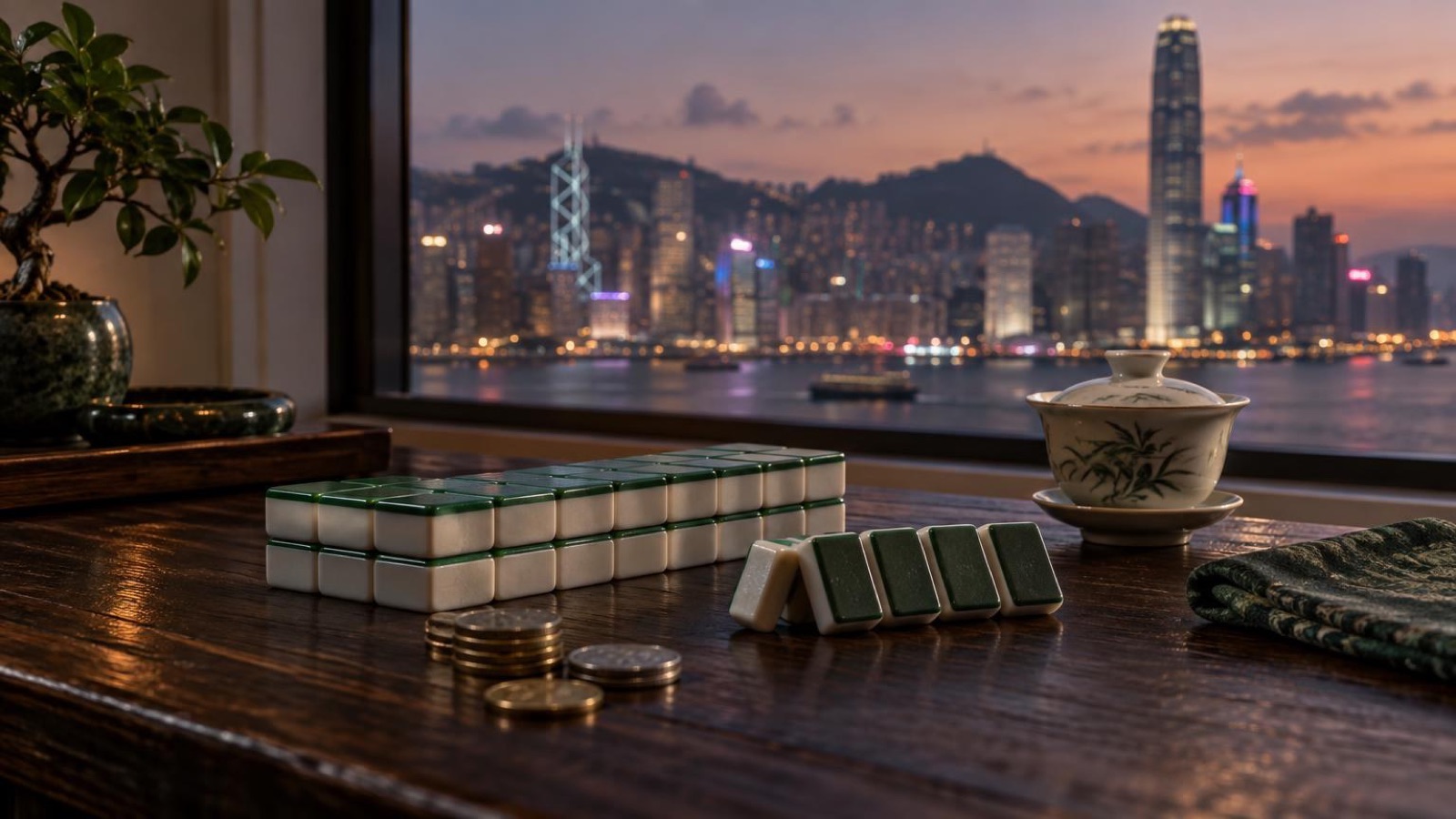
In Hong Kong, gambling is illegal by default. The exceptions are horse racing, football betting and Mark Six lottery run by the Hong Kong Jockey Club, gaming activities licensed under the Gambling Ordinance such as mahjong parlors, and social gambling exempted under section 3 of that ordinance1. Mahjong for money is legal inside licensed parlors and in genuinely social home games, but illegal in unlicensed clubs that charge rental or commission6.
In mainland China, the authorities do not treat mahjong or poker as gambling when relatives play with money stakes without a profit motive, and games among non-relatives with small stakes are also not punished2. Chess and card rooms are legal entertainment venues, but using them as a front for gambling breaks the law7.
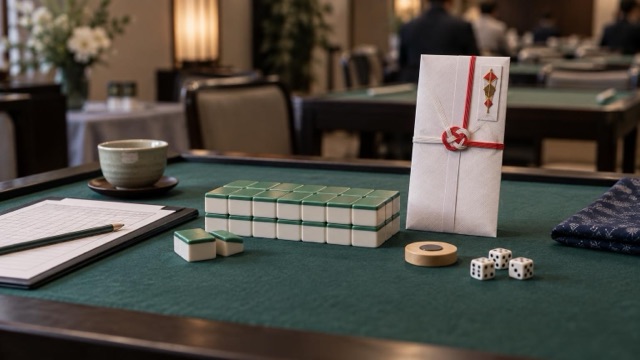
In Japan, mahjong gambling is a crime regardless of the place or the name of the venue, including mahjong parlors, teaching facilities, homes and inns3. Parlors themselves are legal and licensed, but they charge table fees rather than taking a cut of bets8.
In Macau, mahjong played in licensed premises follows official gaming rules published by the regulator, covering payouts, liability and penalties9.
Vietnam takes a different approach: it does not license traditional games like xoc dia at all, but it does allow eligible Vietnamese citizens to enter a small number of licensed casinos under strict conditions on age, income, entry fees and currency4. Singapore and Thailand, meanwhile, charge their own citizens or nationals a fee simply to walk through a casino door10.
For a broader look at each game and where it fits, see Asian gambling games.
Mahjong in Hong Kong: legal where, illegal where
The legality of mahjong in Hong Kong depends almost entirely on the type of premises where the game takes place6.
Legal places to play:
- Licensed mahjong parlors. A small number of mahjong parlors, known locally as mahjong schools, hold licenses to operate legally11. Games inside them are lawful during the premises' prescribed business hours.
- Social games at home. Gambling of a genuinely social nature falls under the exemption in section 3 of the Gambling Ordinance, so a friendly game at home with no one profiting from hosting is allowed1.
Illegal places to play:
- Unlicensed clubs and associations. It is unlawful to play mahjong for money in establishments that are not bona fide, including mahjong clubs or associations operating without a license6.
- Premises charging rental or commission. At so-called Luen Yi Wui establishments, rental or commission is charged for providing tables, tiles and chips. Under those circumstances, players may be committing a gambling offense6.
- After hours. If games continue outside the prescribed business hours of a licensed mahjong school, the activities become illegal6.
A common misconception is that playing mahjong for money does not break the law and that players can evade gambling charges. That is not correct: playing for money in the wrong premises is an offense6.
If you are new to the game itself, see how to play mahjong, and for the licensed halls across the region, see mahjong parlors.
Penalties for mahjong players in Hong Kong
Anyone who participates in illegal gambling in Hong Kong, including illegal online betting, can be sentenced on conviction to nine months in prison and a fine12. The maximum penalty for betting with a bookmaker is a fine of HKD 50,000 and nine months' imprisonment13.
The same ceiling applies to mahjong players in the wrong premises: because playing for money where rental or commission is charged is a gambling offense, conviction carries the same fine of up to HKD 50,000 and up to nine months in prison6.
In practice, the risk for an ordinary player is a criminal record, a fine and, at the top end, a short prison sentence. The practical takeaway is simple: play inside a licensed parlor or a genuine home game, and the question never arises.
What Hong Kong law allows outside mahjong
Hong Kong's gambling policy confines legal betting to a small number of regulated channels1. Everything else is illegal unless the law specifically allows it.
What is authorized:
- Horse racing, football betting and the Mark Six lottery, all organized by the Hong Kong Jockey Club1
- Gaming activities authorized by a public officer appointed under the Gambling Ordinance, such as licensed mahjong parlors1
- Social gambling exempted under section 3 of the Gambling Ordinance, mainly small private games1
What is not:
- Any unauthorized gambling activity is illegal except in the situations listed in the law1
- Online gambling is illegal in Hong Kong, with one exception: online betting offered by the Hong Kong Jockey Club14
So a visitor who wants to bet legally in Hong Kong has three doors: the Jockey Club's racing, football and lottery products, a licensed mahjong parlor, or a private social game. For the country-level picture, see gambling in Hong Kong.
Mainland China: small family games are tolerated
Mainland China bans gambling in general, but the authorities have carved out a practical space for small mahjong and poker games.
The rules, set out in official guidance on how gambling cases are handled, work like this2:
- Games between relatives with money stakes, played without a profit motive, are not punished.
- Games between people who are not relatives, with only small amounts of money at stake and no profit motive, are also not punished.
- Provincial guidance repeats the same position: family and relatives playing mahjong or cards with modest stakes are not treated as gambling15.
News reporting confirms the everyday reality: mahjong among relatives and friends, with tiny winnings and purely for leisure, is legal entertainment protected by law16.
The line is profit. Chess and card rooms, the neighborhood venues found across China, are lawful entertainment venues when they charge only a fixed venue or service fee. But if mahjong or poker tiles are used as gambling tools inside them, that violates the Public Security Administration Punishment Law and can in serious cases become a criminal matter7. Playing in a way that is "not for profit" with small stakes is generally not punished16.
For the wider picture, see gambling in China.
Japan: mahjong parlors yes, betting no
Japan splits the venue from the bet. Mahjong parlors are legal, licensed businesses, and the law even caps what they may charge for a table8:
- Fully automatic mahjong table: JPY 2,400 per hour per table, or JPY 600 per hour per person
- Other mahjong tables: JPY 2,000 per hour per table, or JPY 500 per hour per person
- Plus the equivalent of consumption tax
What is illegal is gambling on the game. Mahjong gambling is a crime regardless of the place or the name of the venue, whether that is a mahjong parlor, a mahjong teaching facility, a home or an inn3. Anyone charged with the gambling offense faces a fine of up to JPY 500,000 or a petty fine3.
So a parlor can legally charge you by the hour to play, but the moment money changes hands on the outcome, the game becomes a crime. This is the same logic that governs pachinko, where the halls are legal and the payout route is arranged to stay on the right side of the line. For more on the country, see gambling in Japan, and for the game itself, riichi mahjong rules.
Macau: official mahjong rules
Macau, the region's casino capital, publishes official rules for mahjong played in its licensed gaming venues9. The Legal Mahjong Gaming Rules, in force since 1991, set out how the game must be run, and they include details that home players will recognize:
- Discarded tiles may not be taken back, and declining a pung voids a win on that turn.
- A winning dealer is paid double by all three other players; when a non-dealer wins, the two other non-dealers pay single and the dealer pays double.
- Special liability rules apply: for example, discarding a tile that lets another player complete a nine-tile exposed full flush, big three dragons or big four winds makes the discarder pay for all players, and all-honors and all-terminal hands never require liability payment.
- False win penalties are paid at fixed fan rates by the offender.
The point for a visitor is that mahjong in Macau's licensed premises is a regulated game with published rules, not an informal house game. See gambling in Macau for the casino scene around it.
Vietnam: rules for citizens entering licensed casinos
Vietnam does not permit its traditional games, such as xoc dia, to be run legally, and playing xoc dia online can even lead to criminal prosecution17. But the country has opened a carefully controlled door for its own citizens into full-scale casinos.
The Government has issued a resolution allowing eligible Vietnamese citizens to enter casinos at several casino business projects, including Phú Quốc, Hồ Tràm and Vân Đồn18. Foreigners and overseas Vietnamese with valid foreign passports may gamble at Vietnam's casinos under Decree 03/2017/NĐ-CP19.
For a Vietnamese citizen, entry is conditional on all of the following4:
- Being at least 21 years old with full civil act capacity
- Proving financial capacity
- Buying an entry ticket
- Not being subject to a bar request from themselves or a close family member
- Not being related to the casino owners in any way19
The Phú Quốc pilot opened the way: Vietnamese individuals over 21 who could show a minimum monthly income of VNĐ 10 million were allowed to gamble there10. For the country overview, see gambling in Vietnam.
Entry levy: VND 1,000,000 per 24 hours
The entry ticket for Vietnamese players is VND 1 million per 24 continuous hours per person, or VND 25 million per month per person4. That is the current level under Decree 03/2017/ND-CP, Article 12, clause 317.
A draft decree on casino business has proposed raising the ticket to VND 2.5 million per 24 hours per person, about USD 100, or VND 50 million per month, about USD 2,00020. The Finance Ministry's proposal would be 2.5 times the current daily level and twice the current monthly level21. As of late 2025, the draft also restates the conditions for entry, including the age, capacity and financial proof requirements21. Until a new decree takes effect, the VND 1 million daily ticket remains the operative figure.
Foreigners do not pay this ticket; the levy system is aimed at Vietnamese nationals, and the draft decree confirms the two groups being regulated for entry to casino business points are Vietnamese players and foreign players, each with their own rules22.
Income and age requirements for Vietnamese players
Two thresholds gate entry for Vietnamese citizens4:
- Age: at least 21 years old, with full civil act capacity under Vietnamese law.
- Income: proof of regular income of VND 10 million per month or more, or being subject to personal income tax from bracket 3 or higher under the 2007 Personal Income Tax Law.
The income test is designed to limit casino play to people with demonstrable means, and the tax bracket alternative gives salaried players a second way to qualify17. The 2017 decree set the same standard from the start: citizens admitted into casinos had to be 21 or above with full capacity for civil acts19.
For comparison, Vietnam's sports betting decree sets the same age floor for punters, at least 21 years old19. The casino rule is the one that applies here.
Currency rules and exclusion orders
Currency. Vietnamese players at casino business points may only use Vietnamese dong to exchange for gaming chips, and may exchange chips back into dong if they are unplayed or represent winnings4. The rule is explicit in the decree: only Vietnamese dong may be used to buy the convention currency used on the floor17.
Foreigners and overseas Vietnamese holding foreign passports are treated differently: they may receive winnings and transfer or carry winnings abroad in foreign currency under Vietnam's foreign exchange rules4.
Exclusion orders. A Vietnamese player may not enter if a relative with full civil act capacity has asked the casino operator to bar them. The relatives who can make the request are the father, adoptive father, mother, adoptive mother, wife, husband or biological child, and the player can also request to be barred themselves4. A person excluded this way must not be allowed to play17.
Similar family-initiated bars exist in betting: managers, executives and employees of a betting business, and their parents, spouses and children, may not bet on that same business's betting, and jockeys, players and referees may not bet on events they take part in19.
How other countries handle entry and family limits
Two other jurisdictions in the region charge their own people to enter casinos and let families step in.
Singapore. Citizens and permanent residents must pay an entry levy of S$150 for every consecutive period of 24 hours to enter casino premises5. Family members of problem gamblers can go further: the National Council on Problem Gambling can impose a Family Exclusion Order or Family Visit Limit on application by a family member whose gambling has caused serious harm, and from September 21, 2026, breaching a Family Visit Limit for casinos is a criminal offense23. The exclusion system covers the two casinos, Resorts World Sentosa and Marina Bay Sands, jackpot machine rooms at private clubs, and Singapore Pools online betting24. Individuals can also self-exclude or apply for a voluntary visit limit24.
Thailand. As its casino legislation takes shape, the fee schedule already sets entry fees payable per entry by entrant type10:
| Entrant | Fee per entry |
|---|---|
| Thai national aged 20 or over | THB 1,000 |
| Students and accompanying persons aged 20 or over | Reduced fee |
| Foreigners aged 20 or over | THB 5,000 |
The pattern across the region is consistent: where locals are allowed into casinos at all, governments use money (levies and tickets), proof of means, and family-initiated bars to keep the door narrow. Traditional games face the mirror-image rule: the game itself is usually tolerated socially and criminalized commercially, whether that is a mahjong parlor in Japan charging by the hour or an unlicensed mahjong club in Hong Kong charging table rental.
Common Questions
Is playing mahjong for money illegal in Hong Kong?
It depends on where you play. Mahjong for money is legal inside licensed mahjong parlors during their approved hours, and in genuinely social games at home. It is illegal in unlicensed clubs or premises that charge table rental or commission, and players can face fines and up to nine months in prison.
What is the minimum age for Vietnamese citizens to enter a licensed casino?
Vietnamese citizens must be at least 21 years old and have full civil act capacity under Vietnamese law. They must also prove a regular monthly income of VND 10 million or more, or show they pay personal income tax from bracket three or higher.
How much does it cost for a Vietnamese citizen to enter a casino?
The entry ticket is VND 1 million per 24 continuous hours per person, or VND 25 million per month. A draft decree has proposed raising this to VND 2.5 million per day or VND 50 million per month, but that is not yet the current level.
Can Vietnamese players use foreign currency in casinos?
No. Vietnamese players may only exchange Vietnamese dong for gaming chips, and chips must be exchanged back into dong if unspent or as winnings. Foreigners and overseas Vietnamese with foreign passports may receive and take winnings abroad in foreign currency.
Can family members request a casino exclusion order in Vietnam?
Yes. A relative with full civil act capacity, including a father, mother, wife, husband or biological child, can ask the casino operator to bar a person from playing. Players can also request to be barred themselves.
What gambling is legal in Hong Kong?
Only regulated horse racing, football betting and Mark Six lottery run by the Hong Kong Jockey Club, licensed mahjong parlors, and social gambling exempted under the Gambling Ordinance. Everything else, including online betting not offered by the Jockey Club, is illegal.
Sources24 sources
- Gambling policy of Hong Kong, Home and Youth Affairs Bureau, 2026
- Notice on Applying the Law in Gambling Violation Cases, Chengqu District Government, February 16, 2024
- Mahjong gambling guidance, National Police Agency, Japan, September 25, 2026
- Casino entry conditions for Vietnamese nationals, Thu Vien Phap Luat, November 28, 2025
- Casino Control Act 2006 section 116, Singapore Statutes Online, October 30, 2024
- Mahjong gambling legality notice, Hong Kong Government, April 26, 1999
- Chess and card room guidance, Beijing Miyun District Government, June 29, 2020
- Article 36 game fee limits, e-Gov, Japan, August 24, 2026
- Legal Mahjong Gaming Rules, Gaming Inspection and Coordination Bureau, Macau, August 5, 1991
- Casino entry fee schedule, Royal Gazette, Thailand, September 16, 2026
- Hong Kong mahjong parlours report, Home and Youth Affairs Bureau, December 2008
- Illegal gambling penalties, Hong Kong Government, September 11, 2025
- Betting with bookmakers penalty notice, Hong Kong Government, July 21, 2026
- Gambling in Hong Kong research report, Home Affairs Bureau, Hong Kong, 2011
- Family mahjong and card games guidance, Jiangsu Provincial Government, March 13, 2019
- Mahjong entertainment in China, China Peace, May 15, 2023
- Decree 03/2017/ND-CP Article 12 clause 3 guidance, Thu Vien Phap Luat, November 9, 2023
- Vietnamese citizens allowed to play in casinos, Vietnam News, November 26, 2025
- Vietnamese to be permitted to gamble in casinos, Vietnam News, January 26, 2017
- Finance Ministry proposes higher casino entry fees, Vietnam News, August 6, 2025
- Draft decree on casino business, Bao Chinh Phu, August 2025
- MPI seeks Phu Quoc casino access for locals, Vietnam News, December 2017
- Second tranche of amendments to the Casino Control Amendment Act 2024, Ministry of Home Affairs, Singapore, September 21, 2026
- Family exclusions and visit limits, National Council on Problem Gambling, Singapore, September 25, 2026