

Cash games vs tournaments: the core difference
The simplest way to understand the split is to look at the chips. In tournaments, chips have a point value. In cash games they have a cash value1. That single sentence drives almost everything else about the two formats.
In a cash game, you sit down with money, the dealer gives you chips worth exactly that money, and every pot you win is worth exactly what is in it. If you buy in for $200 and double up, you now have $400 in chips that you can convert back to cash at any moment. The blinds stay the same all night, the game keeps running as players come and go, and your session can last ten minutes or ten hours.
A tournament works the other way around. Before the tournament starts, all players pay an entry fee and buy-in. This gets you a number of chips and your seat at the table2. Those chips are not money. They are your ammunition, and the goal is to outlast the other players. Blinds rise on a schedule, players are eliminated as they run out of chips, and the last players standing share a prize pool built from everyone's buy-ins.
The two formats also reward different things. A cash game is a repeated contest for the money on the table, hand after hand, with no end point. A tournament is a race against a clock: the rising blinds force action, and survival matters as much as winning individual pots. If you want the basics of the game itself, see our pages on Texas Hold'em rules and poker hand rankings.
Buy-ins: variable in cash games, fixed in tournaments
A buy-in is simply the money you pay to take part, but it behaves very differently in the two formats.
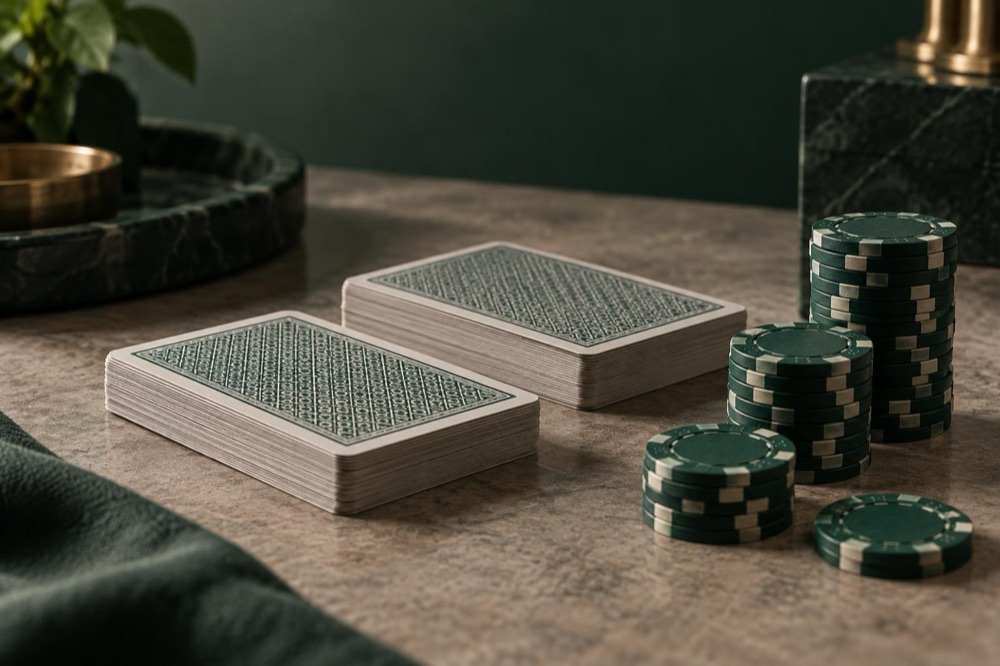
In a cash game, the buy-in is variable. Each table has a stake level, such as $1/$2 blinds, and a minimum and maximum buy-in. Within those limits you can sit down with whatever amount you choose, and if you lose chips you can usually top back up to the table maximum at any time. A common bankroll guideline for cash games is to keep 20 to 40 buy-ins for your primary stake4.
In a tournament, the buy-in is fixed. Everyone pays the same amount, gets the same starting stack, and the room or site takes a fee. Fixed buy-ins can start at absolutely nothing, in the form of freerolls, which makes tournaments one of the cheapest ways to get into real-money poker2. At the other end, live events in Asia range widely: poker clubs in Vietnam sell entry tickets from a few hundred thousand dong to a few tens of millions of dong5, and a Resorts World Manila series ran a seven-day tournament with a US$1,200 buy-in Main Event6.
The buy-in also tells you where the prize money comes from. If a tournament has an $11 buy-in ($10+$1), $10 is added to the prize pool for every player that joins. With 100 players, that is a $1,000 prize pool3. The $1 is the fee, which is how the operator makes its money. Our page on poker rake and fees covers this in more depth.
How chips work in each format
Cash game chips are money. If you have $350 in chips, you have $350, full stop. You can rack them up and walk to the cage at any moment. This is why cash game players think in terms of the actual dollars in each pot.
Tournament chips are a completely different animal. They have a point value, not a cash value1, and their worth comes entirely from where they can carry you in the event. A player with a huge stack late in a tournament holds a strong claim on a large share of the prize pool, but the stack itself cannot be exchanged for cash.
Starting stacks vary by event. A regular tournament might give each player a standard stack, while mega stack tournaments offer up to 4 times as many starting chips as regular tournaments3. At the Japan Open Poker Tour, the NLH Heads-up Championship starts players with 20,000 chips in round one, 40,000 in round two, doubling each round to 1,280,000 chips in the final round7.
Two special chip purchases exist in tournaments. A rebuy lets a player purchase additional chips if they lose all their initial chips during a specified period8. An add-on is an optional purchase of extra chips, usually available at the end of the rebuy period, often during a scheduled break9. The difference matters: rebuys depend on your chip count meeting the rebuy threshold, while add-ons are guaranteed opportunities open to every player at the designated time regardless of chip count9. An add-on usually costs the same as the buy-in amount, but the chip amount may sometimes be higher than the original starting stack9. For example, in a $50 Rebuy + Add-On event, players start with 5,000 chips, take a 10-minute break after two hours, and each player can add-on 5,000 chips for $50 regardless of their current stack9.
Payouts: what you take home
In a cash game, your payout is continuous. Every pot you win is immediately yours, in chips that are worth cash. There is no prize pool, no finishing order and no waiting. Leave the table and the cage converts your chips to money on the spot.
In a tournament, your payout depends on where you finish. The prize pool is built from the buy-ins, and it is divided among the top finishers, with the largest share going to the winner and progressively smaller shares going down the finishing order. Most of the field gets nothing.
Some tournament formats add payouts along the way. In Knockout Bounty tournaments, players receive a cash prize for eliminating opponents, with each player's bounty added to the prize pool when they are knocked out8. In Progressive Knockout (PKO) events, when a player is knocked out, half of that player's bounty is added to the bounty of the player who knocked them out, and the other half is awarded instantly as a cash prize10. Our page on bounty tournaments explains these formats in full.
Not every tournament pays in cash. A majority of the poker tournaments at Natural8 feature real money prizes, but a handful feature prizes in tournament tickets or site currency instead10. Tournament tickets themselves have rules:
- A ticket may only be used in tournaments with a buy-in equal to the ticket value11
- A ticket cannot be used to re-buy or add chips11
- A ticket may not be exchanged or converted into cash11
- A ticket cannot be transferred to another player11
If a tournament is canceled, the refund rules depend on when. If it has not started, all buy-ins and fees are refunded to all registered players. If it is canceled after starting but with late registration still open, remaining players get their entry fee refunded and the player-generated prize pool is distributed using an Independent Chip Model calculation based on chip stacks at cancellation. If it has already reached the paid places, the guaranteed prize pool is distributed among remaining players the same way12. For cash games hit by a technical interruption, any hand in progress is rolled back and each player's chip stack is returned to the amount held at the start of the hand12.
Blinds, levels and session length
Cash game blinds never change. A $1/$2 table is $1/$2 whether you arrive at 8 pm or 2 am, which is why cash game sessions can be as short or as long as you like. You can find the mechanics of forced bets on our blinds and antes page.
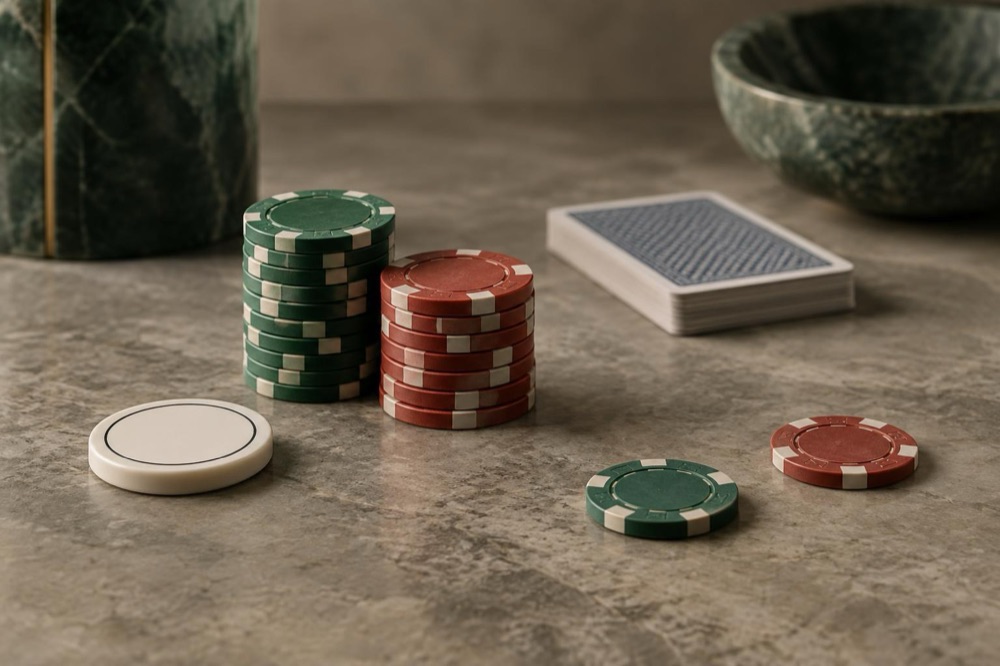
Tournament blinds rise on a schedule called levels, and the level length sets the pace of the whole event:
| Tournament type | Blind level length |
|---|---|
| Slow | Blinds go up every 12 to 15 minutes3 |
| Regular / classic | 8-minute blind levels, with a 90-minute rebuy period in classic events13 |
| Turbo | Blinds going up every 6 minutes3, or typically 5-minute blind levels10 |
| Hyper | Blinds go up every 3 minutes3 |
| Hyper Turbo | 3-minute blind levels10 |
Turbo tournaments are fast-paced variations with shorter blind levels, which may be 1/3 or 1/2 that of regular tournaments, and less time to act14. The faster the levels, the sooner the event ends, and the more the rising blinds force decisions.
Session length follows directly. A slow-structured live main event can run across several days, while a hyper online event might wrap up in under an hour. Cash games have no such clock: the game runs as long as seats are filled.
Which format suits which player
Neither format is easier; they suit different temperaments and budgets.
Cash games suit players who want control over time and money. You choose your buy-in within the table limits, you choose when to sit and when to leave, and your results are measured hand by hand. The trade-off is that losses are immediate and open-ended: you can keep topping up, so discipline matters. The 20 to 40 buy-in bankroll guideline exists precisely because cash game swings are steady rather than lumpy4.
Tournaments suit players who want a fixed, known cost and a shot at a large prize from a small outlay. Your maximum loss is the buy-in plus any rebuys or add-ons you choose. The trade-off is variance: even the best players can go 30 to 50 tournaments without a single meaningful cash, due to massive field sizes4. Tournament players therefore need to accept long losing stretches as the price of the occasional deep run.
There is also a strategic difference worth naming. Say you are a 57% favorite over your opponent in a big all-in confrontation. In a cash game, that is definitely worth a call. In a tournament, 43% of the time you would be out entirely, and being eliminated has costs beyond that single hand2. Survival changes what the right play looks like.
For beginners, tournaments with small or free buy-ins are a common starting point because the risk is capped, while cash games at low stakes are a good way to get a large number of hands cheaply. Our page on free poker vs real-money poker covers the stepping stones.
Live series and festivals in Asia
Both formats have a live scene across Asia, and the calendar is busy. Tournament series are the most visible: the Japan Open Poker Tour runs multi-day events with structured schedules7, and in line with Japanese rules it does not pay cash prizes to winners; prizes come instead as USDT (Tether) or a player contract covering things like travel costs and overseas tournament entry fees. Manila has hosted seven-day tournament series with a US$1,200 buy-in Main Event6.

Cash games sit a little apart from this festival circuit. In Japan, the player-contract prizes given at JOPT events cannot be used for cash games, so the tournament and cash-game worlds stay separate there. Elsewhere in the region the two mix more freely: the Asian Poker Tour settles registration through Tournament Receipts paid and verified at the Cashier, and its APT Thailand Exclusive event at APT Jeju offered ฿125,000 in cash prizes on top of the main payouts5.
One thing to know about live tournament prizes in the region: some are not paid in spendable cash. At JOPT, the player contract prize is performed through domestic travel costs, overseas tournament entry fees and travel expenses designated by Poker Guild Co., Ltd., and cannot be used for cash games7. In Taiwan, electronic game arcade businesses may not provide cash, securities or other currency as prizes, and may not buy back prizes given to customers15. Check what the prize actually is before you travel for an event. Our page on poker tours and series in Asia compares the major stops.
Online poker sites and promotions
Online, both formats run around the clock, and the range of tournament types is far wider than in any live room. CoinPoker, for example, spreads knockout, progressive knockout, freeroll, re-entry, turbo, hyper, deep stack, classic, flipout and weekend special formats, alongside major tournament series13. Natural8 runs turbo events with 5-minute blind levels and Hyper Turbo events with 3-minute blind levels10, and BetOnline classifies its schedule by pace, from slow tournaments with blinds going up every 12 to 15 minutes to hyper events every 3 minutes3.
Cash games online work the same way as live: chips carry a cash value, blinds are fixed, and you can join and leave at will. One variant worth knowing is All-in or Fold cash games, where each hand is decided immediately, with published buy-ins and jackpot fees at each stake level16. Play money tables sit apart from all of this: play money has no cash value and cannot be used with cash or any other currency or tickets16.
If a site or app is interrupted, the refund policies described earlier apply: cash game hands are rolled back to the start of the hand, and canceled tournaments refund buy-ins or distribute the prize pool by chip counts12. It is worth reading a site's terms before playing so you know which policy covers the games you play.
Online poker itself is licensed in some Asian jurisdictions and not in others. The Philippine register of accredited gaming system administrators, for example, lists licensed brands offering online poker games17. Whether you may play from where you live is a separate question with a separate answer by country, which we cover on our poker in Asia page and in each country guide.
Common Questions
What is a buy-in in poker?
It is the money you pay to sit down. In a cash game it becomes chips worth that exact amount of cash. In a tournament it is a fixed price that buys your starting stack and seat, with a portion going to the prize pool.
Can I leave a cash game whenever I want?
Yes. In a cash game your chips are worth money at all times, so you can stand up, cash out and leave whenever you like. In a tournament you are committed until you bust or the event ends.
Why are tournament chips not worth money?
Tournament chips have a point value, not a cash value. They only determine where you finish, and your prize comes from the tournament's prize pool according to your finishing position, not from the chips themselves.
What happens if I lose all my chips in a tournament?
In a freezeout, which covers any tournament without rebuys, you are eliminated. In a rebuy tournament you can buy back in during the specified rebuy period, usually by paying for a fresh starting stack.
Do cash games or tournaments cost more to play?
It depends on your stake. A cash game buy-in is variable and you can top up, while a tournament buy-in is fixed and capped. Tournaments can start at nothing, but even strong players can go 30 to 50 events without a meaningful cash.
What is a rebuy?
A rebuy lets you purchase chips again in a tournament, normally during the first hour or a stated period, and only in events explicitly run as rebuy tournaments. An add-on is different: it is a chance to buy extra chips open to everyone at a set time.
Sources17 sources
- PartyPoker Poker Terms, partypoker, 2026
- PartyPoker Tournaments, partypoker, 2026
- BetOnline Poker, BetOnline, 2026
- How to Balance a Poker and Casino Bankroll, Natural8, 2026
- Trường hợp nào chơi poker bất hợp pháp và hợp pháp tại Việt Nam, Vietnamese government portal, July 7, 2025
- Resorts World Manila tournament coverage, Asia Gaming Brief, July 2012
- JOPT 2025 Tokyo Players Guide, Japan Open Poker Tour, October 2025
- Americas Cardroom Poker Terms, Americas Cardroom, 2026
- Add-On, WPT Global, 2026
- Natural8 Tournaments, Natural8, 2026
- 888poker Tournament Ticket Terms, 888poker, 2026
- CoinPoker Game Interruption and Refund Policy, CoinPoker, 2026
- CoinPoker Tournaments, CoinPoker, September 8, 2026
- GGPoker Tournament Types, GGPoker, 2026
- Taiwan Electronic Game Arcade Business Act, Taiwan Ministry of Justice, December 28, 2006
- Natural8 All-in or Fold, Natural8, 2026
- List of PAGCOR-accredited Gaming System Administrators and registered Brands and Sub-brands, PAGCOR, December 4, 2025















