Why every hand starts with money already in the pot
Poker needs a reason to bet. If the pot started empty, everyone could wait for a premium hand and the game would stall. So most poker games begin with forced bets, money committed to the pot before the cards are dealt. A blind is "a compulsory bet made by one or more players before the cards are dealt to initiate the betting in a poker game"5. An ante is "a small forced bet each player must pay before a hand begins to create an initial pot"3.
These bets do two jobs. They seed the pot, so there is always something to fight over, and they create a cost for sitting still. In Texas Hold'em rules and Omaha, the blinds do that work. In stud games, where there is no button, antes usually do it instead6. Some games use both at once, and cash games offer a third, optional forced bet, the straddle, which a player can post to raise the stakes for one hand3.
If you are new to the game, it helps to read this alongside poker table positions, since the blinds are seats as much as bets, and poker betting actions, since the big blind sets the size of the minimum bet.
Who posts the blinds and how they move round the table
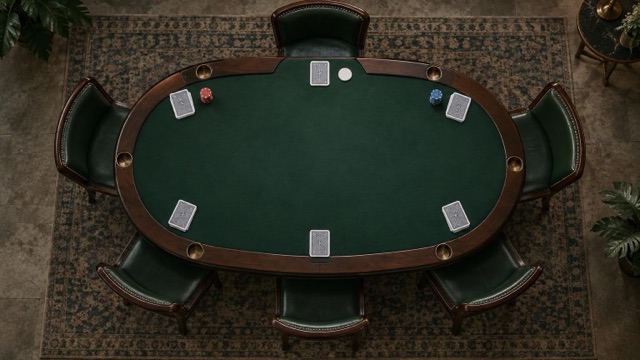
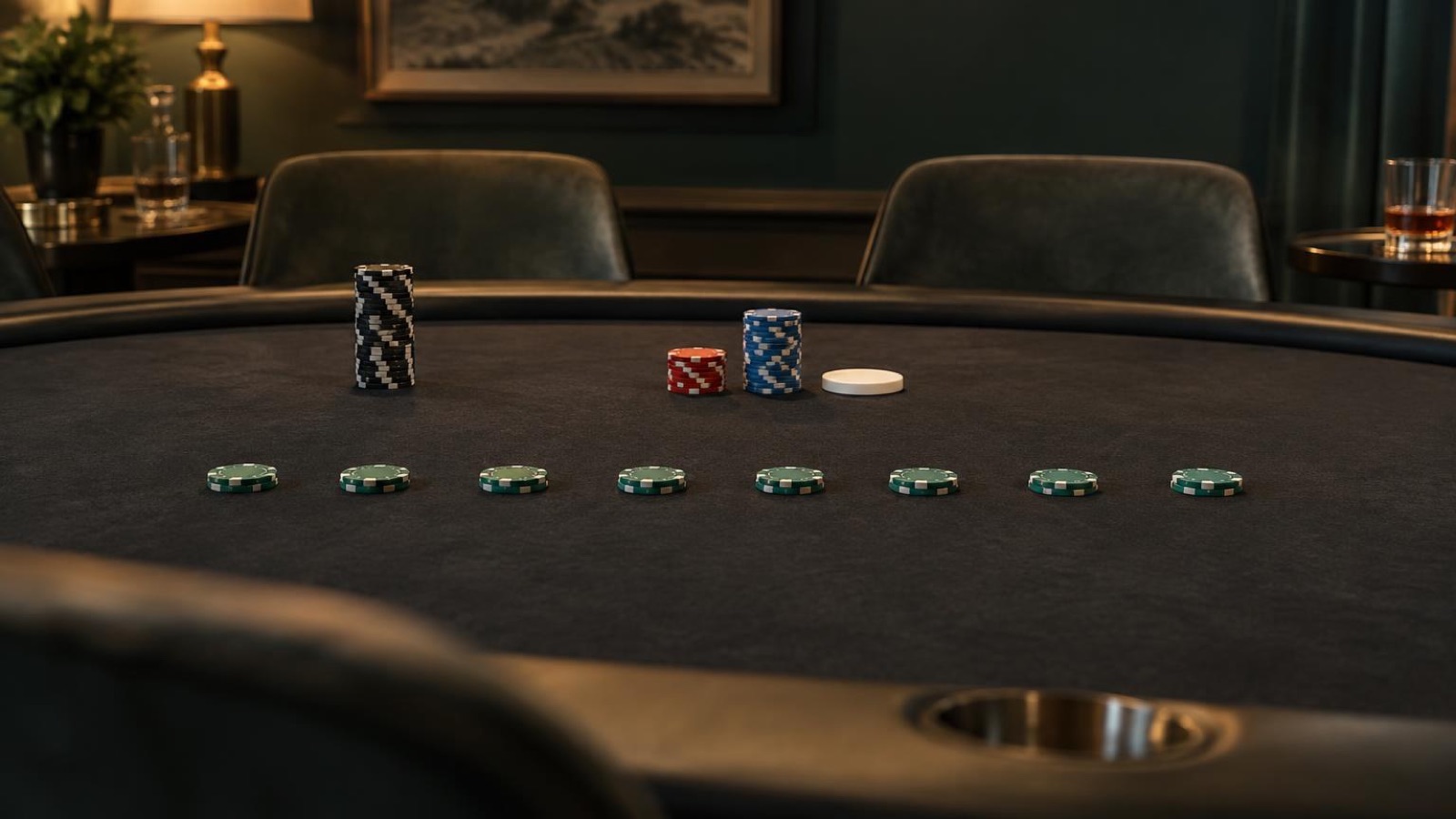
In flop games like Texas Hold'em and Omaha, the blinds belong to the two seats to the left of the dealer button. "Player 1 (known as the 'small blind') posts a bet equal to half the minimum bet" and "Player 2 (known as the 'big blind') posts a bet equal to the minimum bet"7. The same arrangement applies in Omaha8. The button, and with it both blinds, moves one seat clockwise after every hand, so over a full orbit everyone pays the blinds an equal number of times6.
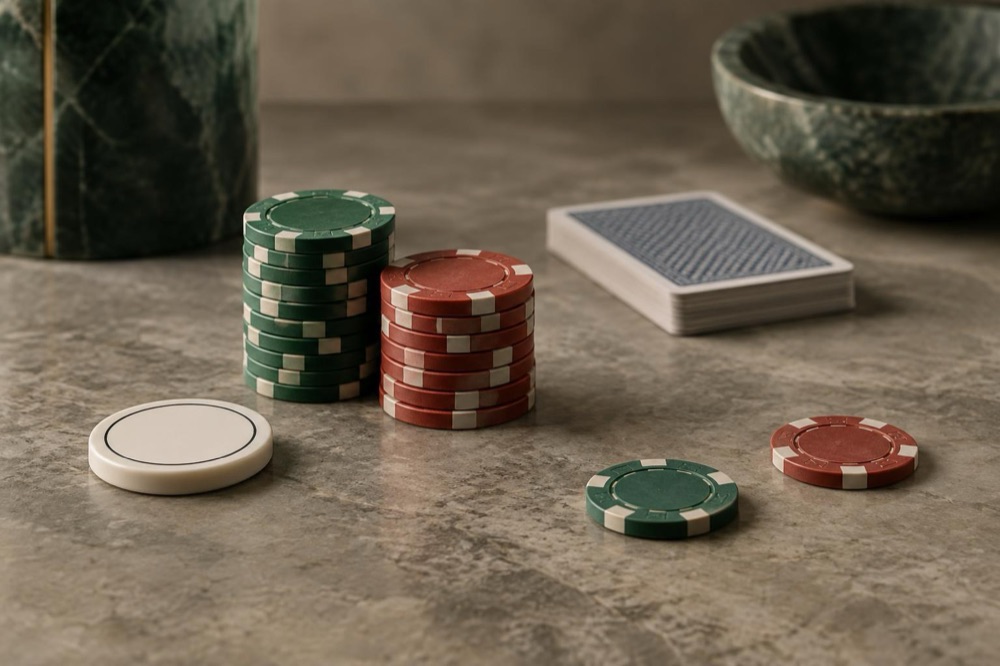
The blinds also decide who acts first. Before the flop, the player to the immediate left of the big blind, the third player after the button, acts first7. After the flop, the action flips: the blinds act first and the button acts last, which is why the button is the most profitable seat in the game.
In fixed-limit games, the blinds set the bet sizes for the whole hand. The first two betting rounds use the small bet, equal to the small blind, and the last two use the big bet, equal to the big blind9. You can read more about that in no-limit vs pot-limit vs fixed-limit poker.
Small blind: how much it is
The small blind is the smaller of the two blinds, and it is "typically half the size of the big blind"9. At a table described as $1/$2, the small blind is $11. The first number in any cash game description is always the small blind, the second the big blind.
How big that is in real money depends on the stakes. Micro stakes games run blinds as low as $0.01/$0.02 online10. Mid stakes cash games typically range from $1/$2 to $5/$1010. At the top end, VIP Texas Hold'em tables run at $25/$50, $50/$100 and even $500/$1,000 blinds11.
The small blind is the worst seat to hold. You have already put half a bet in the pot, you act first on every later street, and you will be out of position against most of the table. That is the price of the orbit: everyone pays it in turn.
Big blind: how much it is
The big blind equals the minimum bet for the hand. "The Small Blind is usually equivalent to half of the minimum bet," which makes the big blind the minimum bet itself12. At $1/$2, the big blind is $21.
The big blind has one privilege the small blind does not: it is a full bet already in the pot. If everyone folds or limps around to the big blind before the flop, the big blind may check and see a flop for free, or raise.
In pot-limit games, the big blind also sets the floor for betting. In Pot Limit Omaha, "any bet or raise amount must be equal to the value of the Big Blind or greater"13. And in some games the big blind is the unit the room measures everything in: high-stakes PLO rake caps are written as fractions of a big blind, from 0.375BB in heads-up pots to 1.5BB with five or more players14.
Antes: the bet every player pays
An ante is a different kind of forced bet. Instead of one or two players paying, everyone at the table pays, and usually a smaller amount than either blind. In Texas Hold'em, each player "may also post an 'ante', which is another type of forced bet that is usually smaller" than the blinds9. Everyone at the table pays the ante before any hole cards are dealt, including the players in the blinds2.
Where you meet antes depends on the game:
- Stud games. Stud variants "always require an ante"2, because there is no button and no blinds to seed the pot.
- Tournaments. Most poker tournaments employ antes, "but typically only in the later rounds"15. Early levels often run blinds only; the ante appears as the event progresses.
- Cash games. Antes are less common, but some rooms run them, and in some regions the ante is simply called a "forced bet"3.
The ante is not an Asian or Western thing; it is universal. In Teen Patti, the hugely popular Indian card game, the ante is "a forced bet where each player puts an equal amount or chips into the pot before the deal," often one unit or a small fraction of the minimum bet16. Short Deck Hold'em also uses antes in place of the traditional small blind in many games.
The ante changes how the game plays. Because everyone has already chipped in, the pot is bigger relative to the bets, and the forced payment "typically incentivizes looser decisions in the preflop betting rounds"2. Folding costs you the ante, so hands you would throw away in a blinds-only game become worth a look.
Big blind ante: one player pays for the table
Posting an ante at every seat is slow. Live tournaments solved this with the big blind ante: the player on the big blind pays both the big blind and the ante for the whole table2. One player posts, everyone is covered, and the dealer does not have to make change at nine seats.
Here is how it works with real numbers. In a tournament with blinds at 50/100 and an ante of 25, the player on the big blind posts the 100-chip big blind plus the 25-chip ante for all players, another 200 in chips at a table of eight2. The other players post nothing before the deal.
The big blind ante is "less common in cash games but is increasingly more prevalent in tournaments"2. You will see it across Asia's live tours. The Batang Metro Poker Challenge Main Event in Manila, for example, ran a "Big Blind Ante, ante first" format until the final table, where the regular ante took over17. If you are planning to play poker tournaments in Asia, expect this format as the default.
Straddles: the optional third blind
A straddle is "an optional blind bet made before cards are dealt, typically double the big blind, to increase the stakes and action"3. It is posted by the player to the left of the big blind, before that player looks at their hole cards18. Some players just call it a "blind raise"3.
The key facts about straddles:
- They are optional. Nobody has to straddle. It is a choice, usually made to gamble bigger for a hand3.
- They are a cash game thing. Straddles are "usually allowed in cash games but are subject to house rules"3. Tournaments do not use them.
- They are always double the big blind in the standard form12. At $1/$2, the straddle is $4.
- The straddler acts last before the flop. Posting a straddle buys the button's privilege for the preflop round: the action folds around to the straddler last.
House rules vary on who may straddle. The classic straddle sits on the left of the big blind, but many rooms also allow a button straddle, posted by the player on the button, or even a "under the gun" straddle from the first seat to act. Some rooms allow re-straddles, doubling again. Always ask how the room handles straddles before you sit down; the rules differ from card room to card room3. Our page on what a straddle bet is goes deeper.
What a straddle does to the stakes
A straddle effectively rewrites the stakes for one hand. In a $1/$2 cash game, "the player to the left of the big blind posts a $4 straddle, effectively making the new stakes $1/$2/$4 for this hand"3. The minimum bet is no longer $2; it is $4, and the preflop action starts from the straddler's left.
That has real consequences:
- The pot is bigger from the start. There is $7 in the middle before anyone has looked at their cards, so players have more reason to contest the pot.
- Everyone's price to play goes up. Limping for $2 is no longer an option; calling means matching $4.
- The straddler gambles blind. The straddle is posted before the cards are seen, so it is pure action, not a bet made on the strength of a hand18.
In short, a straddle turns a $1/$2 hand into a $1/$2/$4 hand for everyone at the table. If you enjoy the format where every hand is played at raised stakes, All-in or Fold games take that idea to its extreme, with blinds up to $100/$200 and a single decision on every hand19.
Blinds in cash games vs tournaments
Blinds behave very differently depending on whether you are playing a cash game or a tournament.
In cash games, blinds are fixed. A $1/$2 table stays $1/$2 for as long as you sit there, "providing a consistent structure"6. The ante, where a cash game has one, does not change either2. You can buy in, play two hands, and leave, and the stakes never moved.
In tournaments, blinds go up. They "increase at regular intervals to ensure the tournament progresses"5, rising by set amounts at specific times as the event goes on15. The ante, when there is one, rises along with them after each level2. This is the engine of every tournament: as the blinds eat a bigger share of your stack, waiting for premium hands stops being an option, and players are forced into action. You can see how levels are built in poker tournament structures.
How fast the blinds rise depends on the format4:
| Format | Blind levels |
|---|---|
| Slow | every 12 to 15 minutes |
| Turbo | every 6 minutes |
| Hyper | every 3 minutes |
A turbo is simply "a type of tournament where the blind levels increase much faster than in standard play"18. The faster the levels, the more the forced bets dominate the game.
Some online operators even adjust blinds at the final table to keep the game balanced. On CoinPoker, if the average stack at a final table of a 100-plus-entry tournament falls below 40 big blinds, the blind level is rolled back, and if it climbs above 100 big blinds, it is rolled forward, keeping the ratio between stacks and blinds in a healthy band20.
What happens if you miss or skip your blind
The blinds are compulsory. If it is your turn to post a blind, "you must do so or leave the table"5. There is no opting out while you keep your seat.
The rules differ between formats when you step away:
- In a tournament, your blinds keep coming out whether you are there or not. Tournament players "continue to pay the blinds and antes as usual, even if they are sitting out"2. This is called being "anted off" or "blinded off": an absent player is forced to keep paying the forced bets "so that the contest remains fair to the other players"21. Leave a tournament table for an hour and you may come back to a much shorter stack.
- In a cash game, a player sitting out does not pay until they return2. You can take a break without bleeding chips, though most rooms will take you off the table if you stay away too long.
If you are away when your blind is due in a cash game and then return, most card rooms require you to post a blind to rejoin, or wait for the button to pass, rather than sliding back in for free. The exact policy is a house rule; ask the floor. Our page on card room rules and etiquette covers what to expect when you take a seat.
One more thing worth knowing: if a hand is dealt incorrectly and cannot be corrected, the round is void and bets are returned to the players22. Your posted blind is not lost to a dealer error.
A different "Blind" in casino table poker
A warning for anyone moving from the poker room to the casino pit: several house-banked table games use the word "Blind" for a completely different bet. In these games you are playing against the dealer, not against other players, and the Blind is one of your opening wagers, not a rotating forced bet.
The main examples:
- Ultimate Texas Hold'em. You "place equal bets for the ante and blind" at the start, plus an optional trips bonus bet23. The Blind is "a mandatory bet equal to the ante"24. It pays only when you beat the dealer with at least a straight: royal flush 500 to 1, straight flush 50 to 1, four of a kind 10 to 1, full house 3 to 1, flush 3 to 2, straight 1 to 1. With less than a straight, the blind bet is a push25. Fold and you forfeit both the Ante and the Blind25.
- Texas Hold'em Bonus Poker. The ante pays even money if your winning hand contains a straight or better, and pushes if you win with a weaker hand26.
- Three Card Poker. The Ante bet here is a wager against the dealer with an ante bonus paid on strong hands regardless of what the dealer holds: a straight pays 1 to 1, three of a kind 4 to 1 and a straight flush 5 to 127. Fold and you forfeit the ante, though a Pair Plus wager can still win28.
- Caribbean Stud Poker. You make a mandatory Ante bet to join, and to continue you raise exactly twice the ante; folding forfeits the ante29. If the dealer does not qualify, you win even money on the Ante and the raise pushes30.
- Four Card Poker. Automatic bonuses are paid on the ante wager: a flush pays 6 to 1 and a straight flush 30 to 131.
These pit games are covered in full on our page about casino poker games against the house. The short version: when a felt layout says "Blind," check whether you are at a poker table or a table game before assuming it works like the big blind.
Quick reference
| Forced bet | Who pays | How much | Where you find it |
|---|---|---|---|
| Small blind | Player left of the button | Typically half the big blind9 | All flop games, cash and tournament |
| Big blind | Second player left of the button | The minimum bet7 | All flop games, cash and tournament |
| Ante | Every player, every hand | A small fixed amount, smaller than the blinds9 | Stud games always; tournaments in later rounds2 |
| Big blind ante | The big blind, for the whole table | The ante times the number of players2 | Live tournaments, increasingly the default2 |
| Straddle | Optional, player left of the big blind | Double the big blind12 | Cash games, subject to house rules3 |
And the shorthand for reading stakes:
| You see | It means |
|---|---|
| $1/$2 | $1 small blind, $2 big blind, cash game1 |
| $1/$2/$4 | $1/$2 with a $4 straddle in action3 |
| 50/100/25 | Tournament level: blinds 50 and 100, ante 252 |
| $0.01/$0.02 | Micro stakes, the smallest online games10 |
Common Questions
What is the difference between a blind and an ante?
A blind is posted by only one or two players, the two seats to the left of the button, and it sets the minimum bet for the hand. An ante is a smaller amount that every player at the table pays before the deal, purely to seed the pot.
Who has to post the small blind and big blind?
The player directly to the left of the dealer button posts the small blind, and the next player to the left posts the big blind. Both seats move one place clockwise after every hand, so everyone takes a turn.
How much is the small blind compared to the big blind?
The small blind is typically half the size of the big blind. At a $1/$2 table, the small blind is $1 and the big blind is $2, and the big blind equals the minimum bet.
Is a straddle mandatory?
No. A straddle is an optional blind bet, usually double the big blind, posted before the cards are dealt. It is generally allowed in cash games but subject to each card room's house rules.
Do antes replace the blinds?
No. The ante is a separate forced bet that does not change the blind structure. When antes are in play, everyone pays them, including the players in the blinds.
Why do blinds go up in tournaments?
Tournament blinds increase at set intervals so the event keeps moving and players are eventually forced into action. How fast they rise depends on the format, from every 12 to 15 minutes in slow events to every 3 minutes in hypers.
Sources31 sources
- Betting Stakes, Americas Cardroom, 2026
- Ante, 888poker, 2018
- Ante and Straddle, Americas Cardroom, 2026
- Poker, BetOnline, 2026
- Blind, Americas Cardroom, 2026
- Poker Basics, GGPoker, 2026
- Texas Hold'em Community Poker, PlaySmart, 2026
- Omaha Community Poker, PlaySmart, 2026
- How to Play Texas Hold'em Poker, GGPoker, 2026
- Poker Terms, Americas Cardroom, 2026
- VIP Tables, Natural8, 2026
- How to Play Poker, GGPoker, 2026
- How to Play Omaha Poker, Natural8, 2026
- Omaha, GGPoker, 2026
- Poker Tournaments, partypoker, 2026
- तीन पत्ती, Wikipedia, 2026
- Batang Metro Poker Challenge, Metro Card Club, 2024
- Poker Terms Glossary, GGPoker, 2018
- All-In or Fold, Natural8, 2026
- Blind Rollback, CoinPoker, 2026
- Poker Terms, GGPoker, 2026
- Texas Hold'em Poker Rules, DICJ Macau, 2008
- How to Play Ultimate Texas Hold'em Poker, GameSense, 2021
- Ultimate Texas Hold'em, Newport World Resorts, 2026
- Ultimate Texas Hold'em, 888casino, 2026
- How to Play Texas Hold'em Bonus Poker, GameSense, 2020
- Three Card Poker Regulations, UK Statutory Instruments, 2002
- How to Play Three Card Poker, GameSense, 2020
- Casino Stud Poker Regulations, UK Statutory Instruments, 1994
- Caribbean Stud Poker, PlaySmart, 2026
- How to Play Four Card Poker, GameSense, 2020