
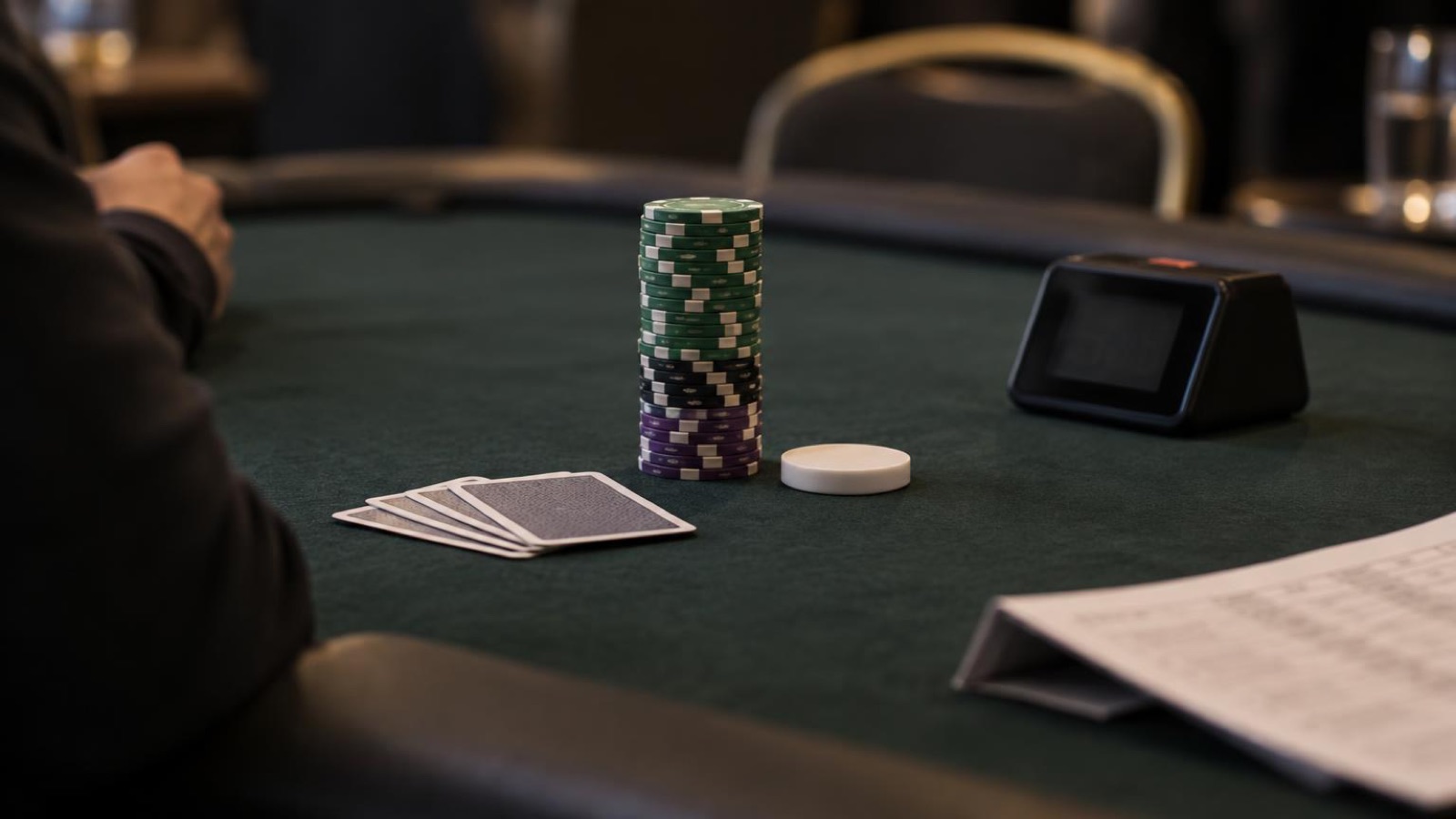
What a tournament structure covers
Every tournament publishes a structure sheet, and it is worth two minutes of your time before you hand over a buy-in. It answers four questions: how many chips you start with, how long each level lasts, when the antes start, and how often you get a break.
Poker itself is a skill-based game in which chance and strategy both influence your outcome, and the structure is the part that decides how much room you have to use that skill5. A generous structure rewards patience and post-flop play. A tight one turns the event into a race.
The sheet usually lists levels in rows. Each row shows the small blind, the big blind, the ante if there is one, and sometimes the average stack in big blinds at that point. You do not need to memorize it. You need to know roughly how many big blinds you will have at the start and how quickly that number will fall.
Blinds: the mandatory bets that drive the game
A blind is a forced bet made by the first two players seated to the left of the dealer: the small blind sits next to the dealer and the big blind sits next after1. They are not optional. The chips go in before anyone sees a card, which is what gives the game something to fight over from the first hand.
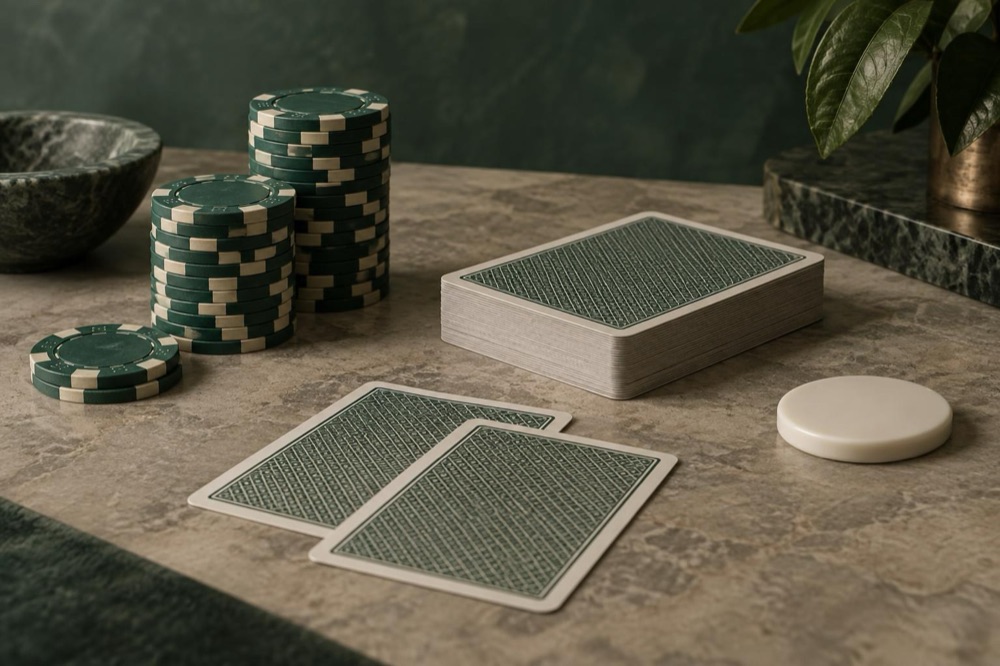
In Texas Hold'em and Omaha, both blinds are mandatory bets made by the two players to the left of the dealer3. That is the whole mechanism. Everything else in a tournament structure is a variation on how big those two bets are and how often they change.
Not every poker game works this way. Stud games do not use blinds at all. In Seven-Card Stud the first round of betting is started by a forced bet from the lowest value upcard, and if two players show the same value, suit breaks the tie with the lowest suit forced to bet6. If you are used to Hold'em, that is the first thing that will feel strange at a stud table.
Small blind and big blind: who posts what
The order is fixed and it moves one seat clockwise every hand.
In Texas Hold'em, Player 1, known as the small blind, posts a bet equal to half the minimum bet, and Player 2, the big blind, posts a bet equal to the full minimum bet2. Omaha works the same way: the small blind posts half the minimum bet and the big blind posts the full minimum bet7.
So at a 100/200 level, the small blind puts in 100 and the big blind puts in 200. The small blind is typically half the size of the big blind, which is why you will see levels written as 100/200, 200/400, 500/1,000 and so on3.
Two practical points follow from this.
- The big blind sets the minimum bet for the first round. If you want to raise, the smallest legal raise is usually double the big blind.
- The player to the immediate left of the big blind, the third player after the button, acts first in the first betting round2. The blinds act last preflop, then first on every round after.
In Macau, the published rules for Texas Hold'em and Omaha state the same thing: the first player to the left of the dealer button posts the small blind, generally half the big blind, and the second player posts the big blind8.
Blinds in cash games: fixed stakes
This is the part that confuses people coming from tournaments. In cash games, blinds are usually fixed, providing a consistent structure3.
If you sit down at a 50/100 table, the blinds are 50 and 100 for as long as you are there. They do not move. The stakes do not change whether you play for twenty minutes or five hours, and you can get up and cash out whenever you like.
That fixed structure is what makes cash games a different animal from tournaments. Your stack is real money, not tournament chips, and it does not shrink on a clock. There is no pressure to accumulate. You can fold for an hour and nothing bad happens.
One practical note for live tables: at many card rooms all cash must be exchanged for chips, and cash wagers do not play6. Buy chips at the cage or from the dealer before you sit down.
Blinds in tournaments: rising levels
In poker tournaments, blinds increase at regular intervals to accelerate the game and add an extra layer of strategy3.
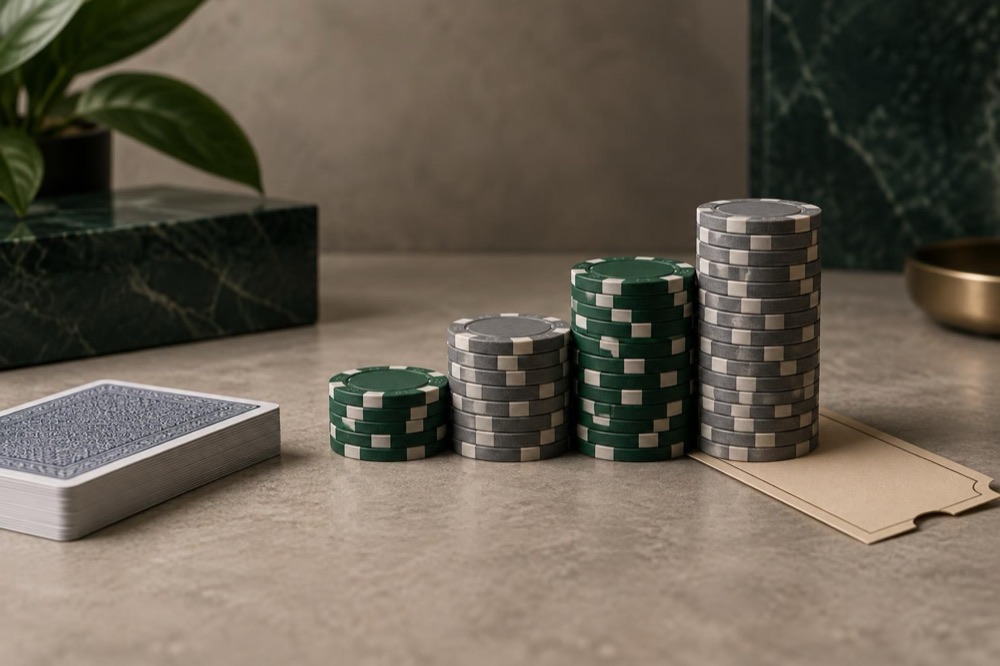
That single sentence is the difference between the two formats. In a tournament you are renting your chips. The blinds come around every orbit and take a bite, and the bite gets bigger on a published schedule. If you do nothing, you slowly bleed out.
The schedule is set before the event starts and does not change. A typical structure sheet might look like this:
| Level | Small blind | Big blind | Ante |
|---|---|---|---|
| 1 | 100 | 200 | none |
| 2 | 200 | 400 | none |
| 3 | 300 | 600 | 600 |
| 4 | 400 | 800 | 800 |
| Break | 15 minutes |
The ante column is where a lot of modern events put a big blind ante, meaning the player in the big blind posts one ante for the whole table instead of everyone chipping in. Most modern hyper-turbo formats use a big blind ante structure from the start or very early levels10. It speeds things up and removes the fiddly business of eight players each tossing in a small chip.
How blind increases shape tournament speed
The speed of the blind increase is the single biggest factor in how a tournament feels.
A standard sit and go sets its pace by increasing blind levels, typically every 10 to 15 minutes4. That gives you a reasonable number of orbits at each level and room to play hands.
Compare that with a turbo or hyper-turbo sit and go, where the blinds go up every 2 to 5 minutes instead of the usual 10 to 154. At that pace you might see only a handful of hands before the cost of playing doubles.
What that does to your stack is arithmetic. If you start with 3,000 chips at 100/200, you have 15 big blinds. Two levels later at 200/400 you have under 8 big blinds, and at 400/800 you have under 4. You have not lost a hand and you are nearly out of room.
That is why structure and strategy are linked. In hyper-turbo formats, when stacks fall below 15 big blinds, play increasingly revolves around all in decisions based on hand strength and position10. Below 10 big blinds, the same logic applies with a narrower range of holdings10.
Some operators go further and adjust the blinds at the final table to keep the ratio healthy. A blind rollback happens if the average chip stack at the final table is below 40 big blinds, and the level is reduced so the average stack increases to just above 40 big blinds11. A blind roll forward happens when the average stack is above 100 big blinds, and the level is increased to bring the average stack to just below 100 big blinds11.
The worked examples make it concrete. If the average stack is 200,000 and the big blind is 10,000, that is 20 big blinds, and the blind is rolled back to 5,000 to increase the average stack to 40 big blinds11. If the average stack is 1,500,000 and the big blind is 10,000, that is 150 big blinds, and the blinds are rolled forward to 15,000, reducing the average stack to 100 big blinds11.
These adjustments are done only at the final table of a tournament when the total number of entries is 100 or more and the average stack at the final table is outside the range of 40 to 100 big blinds11. The purpose is to make gameplay more balanced and competitive by keeping a healthy ratio between average chip stacks and the blinds11.
Structure choices: deepstack, turbo and standard formats
Once you know the labels, picking an event is straightforward. The three common formats differ mainly in starting stack and level length.

Deepstack. A deep stack sit and go gives players larger starting chip stacks for more strategic play, with tournaments lasting 2 to 4 hours4. You begin with many big blinds, so you can call raises, see flops and use position instead of shoving. If you are new to live tournaments, this is the format that lets you actually play poker rather than gamble.
Standard. The middle ground. Blinds rise every 10 to 15 minutes, starting stacks are moderate, and the event finishes in a reasonable evening4. Most weekly card room tournaments sit here.
Turbo. Faster increasing blind levels than a standard single-table event, usually with 6 to 10 players4. Blinds move every 2 to 5 minutes4. You need to be more willing to commit chips early because waiting costs you.
Hyper-turbo. Hyper-turbo tournaments are characterized by extremely short levels and rapidly increasing blinds and antes10. They are generally more challenging and require advanced poker skills beyond basic rules and hand rankings, and players should gain experience in regular poker tournaments first10. Some hyper multi-table tournaments may start deeper at 50 to 100 big blinds before rapidly shortening10, but the endgame arrives fast either way.
A quick comparison:
| Format | Level length | Starting depth | Typical duration |
|---|---|---|---|
| Deepstack | Standard or longer | Large stack | 2 to 4 hours |
| Standard | 10 to 15 minutes | Moderate | Evening |
| Turbo | 2 to 5 minutes | Moderate | Short |
| Hyper-turbo | Extremely short | Often shallow | Very short |
One more format worth knowing: a satellite is a poker tournament that grants winners entry into a larger tournament1. Satellites usually have fast structures by design, because the prize is a seat rather than cash and the event needs to finish quickly.
Buy-ins vary widely by market. In Vietnam, players buy tickets to enter poker tournaments at licensed clubs, with costs from a few hundred thousand dong to a few tens of millions of dong12. Licensed poker rooms in the Philippines operate under a gaming license issued to the operator, so the structure and buy-in are published by the room itself13.
Shot clocks and other pace controls
A shot clock gives each player a fixed amount of time to act. When the clock runs out, your hand is folded. It exists because a single player tanking for five minutes on every decision slows the whole tournament down, and in a game where blinds are rising, everyone else is paying for that time.
The practical version at most live events works like this:
- You get a set number of seconds, commonly 30, to act on your hand.
- If you need longer, you spend a time bank card, which adds extra seconds to that one decision.
- You start with a small number of cards, and they do not refresh.
- Once they are gone, you either act inside the clock or your hand is dead.
The effect on the game is real. Players cannot stall, so more hands are dealt per level, which means the blinds come around more often relative to the number of hands you see. If you are used to playing without a clock, the first hour with one feels rushed.
Shot clocks are most common in high buy-in events and in tours that want to keep a televised or streamed schedule on time. If you are playing a low buy-in weekly tournament, you will usually just have the dealer and the other players reminding you to act.
Other pace controls you will see on a structure sheet:
- Breaks. Usually a short break every two or three levels, plus a longer dinner break. Use them. Tournament days are long.
- Late registration. Most events let you buy in after the start, often for the first several levels. Check the sheet for the cut-off.
- Ante start level. The level where antes kick in is a real turning point, because the cost per orbit jumps.
- Level length changes. Some structures shorten levels later in the event to force a finish.
If you want to go deeper on the mechanics of forced bets, blinds, antes and straddles covers the full set, and how poker tournaments work walks through buy-ins, flights, re-entry and payouts. For the seat-by-seat picture, poker table positions explains why the button and the blinds matter so much, and cash games vs tournaments sets out how chips, buy-ins and payouts differ between the two.
Common Questions
Who posts the small blind at the table?
The player immediately to the left of the dealer button posts the small blind. The next player to their left posts the big blind. In Texas Hold'em and Omaha the small blind is usually half the big blind, and the player after the big blind acts first.
How much is the big blind compared to the small blind?
The big blind is normally double the small blind. If the level is 100/200, the small blind posts 100 and the big blind posts 200. The big blind also sets the minimum bet for the first betting round.
Why do blinds increase during a tournament?
Blinds rise on a schedule so the average stack shrinks relative to the blinds as the event goes on. That forces action, stops play dragging and guarantees the tournament finishes in a set time rather than running all night.
Do blinds change in a cash game?
No. In a cash game the blinds are fixed for the whole session, so the stakes stay the same whether you sit for ten minutes or five hours. You can leave at any time and take your chips to the cage.
Which games use blinds?
Texas Hold'em and Omaha use blinds, in both cash games and tournaments. Stud games do not use blinds. Instead the first round is started by a forced bet from the lowest upcard, with suit breaking any tie.
What is a deepstack tournament?
A deepstack event gives players a larger starting chip stack, so you begin with many big blinds and have room to play strategically rather than being forced all in early. These events typically run longer than standard or turbo formats.
What does a shot clock do?
A shot clock gives each player a fixed amount of time to act on their hand. If you do not act in time your hand can be folded. Many events add time bank cards you can use to extend a decision.
How do turbo events differ from standard blind levels?
Turbo events raise the blinds every 2 to 5 minutes instead of the usual 10 to 15. Hyper-turbos are faster still, with extremely short levels and rapidly rising blinds and antes, which pushes players toward all in decisions much sooner.
Sources13 sources
- Poker Terms and Definitions, Natural8
- Texas Hold'em Community, PlaySmart
- Poker Basics, GGPoker
- Sit and Go, CoinPoker, March 6, 2026
- Poker Essentials, GameSense, 2020
- Hustler Casino Rules, California Attorney General, 2021
- Omaha Community, PlaySmart
- Texas Hold'em Poker Rules, DICJ Macau, January 18, 2008
- Omaha Poker Rules, DICJ Macau, July 29, 2010
- Hyper Turbo Tournaments: How to Develop a Winning Poker Strategy, GGPoker, September 10, 2025
- Blind Rollback, CoinPoker, September 26, 2026
- Which cases of playing poker are illegal and legal in Vietnam, Vietnam Government Policy Building, July 7, 2025
- List of Poker Operators with Issued Gaming License, PAGCOR, May 7, 2026















