What Omaha poker is and how it differs from Texas Hold'em
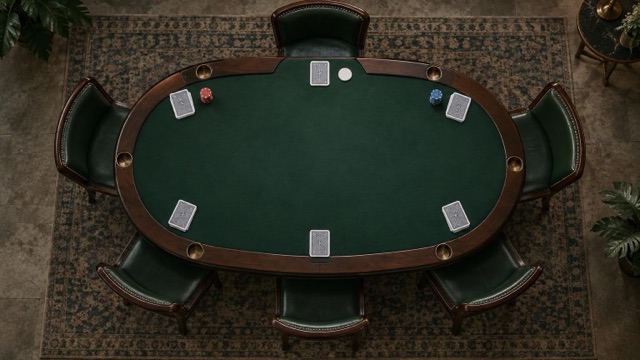
Omaha is a community-card poker game, sometimes known as Omaha Hold'em, and it is the second most-played poker variant in both live and online poker, behind only Texas Hold'em1. If you already know how to play Texas Hold'em, you already know most of Omaha: there is a dealer button, blinds, a flop of three cards, a turn and a river, and a showdown at the end. The structure of the hand is identical.
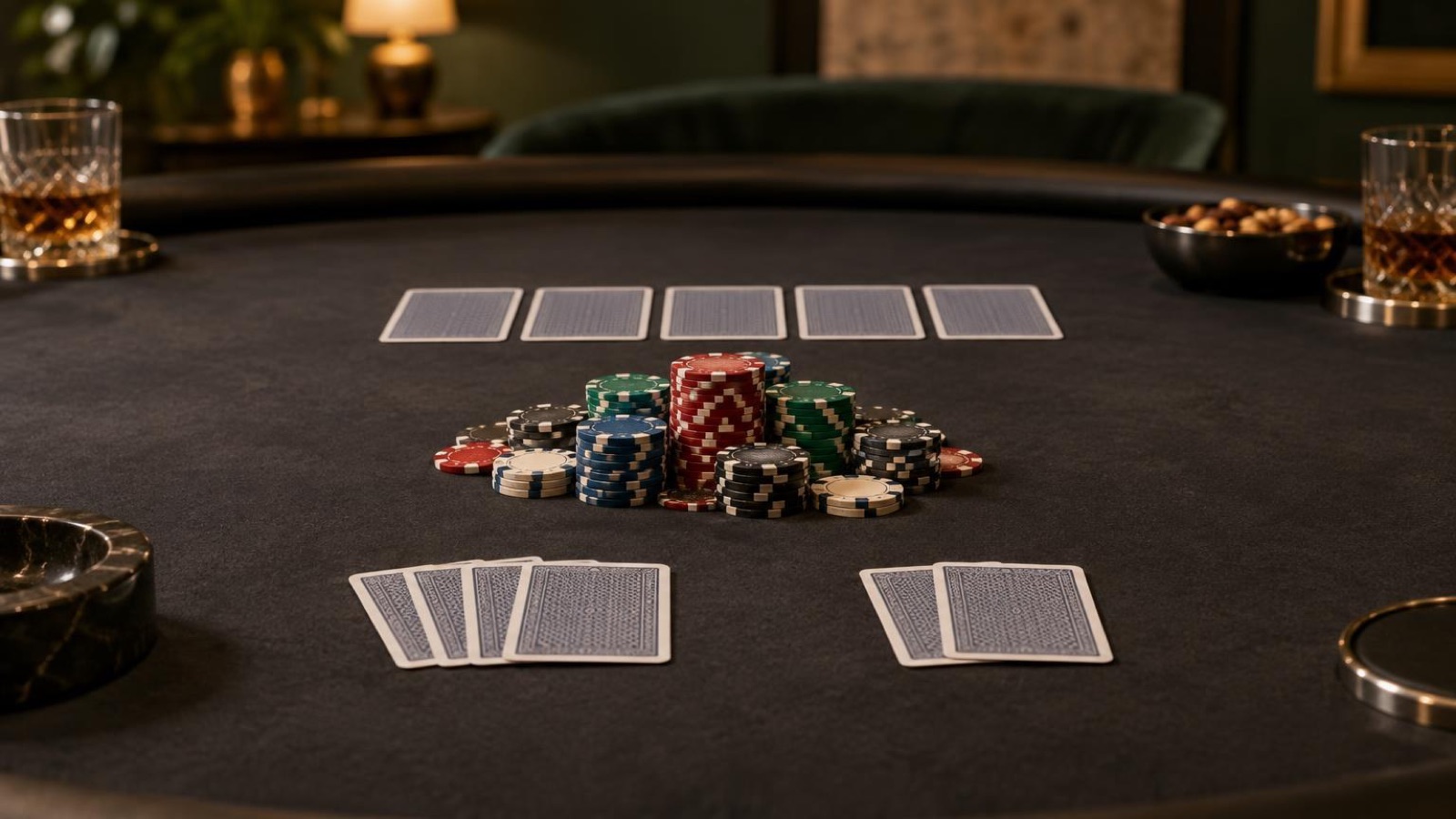
The difference is in the cards you hold. In Texas Hold'em each player gets two hole cards. In Omaha you get four, dealt face down, and only you can see them2. That single change does more to the game than you might expect.
The second rule is the one that defines the game and catches the most newcomers: at showdown you must use exactly two of your hole cards and exactly three of the five community cards to make your best five-card hand. No more, no fewer3. This is not a style preference or a house option; it is the core rule of every Omaha variant, and it works differently from Hold'em, where you can use both, one or even none of your hole cards.
Here is the classic trap. Suppose the board comes A-A-K-3-3 and you hold a single king in your hand. In Hold'em that would give you two pair, aces and kings, since your king pairs the board's king alongside its pair of aces. In Omaha you cannot "play the board" with one king: you need two hole cards in your hand, so your king alone gives you nothing beyond what everyone else has. Every hand you make has to be built from two cards in your hand and three on the table, always3.
The practical effect of four hole cards is that everyone at the table has more ways to connect with the board. Big hands are made far more often than in Hold'em, which is why Omaha is known as an action game. It also means the preflop edge between strong hands shrinks: a pair of aces against a pair of kings in Omaha is rarely more than a 55 percent favorite, a much closer race than the same matchup in Hold'em5.
The game uses a standard 52-card deck with no jokers, and the full deck is used2. The dealer deals the five community cards in a 3-1-1 pattern: three cards for the flop, one for the turn, one for the river4. In casino settings, each community card is dealt after burning one card, and all bets are made with chips8.
A quick note on names: regular four-card Omaha is designated PLO (Pot Limit Omaha) in table descriptions on most poker clients, so if you sit at a table marked PLO you are playing the standard four-card game4. For a side-by-side comparison, see Texas Hold'em vs Omaha.
The four betting rounds: pre-flop, flop, turn and river
Omaha has four betting rounds, the same as Hold'em: pre-flop, flop, turn and river2.
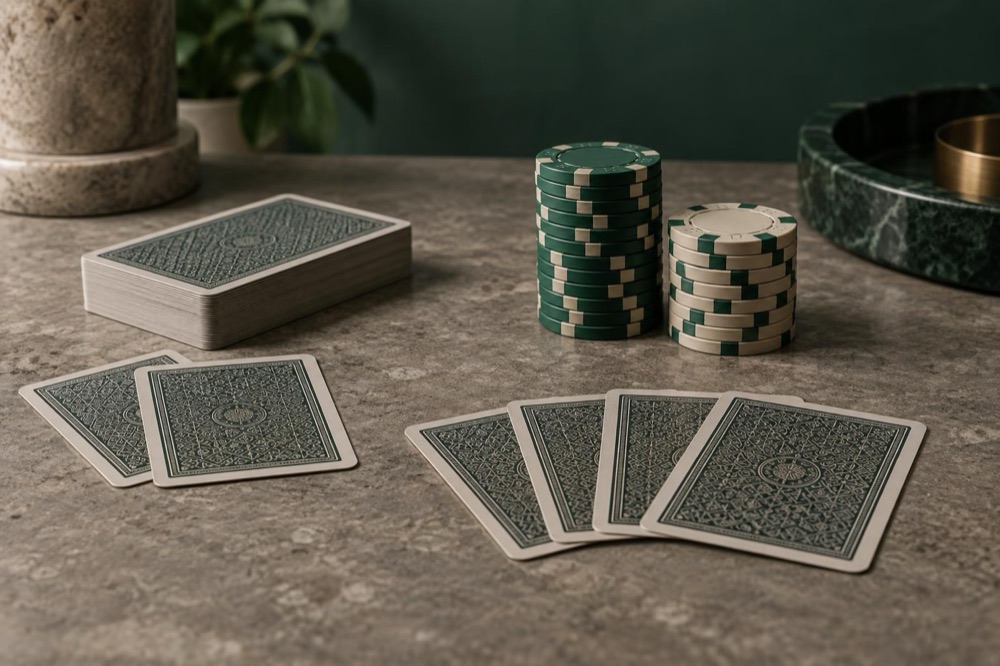
Pre-flop. Each player receives their four hole cards, and the first betting round begins. Two players post forced bets before any cards are dealt: the player immediately to the left of the dealer button posts the small blind, and the next player posts the big blind. The small blind is usually half the size of the big blind2. Action starts to the left of the big blind and moves clockwise.
Flop. The dealer burns one card and deals three community cards face up in the middle of the table8. A second betting round follows. From this round onward, the player to the left of the dealer button (the first active player left of the button) starts the action1.
Turn. The dealer burns another card and deals a fourth community card face up, followed by the third betting round8.
River. One final burn card, then the fifth and last community card, followed by the final betting round. If two or more players are still in the hand, there is a showdown and the best five-card hand, built from exactly two hole cards and three board cards, takes the pot3.
If at any point everyone folds except one player, that player takes the pot without a showdown and the hand ends there. If any players tie with identical hands at showdown, they split the pot evenly1.
The minimum bet after the flop is equal to the big blind, and in PLO the maximum is equal to the size of the pot2. How that maximum is worked out is the next section, because in pot-limit games the math matters.
Pot-limit betting: how the maximum bet is calculated
Omaha can be played with or without betting limits, but in practice it is almost always played pot-limit1. Fixed-limit Omaha exists, and no-limit Omaha is nearly unheard of for real money2. The pot-limit format is why the game carries the name PLO.
The rule is simple to state: the maximum you can bet or raise is the size of the pot10. If there is $10 in the pot and you are first to act after the flop, $10 is the most you can bet5. You can never bet an amount higher than the pot11.
The complication is that "the size of the pot" for betting purposes is not just the chips sitting in the middle. The maximum a player can bet equals the current pot size, plus any bets already placed in the current round, plus the amount needed to call4. In other words, you count the pot, add the bets already out on the table this round, and add the amount you would need to put in just to call. That total is your maximum bet.
A worked example from a $0.10/$0.25 game makes it clear. Suppose the pot is $0.35 preflop and a player has bet $0.85. To find your maximum raise: the pot ($0.35) plus three times the outstanding bet (3 x $0.85) gives $2.90, and that is your maximum allowed bet size9.
Another example, postflop: if the pot is $30 and the outstanding bet is $20, the pot size for betting purposes is $30 plus three times $20, which is $909.
And one more from a simpler angle: if you bet $10 into the pot and your opponent wants to raise, they can bet $40 in total, which is the $10 to call your bet plus the $30 maximum raise on top5.
You do not need to do this arithmetic yourself at the table. Live dealers announce the pot when asked, and online clients calculate and cap your bet automatically. But understanding the formula helps you see why pot-limit pots grow in jumps rather than the explosive all-in shoves of no-limit games, and why the betting limits shape the strategy so much.
For completeness, fixed-limit Omaha works differently: the bet or raise must be equal to the size of the blinds, and a pot can only be raised a maximum of four times4. In limit games generally, a maximum of three raises per betting round applies, with no raise limit when only two players remain8.
Minimum bets, raises and the ante rule
The minimum side of pot-limit betting is straightforward. In PLO, any bet or raise must be equal to the value of the big blind or greater2. After the flop, the minimum bet is the big blind, with the maximum equal to the size of the pot2.
A raise must be at least the size of the previous bet or raise in the same round4. So if a player bets $10, the next raise must take the total to at least $20.
Some games, particularly tournaments and certain cash formats, use antes. In PLO games, the ante is not considered part of the pot until after the flop; it is excluded from the pot when calculating preflop bets4. This is a small but real difference from some other games where antes immediately count toward the pot for betting purposes. If you play tournaments, expect antes to appear in the later levels.
Blinds and antes are covered in more detail on the forced bets page, and the actions you can take with them on the betting actions page.
One practical money note for live play: venues take a commission from each pot. In Macau's licensed poker rooms, for example, the house takes 3 to 5 percent of each pot, capped at five times the big blind8. Online, rake on PLO tables typically runs 5 percent with caps that vary by stake and player count12. The rake explained page breaks down how this works.
Hand rankings and the suit tiebreak rule
Omaha uses the same hand rankings as Texas Hold'em, from strongest to weakest2:
- Royal flush (A-K-Q-J-10 of the same suit)
- Straight flush
- Four of a kind
- Full house
- Flush
- Straight
- Three of a kind
- Two pair
- One pair
- High card
Cards rank A, K, Q, J, 10, 9, 8, 7, 6, 5, 4, 3, 2, and the ace can count as the lowest card in the 5-4-3-2-A straight8. The full breakdown, including how it differs in other games, is on the poker hand rankings page.
The tiebreak question comes up more often in Omaha than in Hold'em, because with four hole cards each, players make big hands constantly. The answer: there is no suit ranking in Omaha. If two players have the same hand type, the highest card wins, so a king-high flush beats a queen-high flush regardless of which suit each one holds15. Suits never break a tie.
If two players genuinely have identical hands, for example two king-high flushes with the same five card ranks, they split the pot evenly1. In licensed rooms the split goes down to the lowest divisible amount, and any indivisible remainder goes to the first player still in the hand to the dealer's left8. Players may not agree to share the pot by deal; the hand plays out to its result8.
The strongest starting hands in PLO
Because you must use exactly two hole cards, starting-hand values in Omaha work differently from Hold'em. A big pair on its own is much weaker than it looks, and connected, double-suited cards are much stronger than they look.
The best starting hand in PLO is A-A-K-K double-suited9. Double-suited means each pair shares a suit with a different board suit possibility, giving you two ways to make a nut flush. The second-strongest starting hand is A-A-J-T double-suited2.
More broadly, the best starting hands in Omaha are double-suited and include a strong pair: A-A-K-K, A-A-J-T and A-A-Q-Q are the pattern4. A wider list of strong holdings includes A-A-K-K, A-A-J-10, K-K-Q-J, J-J-Q-K, 8-8-7-6, 7-7-8-9, A-K-Q-J and K-Q-J-10; any hand featuring a pair of aces with a card from ten to king is among the best hands in the game13. The theme is consistent: high pairs, connected cards and suited combinations, ideally all in the same four cards.
What you want to avoid is the Hold'em habit of overvaluing a single big pair. Aces versus kings in Omaha is rarely more than a 55 percent favorite preflop5, because the four-card hands give the "underdog" so many ways to catch up. Starting-hand selection matters more in Omaha, not less, precisely because every opponent holds six two-card combinations at once.
PLO-5 and PLO-6: variants with more hole cards
Once you know the two-hole-cards-plus-three-board-cards rule, the bigger Omaha variants are easy: same rules, more hole cards. In PLO-5 you get five hole cards, and in PLO-6 you get six, but you still use exactly two of them with three community cards16.
PLO-5 (Five-Card Omaha) adds a fifth hole card to the traditional four, ramping up the action considerably19. With more hole cards in the mix, hand combinations multiply and draws come around far more often. Betting is still pot-limit: players can bet only up to the pot size20. Online clients list the format as PLO-5 or 5-Card Omaha alongside regular PLO, and because the extra hole cards leave less room at the table, these games are played with a maximum of 6 players4.
PLO-6 (Six-Card Omaha) deals six hole cards, three times as many as Texas Hold'em, meaning everyone has a large number of draws on every flop17. The extra cards make hands run even bigger, and the game rewards tight hand selection at showdown. You must still use exactly two of your six hole cards and three community cards10.
Because more hole cards per player eats up more of the deck, tables shrink as the cards increase. PLO-5 and PLO-6 are played with a maximum of six players, compared with up to seven for regular PLO at the same venues4. Online, six-card games run at heads-up and 5-max tables21.
A practical warning for anyone moving up through these variants: the more hole cards in play, the more likely an opponent has the nuts or a big redraw. Hands that look strong in four-card Omaha, like top set or an unimproved overpair, get beaten far more often in PLO-5 and PLO-6. Treat every extra hole card as a tax on your marginal hands.
Omaha Hi-Lo and other variants
Omaha Hi-Lo (also written Omaha High-Low or Omaha 8) is the most popular split-pot version. The pot is divided in two: the strongest conventional hand claims half the chips, and the best qualifying "low" hand takes the other half2.
A low hand qualifies only if it contains five different card ranks, all valued eight or lower. Aces count as low, and straights and flushes do not disqualify a low hand, but pairs and trips never qualify6. The best possible low is 5-4-3-2-A, known as the wheel5. Because the ace plays both high and low, wheel cards are gold in this game.
Each player still receives four hole cards and must use exactly two of them plus exactly three community cards, for both the high and the low6. The same two hole cards do not have to serve both halves; you can use one pair for your high hand and a different pair for your low.
If nobody makes a qualifying low, the entire pot goes to the best high hand. If the high or low pot cannot be split evenly, the extra chip goes to the winning player immediately to the left of the dealer button4. A quirk worth knowing: if two players tie for the low while a third wins the high, the tied low players each receive a quarter of the total pot, which can mean a small gain or even a net loss after the rake6.
Omaha Hi-Lo follows standard pot-limit betting in most cases, with limit and no-limit formats less common6. Premium starting hands are the connected wheel cards: A-2-3-X, A-2-4-5 and A-3-4-5, preferably double-suited, because they give you a shot at both halves of the pot at once6.
Beyond Hi-Lo, Omaha appears in mixed-game lineups alongside other community and stud formats. Licensed poker rooms commonly spread Hold'em, Omaha, Omaha High-Low, Seven Card Stud, Razz, Seven Card Stud High-Low, Lowball, Draw High and Chinese Poker as their approved menu22. Five-card and six-card versions of Omaha sit in the same lobby tabs as regular PLO on major online clients4. For the wider family tree, see poker variants.
How many players fit at an Omaha table
A standard game of Omaha needs anywhere between two and ten players2, and licensed casino tables are laid out with ten player seats plus one dealer seat8. The minimum to start a round is two players8.
Online, the numbers run smaller.
| Client and format | Maximum players |
|---|---|
| Natural8, all Omaha tables16 | 6 |
| GGPoker, Pot Limit Omaha4 | 7 |
| GGPoker, PLO-5 and PLO-64 | 6 |
| Six-card games online21 | Heads-up or 5-max |
The general principle: the more hole cards each player holds, the fewer players the table can hold, since the deck has to stretch further. If you are playing 5-card Omaha or another variation with more hole cards, the maximum number of players is reduced accordingly2.
Table size changes the game more than it might first appear. Short-handed tables (six or fewer) see more hands per hour and more flops per hand, which suits Omaha's action reputation. Full ten-handed tables play tighter preflop but produce enormous multiway pots when several players connect with the flop. If you are used to Hold'em's nine-handed norms, expect Omaha tables to feel faster and looser at the same seat count.
Where Omaha fits into poker in Asia
Omaha's footprint in Asia is mostly online, but the live scene is real and growing. The game is now the second most-played poker variant in both live poker and online poker, trailing only Texas Hold'em5. That ranking shows up in Asia's online card rooms, where the Omaha tab sits alongside Hold'em in the lobby, offering regular pot-limit Omaha plus 5-card and 6-card versions of the game.
Wherever you find the game, the labeling follows a pattern: regular Omaha is designated with PLO (Pot Limit Omaha) in the table description, while the 5-card and 6-card versions appear as their own listings8. Tables for those variants seat fewer players than a standard Omaha table, since the extra hole cards take up more of the deck, and PLO-5 and PLO-6 games are typically capped at 6 players22.
Online, PLO is the second most popular variant in cash game and tournament lobbies, with the most traffic of any Omaha format by far24. Stakes run from micro blind levels up to $500/$1,000 high-roller games19, and buy-ins at live card rooms scale with the blinds; one Manila club lists PLO cash games at 20/40 blinds with a minimum buy-in of 500 and a maximum of 4,000, alongside 50/50 blind games25. For the practical side of sitting down, from getting a seat to table etiquette, see card room rules and etiquette, and for the regional picture, start with poker in Asia.
Common Questions
How many hole cards do you get in Omaha?
Four in standard Omaha, dealt face down. In PLO-5 you get five and in PLO-6 you get six, but the rule for making your hand never changes: exactly two hole cards plus three community cards.
Do you have to use both of your hole cards?
Yes, exactly two of your hole cards and exactly three from the board, no more and no fewer. This is the rule that most often trips up players moving over from Texas Hold'em.
What is the best starting hand in Pot-Limit Omaha?
A-A-K-K double-suited is widely considered the strongest starting hand, with A-A-J-T double-suited close behind. Double-suited means both pairs can make a flush with the board.
How many players can sit at an Omaha table?
A standard game runs with two to ten players. Online tables are usually smaller, with six players a common maximum, and PLO-5 and PLO-6 tables cap at six.
Is Omaha played no-limit?
Almost never for real money. Pot-Limit Omaha is by far the most common format, with fixed-limit games occasionally offered. The pot-limit cap keeps bet sizes tied to the size of the pot.
What happens if two players have the same flush?
There is no suit ranking in Omaha, so identical hands split the pot evenly. A king-high flush beats a queen-high flush, but two king-high flushes of different suits tie and chop.
When did Omaha first appear at the World Series of Poker?
Omaha made its first major appearance at the 1983 World Series of Poker. Robert Turner had introduced the game to Bill Boyd at the Golden Nugget in Las Vegas in 1982, and it spread from there.
Sources25 sources
- Omaha (Community Poker), PlaySmart, 2026-09-25
- How to Play Omaha Poker, Natural8, 2026-09-26
- How to Play Omaha Poker, GGPoker, 2026-09-26
- Omaha, GGPoker, 2026-09-26
- Omaha, partypoker, 2026-09-26
- Omaha Hi-Lo, CoinPoker, 2025-12-05
- Hold'em vs Omaha Differences, CoinPoker, 2026-09-26
- Omaha Poker Rules, DICJ Macau, 2010-07-29
- Pot-Limit Omaha Guide, CoinPoker, 2025-09-19
- How to Play PLO, CoinPoker, 2026-09-26
- Omaha Hold'Em Terms, WPT Global, 2026-09-26
- Pot Limit Omaha, Natural8, 2026-09-26
- Poker Hand Rankings, GGPoker, 2026-09-26
- How to Play Poker, PlaySmart, 2026-09-25
- วิธีเล่น โอมาฮา, WPT Global, 2026-09-26
- Pot Limit Omaha, Natural8, 2026-09-26
- Register CoinPoker Browser, CoinPoker, 2026-09-26
- PLO5, CoinPoker, 2026-07-17
- Online Poker Indonesia, CoinPoker, 2026-06-30
- PLO5 vs PLO4, CoinPoker, 2026-07-27
- Poker Games (JA), CoinPoker, 2026-09-10
- Kahnawà:ke Gaming Commission FAQs, Kahnawà:ke Gaming Commission, 2026-09-25
- Pot Limit Omaha (VI), Natural8, 2026-09-26
- How to Play Games, partypoker, 2026-09-26
- Metro Card Club, Metro Card Club, 2026-09-26