
What a Sit & Go is and how these formats differ
A sit and go, usually shortened to SNG, is a poker tournament with no fixed start time. Once enough players buy a ticket, the game is on1. That is the whole idea: you do not wait for a scheduled start, you sit down, the table fills, and you play.
Standard sit and gos move at a steady pace. Blind levels usually go up every 10 to 15 minutes, and the most common payout is a 50/30/20 split, where first place takes 50 percent, second takes 30 percent and third takes 20 percent1. Some formats add antes in the middle levels, which forces a bit more action before the blinds get steep1. The dealer button is decided by dealing one card to each player, and the highest card gets the button1.
The four formats on this page take that basic structure and push it much faster. They cut the number of players, shorten the blind clock, or remove betting rounds entirely. Some of them decide the prize pool before a single card is dealt.
Here is the quick comparison:
| Format | Players | How the prize is set | Main decision |
|---|---|---|---|
| Spin & Gold / Spin & Go | 3 or 6 | Multiplier wheel before the game | Play fast, short stacks |
| Flip & Go | 8 per table | Guaranteed prize pool | Discard one of three cards, then play |
| All-In or Fold | Table dependent | Standard pot | Push all in or fold |
| Battle Royale | 30 | Fixed payout table | Survive three stages |
If you want the wider picture of how tournaments work, from buy-ins to payouts, see how poker tournaments work. If you are new to the betting actions themselves, check, bet, call, raise, fold and all-in covers the basics.
Spin & Gold: multipliers up to x200,000 the buy-in
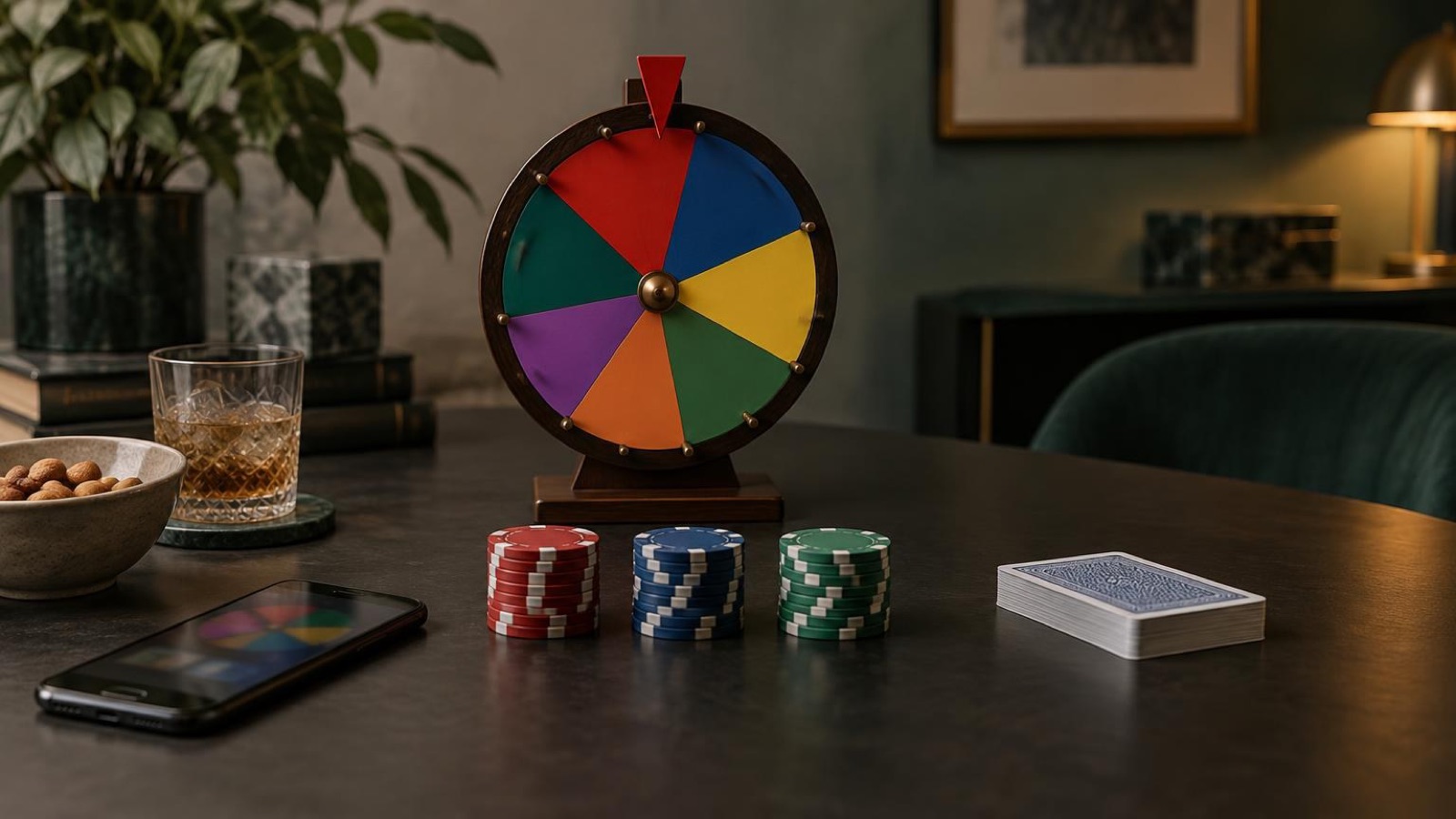
Spin & Gold is a lottery-style sit and go. Before the first hand, a wheel spins and sets the prize pool as a multiple of the buy-in. The wheel shows multipliers from 2x all the way up to 100,000x for 3-Max games and 200,000x for 6-Max games2.
The headline numbers are big. In 6-Max games the top multiplier is x200,000 of the buy-in, and the site advertises the chance to turn a $1 investment into $200,0002. At the $5 buy-in level, tables offer wins up to x200,000 your buy-in, and the site promotes winning up to $1,000,000 with just a $5 buy-in10. In 3-Max games the top prize is up to x100,000 your buy-in9.
When the biggest multiplier hits, the prize is split across the finishers rather than going to one player. In 6-Max games with $0.25, $3 and $5 buy-ins, a 200,000x multiplier pays x60,000 for first, x44,000 for second, x34,000 for third, x26,000 for fourth and x16,000 for fifth, and it comes up once in 100 million games9. In 3-Max games with a $200 buy-in, a 5,000x multiplier pays x2,500 for first, x1,500 for second and x1,000 for third, at a frequency of 20 in 100 million games9.
The other lottery-style game, Spin & Go, works the same way. The prize pool is set by a pre-game spin, with multipliers ranging from 2x up to 170,000x the buy-in3. Depending on the buy-in level, from $1 to $60, players can win up to 170,000x their entry fee3. At a $3 buy-in, prizes range from $6 to $8,500, and at a $15 buy-in they range from $30 to $42,5003.
A Spin & Go is a fast, three-player online poker format, typically lasting between 5 and 10 minutes, with blinds increasing every 2 minutes3. That short clock is what makes the format what it is: you cannot wait for premium hands, because the blinds will eat you first.
Spin & Gold buy-ins, fees and table sizes
Spin & Gold comes in two table sizes. 3-Max games seat up to 3 players per table, and 6-Max games seat up to 6 players per table9. The buy-in range runs from $0.25 to $200, which the site describes as wide enough to fit every bankroll10. For 6-Max games the buy-in options are $0.25, $1, $3 or $102.
A tournament fee of 7 percent is withheld from each buy-in10. That fee comes out before the prize pool is set, so it is worth knowing when you compare the cost of playing.
There is also a play money version if you want to try the format without spending. Spin & Gold play money tables run at blinds up to P200/P500, with a rake cap of P5,000 on those tables2. A P100/P200 play money table has a rake cap of P2,000, and the P200/P500 table has a default buy-in of P10,0009.
If you like to play more than one table at once, you can register for up to four games of the same buy-in level at a time9. That suits the format, since each game is short.
One feature worth knowing about is insurance. In 6-Max insured games, the spin must land on x4 for you to get your buy-in back10. That is a specific condition, not a general refund, so read it as part of the game rather than a safety net.
Flip & Go: a tournament that starts after the bubble
Flip & Go is a different idea. It is a tournament that skips the long early grind and drops you straight into the prize stage4. The format is split into two stages, the Flip and the Go5.
In the Flip Stage, players are dealt 3 hole cards and have 30 seconds to discard one5. If you do not choose in time, the lowest card is removed automatically. For example, with A-K-2 the 2 is discarded, and if you hold a pocket pair the unpaired card goes, so with T-T-3 the 3 is discarded11.
Each table then plays down to a winner in an all-in shootout fashion, and that winner proceeds to the Go Stage and is in the money5. In the Go Stage, all players are in the money, they carry their chips from the Flip Stage, and the tournament continues in a regular tournament format11.
Run It Twice is switched on for every hand in the Flip Stage and stays on until the table reaches heads up, with two players remaining. You cannot turn it off5. In the Double Board version, Run It Twice is activated for the Flip Stage and deactivated once the table has reached heads up5.
Tables are 8-handed, with 9 players at the final table, and there is no late registration11. If you want to compare this with a standard event, Flip & Go vs regular tournament format sets out the differences.
Flip & Go buy-ins, guarantees and the Flip Stage schedule
Flip & Go runs at several buy-in levels, each with its own guaranteed prize pool.
- At the $0.05 buy-in the guarantee is $50 to $1504.
- At $0.50 it is $125 to $7004.
- At $3 it is $300 to $2,5004.
- At $20 it is $600 to $3,5004.
Another listing gives $30 to $75 guaranteed at the $0.05 tier, $200 to $400 at $0.50, $700 to $1,250 at $3, and $1,500 to $2,000 at $2011.
The tournament fee is small at the low end. At the $0.05 buy-in tier the fee is $0.003, and at the $3.00 tier it is $0.1511. The rake per pot matches those figures, at $0.003 and $0.15 respectively11.
The schedule is built around the two stages. The Go Stage is held at :05 past each hour, while the Flip Stage runs multiple times, every 5 to 10 minutes11. In one published schedule, there are 8 Flip stages per hour, at :00, :05, :10, :25, :35, :40, :45 and :50 minutes past the hour, and the Go stage runs at :05 past each hour4. You can take part in up to 8 Flip stages4.
You can also buy more than one stack. You choose between one and a maximum of 5 stacks, and each stack costs one buy-in5. So if the buy-in is $3 and you buy 3 stacks, it costs you $95. More stacks mean more starting chips, but the buy-in level and the prize pool stay the same.
All-In or Fold: one decision, no betting rounds
All-In or Fold strips poker down to a single choice. On each hand you either push all your chips in or you fold. There are no betting rounds, no raises to size, and no post-flop play. You make one decision and the hand resolves.
Folding, in poker terms, means ending your participation in the hand. You can fold on any round, including right off the deal, but you must wait until it is your turn to act. When you fold, you forfeit all your bets and you are not allowed to make any further bets on that round12. In All-In or Fold, that is the whole game: commit everything or give up the hand.
Because there is no betting after the deal, the format moves quickly and the decisions are simple. It suits players who want a fast game with no long tanking, and it removes the bluffing and bet-sizing that define regular poker. If you want to understand the actions you are giving up, check, bet, call, raise, fold and all-in explains each one.
There is a dedicated guide to the format if you want to go deeper: how to play All-in or Fold sit and go.
All-In or Fold Fortune: side prizes up to $16,000
All-In or Fold also comes in a version with side prizes. In All-In or Fold Fortune, you can hit a MEGA FORTUNE, the largest of which can be worth up to $16,0006.
The side game is funded by a small fee per hand, and the fee scales with the blinds. At Hold'em $0.05/$0.10 blinds the payout fee is $0.007 per hand, at $0.25/$0.50 it is $0.02, at $1/$2 it is $0.10, at $5/$10 it is $0.50, and at $10/$20 it is $1.006.
The odds of the biggest special payout are long. At Hold'em $10/$20 blinds, a special payout of $20,000 carries odds of 400 in 1,000,0006. Treat the Fortune side game as a lottery attached to the format rather than a reason to play.
Battle Royale Sit & Go Survival: 30 players, three stages
Battle Royale is a survival format for 30 players. Each Battle Royale has exactly 30 players, and the tournament starts when all 30 have registered8. The game uses 1 deck of 52 cards, shuffled after each hand13.
It runs in three stages: The Rush, The Shootout and The Bounties13. Stage 1 ends when only 15 players remain7. Stage 2 seats those 15 players at 5 tables of 3, and each table plays until one player remains7. If multiple players are still in after 5 minutes, the game enters All-In mode, where all players are forced all-in until only one remains8.
Stage 3 is The Bounties, where you collect bounties by knocking other players out7. If there is a tie at the end of Stage 1, the player who knocked out the most players advances to Stage 27.
The final table pays the top five players, who are in the money8. First place takes 27.40 percent, and third place takes 20 percent8.
Battle Royale payouts, rake and buy-in levels
Battle Royale has four buy-in levels: $0.25, $1, $3 and $108. The rake is 5 percent of the buy-in for the $1, $3 and $10 levels, and 6 percent for the $0.25 buy-in13.
You cannot register with every kind of balance. Players can register using cash, tickets or tournament dollars (T$) only, and cash game funds (C$) are not accepted13.
If you disconnect during a Battle Royale, the money you have already put into the pot remains valid, and you accept the risk of internet disconnection8. The same rule applies across the site's games: money invested in the pot stays in play if your connection drops9.
Rules that apply across all four formats
A few things are the same whichever of these formats you play.
Most forms of poker use a single 52-card deck in which all suits are equal in value14. Battle Royale confirms this for its own game, using 1 deck of 52 cards shuffled after each hand13.
Folding works the same way everywhere. You can fold on any round, including right off the deal, but you must wait until it is your turn to act, and folding forfeits all your bets for that round12.
Disconnection is handled the same way across the site's games. Money already invested in the pot remains valid if you lose your connection, and players accept the risk of internet disconnection9. In practice, that means if you are all-in and your connection drops, the hand still plays out and you can win or lose the chips you committed.
Age rules depend on where you are and which operator you use. One operator's Battle Royale promotion requires players to be 18 or older8. In Kahnawake, a poker room license holder must not allow a player under the full age of 18 to take part in approved games15. Singapore Pools requires customers applying for a betting account to be at least 21 years old16. In Japan, pachinko and pachislo are for ages 18 and over17. If you are unsure, check the terms of the specific site you plan to use, because the minimum age can differ between operators and jurisdictions.
If you are playing from Asia as a visitor or an expat, the practical questions are usually about account setup, ID and currency rather than the rules of the game. Playing poker as a visitor or expat in Asia covers those points. For the wider context on where online poker sits legally across the region, start with poker in Asia.
Common Questions
How long does a Spin & Gold game usually last?
Most Spin & Gold games finish in about five to ten minutes. Blinds go up every two minutes, and with only three or six players at the table there is no room for long, patient play. Expect a fast, all-action game rather than a slow grind.
What happens if I disconnect mid-hand?
Any money you have already put into the pot stays in play and is treated as valid, even if your connection drops. The site treats internet disconnection as a risk you accept when you sit down, so you can lose the chips you have committed.
Can I make a deal in Spin & Gold or Battle Royale?
No. These are fast, fixed-format games with set prize structures, so there is no final-table deal or chop. The prizes are decided by the multiplier or the payout table before the game starts, and everyone plays it out to the end.
How much does the Flip & Go Flip Stage cost if I buy multiple stacks?
Each stack costs one buy-in. You can take between one and five stacks, so at a $3 buy-in, three stacks cost you $9. Buying more stacks gives you more starting chips but does not change the buy-in level or the prize pool.
What card is discarded if I don't choose within 30 seconds in Flip & Go?
The lowest card is removed automatically. For example, with A-K-2 the 2 is discarded. If you hold a pocket pair, the unpaired card goes, so with T-T-3 the 3 is discarded. You have 30 seconds to choose before this happens.
Can I turn off Run It Twice in Flip & Go?
No. Run It Twice is switched on for every hand in the Flip Stage and stays on until the table reaches heads up with two players left. You cannot turn it off, so expect each all-in to be run twice during that stage.
Sources17 sources
- Online Poker Sit and Go, CoinPoker, 2026-03-06
- Spin & Gold, Natural8, 2026-09-26
- Spin & Go Poker, CoinPoker, 2026-06-30
- Flip & Go Renewal, GGPoker, 2026-09-26
- Flip & Go, Natural8, 2026-09-26
- All-In Poker, Natural8, 2026-09-26
- Battle Royale, Natural8, 2026-09-26
- Battle Royale, Natural8, 2026-09-26
- Spin & Gold, Natural8, 2026-09-26
- Spin & Gold, GGPoker, 2026-09-26
- Flip & Go, Natural8, 2026-09-26
- How to Bet, PlaySmart, 2026-09-25
- Battle Royale, Natural8, 2026-09-26
- How to Play Poker, PlaySmart, 2026-09-25
- Regulations concerning Poker Rooms, Kahnawake Gaming Commission, 2026-01-14
- Responsible Gambling Practices, Singapore Pools, 2026-09-26
- Gambling Dependency Pamphlet, SCGA, 2026-09-26















