
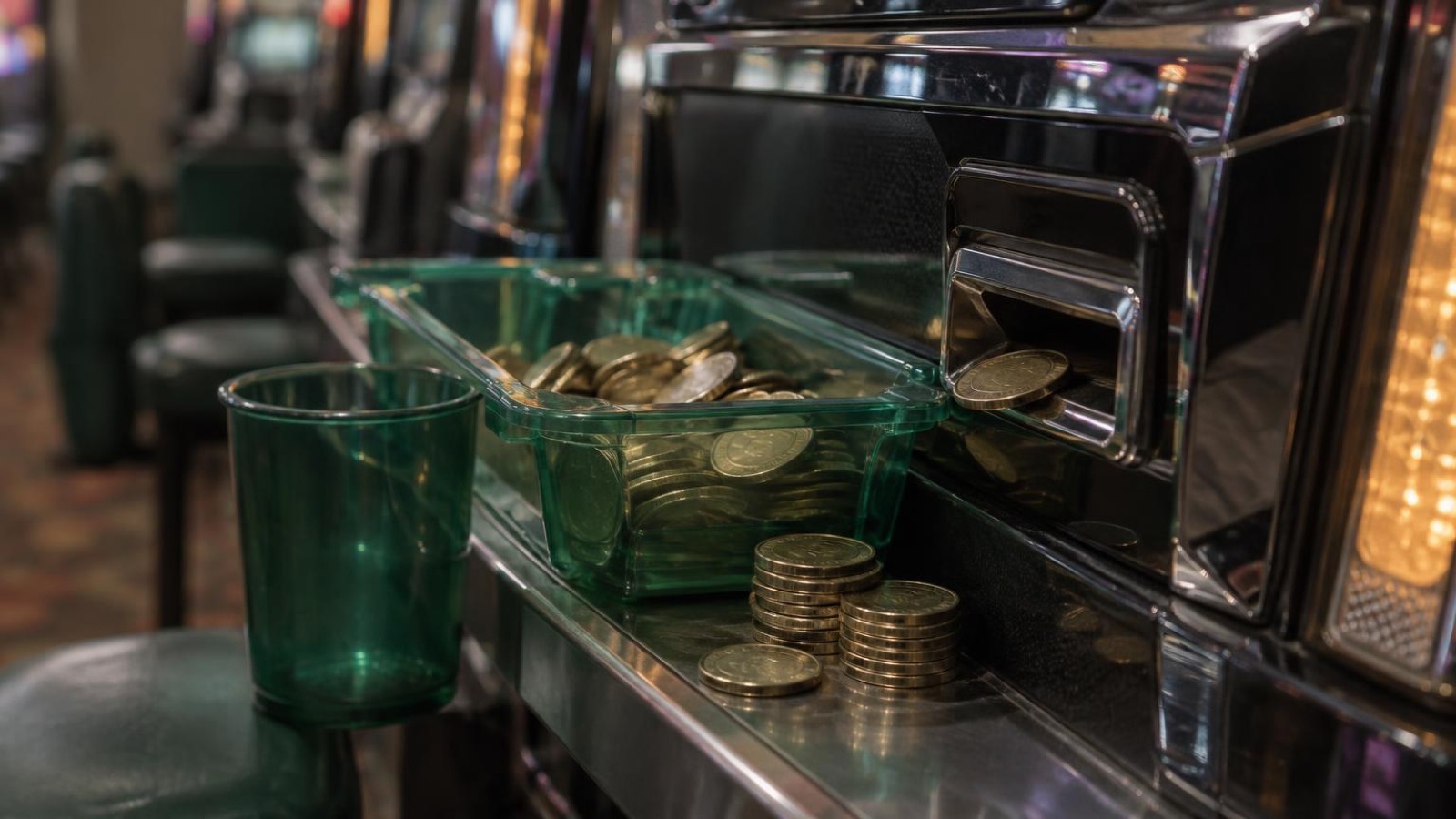
25-pai vs 30-pai medals: the short answer
If you are standing in a parlor holding a cup of medals and wondering whether they will work in the machine in front of you, the answer is no. The medal size is tied to the machine, and the machine is tied to its generation. A 30-pai machine is built around 30-pai medals. A 25-pai machine is built around 25-pai medals. Drop the wrong one in and it will not register, or it will jam the mechanism and you will be waiting for staff to open the machine while everyone behind you watches.
The practical rule is simple. Sit down, look at the machine, and use the medals the parlor gives you for that machine. If you have a mixed cup because you moved between machines, sort it out at the counter rather than at the seat.
The rest of this page covers what the two medal types actually are, why the machines will not share them, and how pachislo sits inside Japan's gambling rules, including the age limits and the online casino question that catches a lot of visitors out.
What 25-pai and 30-pai (Oki-slo) machines are
Pachislo is the slot-style cousin of pachinko. You feed medals into the machine, spin the reels, and win more medals when the symbols line up. The "pai" in 25-pai and 30-pai is the medal count or size designation tied to the machine's generation and specification, and it is the single most practical thing to know before you sit down.
Oki-slo means Okinawa-style pachislo. These machines are known for announcing results clearly and loudly rather than hiding them. The Japanese term is "fully announced," and it describes a machine that tells you what is happening through sound, light and reel behavior instead of leaving you guessing. Shiosai-30 is described as a fully announced Okinawa slot fifth regulation machine, and New Hanahana 30 is described the same way3.
New Hanahana 30 is worth knowing about because it shares its reel layout with an earlier machine, New Oasis, but has different specifications. The two are described as sibling machines: same reel arrangement, different internals6. That matters if you have played one and assume the other behaves the same way. It will not.
A 30-pai machine like Shiosai-30 has a defined betting structure. In normal play you bet 3 coins per game. During a Regular Bonus you bet 2 coins per game. During a Big Bonus you bet 1 coin per game3. The Big Bonus ends when the payout exceeds 330 coins, with a maximum net gain of 322 coins3. During bonus games only, the maximum payout per game is 15 coins3.
The machine also has a ceiling mechanic. After 1,300 games between bonuses, the machine reaches a state where you can keep playing with almost no medal loss3. That is a specification detail, not a promise, and it does not change the medal size question.
Why the medals are not interchangeable
The medals are physically different. A 30-pai medal will not fit the slot of a 25-pai machine, and a 25-pai medal will not trip the sensor of a 30-pai machine. This is not a software setting you can change. It is the hardware.
There is a second reason the two do not mix, and it is a legal one rather than a mechanical one. Under the rules that govern prize games in this category, the prize cannot be awarded in the form of money, and an awarded prize cannot be returned, bought back or exchanged within the premises where the play is taking place, or in any contiguous area4. That is why parlors give you medals and prizes rather than cash at the machine, and why the medal itself is a token rather than a currency. The medal size is part of how the parlor keeps the two systems separate.
So the practical points are:
- Use the medals the parlor issues for the machine you are sitting at.
- Do not carry medals from a 25-pai machine to a 30-pai machine, or the reverse.
- If you are unsure which machine you are at, ask staff before you feed anything in.
- Keep your medals in the tray the parlor provides, not loose in a pocket where they can mix.
If you want the wider picture of how these machines are specified, including payout rates and settings, see how to read pachinko and pachislot machine specs.
Where pachislo fits in Japan's gambling laws
Pachinko and pachislo are legal in Japan, but not as cash gambling. They operate as prize games under the Entertainment Business Act, and the parlor is licensed. The law sets a maximum game fee: JPY 4 per ball, plus a consumption tax equivalent, for pachinko game machines and businesses covered by the relevant cabinet order7. That ceiling is what keeps the game in the prize category rather than the betting category.
The distinction matters to you as a player in a very direct way. You are not placing a bet with a cash return. You are playing a game for medals and prizes. The medals cannot be turned into money inside the parlor or in any connected area4. That is the line the whole system rests on.
Mahjong is the opposite case, and it is worth stating plainly because visitors often assume a mahjong parlor is the same kind of licensed venue. Gambling at mahjong is a crime regardless of the place or the name of the venue, including mahjong parlors, mahjong teaching facilities, homes and inns1. If you are looking for the legal picture across the region rather than just Japan, where mahjong, pachinko, sabong, teen patti and other Asian games are legal compares twelve jurisdictions.
Legal forms of gambling in Japan
Japan's legal gambling is a short list, and it is mostly state-run or publicly authorized.
Public racing. Horse racing, keirin (cycling), boat race and auto race are authorized. Betting on horse racing would normally be the crime of gambling, but the Horse Racing Act authorizes it as a special law, and betting by methods other than those the special law prescribes is the crime of gambling8. The Japan Racing Association may sell pari-mutuel betting tickets with a face value of JPY 10 for races in race meetings9. Night races are conducted at four racecourses in Japan10.
Sports lotteries. toto, BIG, WINNER and DUNK are operated through the Japan Sport Council. The payout share is 50 percent of sales revenue11. You can buy tickets and claim prizes at shops, and the operator publishes the refund shop network12.
Pachinko and pachislo. Played for prizes, as described above.
Local racing. Beyond the central racing run by the JRA, local racing authorities run their own meetings, and the same general framework applies10.
What is not on the list is casino gambling. No land-based casino is open in Japan. Casino resorts have been planned, but none is operating, so if you are asked to believe otherwise, check before you travel.
If you want the full country picture, including what visitors can and cannot do, see can I gamble in Japan.
Minimum ages: 18 or 20 depending on the game
The age rules differ by game, and this is where visitors most often get caught out.
| Game | Minimum age | Where |
|---|---|---|
| Pachinko and pachislo | 18 | Licensed parlors2 |
| Horse racing betting tickets | 20 | JRA and related outlets9 |
| Sports lottery (BIG, toto, WINNER, DUNK) | 19 | Ticket purchase16 |
For pachinko and pachislo, the rule is that persons under 18 are prohibited from entering a pachinko parlor as customers, under the Entertainment Business Act2. That applies to visitors and residents alike. Bring photo ID, because staff can and do check at the door, especially in the evening.
For horse racing, pari-mutuel betting tickets must not be purchased by or transferred to individuals under the age of 209. The JRA states the same: persons under 20 may not buy or cash betting tickets15.
For the sports lotteries, purchase is prohibited for anyone under 1916.
The practical takeaway: if you are 18 or 19, you can play pachislo but you cannot buy a horse racing ticket or a sports lottery ticket. If you are under 18, you cannot enter a pachinko parlor as a customer at all.
Online casinos and the gray area
This is the part where the answer is not gray at all, even though people describe it that way.
Connecting from Japan to gamble on an online casino is a crime, even if the casino is legally operated overseas17. That includes free versions and free bonus points17. The Consumer Affairs Agency states that players who used online casinos as customers have actually been arrested for the crime of gambling5. A research paper on the subject puts it in the same terms: even for an overseas casino that is legal where it operates, a user accessing it from Japan and taking part in games is committing an illegal act, and Japan's criminal law on gambling applies18. A foreign license does not justify it, and a mistake about its illegality does not negate intent18.
So the practical position for a visitor, a resident or a citizen is the same. Do not use online casinos from Japan. The fact that the site loads and takes your card does not make it legal, and the enforcement is real.
If you want to understand how this applies to app-based games more broadly, mahjong, teen patti, rummy and niu niu online covers apps, live dealer games and the legal risk across the region.
What to expect on the day
A first visit to a pachislo parlor is straightforward once you know the sequence.
- Check the age rule. You must be 18 or older to enter as a customer2. Bring photo ID.
- Pick a machine. Look at the medal designation. A 30-pai machine takes 30-pai medals. If you are not sure, ask staff.
- Get your medals. You buy or receive medals at the counter or from the machine's medal unit, depending on the parlor. Use the medals that match the machine.
- Sit down and play. On a 30-pai machine like Shiosai-30, normal play is 3 coins per game, a Regular Bonus is 2 coins per game, and a Big Bonus is 1 coin per game3.
- Watch for the announcement. Oki-slo machines announce results clearly, which is the point of the style3.
- Cash out in prizes, not cash. The prize cannot be money, and it cannot be exchanged inside the parlor or in a connected area4.
If you are visiting Japan and want the wider context on playing local games as a visitor, including parlor etiquette, see playing local games as a visitor or expat.
Common Questions
Can I use 25-pai medals in a 30-pai machine?
No. The two medals are different sizes and weights, and a machine built for one will not accept the other. A 30-pai machine takes 30-pai medals only, and a 25-pai machine takes 25-pai medals only. You get the right medals from the parlor, not from another machine.
What is an Oki-slo machine?
Oki-slo means Okinawa-style pachislo. These machines announce the result clearly and loudly, often with sound and light, rather than hiding it behind a screen. Shiosai-30 and New Hanahana 30 are both fully announced Oki-slo machines from the fifth regulation generation.
How old do you have to be to play pachinko in Japan?
You must be 18 or older to enter a pachinko parlor as a customer. Parlors are licensed under the Entertainment Business Act, which bans anyone under 18 from entering as a customer. Bring photo ID, because staff can ask for it at the door.
Are there any legal casinos in Japan?
No land-based casino is open in Japan yet. Casino resorts have been planned, but none is operating. The only legal gambling in Japan is the state-run and publicly authorized forms: horse racing, keirin, boat race, auto race, the sports lotteries, and pachinko and pachislo played for prizes rather than cash.
Can Japanese players be arrested for using online casinos?
Yes. Connecting from Japan to gamble on an online casino is a crime even when the operator is legally licensed overseas, and players have been arrested for it. Free versions and free bonus points count too. A foreign license does not protect you, and not knowing the rule is no defense.
What gambling is legal in Japan?
Legal options include horse racing and other public racing, the sports lotteries such as toto and BIG, and pachinko and pachislo played for prizes. Mahjong gambling is illegal anywhere, including in mahjong parlors and private homes. Online casino gambling from Japan is illegal.
Is there a tax on gambling winnings in Japan?
Public racing and sports lottery winnings are generally not taxed as income when you buy and cash at the counter, though a transfer fee applies to large payouts. Winnings over JPY 500,000 paid by bank transfer carry a fee of JPY 154 at most banks or JPY 50 at Japan Post Bank.
Sources18 sources
- 遊技場営業, National Police Agency
- ギャンブル等依存症対策基本計画, Cabinet Office, March 21, 2025
- シオサイ-30 (5号機)), Wikipedia
- Regulatory Framework for Gaming Venue Operations, Department of Provincial Administration, Thailand
- オンラインカジノに関する注意喚起, Consumer Affairs Agency
- ニューハナハナ30, Wikipedia
- 風俗営業等の規制及び業務の適正化等に関する法律, e-Gov
- 賭博罪と競馬, National Tax Agency
- Horsemen: Law, Japan Racing Association
- Local Racing, Japan Racing Association
- スポーツくじ, Japan Sport Council, March 2026
- 当せん金の受取り, toto
- 当せん金の受取り, toto
- BIGの当せん金の受取り, toto
- 馬券の購入, Japan Racing Association
- Integrity, toto
- オンラインカジノ, National Police Agency
- オンラインカジノをめぐる法的問題, National Police Agency















