What Auto Race is
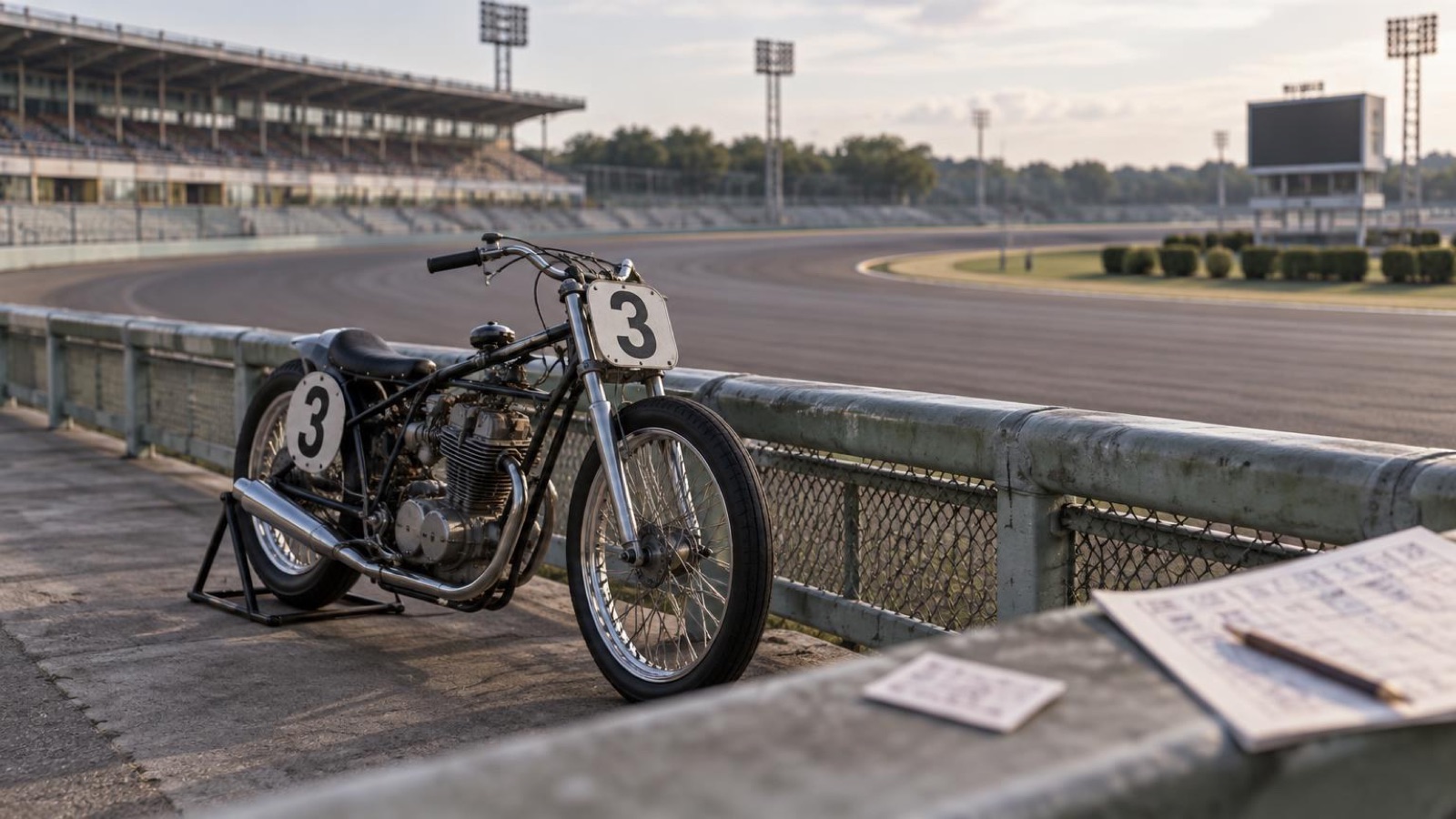
Auto Race, called Oto Race in Japanese, is the fourth of Japan's public betting sports, alongside horse racing, keirin cycling and boat racing. It is the only one raced on motorcycles: eight riders on heavily tuned 600cc machines fight around a short paved oval, deliberately sliding the rear wheel through the corners in a controlled drift. Races are short, loud and over in about a minute, which is part of the appeal. A full program runs 12 races in a day, the same daily rhythm used across Japan's race sports, so a day at the track gives you a dozen betting opportunities5.
The sport is organized as pari-mutuel betting run by designated municipalities, the same public model that underpins horse racing in Japan and keirin. All money staked on a race goes into a pool, roughly 70 to 80 percent of sales is returned to winning bettors, and the odds move with the money4. That means you are betting against the other bettors, not against a bookmaker, and a wildly unpopular combination can pay a fortune.
Riders are full-time professionals who race under numbered vests and colored silks, and each has a published track record, so form study is a big part of the culture. Handicaps keep fields competitive: riders are staggered at the start in 10 m increments, with the strongest riders conceding up to 110 m to the weakest in a field. Because the start positions are set by official handicap rather than luck, the first corner often decides the race, and watching how a rider handles a bad draw is half the skill of picking a winner2.
The five tracks
Auto Race is held at exactly five tracks, spread down the country from the Kanto plain to Kyushu. Each is a compact stadium with banked asphalt corners, grandstand seating, indoor betting areas and restaurants, and each hosts its own meetings through the year1.
| Track | Location | Region |
|---|---|---|
| Kawaguchi Auto Race | Kawaguchi, Saitama | Greater Tokyo |
| Isezaki Auto Race | Isezaki, Gunma | Kanto |
| Hamamatsu Auto Race | Hamamatsu, Shizuoka | Chubu |
| Sanyo Auto Race | Sanyo-Onoda, Yamaguchi | Chugoku |
| Iizuka Auto Race | Iizuka, Fukuoka | Kyushu |
Kawaguchi is the easiest for a visitor staying in Tokyo, reachable by train from the capital. Isezaki sits north of Tokyo in Gunma and is the track that produced the sport's record payout. Hamamatsu covers the Nagoya and Shizuoka area, while Sanyo-Onoda and Iizuka serve western Japan and Kyushu. Because there are only five venues, at least one is nearly always running a meeting, and the tracks take turns hosting the biggest graded events1.
How betting works
Betting is pari-mutuel, so your ticket does not carry fixed odds. The pool for each bet type is divided among the winners after the track's takeout, and the payout per JPY 100 is announced on the boards before and during the race. As a worked example from Japan's race sports: a JPY 1,500 bet at odds of 15.3 returns JPY 22,950, and machines all over the venue pay out your prize on the spot the moment the result is official5.
Auto Race tickets come in six main types3:
- Win (tansho): pick the first-place rider.
- Perfecta (2-runner exacta): pick the first two riders in exact order.
- Quinella (2-runner quinella): pick the first two in either order.
- Trifecta (3-runner exacta): pick the first three in exact order.
- Trio (3-runner quinella): pick the first three in any order.
- Quinella Place (wide): pick any two of the riders who finish in the top places; both must land in the paying positions.
Tickets are sold in JPY 100 units, and you can combine selections, for example boxing three riders to cover every Trifecta order. The harder the prediction, the bigger the potential return: Trifecta payouts are where the headline figures come from, and the record is JPY 15,721,720 for a single JPY 100 bet, struck at Isezaki when an unfancied combination came home in order2.
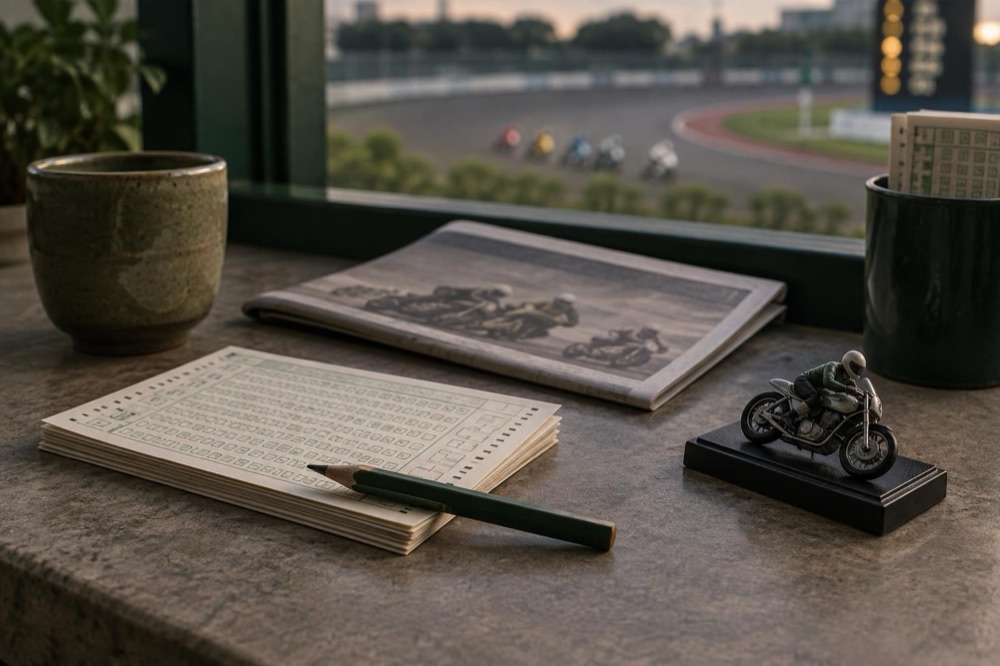
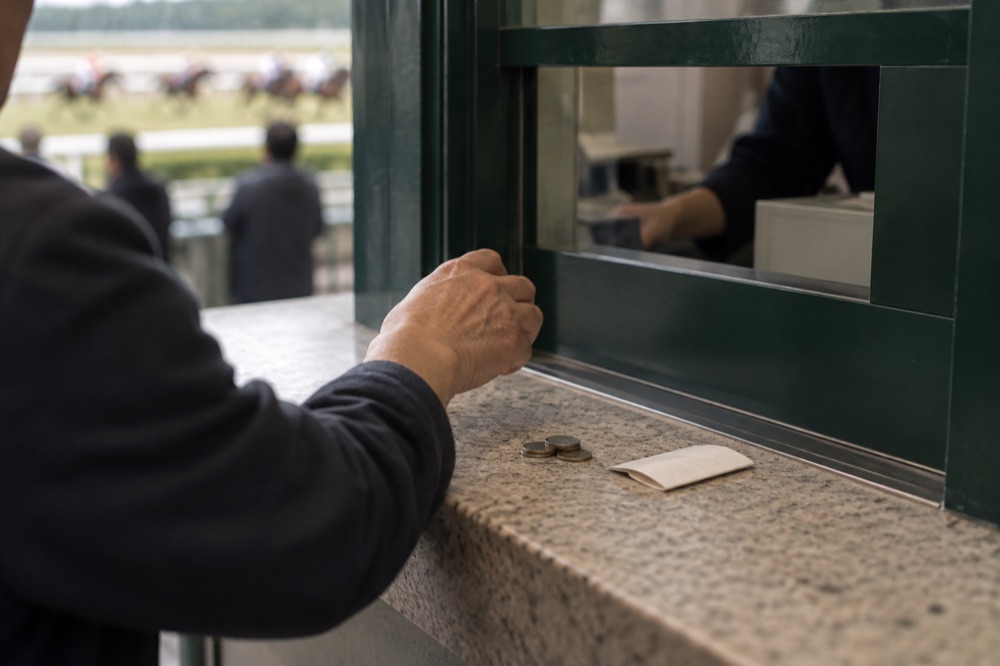
You can bet in three ways: at the track itself, at off-course betting halls operated by the Auto Race municipalities, and by telephone voting through the official account-based service, which is how most regulars now play3. At the track you mark a paper card with your race, bet type and rider numbers and feed it to a machine with your cash, or use the touchscreen terminals. Payout machines sit throughout the building and pay winnings immediately after each result is confirmed5.
What happens if a race is voided
Races are occasionally declared void or "not established": if the meeting is abandoned for weather or an accident, if the field falls apart so that no meaningful contest is possible, or if a serious disruption such as spectator interference makes the result invalid2. When that happens, all bets on that race are canceled and the stakes are refunded at face value in exchange for the ticket, so hold on to every ticket until the day's results are settled2. The same refund applies if a rider you backed is scratched and does not start, or if the number of starters drops below the minimum for your bet type2. In short: a voided or shortened race costs you nothing beyond the trip.
How Auto Race compares with Japan's other race sports
Auto Race sits in the same family as the other three public race sports, and if you know one, the mechanics transfer easily. All four run pari-mutuel pools with roughly 70 to 80 percent of sales returned to winners, all run around 12 races a day, and all sell tickets in small units at the venue, at off-course halls and by telephone4.
The differences are in the machine and the field size. Horse racing runs up to 18 runners over turf and dirt courses at 10 JRA racecourses plus local tracks, with the richest purses in Japanese sport, up to JPY 500 million for the Japan Cup7. Keirin puts nine cyclists on a banked velodrome and grades its races from GP down through G ranks, with the KEIRIN Grand Prix paying JPY 100 million to the winner and its Dokanto multi-race bets producing wins over JPY 100 million8. Boat racing (kyotei) races six boats over three laps of 600 m, 1,800 m in all, at 24 venues nationwide, and its SG grade stands for Special Grade, the top events open only to the best racers10. Auto Race itself runs eight riders per race, normally 12 races a day, with general races over 6 laps (3,100 m) and its SG finals over 10 laps (5,100 m)13.
Auto Race is the smallest of the four, with just five venues, but that compactness has its own appeal: the fields are small enough to study properly, the handicaps make every race a genuine puzzle, and the sliding motorcycles give it a spectacle the others cannot match. Its SG grade follows the same convention as boat racing's, marking the sport's top meetings11.
Grades and big meetings
Auto Race meetings are graded like the other race sports, with three main levels: SG at the top, then GI and GII8.
- SG (Special Grade): the championship events of the sport, where only the leading riders qualify. Finals can be run over up to 10 laps instead of the usual 6, and these are the meetings that draw the biggest crowds and pools2.
- GI: major open meetings below SG level, still contested by the sport's top names.
- GII: the standard graded meetings that fill most of the calendar.
Below the graded meetings sit the general races that make up the everyday program, the equivalent of the low-grade races that fill out every day of racing in Japan's other sports, where the sport's rank-and-file riders earn their living13. The pattern mirrors keirin, where all races fall into six grades from GP down to FII and the calendar is built from a handful of marquee GI meetings plus commemorative events at each venue8. If you want to see Auto Race at its loudest and most lucrative, time a visit around an SG final at Kawaguchi or Isezaki.
Who can take part
Auto Race is one of Japan's legal public betting sports, run by designated municipalities under the same pari-mutuel framework as horse racing, keirin and boat racing, so buying a ticket at the track or through the official telephone service is ordinary, licensed activity4. Foreign visitors and residents are welcome at the tracks on the same terms as Japanese customers; you do not need membership or ID beyond what payment requires, and the venues are family-friendly enough that plenty of people come just to watch5. The practical restriction to know is that the sport is for adults, so anyone betting needs to be of age, and the telephone voting service requires a registered account3.
A first visit: what to expect
A day at an Auto Race track is casual and inexpensive. There is no dress code; come as you are. Entry costs a few hundred yen, grandstand seating is first come, first served, and the indoor areas have food stalls, restaurants and big screens showing the odds and replays. A meeting normally runs 12 races in a day, with 8 riders in each race, spaced so you have time to study the form, place bets and collect between each one5.
For your first bets, keep it simple. Buy a JPY 100 win ticket on a rider whose recent form you like, and a Quinella Place combining two riders so you have a wider chance of collecting. Watch the handicap line-up before each race: the riders conceding distance at the start are the ones the officials rate highest, and the staggered start is the single biggest clue in the sport2. Mark cards are in Japanese, but the numbers are universal: race number, bet type, rider numbers, stake. Feed the card and cash into the machine and keep the printed ticket.
When your rider wins, take the ticket to any payout machine, insert it, and the machine pays on the spot5. If a race you bet on is voided, the same machine refunds your stake, so never throw a ticket away until the day is over2. Racecards, results and rider statistics are posted around the track and on the official site, and the regulars are generally happy to help a newcomer decipher a card. Arrive an hour before the first race to buy your seat, eat, and get the feel of the place before the motorcycles fire up.
Common Questions
How many races are there in a day?
A normal Auto Race program runs 12 races in a day, the same rhythm used across Japan's public race sports, with betting windows open between each race.
How many riders are in each race?
Eight riders line up in each Auto Race, wearing numbered vests and colored silks so you can pick them out as they slide around the paved oval.
How long is a general Auto Race?
General races are run over 6 laps of the paved course, while the biggest SG finals can be stretched to as many as 10 laps.
Where can I bet on Auto Race?
You can bet at the five Auto Race tracks themselves, at off-course betting halls run by the operator municipalities, and by telephone voting through the official service.
What is the biggest payout ever recorded?
The record Trifecta payout is JPY 15,721,720 for a JPY 100 bet, hit at Isezaki. Pari-mutuel odds can climb very high when an unlikely combination comes in.
Do I get my money back if a race is canceled?
Yes. If a race is declared void or not established, all tickets on it are refunded at face value when you present them, so keep your ticket.
Which cities host Auto Race meetings?
Five cities: Kawaguchi in Saitama, Isezaki in Gunma, Hamamatsu in Shizuoka, Sanyo-Onoda in Yamaguchi and Iizuka in Fukuoka.
Sources13 sources
- Kawaguchi City: Kawaguchi Auto Race, Isesaki Auto Race, Hamamatsu Auto Race, Sanyo Auto Race, Iizuka Auto Race, ExpatBets
- Auto Race competition implementation rules, JKA, 2026
- KEIRIN telephone voting terms and conditions, keirin.jp, 2026
- Research paper on pari-mutuel betting, National Tax College, 2025
- How to make predictions, Boat Race official site, 2026
- JRA betting ticket rules, Japan Racing Association, 2026
- Japan Racing Guidebook 2026, Japan Racing Association, 2026
- KEIRIN race grades, keirin.jp, 2022
- KEIRIN glossary: numbers and alphabets, keirin.jp, 2022
- Boat Race venues, Boat Race official site, 2026
- Kyushu Boat Race locations and schedule, Boat Race official site, 2026
- Boat Race guide (Chinese), Boat Race official site, 2026
- KEIRIN guide (Chinese), keirin.jp, 2016