What Big Two is
Big Two is a card game about getting rid of your cards before anyone else does. You are not trying to build the best hand and show it down at the end, as in poker. You are trying to empty your 13 cards onto the table, combination by combination, while blocking the other players from doing the same.
The game goes by several names. In Hong Kong and Cantonese-speaking communities it is Choh Dai Di (鋤大弟), sometimes written 锄大D, which roughly means "dig out the big brother," a nod to beating the biggest card. In English it is Big Two or just Deuces, again because the 2 is the star of the deck. The Vietnamese version, Tiến Lên (Tiến Lên Miền Nam, or "Southern Tiến Lên"), is dealt in exactly the same way, with 4 players receiving 13 cards each1, and the family extends across Southeast Asia under various local names.
It belongs to the same broad clan of Asian card games as Dou Dizhu (Fight the Landlord) and Chinese Poker (Shisan Zhang). All of them share the shedding idea: play valid combinations, beat what the last player played, pass when you cannot, and the first empty hand wins. Where Chinese Poker has you split 13 cards into set hands and compare them at the end2, Big Two keeps everything in motion, one play at a time, which makes it quicker and more conversational.
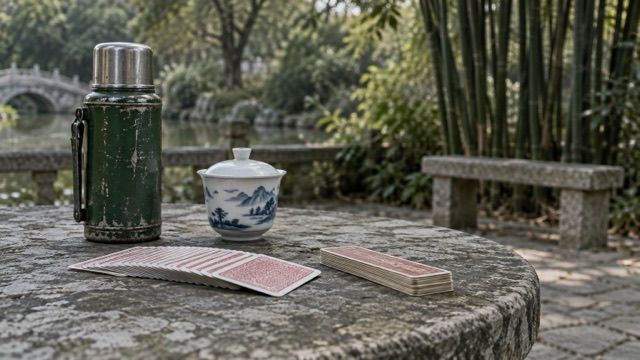
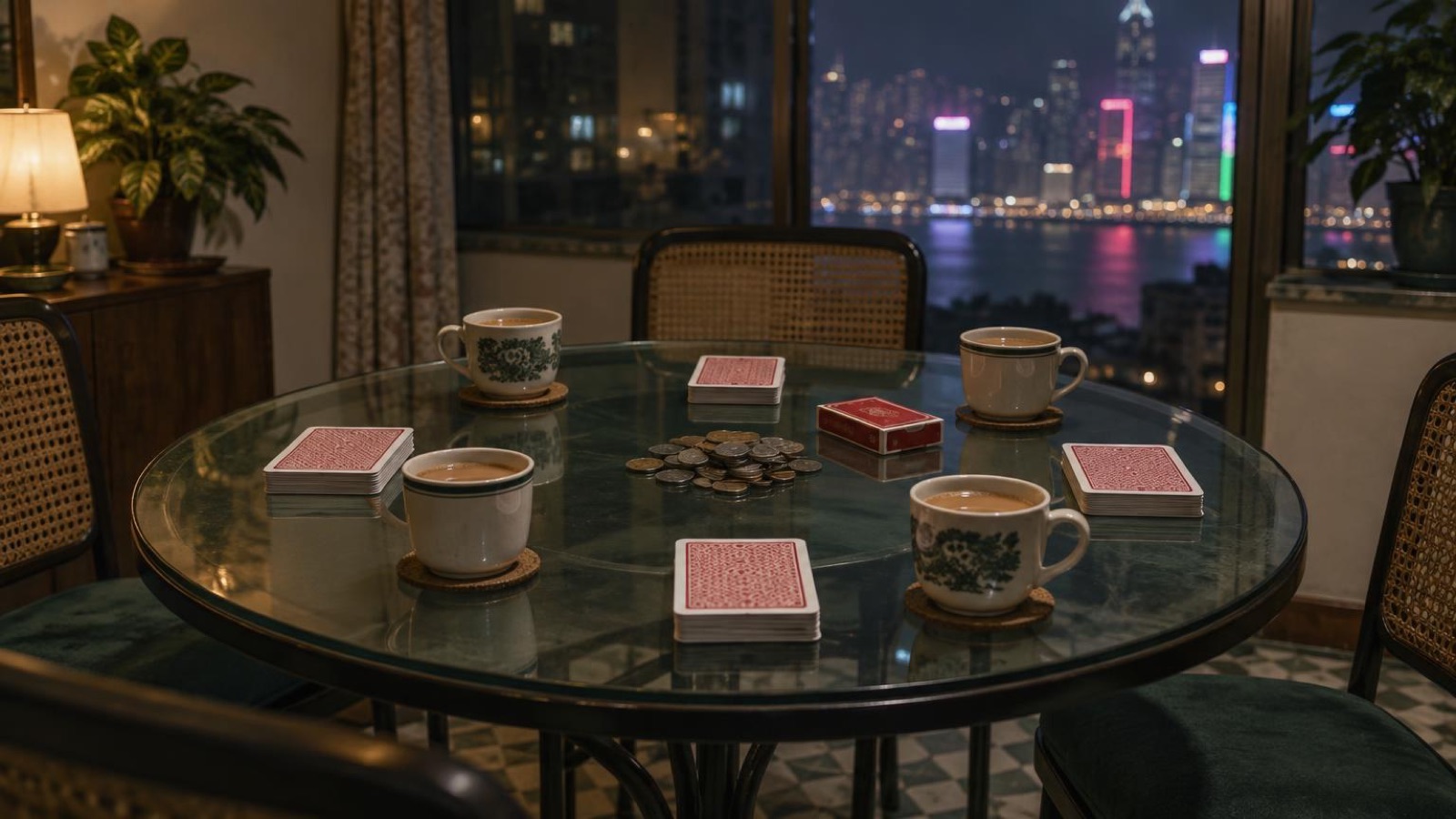
That speed is the appeal. A hand of Big Two takes a few minutes, everyone at the table is involved on every turn, and the luck-to-skill balance feels fair enough that losers always want a rematch. It is the kind of game people play at family gatherings, over tea, or in the chess and card rooms (qipai shi) that dot southern China, usually for modest per-card stakes.
How the 13 cards are dealt
The deal is simple. One standard 52-card deck is used3. With four players, the dealer gives out the entire pack, one card at a time, so each player ends up with exactly 13 cards and nothing is left over. This is the same structure as the Vietnamese cousin, described plainly as "4 players, 13 cards each"1.
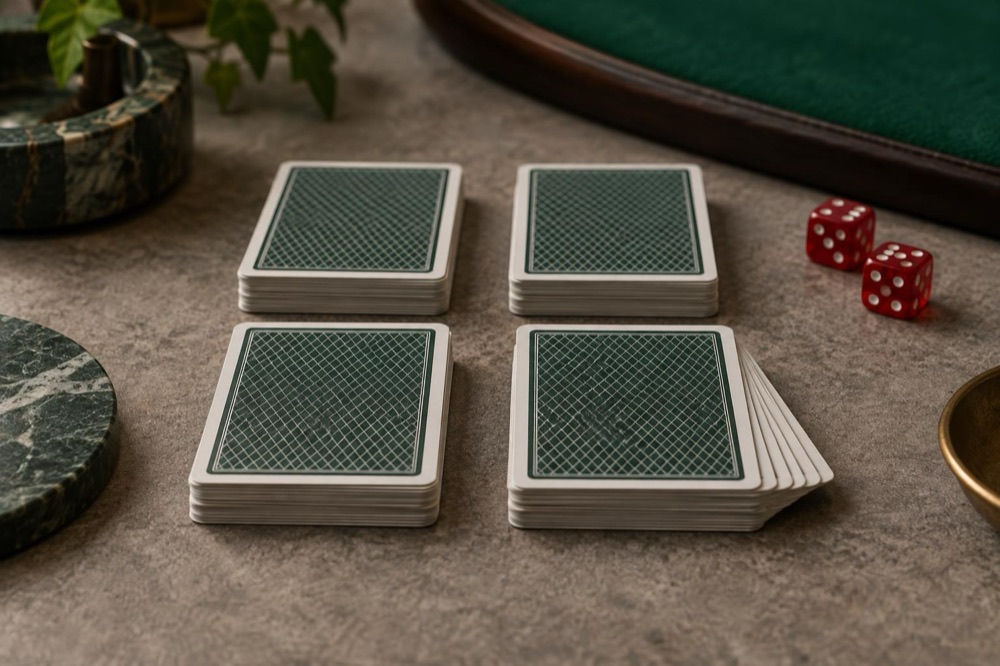
With two or three players, 13 cards each does not use the whole deck. Related 13-card games are documented as working with two, three, or four players2, and in smaller games the common approach is to deal 13 per person and set the rest aside unseen. Fewer players means you see fewer of the key cards, so tracking which 2s and aces have appeared becomes more guesswork and less arithmetic.
Once everyone has their 13, players sort their hands. This is a quiet moment of the game: each person groups their pairs, triples, possible straights and flushes, and works out which single cards they are stuck with. How you organize your 13 cards matters as much as how you play them, because a well-planned hand lets you exit in a smooth sequence instead of getting stranded with a lone 3 at the end.
The player holding the lowest card, normally the 3 of diamonds or the 3 of spades depending on house rules, opens the first trick. From there, play runs clockwise, and each player must either beat the last combination on the table or pass.
Playing with four players
Four is the standard and best-supported number, and it is worth understanding why. With four players and 13 cards each, every card in the deck is in someone's hand. Nothing is hidden in a kitty or an undealt stack. If three 2s have been played and you hold the fourth, you know it with certainty. That makes Big Two at four players a game of counting and deduction, not just luck.
The turn structure keeps all four people engaged. On your turn you have three options:
- Play a combination of the same type and size as the last one, but higher. If someone led a pair of 8s, you need a higher pair, such as 9s or above.
- Play a bigger combination of five cards, if the house allows a five-card hand to beat certain smaller plays. Most versions keep it strict: like beats like.
- Pass, and wait for the next trick.
When all other players pass consecutively, the last person to have played wins the trick and leads whatever they like next, which is a real advantage. You can restart with a tiny card to dump your junk, or lead your monster combination to force everyone out of the way.
Passing is not weakness, it is information. If you pass on a pair of queens, the table learns you have no pair of kings, aces or 2s, and sharp opponents will use that later. Conversely, holding back a winning card to lure others into committing is a standard play. The related Vietnamese game formalizes the harsh end of this: a player who has not played a single card when someone else finishes is said to have lost "thua cóng" and pays double the stake, with extra penalties counted from the strong cards left in their hand5. Many Big Two circles use the same idea in softer form.
Card rankings and hands
Two rankings matter in Big Two: the order of individual cards, and the order of combinations.
For single cards, the twist that defines the game is that the 2 sits above the ace. The full order from high to low is: 2, then A, K, Q, J, 10, 9, 8, 7, 6, 5, 4, 3. Among the 2s, spades is highest, then hearts, diamonds and clubs. This inverts the familiar poker order, where the cards rank "from high to low: Ace, King, Queen, Jack, 10, 9, 8, 7, 6, 5, 4, 3, 2"4. If you come from poker, the single biggest adjustment in Big Two is treating the humble 2 as the king of the deck.
For combinations, Big Two borrows the poker family of hands. A poker hand consists of five cards6, and the classic rankings, highest to lowest, are Royal Flush, Straight Flush, Four of a Kind, Full House, Flush, Straight, Three of a Kind, Two Pair, One Pair and High Card7. Big Two uses the same building blocks, in this order of strength:
| Combination | What it is | Example |
|---|---|---|
| Single | Any one card | The 2 of spades beats everything |
| Pair | Two cards of the same rank8 | Two 8s |
| Triple | Three cards of the same rank | Three kings |
| Five-card hand | Poker-style combinations | See below |
Among five-card plays, the strength order follows poker: a Straight Flush (five cards in order, same suit) beats everything9, then Four of a Kind, Full House, Flush, and Straight (five cards in sequence in different suits)9. A Flush is any five cards of one suit, not necessarily in order; a Straight is any five in sequence, not necessarily one suit. Within ties, the highest card in the combination decides, so a straight ending in a king beats a straight ending in a 10.
Two rules do most of the work in real games. First, like must beat like: a pair only beats a pair, a straight only beats a straight. Second, the 2 is wild in rank but not in function; it cannot substitute for other cards the way wild cards do in some video poker variants10, it is simply the highest card in whatever combination it joins. A pair of 2s is the unbeatable pair; a single 2 of spades is the unbeatable single.
One more poker habit worth unlearning: in Big Two there is no betting round, no community cards, no drawing. You keep the 13 cards you were dealt. The strategy is entirely about the order in which you release them.
Winning the game
The winner is the first player to play their last card. That is the whole object. When your final card hits the table and your hand is empty, the hand ends immediately and scoring begins.
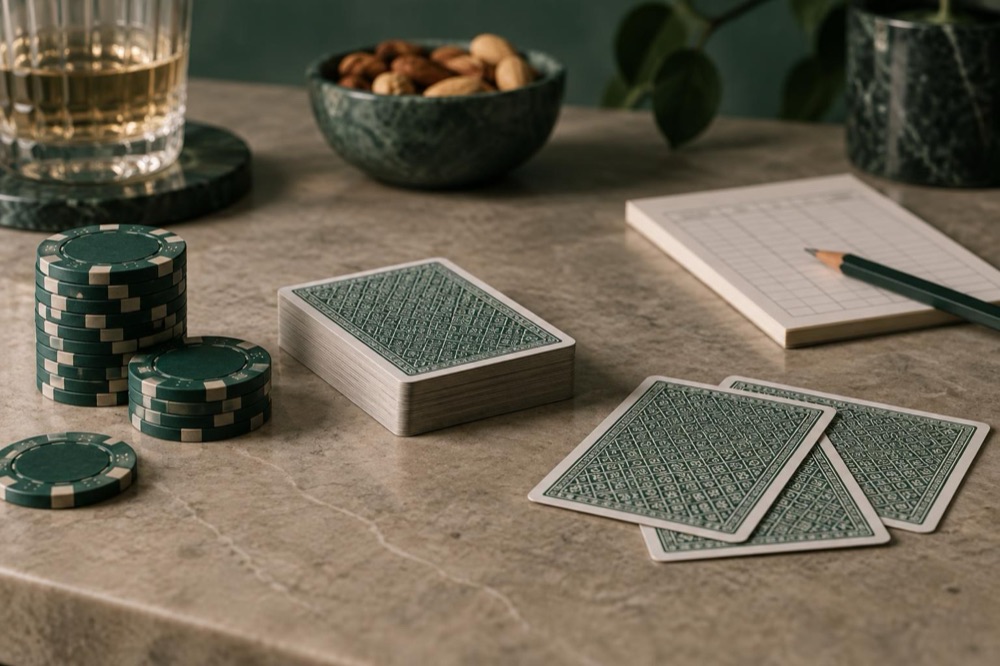
Scoring is where the money moves, and the common approach is per-card payment. Each loser counts the cards still in their hand and pays the winner one unit per card. So if you are caught holding five cards when the winner goes out, you pay five units. This is why the endgame matters so much: a player who dumps their last six cards in one run can go from a heavy loss to a small one, while a player sitting on a fistful of strong but unplayable cards pays dearly.
The doubled-loss rule adds teeth. In the Vietnamese cousin, a player who never played a single card all hand loses double the stake and is then checked for the strong cards remaining in their hand, with further penalties added on top5. Big Two groups commonly adopt a version of this: a full hand of 13 unplayed cards, or sometimes any hand with a certain number of cards left, pays double. House rules vary, so agree on this before money is on the table.
Some groups add automatic bonuses for going out with particularly strong finishes, such as holding all four 2s or going out with the 2 of spades as your last card. These are pure house conventions; there is no official rulebook, and every circle plays slightly different details. The core, though, is stable everywhere: shed first, pay per card, double the disasters.
Compared with casino poker games, where the winner is decided by showdown or by making others fold through skill, strategy and bluffing13, Big Two has no bluffing in the betting sense. There is nothing to bet with. The psychology is in what you choose to play and what you choose to withhold, which opponents read the same way they would read a bet.
Where to play Big Two in Asia
Big Two is a home and cafe game, not a casino product. You will not find it spread on a Macau casino floor alongside baccarat tables seating up to 14 players14. Its natural homes are kitchens, tea houses, dormitories and the card rooms of Hong Kong, Guangdong and Chinese communities worldwide.
In mainland China, the closest public venues are the chess and card rooms (qipai shi), which rent tables and cards by the hour and are a normal part of social life. See our page on chess and card rooms for how they work. Playing there for tokens or small sums among friends is ordinary; playing for meaningful cash is where you cross into the territory covered on our gambling laws in China page, so keep the stakes at friendship level. Many people instead play on their phones, which our card and mahjong apps page covers.
In Hong Kong, Big Two is close to a national pastime, played at every level of society, and it is the version most expats encounter first. In Vietnam, the equivalent game is Tiến Lên, and in the Philippines a similar shedding game is widespread. Wherever Cantonese or Vietnamese communities have settled, from Sydney to San Jose, the game has traveled with them.
If your interest in 13-card games extends toward poker proper, Asia's live poker scene has grown fast. The Asian Poker Tour has run festivals across the region, with the APT Taipei Poker Classic taking place across two venues: the CTP Asia Poker Arena, Asia's largest permanent poker room, and the CML (Chinese Mahjong League)11. The tour has also staged series further afield, such as an eight-day stop at Ti Vegas Casino in Grand Bay, Mauritius, with a €900 buy-in15. Those events feature Texas Hold'em and its relatives, not Big Two, but they are where the 13-card habit meets organized card play. Our pages on poker in China and Chinese Poker pick up that thread.
For most people, though, Big Two needs nothing more than a deck of cards, three friends, and a spare half hour. Learn the rankings, count the 2s, and mind the cards you leave in your hand when someone else goes out first.
Common Questions
How many cards do you get in Big Two?
Each player is dealt 13 cards from a standard 52-card deck. With four players, the whole deck is used, one card at a time to each player until everyone has a full hand.
How many players can play Big Two?
The classic form is four players with 13 cards each, which uses the entire deck. The game also works with two or three players, though the deal and the leftover cards work slightly differently.
What is the strongest card in Big Two?
The 2, which is where the game's name comes from. The 2 of spades is the single highest card, followed by the other 2s, then aces, kings, queens and so on down to 3.
Is Big Two the same as Choh Dai Di?
Yes. Choh Dai Di (鋤大弟, sometimes written 锄大D) is the Cantonese name for the same game, popular in Hong Kong. Big Two is the English name, and the Vietnamese game Tiến Lên is a close cousin.
Can Big Two be played with two or three players?
Yes. Related 13-card games are documented with two, three or four players. With fewer than four, some cards are left out of the deal, and the strategy shifts because you see fewer of the key cards.
What happens if you can't beat the last card played?
You simply pass. Play moves to the next player, and you rejoin when a new combination starts. If you never play a single card before someone goes out, most house rules penalize you with a doubled loss.
Sources15 sources
- Online Card Games: Basic Rules and How to Choose, V9Bet, 2026-03-21
- Hustler Casino Game Rules, California Department of Justice, 2021
- 5-Card Draw Poker Guide for Beginners, CoinPoker, 2026-09-26
- Poker Hand Rankings, GGPoker, 2026-09-26
- Bài Tiến Lên, Wikipedia (Vietnamese), 2026
- Hand Rankings, partypoker, 2026-09-26
- Poker Terms, Americas Cardroom, 2026-09-26
- Poker Essentials, GameSense, 2020
- Essential Poker Terms You Should Know, Natural8, 2026-09-26
- Video Poker, CoinPoker, 2026-09-06
- APT Taipei Poker Classic with USD 2 Million Main Event Guarantee, Asian Poker Tour, 2024-04-11
- APT Announces 2 Million Dollar Guarantee for APT Taipei 2024 Main Event, Asian Poker Tour, 2024-01-18
- 7 Card Stud, PlaySmart, 2026-09-25
- How to Play Baccarat, PlaySmart, 2026-09-25
- Asian Series Mauritius, Asia Gaming Brief, 2012-07