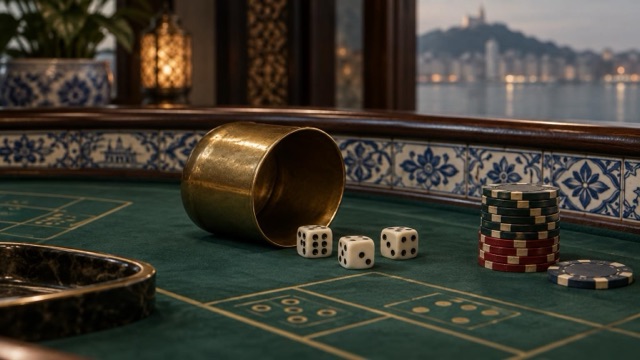
What chess and card rooms are
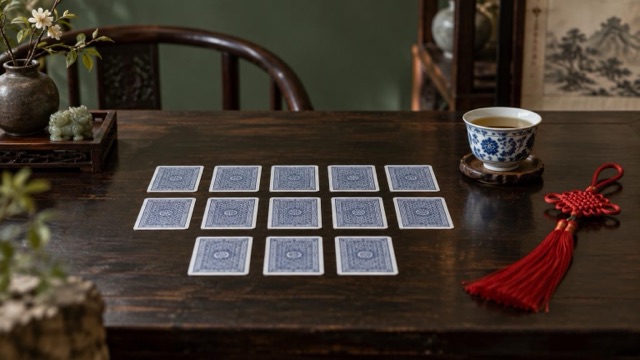
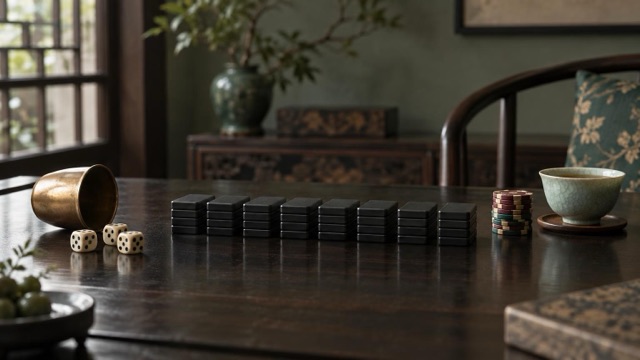
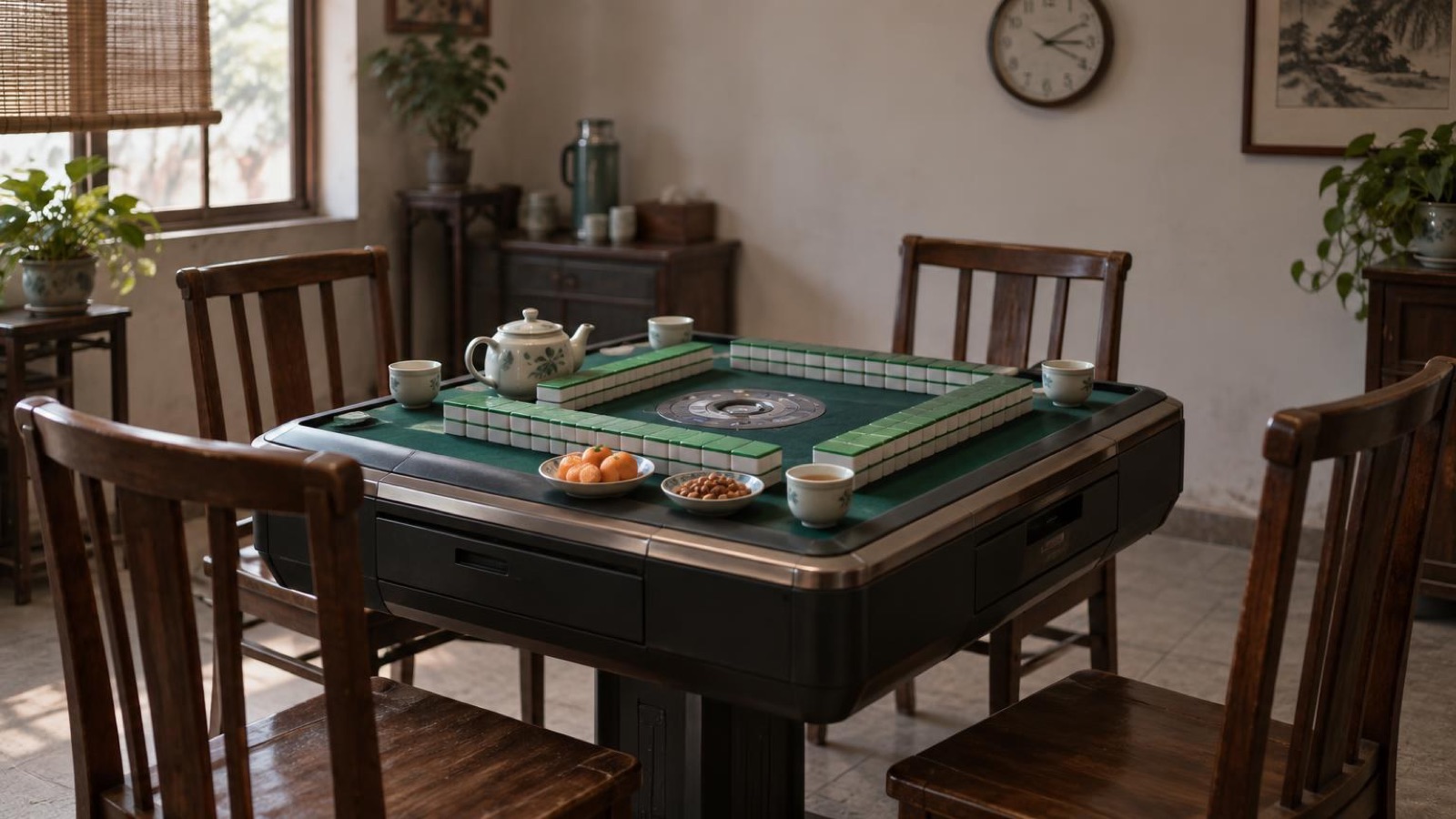
A qipai shi is exactly what the name says: a room for chess and cards. Across mainland China, these are ordinary neighborhood businesses, often tucked above a shop, beside a restaurant or in the back of a small bar. You rent a table, you get tea, and you settle in for an afternoon or an evening of mahjong or cards with friends. Some rooms also keep Chinese chess (xiangqi) sets for players who prefer the board to the deck.
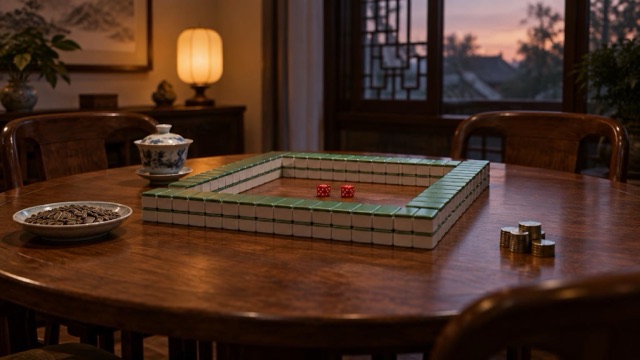
The scale varies enormously. At the small end, a room might have just one or two tables, with a couple of players occupying them on a quiet weekday5. At the larger end, dedicated mahjong parlors run rows of automated tables, machines that shuffle and stack the tiles at the push of a button, and charge players for using the room by the hour while selling drinks and food2. The most expensive parlors, which can charge up to US$150 per hour, provide food and a private air-conditioned room, so the price buys comfort and privacy rather than just a seat1.
The culture around these rooms is social rather than competitive. Long sessions, tea, cigarettes and conversation are the norm, and regulars often treat the same table and the same opponents as a weekly fixture. In one reported case from a card den in Jinshan District, the operator hired two sisters to cook three meals a day and prepare tea, water and betel nut for the players, which gives you a sense of how hospitable a well-run room can feel6. That particular venue was an unlicensed gambling den rather than a proper qipai shi, but it shows the standard of service that players in this world expect.
It helps to understand where these rooms sit in Chinese life. Gambling as such is illegal in mainland China7, and there are no casinos on the mainland in the way you would find in Macau or the Philippines, though a few licensed poker clubs operate in cities such as Beijing and Sanya7. The qipai shi exists in the space around that ban: it is a venue business, not a gambling business. Official guidance reflects this. A 2023 item from the China Peace website states that mahjong entertainment is not treated as gambling and is generally not punished when it is not run for profit, when stakes are small, or when the chess and card room only charges fixed venue and service fees3. In other words, the room sells time and tea, and what players do at the table is their own affair as long as nobody turns it into a racket.
That is the practical dividing line, and it is worth stating once, plainly: playing cards or mahjong at a qipai shi with small stakes among friends is treated as recreation; playing for serious money, or running a room that profits from the betting itself, crosses into illegal gambling, and Chinese citizens can face consequences even for gambling abroad or online8. For a fuller picture of the rules, see gambling laws in China. The rest of this page is about the rooms themselves.
What gets played at the tables
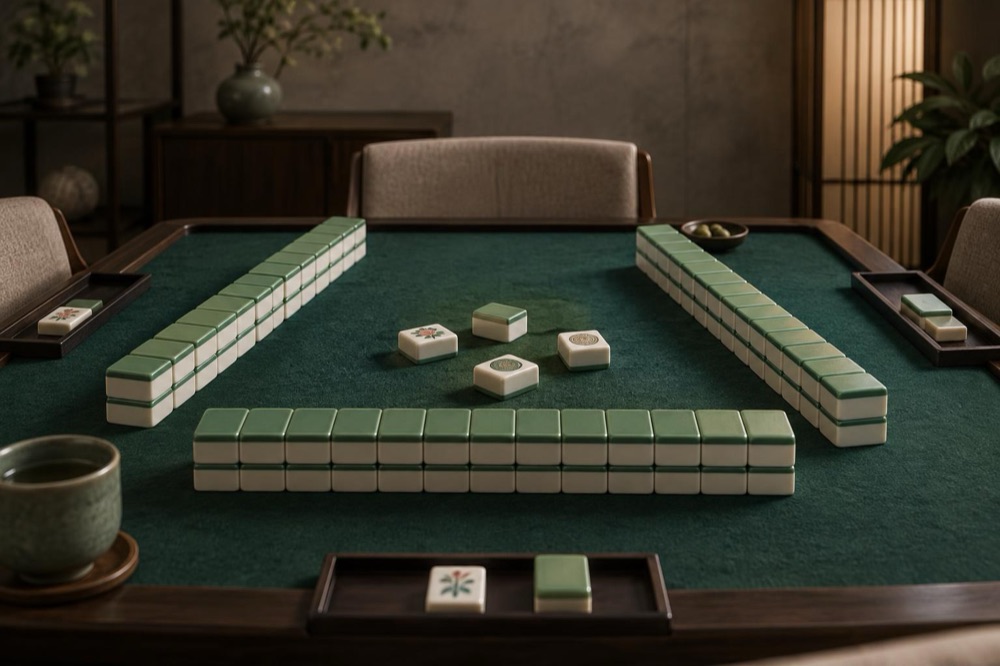
The single most common game is mahjong. In the standard Chinese form, each player draws 13 tiles, with the dealer starting with an extra 14th tile, and play proceeds by drawing and discarding until someone completes a winning hand1. If you have never played, the automated tables in the parlors make the mechanics easy: the machine shuffles and builds the walls for you, so all you have to do is draw, discard and call. Our mahjong in China page covers the rules and culture in more detail.
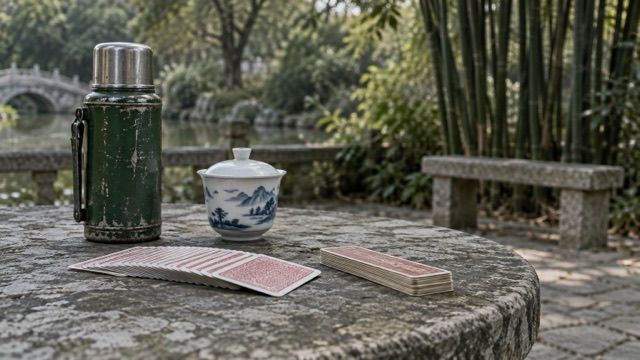
Among card games, the king is Dou Dizhu, or Fight the Landlord. It uses the full 54-card deck including both jokers, and is usually played by three people, though it can be adapted for four players using two decks. The landlord plays alone against the other two players, which is where the game's name and its asymmetry come from. Dou Dizhu is fast, loud and everywhere, from qipai shi tables to phone apps, and it is the game you are most likely to be invited into.
Chinese poker, or Shisan Zhang, is another table staple, played with two, three or four players. Each player is dealt 13 cards and arranges them into three separate poker hands: one three-card hand in front and two five-card hands behind9. Each row is worth one point, and a player who wins all three rows, or whose opponent fouls their hand by arranging it illegally, earns a scoop bonus of three points10. There is also an open-face variant in which 5 cards are dealt up front and placed into rows, then one card at a time until each player holds 1310. Our Chinese poker page walks through the scoring.
Older and more regional games appear too. Four Color Cards, or Si Se Pai, uses a deck of 7 card types bearing the same characters as in Chinese chess. You hold 20 cards and a winning hand has 21, and groups can run anywhere from 1 to 4 cards11. It is a game mostly for older players and mostly in the south, and it has its own page at four color cards. Depending on the region and the crowd, you may also find Big Two, Guandan, Pai Gow with dominoes, or pure Chinese chess at the corner table. A room's regulars decide its menu.
At the handful of licensed poker clubs in cities such as Beijing and Sanya, the game is Texas hold'em style poker played in a club format, and those venues are a different animal from the neighborhood qipai shi. We cover them under poker in China.
How a visit works
A visit to an ordinary qipai shi is informal. You typically arrive with your own group, since the room rents tables rather than filling them. You take a table, the staff bring tea, and you pay by the hour, either per table or per person depending on the house. In mahjong parlors the model is explicit: they charge players for using the room by the hour and make money on drinks and food as well2. Simple rooms keep the rate modest; the US$150-per-hour figure belongs to the luxury end, where a private air-conditioned room and cooked food come with the table1.
If you are playing poker rather than mahjong, some venues use a session fee model instead: a predetermined amount typically paid every 30 minutes12. That structure is common in club-style poker rooms elsewhere in Asia, and the licensed clubs in China work on a similar principle of charging for time rather than taking a cut of the pot, which is what keeps them on the right side of the line between a venue and a gambling house.
Sessions run long. A mahjong group that sits down after lunch may still be playing at midnight, and the game's slow, social pace is part of the point6. There is no national opening-hours rule for qipai shi; neighborhood rooms generally open from late morning and stay open as long as the tables are busy, which in practice often means late into the night.
Payment is in cash or mobile payment to the house for the table time and whatever you consume. What changes hands between players at the table is the players' own business, and this is where the small-stakes convention matters. The official position is that mahjong and card play is not punished when it is not for profit and stakes are small, or when the room charges only fixed fees3, so the social norm is modest per-hand or per-session settling among friends rather than anything that looks like organized betting.
At the licensed poker clubs, the process is more formal. Foreigners and Chinese are allowed to enter the legal poker clubs, which are few in China, and foreigners must provide a passport for registration. Payouts at those clubs are in points or tickets, not cash4. That point system is the mechanism that lets the clubs operate openly: you are paying for a competitive game, not gambling for money.
Who may take part
Anyone adult can walk into an ordinary qipai shi and rent a table, and in practice nobody checks documents at a neighborhood room. The formal age line that matters in this space is 18: Chinese regulation prohibits electronic gaming devices at entertainment and business venues from being open to juveniles under 1814. Rooms that stay on the recreational side of the line simply do not host minors.
For foreigners, the position is straightforward.
| Situation | What applies |
|---|---|
| At neighborhood rooms | You are just another customer |
| At the licensed poker clubs | You can play, but bring your passport, since registration is required4 |
| Involvement in actual illegal gambling | The consequences can be serious, including blacklisted status and a ban on entry for 10 years13 |
For Chinese citizens, the line to keep in mind is the cross-border one. Gambling abroad, online gambling and providing funds or technical support for gambling all violate Chinese law, and Chinese citizens taking part in cross-border gambling are treated as violating Chinese law even when the overseas casino is legally operated8. None of that touches an evening of small-stakes mahjong at the qipai shi down the street, which is precisely why those rooms are packed.
Practical tips for visitors
A few things will make a first visit smoother:
- Bring your own group. Rooms rent tables; they do not pair strangers. Round up three friends for mahjong or two for Dou Dizhu before you go.
- Expect to pay by the hour. Ask the rate when you sit down, and expect to pay separately for tea, drinks and food. In parlors, drinks and food are sold on top of the room charge2.
- Let the automated table do the work. If you have never used one, watch a regular for a minute. The machine builds the walls; you just play2.
- Keep small stakes small. The convention that protects everyone is modest settling between friends. Anything that looks like serious betting changes the character of the room and your position under the law3.
- Bring your passport to licensed poker clubs. Registration is required for foreigners, and remember that payouts there are in points or tickets, not cash4.
- Settle in for a long stay. Sessions run for hours, and the better rooms feed you. Plan for an afternoon or an evening, not a quick game6.
- Keep your things tidy. As at any game table, keep wallets, bags and personal items tucked away, and keep drinks in holders or away from the felt to avoid spills15.
- Learn one game before you go. Dou Dizhu is the easiest entry point: the rules can be picked up in a hand or two. Mahjong takes longer, and your table will happily teach you, but slowly.
- Follow the room's customs on smoking. Practice varies by city and venue; watch what the regulars do rather than assuming either way.
If you are curious about the wider picture, our pages on gambling in China, mahjong in China, Dou Dizhu and traditional Chinese card games cover the games and the culture in more depth, and gambling in China as a visitor answers the questions travelers ask most.
Common Questions
Are chess and card rooms legal in China?
The rooms themselves are legal businesses. Playing mahjong or cards there is treated as recreation, not gambling, as long as stakes stay small and the venue only charges fixed fees for the room and service. Playing for serious money is a different matter and is not protected.
What is the difference between a qipai shi and a mahjong parlor?
A qipai shi is a general chess and card room that may offer several games. A mahjong parlor specializes in mahjong, usually with automated tables, and charges by the hour while selling drinks and food.
Do I need to bring my own cards or mahjong tiles?
No. Rooms provide the equipment, and mahjong parlors typically have automated tables that shuffle and stack the tiles for you. You only need to bring yourself and any money for the hourly fee.
Can foreigners join a chess and card room?
Yes at ordinary neighborhood rooms, where nobody usually checks documents. At the few licensed poker clubs in cities like Beijing or Sanya, foreigners can play but must register with a passport, and payouts are in points or tickets rather than cash.
How much does a session typically cost?
Simple rooms charge a modest hourly rate per table or per person. At the top end, expensive mahjong parlors can charge up to US$150 an hour, and that price usually includes food and a private air-conditioned room.
What are the opening hours?
There is no single national schedule. Neighborhood rooms tend to open from late morning into the evening, and many stay busy late into the night, especially when regulars are mid-session. Hours vary by venue, so check locally.
Is smoking allowed in card rooms?
In practice many rooms tolerate smoking, since tea, cigarettes and long sessions go together in the culture. Rules differ from city to city and venue to venue, so expect a smoky atmosphere in some places and follow what the regulars do.
Sources15 sources
- Culture of Mahjong in China, China Educational Tours, accessed 2026
- Mahjong in China, WinMahjong, accessed 2026
- Chess and card rooms and mahjong entertainment not treated as gambling, China Peace, May 23, 2023
- Poker in China, Somuchpoker, accessed 2026
- Provably Fair casino group page, Stake, accessed 2026
- Four-color card gambling den report, Jinshan District, EBC News, September 16, 2013
- China gambling overview, Channel News Asia, March 21, 2024
- Cross-border gambling warning, National Immigration Administration, February 5, 2021
- 13-Card Chinese Poker rules, California Department of Justice, 2021
- Chinese poker terms, 888poker, December 6, 2018
- Si Se Pai rules, CMU, accessed 2026
- How to play poker: session fees, PlaySmart, accessed 2026
- China-friendly poker sites and restrictions, Somuchpoker, accessed 2026
- Regulation on electronic gaming devices, State Council, November 22, 2019
- Pai Gow Poker etiquette, PlaySmart, accessed 2026