What a visitor can actually do
If you are coming to mainland China and hoping to gamble, the honest answer is that your options are narrow but not zero. There are no casinos anywhere on the mainland, and there never have been under the current government5. The nearest thing to a casino experience is a trip to Macau, a special administrative region an hour by ferry from Hong Kong or a short flight from most major mainland cities, where dozens of licensed casino resorts operate legally1.
Inside the mainland itself, three things remain open to you:
- The state lottery. China runs two national lotteries, the Welfare Lottery and the Sports Lottery, with draws several times a week and tickets costing a few yuan. Anyone can buy, including foreigners, and prizes are paid in cash. See the China lottery for how it works.
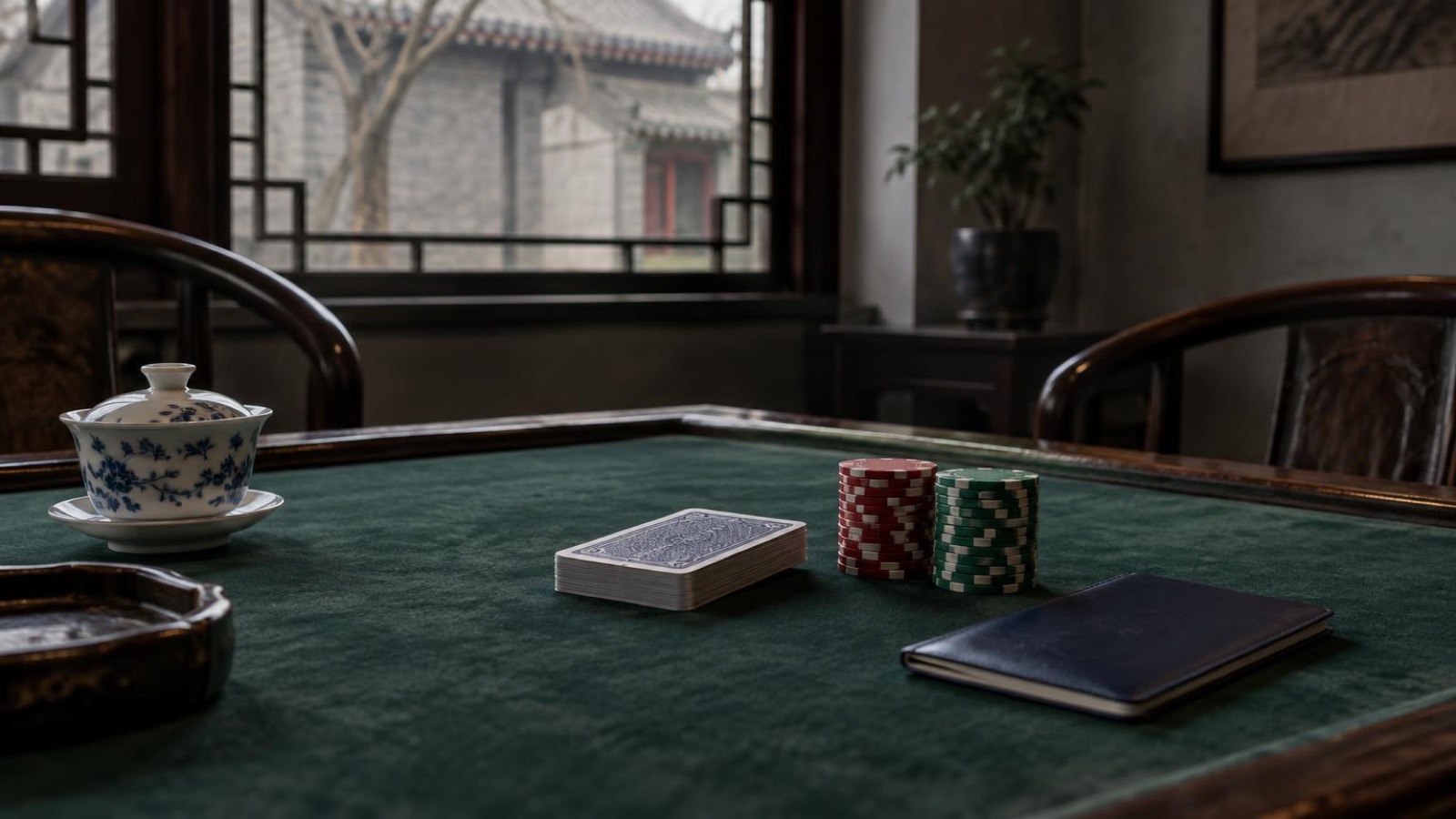
- Licensed poker clubs. A small number of legal clubs, in places like Beijing and Sanya, run poker games. Foreigners can play but must register with a passport, and payouts come as points or tickets rather than cash2.
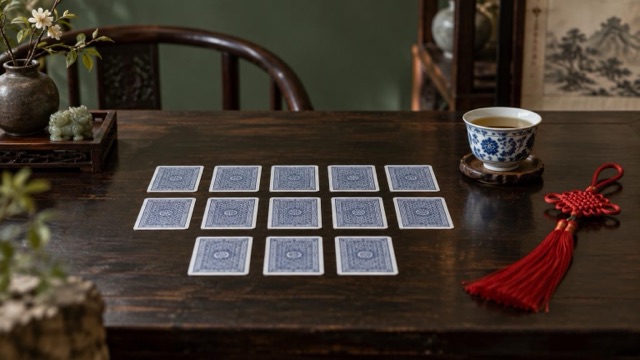
- Social games. Mahjong, dou dizhu, guandan and other card games are a huge part of everyday social life, played in homes, parks and dedicated chess and card rooms. Small-stakes play purely for fun is not treated as a crime7.
Beyond that, everything else you might associate with gambling, from sports betting apps to online casinos, is off the table. The sections below explain where each line is drawn and what it means for you in practice.
Gambling is illegal in China
Gambling has been outlawed on the Chinese mainland since the Communist Party took power in 19495. That ban has not softened with time. Gambling is strictly prohibited across the mainland today8, and the only exception within China's borders is Macau, where Chinese nationals and foreigners alike can bet in licensed casinos9.

For a visitor, the practical effect is simple: you will not find a casino, a betting shop or a legal online betting site anywhere on the mainland. Hotels do not have gaming floors. There are no slot machines in bars. The gambling economy that exists is entirely underground, and taking part in it carries real risk, which we cover below.
One nuance is worth knowing. Official guidance distinguishes between gambling as a criminal activity and small-scale play among friends. If you take part in a game where the money involved is very small and the purpose is only recreation or entertainment, it does not constitute a crime7. This is why you will see pensioners playing mahjong for coins in a park without any trouble, while an underground casino gets raided.
What the ban covers
The ban is broad. Chinese law covers all gambling-related activities, and the state has banned them comprehensively rather than regulating them10. In practice the prohibition reaches:
- Casino games of every kind, on the mainland. Baccarat, blackjack, roulette and anything else found in a casino has no legal venue outside Macau1.
- Sports betting, apart from the state sports lottery products. Private bookmakers, online or in person, are illegal11.
- Online gambling in all forms, which we treat in its own section below.
- Organizing or facilitating gambling. Providing a venue, acting as an agent for a betting operation, or supplying funds or technical support for gambling all break the law12.
The law also draws a line based on your role. Organizing gambling for profit, or making a living from gambling, is pursued under the Criminal Law13. Taking part in gambling with relatively large stakes, where the case does not rise to a criminal level, is still punished under the public security administration rules13. A friendly game with small stakes sits outside both categories7.
The state lottery
The one form of betting you can take part in openly, as a foreigner, is the state lottery. China runs two national lotteries, and both are sold at street-level kiosks across the country, recognizable by their red or blue signage. Tickets cost a few yuan, draws happen most days, and jackpots for the big games regularly run into hundreds of millions of yuan.
The main games include:
| Game | Draws and prizes | Guide |
|---|---|---|
| Double Color Ball (Shuang Se Qiu) | The most popular Welfare Lottery draw, with draws three times a week, every Tuesday, Thursday and Sunday, and a rolling jackpot | Double Color Ball |
| Super Lotto (Da Le Tou) | The Sports Lottery's flagship game, with comparable prizes | Super Lotto |
| 3D, Pailie 3 and Pailie 5 | Daily number games with fixed-structure prizes | 3D, Pailie 3 and Pailie 5 |
| Kuai 3 | A fast dice-based game | Kuai 3 |
| Scratch cards | Sold at the same kiosks | scratch cards in China |
There is no rule barring foreigners from buying tickets or claiming prizes. You buy at the counter, pick your numbers or take a quick pick, and keep the ticket. If you win, larger prizes are claimed at a lottery center with the ticket and identification, so carry your passport. Winnings above a threshold are subject to tax, covered in tax on gambling winnings in China.
One thing to be careful of: the only legal online channel is a small pilot of state sports lottery sales on Ministry of Finance approved websites3. Any other site claiming to sell Chinese lottery tickets online is operating illegally, and money you lose on it is not protected by law4.
Poker clubs
Poker occupies a strange corner of the Chinese landscape. Cash poker rooms and casino-style tournaments are not permitted2, but a small number of licensed clubs run poker games legally, and both foreigners and Chinese are allowed to enter them2.
What you will find:
- Locations. The best-known legal clubs are in Beijing and Sanya, on Hainan island. They are few in number, so do not expect one in every city2.
- Entry. Bring your passport. Foreigners must register with it to play2.
- How payouts work. Because cash gambling is not permitted, prizes are paid in points or tickets rather than cash2. You typically buy in, play a tournament or sit-and-go, and redeem what you win within the club's system.
The scene is small and quiet compared with Macau's poker rooms, but it exists, and it is the only legal way to play live poker on the mainland. For the wider picture, including how online poker fits in, see poker in China and online poker in China.
Online gambling is banned in China
Online gambling is banned outright in China14. This is not a gray area or a rule that is loosely enforced in practice. Authorities have warned the public that even small bets are illegal4, and official notices state plainly that online football betting is not entertainment but a clear illegal and criminal act11.

A few points worth understanding:
- The only exception is the state lottery pilot. Apart from websites permitted by the Ministry of Finance to sell and act as agents for the state sports lottery, everything else online is illegal3.
- Your money has no protection. Official guidance is blunt on this: money lost in online betting is not protected by law and cannot be recovered4. If a site takes your deposit and vanishes, there is no recourse.
- The ban applies to betting on anything, not just casino games. Online football betting, the most popular form, is singled out repeatedly in official warnings, with organizing, acting as an agent for, or participating in it all treated as criminal conduct4.
- Foreign sites are not a loophole. Major international operators have long accepted Chinese players, and the state's response has been to go after the money flows and the people involved rather than to tolerate it15. The scale of the problem is enormous, with one investigation tracing how illegal online gambling launders vast sums out of the country16.
For a visitor, the practical advice is straightforward: do not gamble online while you are in China, even on a site you use legally at home. The connection itself puts you on the wrong side of local rules, and the payment channels used to move money in and out are the same ones the authorities police hardest. More detail is in online gambling in China.
Rules for Chinese citizens: online and overseas gambling
The rules for Chinese nationals go further than the rules for you, and it helps to understand them if you have Chinese friends or colleagues.
Any form of gambling by Chinese citizens, including online gambling and gambling overseas, is illegal under Chinese law, even when the overseas casino is legally operated17. A recent amendment to the Penal Law has formally criminalized cross-border gambling, meaning even participation in a licensed casino abroad can entail criminal liability for a Chinese citizen19. The embassy-level messaging is consistent: Chinese citizens taking part in cross-border gambling are suspected of violating the laws of China18.
This is why, for example, the Chinese embassy in Singapore has publicly warned citizens against gambling there, and why state media has targeted operations that bring mainlanders to casinos9. It also explains the pressure on junket operators who organized trips for mainland gamblers, a business that has since collapsed9.
If a Chinese colleague declines an invitation to Macau or seems uneasy about even a lottery discussion, this is the background. For them, the border does not reset the rules.
Resident or visitor: which rules apply to you
Here is the short version of who is affected by what:
- Foreign visitors and expats inside mainland China: the ban on gambling applies to you while you are in the country. No casinos, no betting shops, no online gambling. The state lottery and licensed poker clubs are the legal options2.
- Chinese citizens: the ban follows them. Gambling overseas and online are both treated as violations even when done outside the country or on a licensed foreign site17.
- Everyone: Macau is the one place in China where casino gambling is legal, and it is open to mainlanders and foreigners alike1.
So the asymmetry is this: as a foreigner, your exposure is mostly territorial. Leave the mainland and the Chinese rules generally stop following you, subject to the laws of wherever you go. A Chinese national's exposure is personal, following them to Singapore, Manila or an online site registered anywhere18.
Why the ban reaches beyond China's borders
China's government treats cross-border gambling not as a private matter but as a problem of national security and capital flight, and it says so openly. Official statements describe cross-border gambling as a criminal offense strictly prohibited by Chinese law20, and public security organs have stated they will crack down severely on participating in cross-border gambling, whether committed inside or outside the border12.
The reasoning, as the authorities present it, is that cross-border gambling drains money out of the country, feeds underground payment networks, and is tied to organized crime. One investigation put the sums laundered through illegal online gambling at extraordinary scale16. The enforcement effort has reached along the routes Chinese gamblers travel, with crackdowns connected to crime networks operating along the Mekong and beyond14.
For you as a visitor, this matters in one main way: the infrastructure that once made gambling easy for mainlanders, the junkets, the agents, the payment channels, has been dismantled or driven underground8. Anything offered to you inside the mainland that looks like organized gambling is by definition illegal, and the people running it are taking bigger risks than you are.
What the law means for tourists
Put all of this together and the picture for a tourist is clear.
What you can do legally:
- Buy state lottery tickets at any kiosk, play, and claim prizes with your passport3.
- Play in a licensed poker club in Beijing or Sanya, registering with your passport, with prizes in points or tickets2.
- Play mahjong, cards or dice with friends for small stakes, purely for fun7.
- Take a trip to Macau and gamble in a licensed casino, the only place in China where that is legal1.
What counts as an offense: Under the Beijing Municipal Regulation on Prohibiting Gambling, providing conditions for gambling for profit, or participating in gambling with relatively large stakes where the conduct does not rise to criminal punishment, is dealt with under the Public Security Administration Punishments Law13.
- Gamble online on any site, including foreign sites you use at home14.
- Accept an invitation to an underground casino or a private betting operation. Organizing gambling for profit is a criminal matter, and taking part with large stakes is punishable too13.
One thing not to assume: money lost to illegal betting can be recovered. It cannot4.
The practical risk in one sentence: a tourist caught in an illegal gambling venue faces detention, fines and a very unpleasant experience with the local police, and consular help will not make the case go away.
If you want the casino experience, Macau is close, legal and set up for visitors, with resorts like Galaxy Macau, City of Dreams and MGM Cotai an hour from Hong Kong. If you want a flutter without leaving the mainland, buy a lottery ticket, sit down at a mahjong table, and enjoy the games China actually plays.
Common Questions
Is gambling legal in China for tourists?
No. Gambling is illegal across mainland China for everyone, including visitors. Tourists who want a casino usually go to Macau, the only place in China where casino gambling is legal.
Are there any casinos in mainland China?
No. There are no casinos in mainland China. Macau, a special administrative region, is the only place in China where casino gambling is legal, and it is easy to reach from the mainland.
Can Chinese citizens gamble online?
No. Online gambling is banned in China, and even small bets are treated as illegal. Money lost to online betting sites is not protected by law and cannot be recovered.
Can Chinese citizens gamble at casinos overseas?
Chinese law treats gambling by Chinese citizens abroad as illegal even when the casino itself is licensed. Cross-border gambling has been formally criminalized, so citizens risk legal trouble at home.
Is online gambling banned in China?
Yes. All online gambling is banned, apart from a small pilot of state lottery sales run on approved websites. Everything else, including online sports betting, is illegal.
Do the gambling rules differ for visitors and residents?
The ban on gambling applies to everyone in mainland China. The main difference is that Chinese citizens face consequences for gambling overseas or online, while foreign visitors are mainly affected while inside the country.
What counts as illegal gambling under Chinese law?
Organizing gambling for profit, gambling for a living, and taking part in games with relatively large stakes are all covered. Small-stakes play purely for fun among friends is generally not treated as a crime.
Sources20 sources
- China gambling overseas warning, Channel NewsAsia, 2024-03-21
- Poker in China, SoMuchPoker, 2026-08-20
- Internet lottery sales rules, Xinhua, 2018-01-16
- Online football betting warning, official news, 2026-08-18
- China's secret gambling problem, The Telegraph, 2010-01-09
- Covid closedown: Macau casinos take billion-dollar hit, Reuters, 2022-07-14
- Legal Q&A on gambling, National People's Congress, 2002-04-19
- Licensed arm of Suncity Group announces closure, Macau Business, 2021-12-11
- Chinese state media target Macau's Suncity, Reuters, 2019-07
- Gambling in China: socio-historical evolution and current challenges, research paper, 2014
- Online football betting is a crime, Xinhua, 2026-07-16
- Public security crackdown on cross-border gambling, Ministry of Public Security, 2020-10-01
- Beijing Municipal Regulation on Prohibiting Gambling, Beijing Municipal Government, 2026-09-25
- Even small bets are illegal, ECNS, 2026-07-20
- Bet365 profit and China online gambling, The Guardian, 2014-10-03
- How illegal online gambling launders money from China, Caixin Global, 2020-12-21
- Chinese embassy statement on gambling by citizens, Chinese Embassy in the Philippines, 2019-08-08
- Chinese embassy in Singapore gambling warning, Must Share News, 2024-03-19
- China expands its strategy to curb cross-border gambling, GambleSector, 2026-02-20
- Cross-border gambling warning, Chifeng Public Security Bureau, 2026-02-06