
Where you can top up
The UMACA card is a dedicated IC card for buying betting tickets. You charge it in advance, then use it at the terminals instead of handling cash each time. The JRA describes it as a cashless IC card that lets holders buy race tickets conveniently at cashless terminals1.
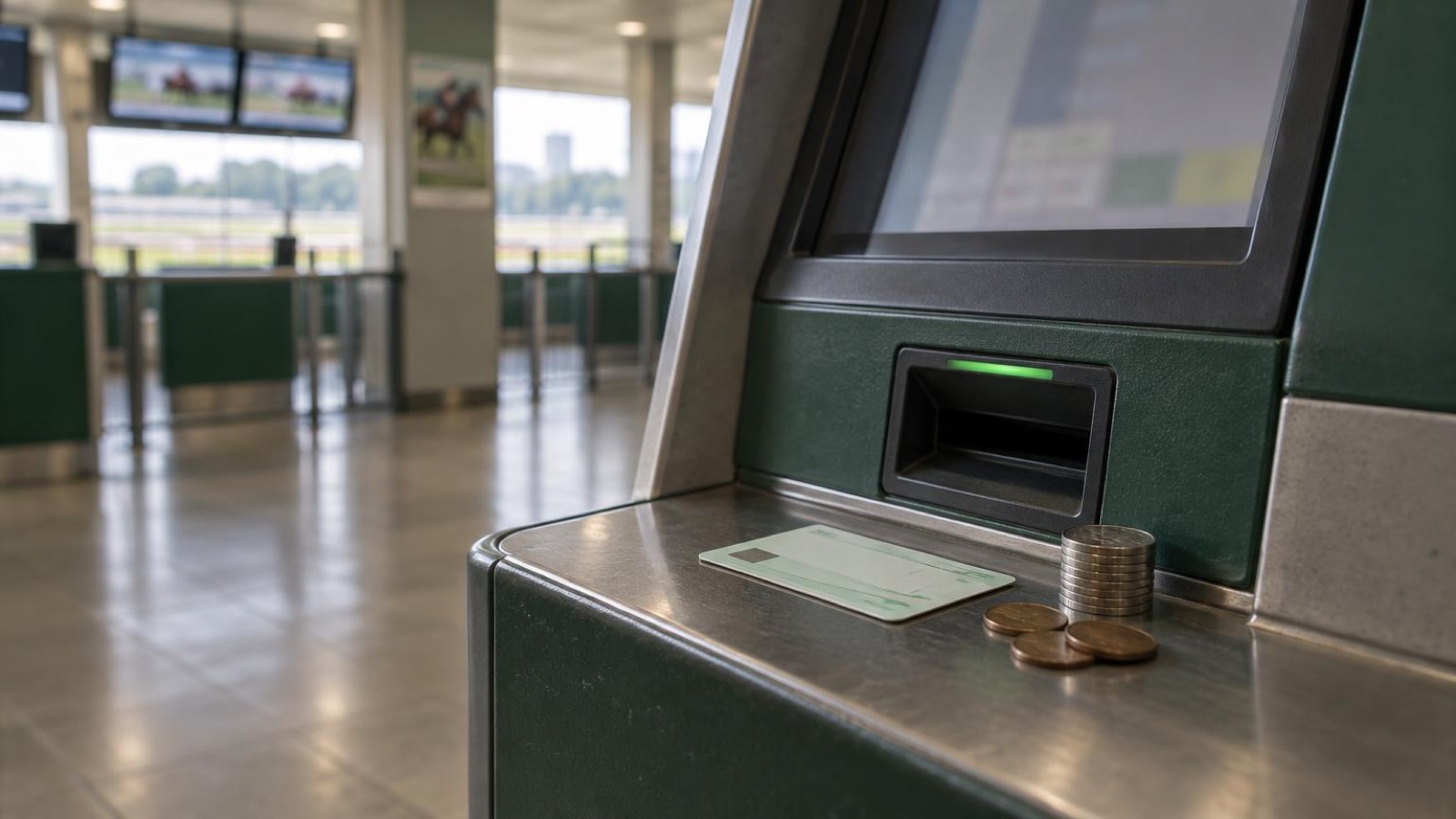
You can top up at the UMACA transaction machine. That machine does more than take your money: it also lets you check your betting content for the day and handle charging of betting funds, which once loaded cannot be withdrawn1. So if you want to see what you have already bet before adding funds, the same machine covers both.
Where do these machines live? At the 10 JRA racecourses and at the off-track betting facilities around the country3. The JRA runs a nationwide network of 10 racecourses and 38 off-course betting facilities called WINS4. At WINS and Excel venues, you can buy betting tickets at the automatic machines at the venue5.
One practical point about timing. UMACA transactions are possible on days when JRA races are held2. If you turn up on a quiet day with no racing, do not expect the machine to be live. Before you travel, it is worth checking the business information page for each facility's operating status, since JRA publishes that for racecourses and WINS facilities3.
If you are visiting a WINS floor for the first time, entrance is free6. You walk in, find the UMACA machine or the betting terminals, and you are set. Some venues sell optional paid seating. WINS Asakusa, for example, has Basement Floor 2 with 315 seats at 1,500 yen7. That is a seat, not an entry fee, and you do not need it to bet.
What a UMACA card lets you bet on
The card is not limited to plain win tickets. With a UMACA terminal you can buy JRA horse racing tickets, WIN5 and overseas horse racing1. That last part matters if you follow international racing: overseas races can be bought with UMACA terminals alongside JRA and WIN5 products1.
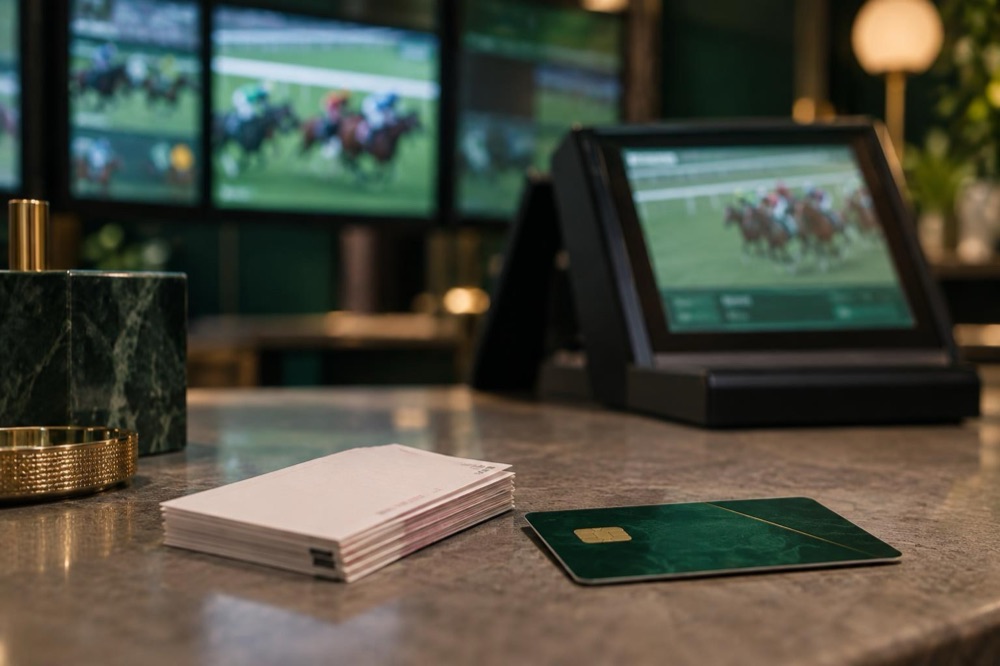
The terminals themselves support several ways of marking your bet. On UMACA machines you can use mark card voting, smartphone voting and touch panel voting1. So you are not locked into one method. If you prefer to fill in a mark card by hand, you can. If you would rather build the bet on a touch panel, that works too.
If you use the smartphone route, the setup is straightforward. If you have a balance in your UMACA, you can purchase betting tickets easily using your smartphone2. You can also earn UMACA Points as you go2.
Registration is simple and cheap. UMACA is a dedicated IC card for buying betting tickets, and you can register the same day with ID only, with no registration or annual fee8. There is no ongoing cost to hold the card.
One thing to understand before you charge it. Money charged onto the UMACA becomes operating funds and cannot be withdrawn1. The balance is managed as betting-use funds and cannot be paid out9. In plain terms: once you top up, you cannot withdraw the cash you put in2. You spend it on bets, or it sits there. Withdrawals, where they are possible at all, happen at the deposit and withdrawal machine via smartphone login and palm vein authentication, not by PIN alone8. So treat a top-up as money you intend to bet, not money you are parking.
Bet types sold in races with 8 or fewer runners
Small fields change what is on offer. The frame quinella, wakuren, is sold from 9 or more runners and is not sold for overseas racing10. So in a race with 8 or fewer runners, wakuren is off the board. Nothing replaces it. You simply choose a different bet type.
What can you buy instead? The regular voting card at local racing covers eight bet types: win, place, frame quinella, wide, quinella, exacta, trio and trifecta11. The frame quinella in that list is the exception: it needs 9 or more runners, so in a small field the other seven horse-based bets remain available but wakuren is off the board11.
If you want a quick primer on how those bets differ, the horse racing bet types page walks through win, place, quinella, trifecta and the multi-race options. For the two-horse combinations specifically, quinella and quinella place explains how wide and quinella pay out. And if you are weighing an exacta against a quinella in a small field, exacta vs quinella covers the difference between picking in order and picking in any order.
A single card can hold more than one bet. One voting card lets you buy up to four selections each of two bet types for the same race12. So you could, for example, put four win selections and four place selections for one race on the same card. That is useful in a small field where you want to spread across a few runners without filling out multiple cards.
Minimum runners for each bet type
Different bets need different field sizes. Here is how the main ones line up.
| Bet type | Minimum runners | Notes |
|---|---|---|
| Win | 4 | Not offered with fewer than 4 starters13 |
| Place | 2 planned runners | Pays to 2nd with 5 to 7 runners, to 3rd with 8 or more14 |
| Frame quinella (wakuren) | 9 | Not sold for overseas racing10 |
The place bet rule is worth reading twice because the payout depth changes with the field. Place bets are sold when there are 2 or more planned runners, with payout to 2nd place for 5 to 7 runners and to 3rd place for 8 or more runners14. A parallel rulebook puts it the same way: bookmakers pay on 3 placed horses when there are 8 or more starters and on 2 placed horses when there are 4 and fewer than 8 starters15.
So in a five-horse race, a place bet pays if your horse finishes first or second. In an eight-horse race, it pays if your horse finishes first, second or third. That is a meaningful difference when you are deciding what to back.
For win bets, the floor is four. Win betting will not be offered for a race with fewer than four starters13. The same source applies the same threshold to place betting13, though the JRA's own rulebook frames place sales around planned runners and payout depth14. Either way, a field of three or fewer is not a normal betting race for these purposes.
If you want the full picture across the region, win and place bets covers how many places pay in different jurisdictions, and minimum bets looks at stake floors. For the three-horse bets, trifecta and trio bets explains how those are structured.
Fees at JRA venues and WINS/Excel floors
There is no charge to top up your UMACA card beyond the amount you deposit. The minimum deposit is JPY 100, in units of JPY 101. So the smallest charge you can make is JPY 100, and you add in JPY 10 steps from there.
At the racecourse itself, you buy an entrance ticket at the gate16. That is the admission cost for the day, separate from anything you put on the card. Once inside, payoffs are handled by automated machines located inside the racecourse, or at WINS16. You do not need to find a clerk.
At WINS and Excel venues, entrance is free6. You can buy betting tickets at the automatic machines at the venue5. So a WINS trip costs you nothing to walk in, and you only spend what you choose to charge onto your card.
The one optional cost is paid seating. WINS Asakusa has Basement Floor 2 with 315 seats at 1,500 yen7. If you want a reserved spot for the day, that is the price. If you are happy standing or using the general area, you pay nothing extra.
Racing programs are free. You can get the racing programs, which include information on all runners for that day, at the information desk12. So your only real outlay is the card balance and, at a racecourse, the gate ticket.
How a top-up works, step by step
Here is the sequence on the day.
- Get your UMACA card. If you do not have one, register on the day with ID only. There is no registration fee and no annual fee8.
- Find the UMACA transaction machine. It handles charging of betting funds, which once loaded cannot be withdrawn, and lets you check your betting content for the day1.
- Charge the card. The minimum is JPY 100, in JPY 10 units1. Remember the money becomes betting funds and cannot be withdrawn1.
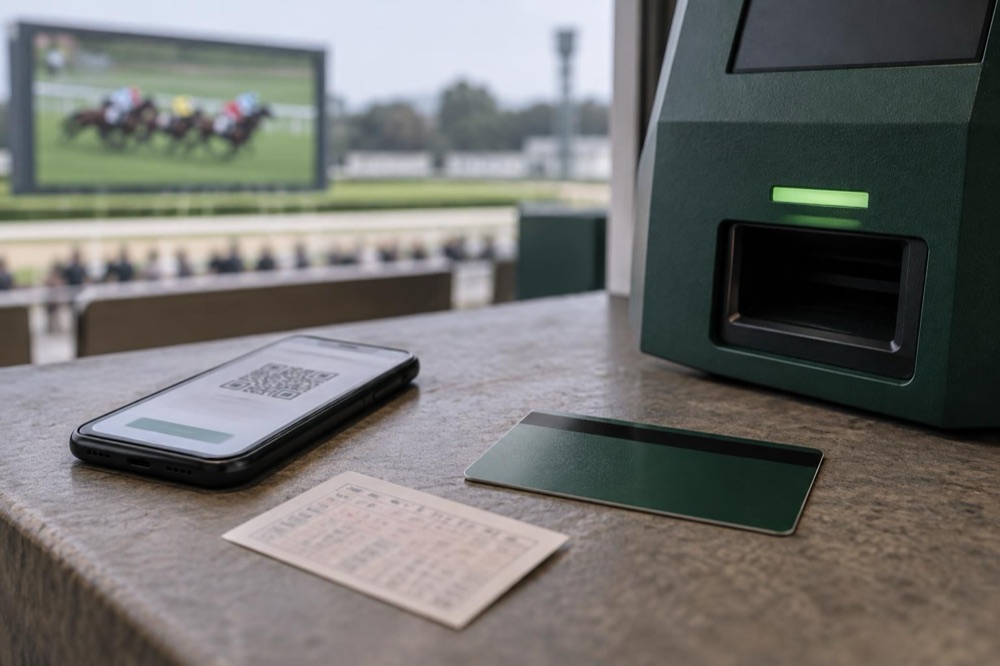
- Go to a betting terminal. You can use mark card voting, smartphone voting or touch panel voting on UMACA machines1.
- Place your bets. You can buy JRA tickets, WIN5 and overseas race tickets1. A single card can carry up to four selections each of two bet types for the same race12.
- Watch the race and collect. Payoffs are handled by automated machines inside the racecourse or at WINS16.
A note on timing. You can purchase tickets up until two minutes prior to post time, when the bell rings signaling the end of sales for that race12. So do not leave your top-up until the last moment. Charge the card well before the race you want, then place your bets with time to spare.
If you are using the smartphone route, the JRA publishes a short guide on using the UMACA machine with SMAPPY QR, which runs to 2 pages17. It is worth a look before your first visit if you plan to bet by phone rather than by card.
What to bring and what to expect
Bring photo ID for same-day registration8. That is the only document you need to get started, and there is no fee attached.
Bring cash to charge the card, or be ready to use the machine's accepted methods. Betting tickets can be paid for by cash, UMACA, mark card, smartphone voting, SPAT4 or A-PAT depending on the channel18. At the terminal, you can insert money or hold up your UMACA card, then purchase betting tickets19.
Expect a cashless flow once you are set up. The point of the card is that you charge once and then bet without handling coins and notes at every window. The trade-off is that the balance is one-way: it goes onto the card as betting funds and does not come back out as cash1.
If you are new to Japanese racing altogether, the JRA vs NAR local racing page explains the difference between the two systems, since UMACA is a JRA product and local racing runs its own arrangements. For the five-race jackpot, WIN5 explained covers how that bet works, and racing jackpots and carryovers looks at how the pools build. If you want to bet on overseas races from a WINS floor, overseas racing bets at WINS covers what is available.
One last practical check. JRA publishes the operating status of each racecourse and WINS facility, so confirm your venue is open before you travel3. Racing days run 12 races6, held at two or sometimes three racecourses, with at least one from the eastern region and one from the western region12. Plan around a day that suits your location.
Common Questions
How many JRA racecourses are there in Japan?
There are 10 JRA racecourses, running from Hokkaido in the north to Kyushu in the south. On a typical racing day, races are held at two or sometimes three of them, with at least one in the eastern region and one in the western region.
What is the 5-race win single bet?
It is WIN5. You pick the winner of all five races designated by the JRA on that day. Get all five right and you share the pool. It is a single bet covering five separate races rather than one race.
What replaced wakuren in races with 8 or fewer runners?
Nothing replaces it. The frame quinella, wakuren, is only sold when there are 9 or more runners. In a race with 8 or fewer runners it is simply not offered, so you pick a different bet type such as win, place or a horse-based combination.
How many runners are needed for place bets to be sold?
Place bets are sold when there are 2 or more planned runners. With 5 to 7 runners the payout covers second place, and with 8 or more runners it covers third place as well.
Are there extra fees for using WINS or Excel floors?
No. Entrance to WINS is free, and you can buy betting tickets at the automatic machines inside. Some WINS venues do have paid seating, such as WINS Asakusa's Basement Floor 2 with 315 seats at 1,500 yen, but that is optional.
When did JRA announce expanded race sales?
The JRA has been widening where and how tickets can be bought, including cashless terminals and smartphone voting. Betting tickets can be purchased at the 10 racecourses and the off-track betting facilities around the country, up until two minutes before post time.
Sources19 sources
- JRA-UMACA, Japan Racing Association
- How to Use UMACA, Japan Racing Association
- Beginners Guide, Japan Racing Association
- JRA Guidebook 2026, Japan Racing Association
- How to Buy Betting Tickets, Japan Racing Association
- Go Racing, Japan Racing Association
- Go Racing Guide, Japan Racing Association
- Beginners Book 2026, Japan Racing Association
- Glossary: UMACA Balance, Japan Racing Association
- A-PAT Instructions, Japan Racing Association
- How to Bet, Japan Racing Association
- Racing FAQ, Japan Racing Association
- Singapore Pools Horse Race Betting Game Rules, Singapore Pools
- Ticket Rules, Nagoya Keiba
- HRC Bookmakers Betting Rules, Hydraces
- Going Racing, Japan Racing Association
- Betting Guide, Japan Racing Association
- Beginners Book, Japan Racing Association
- How to Use SMAPPY, Japan Racing Association















