
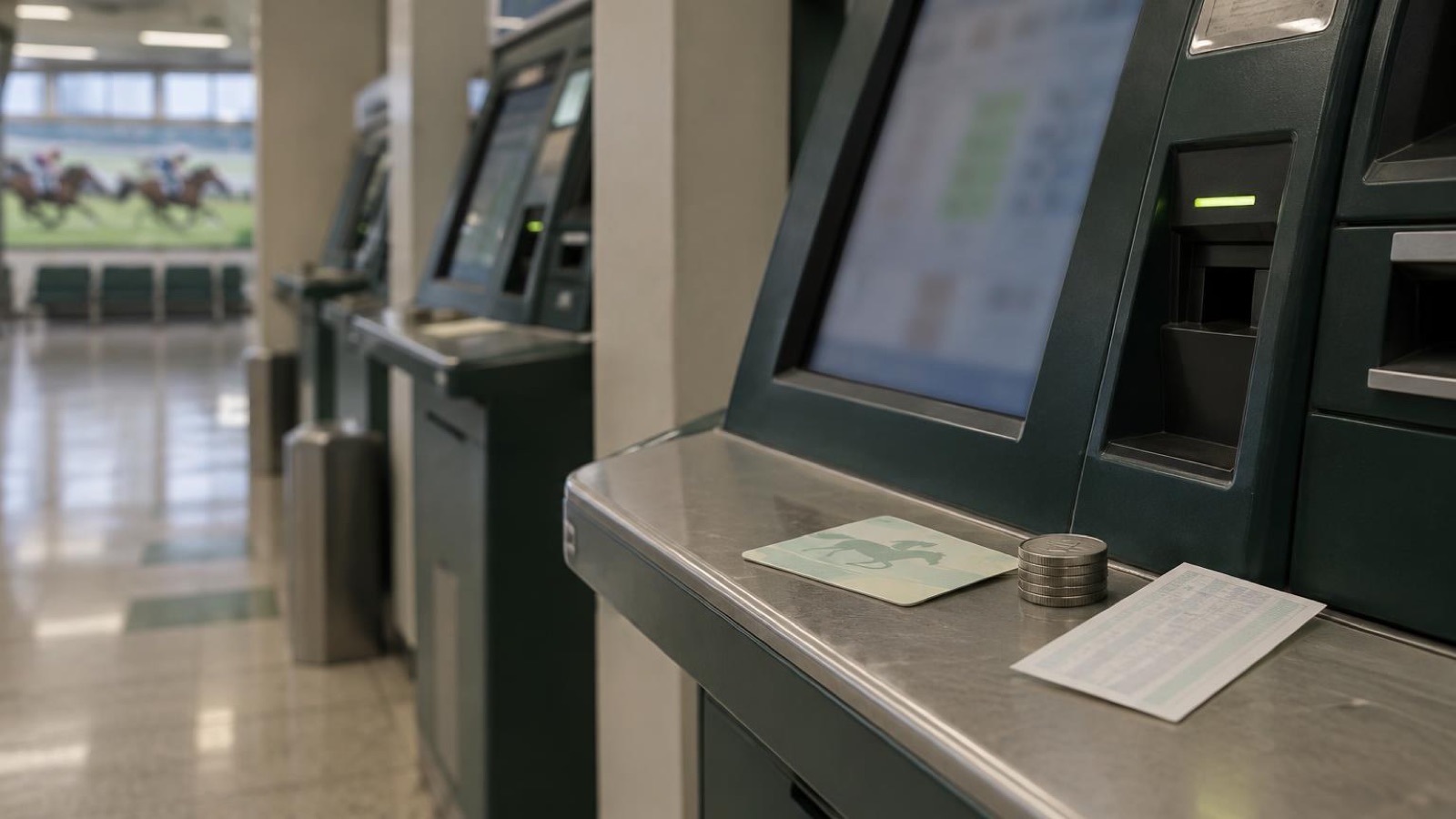
What WINS is and where the JRA runs its off-course betting floors
WINS is the Japan Racing Association's network of off-course betting facilities. These are standalone betting floors in cities around the country, not racecourses, and they exist so you can bet on JRA races without traveling to a track. JRA describes its network as 10 racecourses plus 38 off-course betting facilities called WINS6. Another JRA count puts the WINS total at 37, with the 10 racecourses that are not hosting a meeting that day also functioning as off-course betting facilities6. Either way, the practical point is the same: there is a WINS floor within reach of most major cities, and on a race day it is busy.
The floors are open to anyone who walks in. Entrance to WINS is free7. You do not need a membership, a reservation or a Japanese address to go through the door. What you do need is a way to pay, and the simplest route for a first visit is cash at the automatic betting machines.
Inside, the layout is straightforward. The floor offers:
- Betting terminals
- Screens showing the races
- Payoff machines for collecting winnings
- Usually a seating area
If you have a winning ticket, you take it to the payoff machine inside the racecourse or WINS floor, and the machine handles the payout8. You do not queue at a counter unless something has gone wrong with the ticket.
One thing to check before you travel: JRA asks visitors to check the business information page for each facility's operating status, because individual racecourses and WINS floors can be closed or running reduced hours9. A quick look the day before saves a wasted trip.
Betting overseas races at WINS: what is sold
This is the part most visitors come for. WINS floors do not only sell Japanese racing. Designated overseas races are simulcast into the JRA pools, and you can bet them at the same machines you use for domestic races.
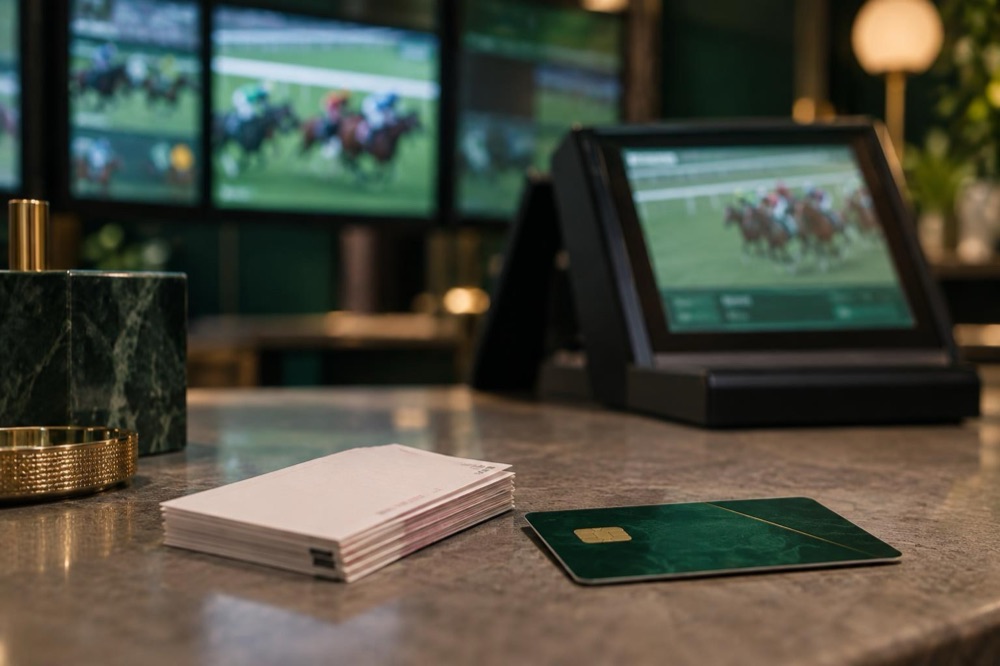
The clearest example is France. On designated simulcast races from France, Win and Place bets are outbound commingled into the pools operated by Pari Mutuel Urbain, under PMU's modified betting rules10. In plain terms, your money goes into the same pool as the French punters' money, and the odds you see are the odds the whole pool produces. That is a good thing for a bettor: a bigger pool means a more stable price, and you are not betting into a thin local book.
The same principle applies to other commingled simulcast product. If you want the wider picture of how these pools work across the region, see commingled pools and simulcast betting.
Overseas racing is also available through the UMACA card system. JRA horse racing tickets, WIN5 and overseas horse racing can all be bought using UMACA terminals4. So if you have a UMACA card, you can move between Japanese races, the five-race jackpot and overseas cards without changing machines.
A practical note on what "overseas" means at the window. Not every foreign race is sold. JRA designates which simulcast races go on sale, and the list changes through the year. The races that are sold are the ones shown on the day's betting screens and printed on the race card. If a race is not on the board, it is not on sale, however famous it is.
Bet types and minimum runner rules
The bet types at WINS are the standard JRA menu. You can read the full breakdown in horse racing bet types, but the short version is that you can back a horse to win, to place, or combine horses in quinella, exacta, trifecta and wider combinations.
Two rules trip up first-timers, and both are about field size.
The first is bracket quinella, known as wakuren. It is sold only when the number of horses entered is 9 or more5. You pick the bracket numbers of the first and second place horses, and there are brackets 1 to 811. If a race has 8 or fewer runners, wakuren is not offered at all. Nothing replaces it. You simply choose from the other bet types on the card. This is worth knowing because a small field can look like a gap in the menu when it is really just the rule working as intended.
The second is place betting in small fields. At Hokkaido Racing, mobile betting is sold once there are two or more runners in a race from the start of sales12. That tells you the floor: two runners is enough for the basic win and place product to go on sale. Combination bets that need more finishers can be restricted when the field is thin, and if a race is reduced below the threshold, affected bets are refunded rather than settled. If you want the detail on how that plays out, see scratched horses and refunds.
For the minimum and maximum stakes across the region, including how JRA compares with its neighbors, minimum bets in horse racing covers it.
Fees at WINS and Excel floors
Entry is free, and that is the headline. You pay nothing to walk in, use the machines or watch the races on the screens7.
What costs money is seating, and only if you want it. The paid seating prices vary by venue and by how good the view is:
| Venue | Paid seating | Price |
|---|---|---|
| WINS Nagoya (Fuefuki, Yamanashi) | 137 seats | 1,000 yen |
| WINS Nagoya (Fuefuki, Yamanashi) | 35 seats, Senior Zone for visitors 65 and up | 500 yen |
| WINS Kinshicho | West Building, 312 seats | 1,000 yen |
| WINS Yokohama | 6th and 7th floors, 251 seats | 1,500 yen |
| WINS Yokohama | 2nd to 5th floors, 1,138 seats | 500 yen |
Those figures come from JRA's own facility guide1. The pattern is simple: the higher the floor and the better the view, the more you pay. The Senior Zone at WINS Nagoya is reserved for visitors aged 65 and up1.
If you are happy standing or using the free seating areas, your only cost is your bets. That makes WINS a cheap afternoon out even if you are betting small.
JRA racecourses and WINS locations in Japan
JRA racing runs on 10 racecourses, spread from Hokkaido in the north to Kyushu in the south1. A race day at a JRA track has 12 races on the card7. That is a full afternoon, and it is the same card you can bet at a WINS floor.
The off-course network reaches well beyond the 10 tracks. JRA has 37 WINS facilities nationwide, and the racecourses not hosting a meeting that day also open as off-course betting floors6. So on any given race day there are far more places to bet than there are meetings.
Some venues blur the line between the two systems. Himeji Racecourse sells JRA races as WINS Himeji13. That means a local racing venue is acting as a JRA off-course betting floor, which is handy if you are in that part of Hyogo.
The J-PLACE arrangement extends JRA betting into local racing facilities. From March 2013, JRA betting began being sold at local racing venues using the joint totalisator system15. Sales at Hokkaido venues opened on March 23, 201316. J-PLACE Saga, for example, sells all JRA races from all venues17.
One practical wrinkle with J-PLACE tickets: tickets sold at J-PLACE are refunded at JRA main offices, including Ebisu and WINS, and at some local WINS venues12. So if you buy at a J-PLACE counter and win, check where you can actually collect before you leave.
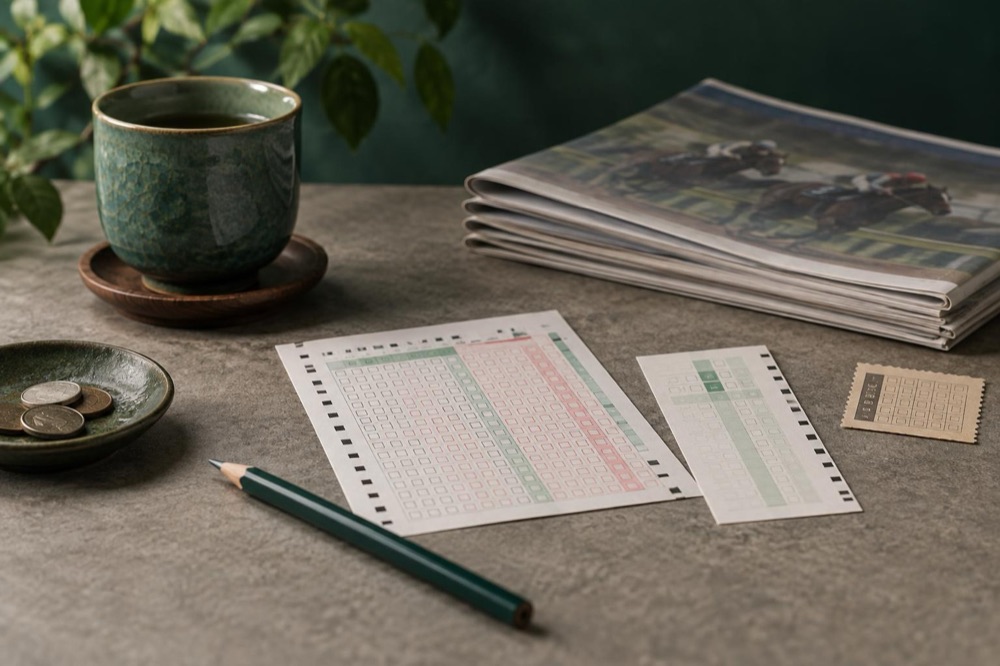
At JRA racecourses, information counters offer free English race programs, a "How To Bet" guide and a booklet translating the mark card into English18. If your Japanese is limited, start there. It is free and it explains the ticket layout before you put money down.
Advance sales and the J-PLACE Kanazawa betting cutoff
Two things are worth knowing if you are planning a trip around the racing calendar.
The first is advance sales. JRA holds advance sales the day before for G1, G2 and G3 races19. If you want to bet a big race without queuing on the day, you can do it the day before. That is useful at busy meetings where the machines are crowded.
For the wider picture of how JRA and local racing differ, including which one you are actually betting at a given venue, see JRA vs NAR local racing.
A last practical point on timing. At J-PLACE Kanazawa, the JRA betting cutoff is 2 minutes before the race start19. That is the standard pattern: sales close shortly before the off, and if you are still in the queue when the window shuts, the bet does not go on. Give yourself a few minutes, especially on a big race day.
Common Questions
How many JRA racecourses are there in Japan?
There are 10 JRA racecourses, running from Hokkaido in the north to Kyushu in the south. On days when a racecourse is not hosting a meeting, it works as an off-course betting facility, so you can still go and bet there.
When did JRA announce expanded race sales?
JRA began selling its races at local racing venues under the J-PLACE arrangement from March 2013. Sales at Hokkaido venues opened on March 23, 2013, letting local tracks take bets on JRA races through the joint totalisator system.
What replaced wakuren in races with 8 or fewer runners?
Nothing replaces it. Bracket quinella (wakuren) is only sold when 9 or more horses start, using brackets 1 to 8. If a race has 8 or fewer runners, wakuren simply is not offered, and you pick from the other bet types on the card.
How many runners are needed for place bets to be sold?
At Hokkaido Racing, mobile betting is sold once a race has two or more runners from the start of sales. In practice, small fields still get win and place betting, but combination bets that need more finishers can be restricted or refunded.
What is the five-race win single bet?
It is WIN5. You pick the winner of all five races JRA designates, and the bet only pays if all five selections win. The designated races include the highest-odds race at final odds declaration time plus the four races before it.
Are WINS floor usage fees charged?
No. Entrance to WINS is free. You only pay if you choose a paid seating area, and those seats cost extra, for example 500 yen or 1,000 yen depending on the venue and floor.
When is the first restructured JRA racing card scheduled?
The first restructured JRA card is planned for November 30, 2026, at Tokyo. It combines five races canceled by February 2026 snow with reorganized races, run as the ninth day of the fifth Tokyo meeting.
Sources19 sources
- Go Racing Guide (full PDF), Japan Racing Association, 2026
- How to Buy Betting Tickets, Japan Racing Association, 2026
- JRA Racing FAQ, Japan Racing Association, 2026
- Cashless Betting and UMACA, Japan Racing Association, 2026
- JRA Glossary: WIN5, Japan Racing Association, 2026
- JRA Guidebook 2026, Japan Racing Association, 2026
- Go Racing Guide Index, Japan Racing Association, 2026
- Go Racing Guide, Japan Racing Association, 2026
- JRA Beginner Guide, Japan Racing Association, 2026
- HKJC Simulcast Betting Help: Rebate and Commingling Rules, Hong Kong Jockey Club, 2024
- Beginner's Book 2026, Japan Racing Association, 2026
- Hokkaido Racing Betting and Payout Rules, Hokkaido Racing, 2026
- Sonoda and Himeji Racecourse Schedule, September 2026, Hyogo Racing, 2026
- Sonoda and Himeji Racecourse Schedule, October 2026, Hyogo Racing, 2026
- J-PLACE Sales System Filing, National Association of Racing, 2013
- JRA News: Hokkaido Venue Sales Opening, Japan Racing Association, 2013
- JRA News: J-PLACE Saga Opening, Japan Racing Association, 2016
- JRA Information for Chinese-Speaking Visitors, Japan Racing Association, 2016
- J-PLACE Kanazawa Betting Guide, Kanazawa Keiba, 2026















