What boat racing and keirin are and where visitors can watch them
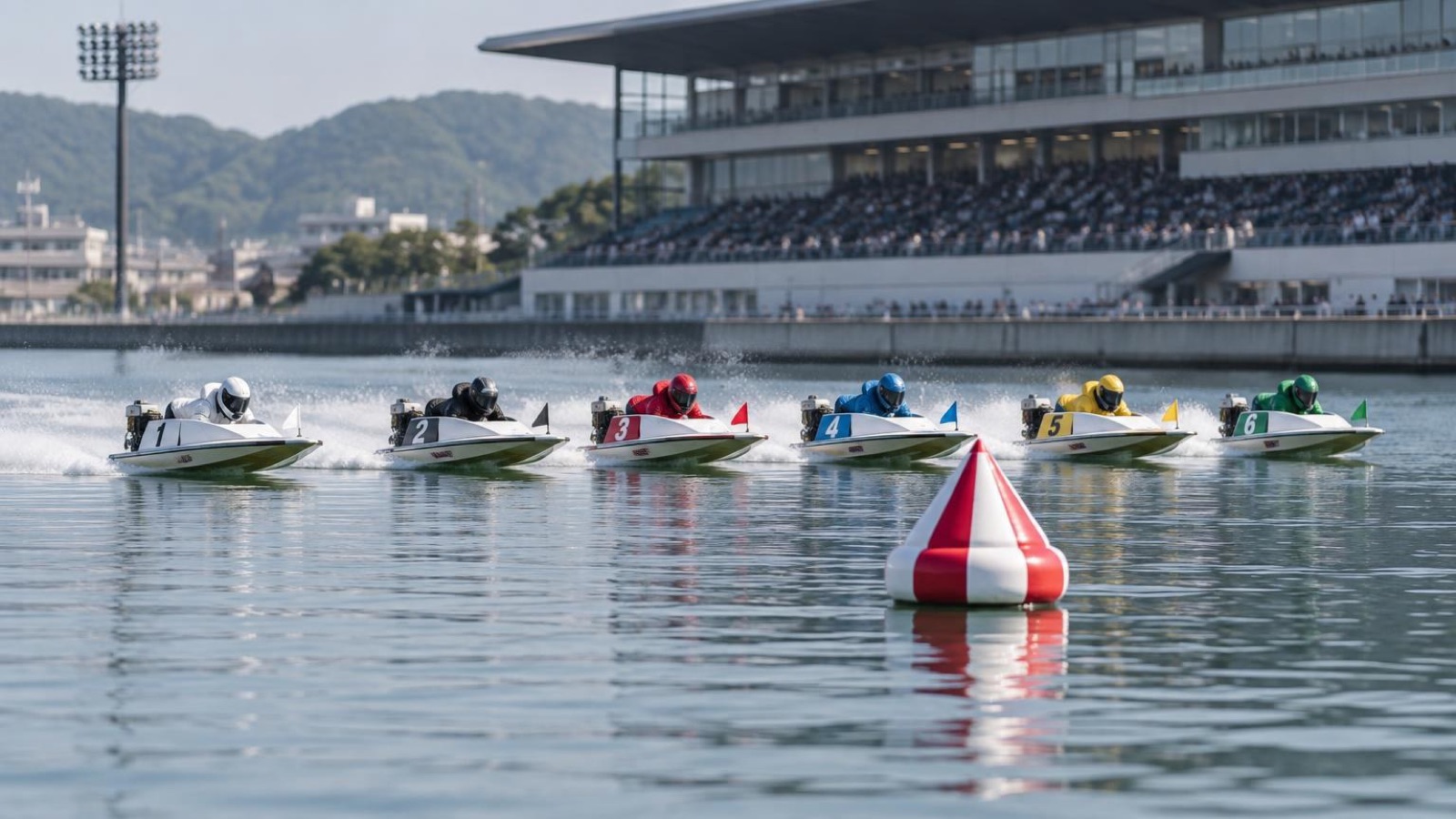
Boat Race, known in Japanese as kyotei, is one of Japan's publicly managed sports betting products, and it is a genuine day out: a hit with adults and children, visitors and locals alike4. Six motorboats race against each other over three laps of a dedicated 600-meter course, 1,800 meters in total, with the finishing order decided after the boats cross the start line and turn left around two marker buoys6. The start is unusual and worth watching: instead of lining up and going when a gun fires, the boats circle and must cross the start line within a set time window, a flying start unlike anything in athletics6.
There are 24 Boat Race venues across Japan, and a lot of them are close to popular tourist spots1. A standard race day runs 12 races, with a roughly half-hour break between each one, so a visit naturally fills an afternoon1. Seven special venues also host night races, which can suit travelers whose days are full of sightseeing2. Rain does not stop anything: races run as scheduled whatever the weather1.
Keirin is the two-wheeled cousin. Track cyclists sprint around a banked velodrome, and you bet on which riders finish in the top places. Velodromes are located all over Japan, and the operators say plainly that first-timers can enjoy keirin easily even if it is their first visit5. Betting takes place at the velodromes themselves or at off-track betting sites, so you do not have to be at the track to play7. Night races and even midnight keirin exist, so check the schedule if you want an evening out8.
Korea runs the same two sports under its own management. Cycle racing there, called Keirung, is described by the operator as a participation leisure sport: you analyze the riders' form, condition and tactics, buy a racing ticket, and receive a payout if you pick the winner9. Motorboat racing in Korea, run by KBOAT, follows the same six-boat format as Japan's, and its betting tickets are sold at the racecourses with the same kind of mark cards you would use in Japan10.
Who can bet: the minimum age is 20
The rule is simple and the same across Japan's racing products: you must be at least 20 years old to buy betting tickets11. This applies to everyone, Japanese citizens, foreign residents and tourists alike, and there is no separate rule for visitors. Children and teenagers can still come in and watch the racing, and the venues actively welcome families, but they cannot buy tickets2.
In practice, no one will ask for ID at the door of a Boat Race stadium, but if you look young, carry your passport. The age limit is a legal one, and staff at the betting machines can refuse a sale.
In Korea, the same 20-and-over principle applies to both Keirung and KBOAT tickets. If you are traveling with family, the free seating, food stalls and weekend shows mean non-betting companions will still have plenty to do.
Getting there and what to bring
Getting to a Boat Race venue is surprisingly simple, as the official guide puts it2. Many venues have free taxis or shuttle buses that run from the closest train station, and every venue has spacious parking if you are driving2. Check the venue's website the day before for the shuttle schedule.
What to bring:
- Cash. Betting booths and food stalls mostly operate on cash, and all payouts are in yen11. Some gates accept IC transit cards like Suica or ICOCA for entry, and most places have coin exchange machines near the entrance, but do not count on cards at the betting machines2.
- Your passport, if there is any chance you will be asked to prove your age.
- Nothing else special. There is no dress code. You are joining a crowd of regulars with racing newspapers, not a casino floor.
Entry costs 100 yen, the same low fee for an all-day stay including the weekend events, and there is plenty of free seating at every venue, both outdoor seats by the water and indoor seats1. If you want to step outside and come back, most venues have a re-entry machine near the gate where you can get a re-entry ticket2.
One more thing worth knowing: even on days when the stadium you are visiting has no local race, betting tickets for races at other stadiums are sold there, so you can almost always watch and bet on something1.
How to bet: OMR cards, pencils and betting machines
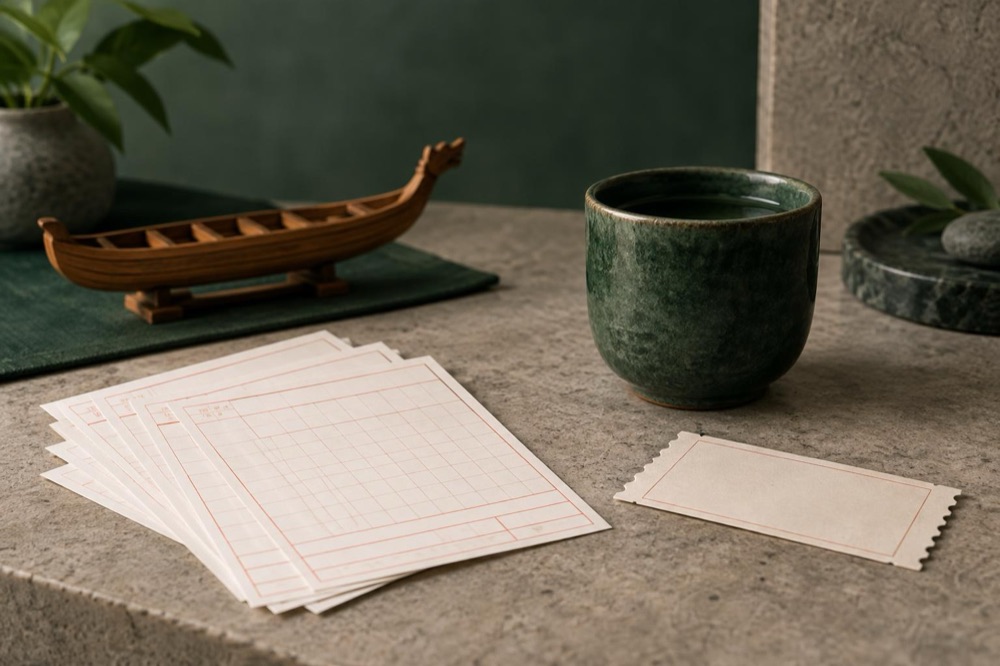
Boat Race betting is done on paper, and the system is easier than it looks. Around the venue you will find stacks of OMR betting cards and pencils2. You take a card, fill in your choices by hand, and feed the card into a betting machine along with your money.
The marking rules matter, because the machines read the cards optically:
- You can only use pencil, and you need to make the marks thick and clear. There are pencils available at every betting venue, so you do not need to bring one12.
- On the card, you fill in the venue, the race number, the ticket type, the boat numbers you are picking, and your stake amount13. For three-boat tickets you mark up to third place; for two-boat tickets, up to second place14.
- For an OMR betting card with all 24 BOAT RACE stadiums listed on it, fill in the stadium where you are placing your bet15.
- You can only bet on one race per card, but you can make multiple bets on that race on a single card11.
- The stake amount uses three units: hundreds of yen, thousands of yen and ten-thousands of yen. Writing 10 in the hundreds column and 2 in the thousands column means 2,100 yen, so double-check before you insert the card14.
Once the card is marked, insert your cash into the betting machine and feed the card in; it prints your betting ticket. Some machines also accept a prepaid UMACA card or a QR-code app instead of cash16. When you win, there are machines all over the venue that you can use to collect your prize money on the spot, and if a refund is made due to a false start or other problem, you simply insert your ticket into the same machine to get your money back11.
Keep hold of your ticket. The official advice is blunt: be sure not to lose or dispose of the betting ticket, because that paper is the only proof of your bet17.
Odds for each race are displayed on monitors inside the stadium, on the jumbo screen, and on the official website, so you can check the payout multipliers before you commit14. The number shown is the payout rate: if a 100-yen betting ticket is given a rate of 6.2, the payout will be 620 yen17.
Minimum bet: 100 yen
Every type of Boat Race ticket can be bought from as little as 100 yen, which is what makes this such an easy product for a curious visitor15. You can simply pick your favorite color and place a bet with just 100 yen2. The online and phone betting service TELEBOAT uses the same floor: boat race tickets start at 100 yen there too18.
In Korea, the scale is similar in spirit. Boat race betting tickets can be placed for amounts from a minimum of KRW 100 up to a maximum of KRW 100,0003.
A practical way to think about it: with 12 races in a day and a half-hour between them, a visitor betting the minimum on each race spends 1,200 yen over the whole meeting, roughly the price of a bowl of ramen per hour of entertainment. Nobody will look twice at small bets; plenty of regulars bet exactly that way.
Bet types: more than picking who finishes first
There is a fun variety of ways to place a bet, more than only picking who is first4. Boat Race offers a total of 7 types of betting tickets15. Here they are, from easiest to hardest:
| Ticket | What you pick | Hit rate |
|---|---|---|
| Win | The boat that finishes first | 1/6 |
| Place-Show | A boat that finishes in the top two | 1/3 |
| Quinella | The two boats that finish in the top two, any order | 1/15 |
| Exacta | The two boats that finish first and second, in order | 1/30 |
| Trio | The three boats that finish in the top three, any order | 1/20 |
| Trifecta | The three boats that finish first, second and third, in order | 1/120 |
| Place | Two of the top three boats, any order | 3/15 |
The definitions come straight from the official guides: Win means picking the boat that finishes in first place; Place-Show means picking a boat that finishes within the first two places; Quinella means picking the two boats that finish within the first two places without regard for order; Exacta means the exact two boats in first and second in order; Trio means the three boats that finish within the first three places, without regard for the order; and Trifecta means the exact three boats in first, second and third in order12. The Place bet covers two of the top three in any order, and when two or more boats tie for third, the third-place combinations do not count17.
For Quinella-Place, you win if your two selected boats finish first and second, second and third, or first and third12.
You can also buy combinations rather than single picks. Mark cards come in two kinds for this: a rotation combination, where you fix one or two boats and buy widely around them, and a multiple combination, where you choose three boats and bet on all their permutations14. The multiple combination costs more, since you are buying several tickets at once, but it covers every ordering.
Hit rates and example odds: Trio pays 1/20
The hit rates in the table above are worth internalizing before your first visit. A Win bet on a single boat has a 1 in 6 chance, since six boats race. A Trio has a 1 in 20 chance. A Trifecta, requiring the exact order of three boats, is 1 in 12017.
The official English guide walks through a worked example: a Trio bet on the 6th race at Suminoe in Osaka, picking Boats 1, 2 and 4 for the top three, for 1,500 yen. In that case, the chances of winning are 1 in 20, and the odds are 15.3. Your 1,500 yen bet is multiplied by 15.3, so the prize money for an accurate prediction is 22,950 yen12.
For two-boat bets, the guide gives another example: if you predict the order 1-3, the odds, the payout, would be 8.4 times the amount of your bet15.
Remember that these are pari-mutuel-style payouts: the multiplier depends on how much money is on each combination, so a popular pick pays less and an unpopular pick pays more. That is why the odds on the monitors keep shifting until the betting window closes, and why checking the screen just before a race is a habit worth copying from the regulars.
Refunds when a boat is scratched or withdrawn
Because of the flying start, Boat Race has a scratch rule that visitors should know about. If a boat crosses the start line too early, before the clock needle hits zero, that is a flying start foul, marked F. If it crosses too late, after the needle hits one, that is a late start foul, marked L. In either case, the boat is scratched from the race and the bets on that boat are refunded19.
The mechanics are simple: tickets for a boat that does not race are refunded in full, so keep the ticket in your pocket and take it to a betting machine to collect14. Do not throw a losing-looking ticket away until you have checked the result board, because a scratched boat turns your ticket into a refund.
Korea's KBOAT has a fuller refund rulebook, and the principles carry over. If a motorboat passes the start line normally but then capsizes, loses its rider overboard, sinks or otherwise fails to finish, tickets on that boat are not refunded; the player is disqualified under the race rules and may face suspension21. Refunds do apply in other situations: when a race has no winners in a bet type, the sales pool after deductions is refunded to customers; when only three or fewer riders start, certain bet types are refunded; when two or fewer start, more bet types are refunded; and when five or more boats start normally but no boat crosses the finish line, all bet types are refunded21.
Keirin: what first-timers should know
Keirin betting works on the same mark-card logic as Boat Race, so everything you learned above transfers. The keirin betting card has you mark the venue, the bet type, the race number, your race prediction, the purchase amount and a cancel field, in that order22. The odds shown are calculated for a nine-rider race, the standard keirin field23.
The bet types mirror the boat ones. The Korean cycle racing guide lays them out with hit probabilities: the trio bet, picking the 1st, 2nd and 3rd place riders in any order, has a hit probability of 1 in 35; the trifecta, picking the top three in exact order, is 1 in 210, the hardest bet type but with the highest expected dividends24. Japan's keirin uses the same family of tickets, and you can bet at the velodrome or at off-track sites7.
One quirk of keirin worth knowing as a spectator: not all events are equal. FII-grade events are open only to A-rank competitors, so the top races feature the strongest riders25. If you want to see the sport at its best, check the grade of the meeting before you go.
Events and fan meetings at Boat Race venues
Boat Race venues work hard to be more than betting halls. On Saturdays, Sundays and holidays, you can watch pop idol performances, comedy shows and hero shows for kids, and some stadiums run bingo tournaments1. All of this is included in the same 100 yen entry fee1.
The venues themselves have restaurants, food stalls and souvenir shops, and some go much further, with attractions like a sports facility called Gruun, VR experiences, karaoke boxes, arcades, gacha capsule machines and photo spots2. Before every race there is a Starting Exhibition, where racers test the waters and show off their boat and motor conditions, which is the moment the regulars study hardest2.
A day at the races: what to expect
Here is how a first visit usually goes. You arrive, pay 100 yen at the gate, and pick up an OMR card and pencil from the stacks near the entrance2. You find a free seat, indoor or by the water, and look at the monitors to see the field and odds for the next race1. You mark your card, feed it into a betting machine with a 100-yen coin or a note, and take your printed ticket11.
Then you watch the Starting Exhibition, where each racer shows off their boat and motor, and the regulars lean in2. The six boats sprint three laps around the course, about two minutes of noise and spray, and the result appears on the board almost immediately6. If your numbers come up, you take your ticket to a payout machine and collect your yen on the spot12. Then there is a half-hour break before the next of the day's 12 races, time enough for a bowl of noodles from a food stall1.
You do not have to bet at all. The official guide is explicit that you can come to any Boat Race venue in Japan to watch the races, enjoy the food and check out the other attractions without placing a single bet12. The racing itself is genuinely dramatic up close, and the venues are built for spectators26. If you are planning a wider trip around betting and racing in Asia, our pages on going to the races as a tourist and gambling as a visitor in Asia cover the rest of the region.
Common Questions
Can tourists bet at Boat Race venues in Japan?
Yes. Anyone aged 20 or older can walk into a Boat Race venue, pay the 100 yen entry fee and buy betting tickets on the spot with cash. No registration or membership is needed, and you can also just watch the races without betting at all.
What happens if the boat I bet on is scratched?
If a boat crosses the start line too early or too late, it is scratched from the race and all bets on that boat are refunded in full. Keep your paper ticket and insert it into a betting machine to collect the refund.
What is a Trio bet?
A Trio means picking the three boats that finish in the top three places, in any order. It is one of seven Boat Race ticket types and has a hit rate of about 1 in 20, better than the harder Trifecta, which requires the exact order.
What are the odds on a typical Trio bet?
The chance of hitting a Trio is 1 in 20. In an official example, a 1,500 yen Trio bet at odds of 15.3 paid out 22,950 yen. Odds for each race are shown on monitors and big screens around the venue.
How do I fill out an OMR betting card?
Take a card and a pencil, then fill in the venue, race number, ticket type, boat numbers and stake amount with thick, clear pencil marks. Insert the card into a betting machine with your cash and it prints your ticket. One card covers one race, but can hold multiple bets.
What does betting on your favorite color mean?
Each of the six boats in a race carries a fixed number and color, with boat 1 always white. Picking your favorite color is the simplest way for a first-timer to choose a boat, and you can bet on it from just 100 yen.
Sources26 sources
- BOAT RACE Official Website | Plan, Boat Race Promotion Association, accessed October 2026
- BOAT RACE Official Website | Step-by-Step Guide, Boat Race Promotion Association, accessed October 2026
- KBOAT Ticket Purchase, KBOAT, accessed October 2026
- BOAT RACE Official Website, Boat Race Promotion Association, accessed October 2026
- KEIRIN Beginner's Guide | Places, JKA, 2022
- BOAT RACE Chinese Guide, Boat Race Promotion Association, accessed October 2026
- KEIRIN Beginner's Guide | Betting, JKA, 2022
- KEIRIN User Policy, JKA, May 1, 2026
- Keirung Introduction, Korea Cycling Federation, accessed October 2026
- BOAT RACE Korean Guide, Boat Race Promotion Association, accessed October 2026
- BOAT RACE Official Website | How To, Boat Race Promotion Association, accessed October 2026
- BOAT RACE Official Website | How to Make Predictions, Boat Race Promotion Association, accessed October 2026
- BOAT RACE English Guide, Boat Race Promotion Association, accessed October 2026
- BOAT RACE Chinese Guide | Mark Cards, Boat Race Promotion Association, accessed October 2026
- BOAT RACE English Guide | Tickets, Boat Race Promotion Association, accessed October 2026
- How to Use SMAPPY, Boat Race Promotion Association, accessed October 2026
- BOAT RACE English Guide (archived), Boat Race Promotion Association, archived May 30, 2016
- TELEBOAT, TELEBOAT, accessed October 2026
- BOAT RACE English Guide | Bet Types, Boat Race Promotion Association, accessed October 2026
- BOAT RACE Traditional Chinese Guide, Boat Race Promotion Association, accessed October 2026
- KBOAT Ticket Refund, KBOAT, accessed October 2026
- KEIRIN Betting Card Guide, JKA, 2022
- KEIRIN Beginner's Guide | Basics of Betting, JKA, 2022
- Keirung Basic Guide, Korea Cycling Federation, accessed October 2026
- KEIRIN Beginner's Guide | Grades, JKA, 2022
- BOAT RACE Venue Guide, Boat Race Promotion Association, accessed October 2026