Where tourists can watch horse racing in Asia: the main venues
Horse racing in Asia is not a niche activity. It is a mainstream day out, and the big racecourses are built to handle enormous crowds, which makes them surprisingly easy places to visit even if you have never placed a bet in your life.
The headline venues are in Hong Kong, Japan, South Korea and Thailand.
Hong Kong has two racecourses, Sha Tin and Happy Valley, both run by the Hong Kong Jockey Club. Happy Valley sits in the middle of the city with night racing under floodlights, while Sha Tin is the bigger purpose-built track in the New Territories. Together they host regular races on weekends and public holidays, and Sha Tin is home to many Group 1 races and major international events1. You can read more about the wider gambling picture in Hong Kong.
Japan has ten national racecourses run by the Japan Racing Association (JRA): Chukyo, Sapporo, Hakodate, Fukushima, Niigata, Tokyo, Nakayama, Kyoto, Hanshin and Kokura5. Tokyo Racecourse on a big race day is one of the largest racing crowds you will find anywhere. Beyond the JRA tracks, there are also regional racecourses run by local governments, and off-track betting counters called J-PLACE, such as those at Korakuen and Shiodome in Tokyo, where you can buy and cash JRA betting tickets without going to a racecourse at all6. See Japan for the full picture.
South Korea's racing is run by the Korea Racing Authority, which operates race parks and a network of branch offices. There are 26 branch offices in total, 21 in the capital area and 5 in the provinces, where races are relayed on screens and betting tickets are sold and refunded7. The main race parks are covered in more detail below, and you can find visitor guides for LetsRun Park Seoul, LetsRun Park Jeju and LetsRun Park Busan-Gyeongnam.
Thailand has racing in Bangkok, and betting on horse racing is one of the few forms of gambling allowed in the country4. More on that below.
If your interest runs wider than horses, Japan and Korea also run boat and cycle racing stadiums that admit visitors; see boat and cycle racing for visitors.
Sha Tin Racecourse: location, capacity and race days
Sha Tin Racecourse is at 6001 Tai Po Road, Sha Tin, in the New Territories1. It is the Hong Kong Jockey Club's flagship venue and hosts regular race meetings on weekends and public holidays, along with many of the region's biggest races1.

The marquee events are worth planning a trip around. The Longines Hong Kong International Races are held at Sha Tin, with the day's feature card made up of the Hong Kong Cup, the Hong Kong Mile, the Hong Kong Vase and the Hong Kong Sprint8. Sha Tin also hosts regular weekend and public holiday meetings alongside its other Group 1 fixtures through the season11. FWD Champions Day in late April brings a full afternoon of racing, with the course opening at 10:30 am and an opening performance at the parade ring at 11:20 am12.
Race days at Sha Tin are full-day events. Gates typically open in the late morning, around 10:25 am on international race days and 11:00 am on regular afternoons, with an opening stage show at the parade ring before racing begins9. On big days there is a public queue area near Entrance 1 before the gates open12.
For visitors who want more than general admission, the racecourse offers tourist dining packages, such as the Champion Circle Dining package, which runs from September 13, 2026 to July 11, 20271. These give you a seated meal with a view of the track and are a comfortable way to spend your first race day.
Admission and entry rules at Sha Tin: age 18 and over, no overnight queuing
The single most important rule at Sha Tin: everyone entering the racecourse must be aged 18 or above1. This is not just about betting. The Hong Kong Jockey Club does not allow anyone under 18 to bet or to enter premises where bets are accepted, and its betting rules state plainly that no person under 18 may place a bet, collect winnings or enter a betting location13. So a race day at Sha Tin is an adults-only outing, and anyone who looks young may be asked for photo ID at the gate.
On major race days, the Club does not permit overnight queueing, for safety reasons11. If you want a good spot for the opening show, use the public queue area near Entrance 1, which opens with the gates in the morning12.
There is no formal dress code for the public areas of the racecourse, so smart casual clothing is fine. The members' areas are a different matter: they are reserved for Jockey Club members and their guests, so as a tourist you will be using the public enclosures, betting halls and parade ring viewing areas. That still gives you the full race day experience.
JRA racecourses in Japan: entry costs and reserved seats
Entry to a JRA racecourse is remarkably cheap. Tickets cost JPY 200, or JPY 100 at some courses2. You simply buy the entrance ticket at the gate when you arrive16.
The entrance fee is set course by course.
| Racecourse | Entrance fee |
|---|---|
| Tokyo | JPY 20016 |
| Nakayama | JPY 20016 |
| Kyoto | JPY 20016 |
| Hanshin | JPY 20016 |
| Chukyo | JPY 20016 |
| Sapporo | JPY 10016 |
| Hakodate | JPY 10016 |
| Fukushima | JPY 10016 |
| Niigata | JPY 10016 |
| Kokura | JPY 10016 |
Some visitors get in free. The JRA's racing implementation regulations exempt listed persons from the admission fee, including children under 15 years old, so a family visit with young children costs nothing for the kids17. The regulations allow the JRA to set admission between JPY 100 and JPY 5,000 per person per day, but in practice the standard levy is the JPY 100 to JPY 200 figure above17.
Once inside, every racecourse offers three kinds of seating: free non-reservable seats, open grass areas where you can sit on the lawn, and reserved seats16. Non-reserved seats are first-come, first-served, so on a big race day the best free spots fill early. Reserved seat tickets can be purchased at the ticket counter at the racecourse entrance18.
You can also book reserved seats in advance through the JRA's online booking service. The process is: search for the course and date, select the racing date, choose your ticket type, choose your seat type, pay by credit card, confirm, and you are done19. The seat map shows blue dots for empty seats, and orange labels mark reserved seating, so you can see exactly what you are getting before you pay19. Online booking requires member registration and credit card payment with the card's three-digit security code19.
At regional (non-JRA) racecourses, conditions vary. Some venues charge separately for special viewing seats; for example, one regional course charges JPY 600 for special seats on local race meeting days and JPY 200 when the venue is only screening JRA betting20. Entry conditions and race schedules at regional courses should always be confirmed on the organizer's website before you go21.
How to place a bet at a Japanese racecourse
Betting at a Japanese racecourse is a simple four-step process, and the beginner materials from the JRA break it down exactly this way: choose which racecourse, which race number, which bet type, and how much money22. That is all a betting slip asks of you.
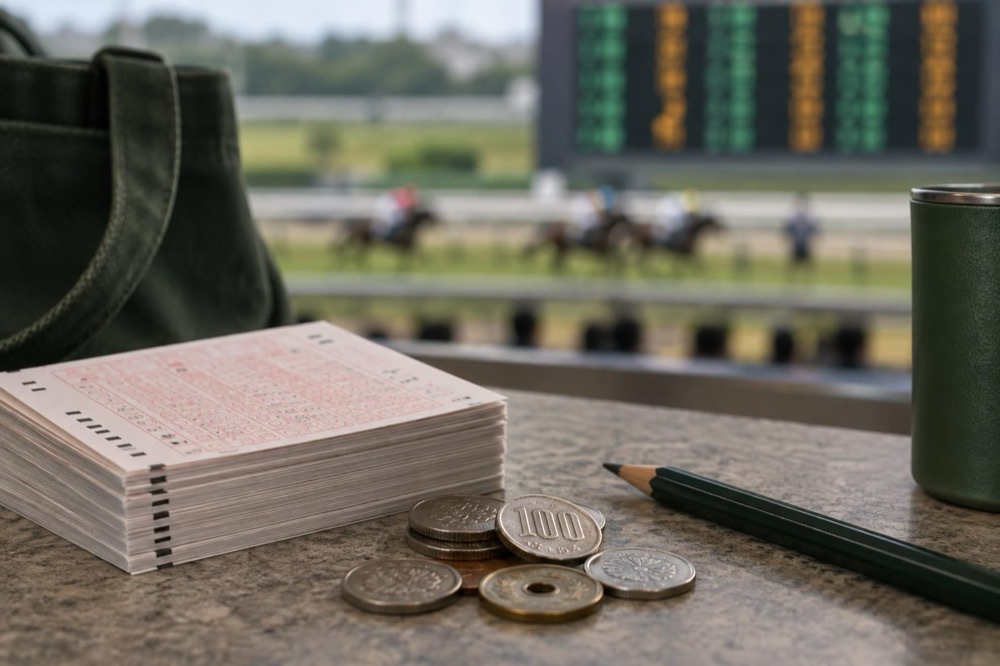
The minimum stake is tiny. The JRA may sell pari-mutuel betting tickets with a face value of just JPY 10, so you can have a flutter for the price of a candy bar15. Popular bet types include umaren, where you pick the first two finishers in either order, and sanrenpuku, where you pick the first three in any order22.
You buy tickets at windows or machines inside the racecourse, or at J-PLACE off-track counters around the country18. If you have a Japanese bank setup, JRA internet voting also lets you buy tickets online23. One warning worth repeating from the JRA's own guidance: buy only at official counters, and be wary of tipster and information businesses selling "guaranteed" picks22.
The age rule in Japan is different from Hong Kong: you must be 20 or older to buy betting tickets, and it is also against the rules to hand tickets to someone under 2024. The same law bars people engaged in horse racing affairs from buying tickets, which will not affect you as a visitor25.
Korea Racing Authority: race parks and how to bet
South Korea's horse racing is run by the Korea Racing Authority (KRA), and it is one of the legally permitted forms of gambling in the country, alongside casinos, cycle racing, powerboat racing, the lottery and sports promotion voting tickets26.
The KRA operates race parks with on-course betting, plus the 26 branch offices mentioned earlier where races are relayed and tickets are sold7. The Authority may collect admission fees from people who visit the racecourses and off-course betting centers, so expect a small entry charge rather than free entry27.
The bet types are set out in the Korea Racing Authority Act: win, quinella, exacta, place, quinella place, tierce, trifecta and special betting, eight types in all27. The unit bet is KRW 100 regardless of the type of betting, so you can stake very small amounts while you learn3. If you know Hong Kong or Japanese racing, win and place will feel familiar, and quinella and exacta work like their counterparts elsewhere.
The betting process is tourist-friendly. The KRA's own guide to using a betting slip includes a step where you select a language, so the machines can walk you through in English28. One limitation to know: English race commentary is currently available only for races at Seoul and Busan, so at other race parks you will be watching without English call29.
If you get stuck, the KRA's main sales helpline is 1566-333330. One thing you cannot do in Korea is bet electronically on overseas horse races; the Korea Racing Authority Act prohibits operating electronic betting on foreign races within Korea27. Your betting at a Korean race park is on Korean races.
Betting at racecourses in Thailand
Thailand is one of the strictest gambling jurisdictions in Asia, but horse racing is an exception. Betting on horse racing, along with betting on boxing, is allowed in Thailand4. In practice this means you can wager legally at the racecourse on race days, which makes a Bangkok race meeting one of the few fully legal gambling outings available to a visitor in the country. For the wider picture, see Thailand.
Keep your betting on course. The legal exception covers racecourse betting, and the rest of Thailand's gambling market remains closed, so do not expect to find legal off-course outlets or online options. A race day in Bangkok is a lively, local experience, and the on-course windows are where your money stays on the right side of the line.
What you can bet on and how to place a bet as a visitor
Across the region, the mechanics of a bet are similar enough that learning once carries you a long way.
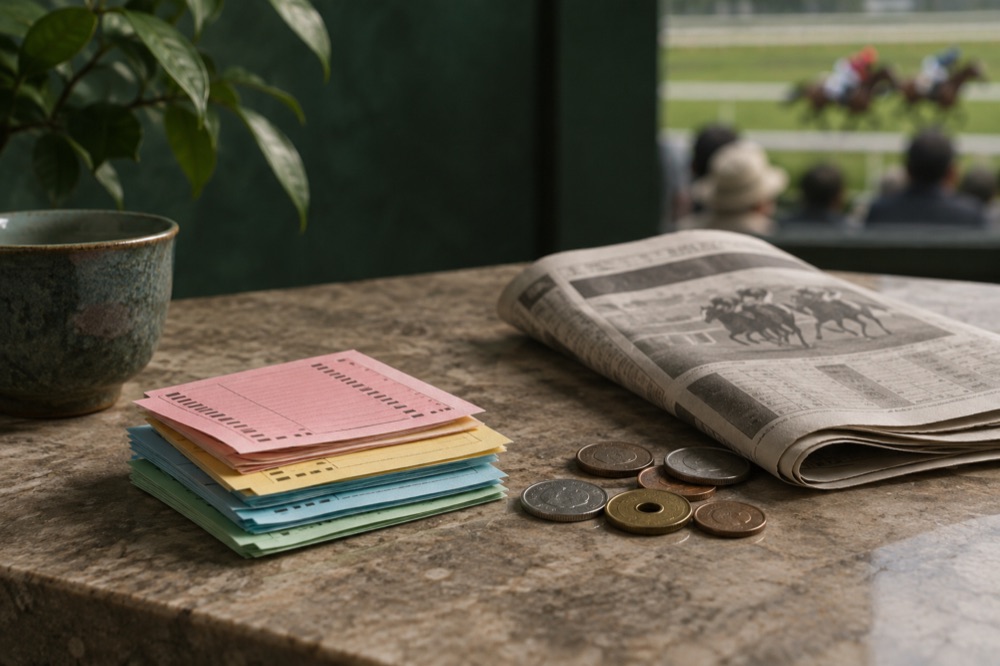
In Hong Kong, the Jockey Club offers pari-mutuel and fixed odds betting on races31. The basic bets are easy to grasp. A Place bet means you must select at least one horse that finishes in the placings in a designated race, and a Forecast (called "double color" locally) requires you to pick the first and second horses in the correct finishing order32. Betting locations include the Sha Tin and Happy Valley racecourses, off-course betting centers and other approved premises, including the Club's official website33.
In Japan, remember the four choices: racecourse, race number, bet type, stake22. In Korea, pick from the eight bet types and stake in units of KRW 10027. In Thailand, bet at the on-course windows on race days4.
A few practical points for a first bet anywhere in Asia:
- Stakes can be very small. Japan allows tickets from JPY 10 and Korea's unit is KRW 100, so you can bet casually without committing much money15.
- Betting slips and machines increasingly support English, most visibly in Korea where language selection is a built-in step28.
- Buy only at official windows, counters and machines. The JRA specifically warns bettors to avoid tipster businesses and to purchase only at official counters22.
- You must be of age: 18 in Hong Kong, 20 in Japan13.
If you want to bet when there is no race meeting on, off-course outlets are the answer in several countries; see betting shops and off-course outlets.
Getting there and getting in: transport, opening times and prohibited items
Getting to a racecourse in Asia is usually a train ride. JRA racecourses are mostly close to train stations, with shuttle buses where the station is far, and limited parking at all courses, so public transportation is the easy option16. Sha Tin in Hong Kong sits beside its own rail station in the New Territories, and gates open in the late morning on race days1.
Opening times vary by race day, so check the specific meeting. At Sha Tin, gates have opened at 10:25 am on international race days, 10:30 am on Champions Day and 11:00 am on regular afternoons, with opening shows at the parade ring around 11:10 am to 11:45 am9. Arriving close to opening gives you time to walk the public areas, watch the horses in the parade ring and get a feel for the betting machines before the first race.
What you cannot bring in is fairly consistent across venues. A Japanese regional racecourse gives a typical list: no dangerous items such as fire, bottles, cans or fireworks; no pets except guide, hearing and assistance dogs; no wheeled equipment apart from wheelchairs and strollers; no tents, shade structures, loudspeakers, instruments, balls, frisbees, drones or kites; and no cooking equipment beyond permitted operators24. Behavior rules are equally plain: do not throw anything onto the course or paddock, do not pick up dropped betting tickets, do not stand on stepladders to watch, keep to designated smoking areas including for e-cigarettes, and do not resell or use resold admission or seat tickets24. These rules apply to everyone in the grounds, including the car park24.
A final note on regional Japanese courses: entry conditions, race schedules and whether betting tickets are being sold and paid out on a given day must be confirmed on the organizer's website before you travel21. The same habit serves you well everywhere: race days move with public holidays and seasons, so a quick check of the racecourse's own site the day before saves a wasted trip.
For the broader question of what you may do as a visitor across the region, see gambling as a visitor in Asia.
Common Questions
What is the minimum age to enter Sha Tin Racecourse?
Everyone entering Sha Tin Racecourse on a race day must be aged 18 or above. The same rule applies at Happy Valley and at all Hong Kong Jockey Club betting locations, so bring photo ID if you look young.
How much does it cost to enter a JRA racecourse in Japan?
Entry costs JPY 200 at Tokyo, Nakayama, Kyoto, Hanshin and Chukyo, and JPY 100 at Sapporo, Hakodate, Fukushima, Niigata and Kokura. You buy the entrance ticket at the gate when you arrive. Children under 15 get in free.
Can I bet on horse racing as a tourist in Thailand?
Yes. Betting on horse racing is one of the permitted forms of gambling in Thailand, and you can do it at the racecourse on race days. Outside the course, most betting remains off limits, so keep your wagering on course.
How do I buy reserved seats for a JRA race?
You can buy reserved seats at the ticket counter inside the entrance gate on the day, or book online in advance through the JRA reserved seat booking service, which needs member registration and credit card payment. Blue dots on the seat map show empty seats.
What is the Korea Racing Authority helpline number?
The main sales helpline is 1566-3333. English race commentary is currently available only for races at Seoul and Busan, so it helps to ask about English support when you call or visit.
Where is Sha Tin Racecourse and how do I get there?
Sha Tin Racecourse is at 6001 Tai Po Road, Sha Tin, in the New Territories. It sits right beside an MTR station, so the easiest way in is by rail on a race day, with gates opening in the late morning.
Can I use the members' areas at Sha Tin as a visitor?
Members' areas are for Hong Kong Jockey Club members and their guests, so as a tourist you use the public areas of the racecourse. Public admission still gives you the parade ring, betting halls and full view of the track.
Sources33 sources
- Hong Kong Horse Racing, Hong Kong Tourism Board, 2026
- Go Racing in Japan, Japan Racing Association, 2026
- Korea, Asian Racing Federation, 2011
- Thailand Gambling Laws, Bangkok Views, 2026
- National horse racing venues, House of Representatives of Japan, 2026
- J-PLACE area guide, Japan Racing Association, 2026
- Korea Racing Authority branch offices, Korea Racing Authority, 2026
- Longines Hong Kong International Races, Hong Kong Jockey Club, 2015
- Champions & Chater Cup, Hong Kong Jockey Club, 2026
- Hong Kong Gold Cup, Hong Kong Jockey Club, 2026
- Centenary Sprint Cup, Hong Kong Jockey Club, 2026
- FWD Champions Day, Hong Kong Jockey Club, 2026
- Hong Kong Jockey Club events, Hong Kong Jockey Club, 2026
- Horse race betting rules, Rule 2.27, Hong Kong Jockey Club, 2023
- Horse Racing Act Article 6, Japan Racing Association, 2026
- Go Racing guide, Japan Racing Association, 2026
- JRA Racing Implementation Regulations Article 171, Japan Racing Association, 2026
- Go Racing FAQ, Japan Racing Association, 2026
- JRA Reserved Seats and Admission Tickets Online Booking guideline, Japan Racing Association, 2023
- Special viewing seat pricing, Japan Local Horse Racing Association, 2026
- Regional racecourse admission status, Japan Local Horse Racing Association, 2026
- JRA Beginner's Book, Japan Racing Association, 2024
- Nagoya Racecourse betting, Nagoya Racecourse, 2026
- Nagoya Racecourse visitor rules, Nagoya Racecourse, 2026
- Kanazawa Racecourse betting rules, Kanazawa Racecourse, 2026
- KBoat FAQ, Korea Sports Promotion Foundation, 2026
- Korea Racing Authority Act, Korea Law Translation Center, 2026
- How to fill in a betting slip, Korea Racing Authority, 2026
- Korea Racing Authority English site, Korea Racing Authority, 2026
- KRA race operation info, Korea Racing Authority, 2026
- Responsible gambling, Hong Kong Jockey Club, 2026
- Horse race betting rules, Chapter 1, Hong Kong Jockey Club, 2025
- Betting locations definition, Hong Kong Jockey Club, 2020