What responsible gambling desks in Asian casinos offer
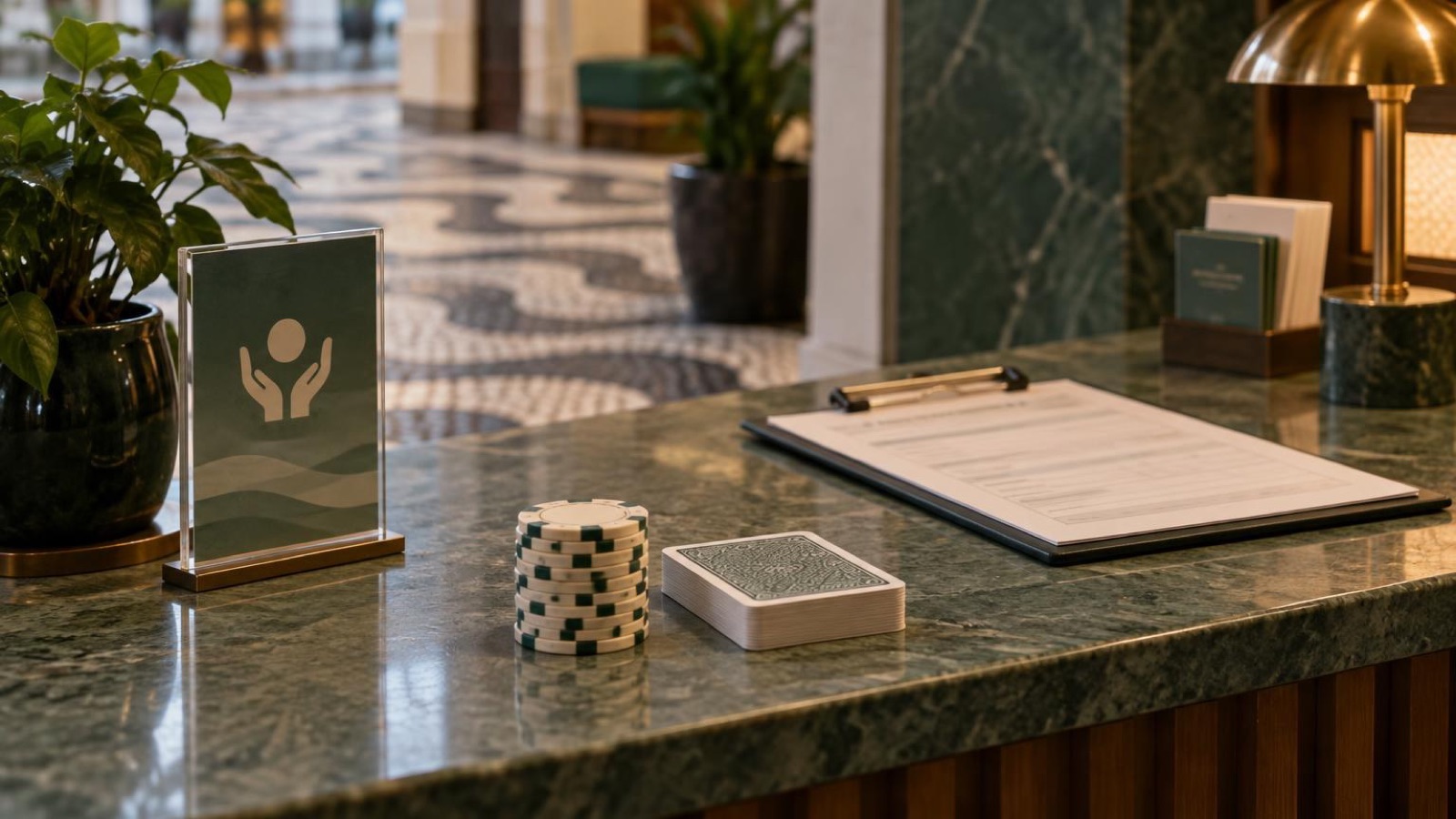
The most visible tool is the help desk itself. In Macau, responsible gambling kiosks sit inside the following casinos4.
| Casino |
|---|
| Studio City |
| Wynn Palace |
| Galaxy Macau |
| The Parisian Macao |
| MGM Cotai |
| The Venetian Macao |
| Grand Lisboa Palace |
They are not just leaflet stands. Each kiosk offers responsible gambling information, electronic applications for self-exclusion and problem gambling family counseling, a gambling disorder assessment that prints a behavior report, and a 24-hour helpline that connects you straight to a prevention and treatment organization4.
Ambassadors staff these kiosks. They explain how the kiosk works, help you submit a service application, and introduce Macau's gambling disorder prevention and treatment organizations4. The service is aimed at both Macau residents and visitors, so you do not need to be a local to walk up and ask4.
Singapore takes a different approach. The Gambling Regulatory Authority lists patron education and help services, plus assistance to patrons who seek help on responsible gambling matters or who show signs of problem gambling, among its harm minimization measures5. In practice that means casino staff are trained to notice and respond, and to point you toward the national support network rather than handle it entirely in-house.
If you are not sure what you want, start at the desk. Ask what tools the property has, what the exclusion process looks like, and how long it takes. In Macau the kiosk can start an electronic self-exclusion application on the spot4.
Self-exclusion: how it works and who can apply
Self-exclusion is a voluntary ban you place on yourself. In its simplest form it blocks your access to gambling, whether that is a physical casino floor or a gaming website you have chosen to exclude from6. On regulated online platforms, a self-exclusion blocks access to the gaming website for a set period, which you can extend7.
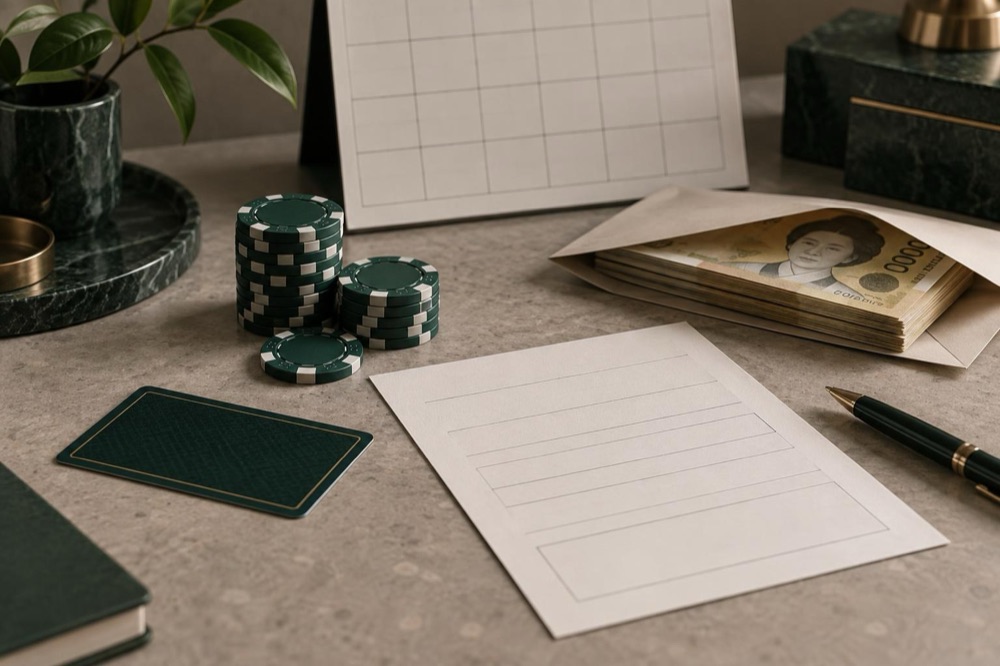
The mechanics differ by market, but the shape is the same everywhere:
- You apply, usually in a prescribed form and manner.
- The operator or regulator records your details and circulates them.
- You are barred from the venues or sites you named.
- Breaking the ban has consequences, which range from being turned away to prosecution.
In Singapore, self-exclusion is defined in law as a ban from entering or remaining on casino premises, from gaming machine rooms, and from all manner of general remote gambling, made on a voluntary application8. A person can apply to be banned from all casino premises, from gaming machine rooms and playing gaming machines, from all general remote gambling, or any combination of those9. The same definition covers bans from casino premises, gaming machine rooms and remote gambling10.
Who can apply is broad. In Macau, anyone may apply for the DICJ's self-exclusion program1. In Singapore, individuals may apply to exclude themselves from one or more gambling activities, including the two casinos, jackpot machine rooms at private clubs, and Singapore Pools online betting3.
One practical point people miss: self-exclusion is not the same as a casino banning you. It is your own application, and in Singapore the law treats it separately from other exclusion orders when it comes to what happens if you walk in anyway11.
Macau: the DICJ exclusion program and how to file
Macau's program is run by the Gaming Inspection and Coordination Bureau, known as DICJ. You can apply to be excluded from all or some of the casinos in Macao, so you are not forced into a blanket ban if you only want to stay away from specific properties1. The maximum exclusion period is two years12.
There are two routes: self-exclusion, where you apply on your own behalf, and third-party exclusion, where a relative applies. For the third-party route, the applicant must be the excluded person's spouse, parent, son or daughter, or brother or sister1. Crucially, the person to be excluded must sign the application form to confirm the exclusion1. You cannot quietly ban a relative behind their back.
Here is how to file:
- Get the form. Application forms are available from DICJ, the Social Welfare Bureau's Resilience Centre, and Macau casinos, or you can download them from the DICJ website12.
- Fill it in and gather documents. Bring the ID card of the applicant and the person to be excluded for verification, plus a recent photo of the person to be excluded1.
- Submit in person at the DICJ office, Avenida da Praia Grande, 762-804, Edf. China Plaza, 12th Floor A1. If you submit through a casino instead, DICJ will contact the applicant to verify personal details, and the person must still attend the DICJ office in person13.
- Wait for confirmation. DICJ notifies the applicant of the start and end date of the exclusion period within five working days after the application is submitted1.
Participation is voluntary1. The person being excluded also has the right to choose whether or not to receive counseling from problem gambling prevention and treatment agencies1.
Ending an exclusion early is deliberately awkward. A revocation request must be made by the excluded person in person at the DICJ office, and it only takes effect 30 days after the request is made1. If you want to extend, you cannot simply roll it over: the period may be extended only after a new self-exclusion application, or after the applicant confirms a new third-party exclusion application1.
For questions, the DICJ exclusion team can be reached on (853) 8397 3286, by fax on (853) 2871 2331, or by email at exclusion@dicj.gov.mo1. The office address for inquiries is 12th Floor A, China Plaza, 762-804 Avenida da Praia Grande, Macau13.
Philippines: the PAGCOR self-exclusion portal and exclusion periods
The Philippines runs its self-exclusion through PAGCOR, the national regulator and operator. The program is designed for patrons who feel they are developing a problem with gambling14. Applications go through the Online Self-Exclusion Application portal, known as OSEA, which restricts your access to all casinos and gaming sites nationwide2.
That nationwide scope is the key detail. You are not excluding yourself from one property; the restriction is meant to cover the country's casinos and gaming sites2.
You pick the length. Applicants may request an exclusion period of 6 months, 1 year or 5 years15. The first six months are irrevocable, so there is no early exit during that window15. After the period you chose is complete, the order is lifted automatically14.
Timing matters if you are planning around it. The exclusion process takes approximately two weeks to take effect across all casinos and gaming sites2. So if you file today, expect roughly a fortnight before the ban is live everywhere.
Family-initiated exclusion: rules and the irrevocable periods
Two Asian markets let a relative start the process, and both build in protection against a person being banned without their knowledge.
In Macau, a spouse, parent, son or daughter, or brother or sister can apply, but the person to be excluded must sign the form to confirm it1. That signature is the safeguard. The excluded person also keeps the right to decide whether to accept counseling1.
In Singapore, the National Council on Problem Gambling handles Family Exclusion Orders. An individual may apply to exclude a family member whose gambling has caused serious harm to the family16. The order can cover the two casinos, jackpot machine rooms at private clubs, and Singapore Pools online betting16. There is also a Family Visit Limit, where the NCPG can ban or limit visits if the person's gambling behavior has caused harm to the family17.
The distinction between an exclusion and a visit limit is worth understanding before you file. An exclusion keeps the person out. A visit limit lets them in but caps how often, which some families prefer as a middle step.
On the irrevocable period: PAGCOR's first six months cannot be undone15. Macau's revocation route exists but is slow, requiring the excluded person to appear in person and wait 30 days for it to take effect1. If you are the family member filing, set expectations accordingly. This is not a switch you can flip back next week.
Self-exclusion and visit limits: NotifyMyPlay in Singapore
NotifyMyPlay is Singapore's self-exclusion and visit limit service, run through the NCPG. It is not a daily budget tool, and it is worth being clear about that before you apply. What it does is let you exclude yourself from gambling activities or place a limit on visits, covering the two casinos, private club jackpot rooms and Singapore Pools online betting3.
For day-to-day spending control, the tools live elsewhere. Many slot machines, mobile apps and internet gambling sites carry pre-commitment features that let you set in advance the time and money you plan to spend, and send you a reminder once you hit the limit18. The practical version of this is simple: decide your budget and time before you start, and use the machine or site tools to hold yourself to it19.
If you are applying for a non-casino self-exclusion through the NCPG, the follow-up process works like this. The NCPG acknowledges receipt of the application, and if there is no word from them within 10 working days, the contact points are 6354 8154 or admin@ncpg.org.sg20. That is the checkpoint for confirming the application did not stall.
A general tip that applies across the region: set a limit for your game and stick to it11. It sounds obvious, but the tools only work if you use them before you sit down, not after a bad run.
What happens if an excluded person enters a casino
This is the part to take seriously, because the consequences are not just being escorted out.
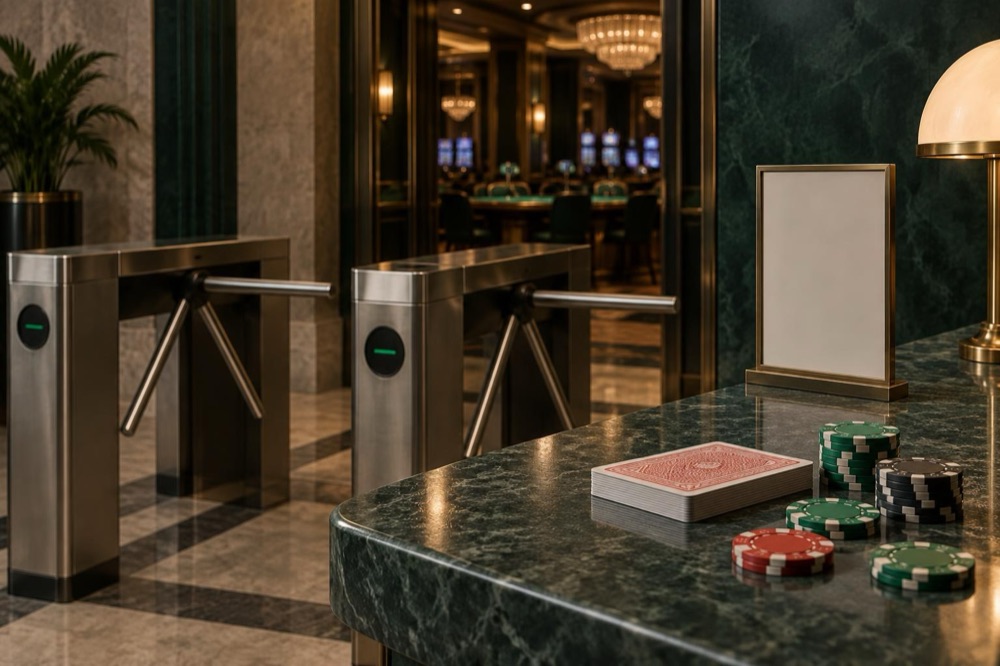
In Macau, once an application is approved, the person is barred from entering or remaining in all or some casinos during the exclusion period, and violating the interdiction order constitutes the crime of disobedience21. The same applies under the DICJ program: failure to comply constitutes a crime of disobedience1.
In Singapore, the rules were tightened. From September 21, 2026, an excluded person is liable for entering, remaining or taking part in gambling on casino premises if it is proven that they know, or ought reasonably to know, that they were an excluded person17. The regulator no longer needs to prove the person was aware of their exclusion status at the time of entry17. That removes a common defense.
There is one important carve-out. A casino-excluded person who enters or remains on, or takes part in casino gambling or a promotional game on, casino premises is guilty of an offense, unless they were excluded only by self-exclusion or a voluntary visit limit8. In other words, the harshest treatment is reserved for people under court or family orders, not for those who voluntarily asked to be kept out.
Casino operators also have a duty. An excluded person is not to enter casino premises, and the casino operator must bar excluded persons from the premises22.
Where to get help: desks, helplines and counseling partners
If you want support rather than a ban, several routes are open.
In Macau, the responsible gambling kiosks are the front door. They provide information, take electronic self-exclusion and family counseling applications, run a gambling disorder assessment with a printable behavior report, and connect you to a 24-hour helpline staffed by prevention and treatment organizations4. The kiosks are inside Studio City, Wynn Palace, Galaxy Macau, The Parisian Macao, MGM Cotai, The Venetian Macao and Grand Lisboa Palace4.
Singapore's support sits with the NCPG and the Gambling Regulatory Authority. The GRA lists patron education and help services, and assistance to patrons who seek help or show signs of problem gambling, among its measures5. For self-exclusion and visit limits, the NCPG is the body to contact3.
Beyond the casinos, community outreach and prevention organizations operate across the region, offering counseling and support to people affected by gambling19. If you would rather not walk into a casino to ask for help, these are the alternative.
A few practical notes for anyone using these tools:
- Bring photo ID. Macau requires the ID card of both the applicant and the person to be excluded, plus a recent photo of the excluded person1.
- Expect a wait. Macau confirms within five working days1; PAGCOR takes about two weeks to apply the ban across all sites2.
- Plan for the lock-in. PAGCOR's first six months are irrevocable15, and Macau revocations take 30 days to take effect1.
- Keep the contact details. DICJ is on (853) 8397 3286 and exclusion@dicj.gov.mo1; the NCPG is on 6354 8154 and admin@ncpg.org.sg20.
If you are weighing up a casino visit more generally, our guide to casinos and integrated resorts in Asia covers who can enter and what you can play, and the Asia casino destinations comparison sets out how Macau, Singapore, Manila and Genting differ. For the country-level rules on entry and legal gambling, start with Macau, Singapore and the Philippines.
Common Questions
How do I contact the DICJ exclusion office in Macau?
Call (853) 8397 3286, fax (853) 2871 2331 or email exclusion@dicj.gov.mo. The office is at 12th Floor A, China Plaza, 762-804 Avenida da Praia Grande, Macau. Applications are submitted in person there, and forms are also available at casinos and the Social Welfare Bureau.
Can I exclude a family member from casinos without their consent?
In Macau, no. A spouse, parent, child or sibling can apply, but the person being excluded must sign the form to confirm it. In Singapore, a family member can apply for a Family Exclusion Order through the NCPG if the gambling has caused serious harm to the family.
How long does a PAGCOR self-exclusion last?
You choose 6 months, 1 year or 5 years. The first six months are irrevocable, so you cannot undo it early. Once the period you picked runs out, the order is lifted automatically and you can return without reapplying.
Can I cancel my self-exclusion before it expires?
Usually not immediately. PAGCOR's first six months are irrevocable. In Macau, a revocation request must be made in person by the excluded person and only takes effect 30 days after the request. In Singapore, a self-exclusion runs for the period you applied for.
What are the daily time and spend limit options in NotifyMyPlay?
NotifyMyPlay is a Singapore self-exclusion and visit limit service run through the NCPG, not a daily budget tool. For daily limits, many slot machines and online sites carry pre-commitment tools that let you set a time and money limit and send a reminder when you reach it.
Will casino staff help me choose a budget?
Staff at responsible gambling desks can explain the tools and hand you information, and Macau's kiosks have ambassadors who walk you through the services. They will not set a budget for you. Budget and time limits are yours to decide, using the tools on machines and sites.
Sources22 sources
- Self-exclusion and third-party exclusion program, DICJ, 2026
- Online Self-Exclusion Application Portal, PAGCOR, 2026
- Apply for Self-Exclusion, MSF/NCPG, 2026
- 負責任博彩資訊站, DICJ, 2026
- Harm Minimisation, GRA, 2026
- Self-Barring, MGA, 2025
- Safer Gambling, MGA, 2025
- Casino Control (Amendment) Bill 24/2024, Singapore Statutes Online, 2024
- Casino Control (Amendment) Bill 24/2024 (PDF), Singapore Statutes Online, 2024
- Casino Control (Amendment) Act 2024, Singapore Statutes Online, 2024
- Play Responsibly, Cash Sweep, 2026
- Exclusion application forms and availability, DICJ, 2026
- 自我隔離, DICJ, 2026
- Responsible Gaming, PAGCOR, 2026
- Exclusion, PAGCOR, 2026
- Apply for a Family Exclusion Order, MSF/NCPG, 2026
- Second tranche of amendments to the Casino Control Amendment Act 2024, MHA, 2026
- 善用赌博网站的预先设限工具, Responsible Gambling, 2026
- Safer Gambling Tips, Responsible Gambling, 2026
- Non-Casino Self-Exclusion, Singapore Pools, 2016
- 自我隔離娛樂場之申請表, DICJ, 2025
- Casino Control Act 2006, Singapore Statutes Online, 2021