
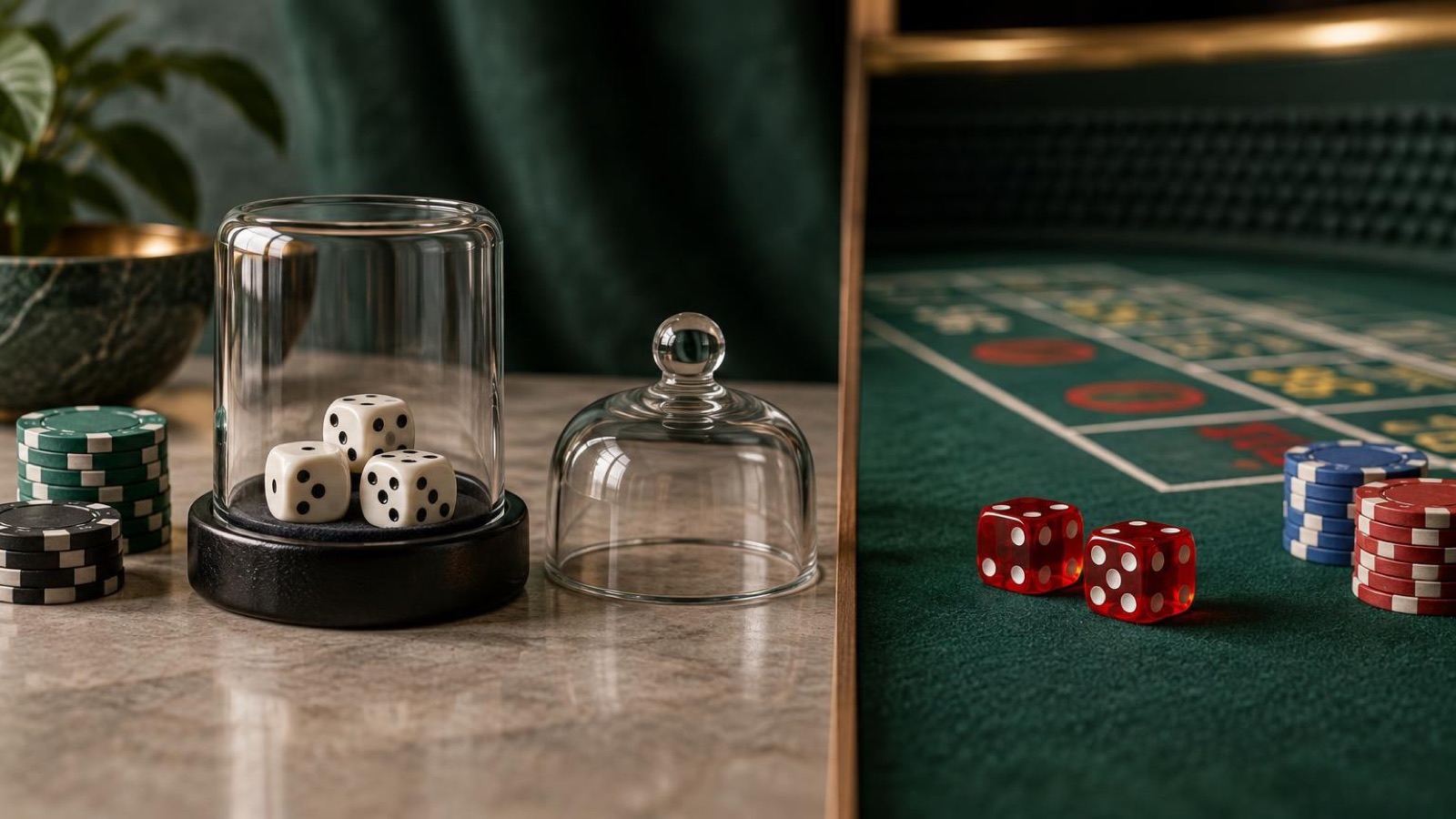
Two dice games, two very different tables
If you have only ever seen one of these games, the other will look strange at first. They share a family resemblance, since both are played with dice on a felt layout and both are decided entirely by the roll, but almost nothing else carries over.
Craps is played on a specially designed table where players bet on the outcome of the next roll of the dice. It is often called the fastest game in the casino, and for a lot of players the most thrilling, because a full table moves quickly and loudly2. Every craps table layout is exactly the same wherever you go, though betting limits and dollar amounts vary between tables and casinos2.
Sic Bo is the quieter cousin. It is a fast-paced game that requires some quick thinking, but the noise and the crowd ritual are not part of it5. Each Sic Bo table has two dealers who exchange chips, monitor the bets and keep the game moving1. The only thing that really belongs on the Sic Bo table is casino chips, so keep your phone, drink and lucky charm off the felt5.
The practical difference you will notice first is availability. Sic Bo sits on the main floor of casinos across Macau, Singapore, the Philippines, Cambodia and beyond. Craps is a specialty table. In Macau it is regulated and offered, but you will find far fewer of them, and in much of Asia you may not find one at all.
What Sic Bo is and how a round plays out
Sic Bo, originally pronounced "SEE-BO", is an ancient Chinese dice game1. The game is played with three dice, and players bet on the outcome of each roll1.
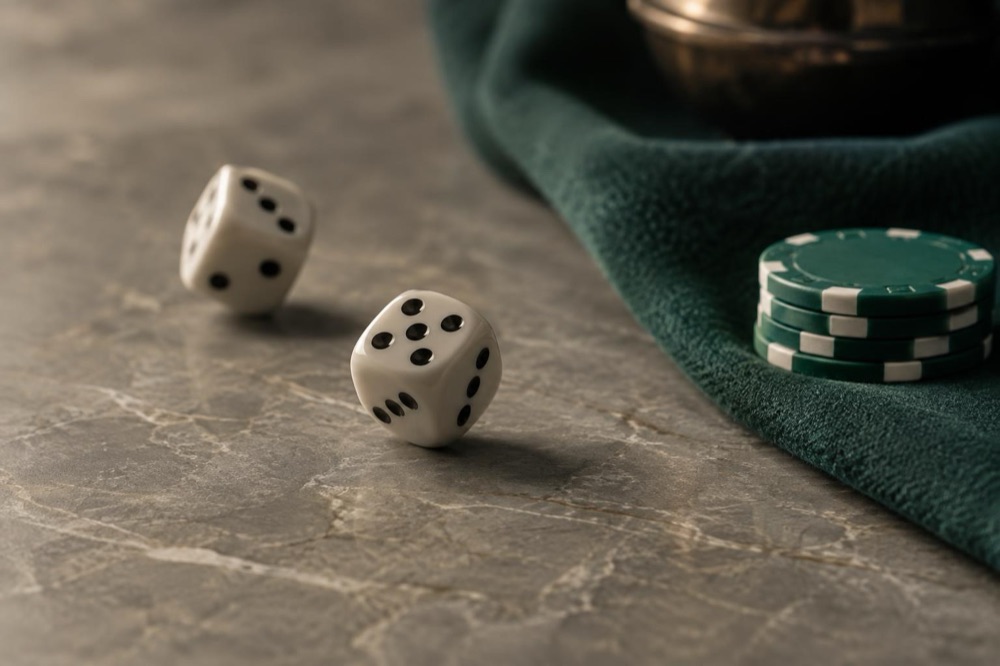
The dice are not thrown by hand. On most tables the Sic Bo dice are "rolled" using an electronic dice shaker, activated by a button on the table1. That keeps the game moving and removes any question about how the dice landed. In Macau the equipment is specified in detail: three dice of equal weight, each face pair summing to seven, a special dice cup with a black opaque base, a glass cover and a removable lid, and one or more table plaques printed with the betting options6.
A round runs like this:
- The dealer opens betting and you place your chips on the sections of the layout you want.
- The shaker is activated and the three dice settle.
- The lid is lifted and the dealer calls the result.
- Losing chips are collected and winning bets are paid at the posted odds.
- The layout is cleared and a new round begins.
If the dice are stacked or leaning unevenly when the lid is lifted, the dealer declares the round void and a new round begins. You may not cancel bets you have already placed, but you may bet again on the new round6.
Buying in is simple. You place your money on the table and a dealer exchanges it for chips. You never hand your money directly to a dealer when buying chips, so to avoid any confusion, simply place your bills on the table1. There is no strategy or skill involved in Sic Bo. It is a game of pure chance that moves quickly1.
What craps is and how a round plays out
Craps is played with two dice, and players bet on the outcome of each roll2. It is a game of chance that requires no skill or strategy to play2.
The structure is what makes craps different from every other dice game. A round is not a single roll. It starts with a come-out roll, and what happens next depends on what comes up.
- If the come-out roll is 7 or 11, pass line bets win immediately.
- If it is 2, 3 or 12, pass line bets lose. That outcome is called "craps"7.
- If the come-out roll is any other number, meaning 4, 5, 6, 8, 9 or 10, that number becomes the point and no one wins or loses yet2.
Once a point is set, the shooter keeps rolling until they roll a 7 or make their point. When that happens, the dice move to the next player and the round begins again2.
Every player gets a turn as the shooter as long as they have an active pass or don't pass wager, and the honor moves clockwise around the table2. To take a turn at being the shooter you are obligated to place a pass or don't pass bet before the come-out roll7.
The table crew runs the game. The stickperson calls the outcomes of the rolls, uses a curved stick to retrieve the dice after rolls and pass the dice to the shooter, and takes all center bets2. If you want chips, put your cash on the table and let one of the crew know. Do this after the current shooter rolls, while the dice are in front of the boxperson, so you do not interrupt the game2.
Three dice versus two: the maths behind each game
The number of dice is the whole story. Three dice give 216 possible ordered outcomes. Two dice give 36 possible combinations per roll3.
That difference shapes everything. In Sic Bo you are betting on the combined total of three dice, on whether specific numbers appear among them, or on patterns like triples and pairs. In craps you are betting on the total of two dice, and then on whether that total repeats before a 7 appears.
Some craps numbers are easier to picture than others. The chance of rolling a 5 is 4 in 36, which is 1 in 93. Once a 5 is the point, the chance of rolling a 5 again before a 7 is 40 percent, or 6 to 43. Those two figures are the kind of thing experienced craps players carry around in their heads, because the point number changes how likely you are to win.
Sic Bo probabilities work differently because there are three dice. A big bet covers a total of 11 to 17 points, and a small bet covers 4 to 10 points6. Those two bets cover most of the outcomes, which is why they pay close to even money. The specific totals and combinations cover far fewer outcomes, which is why they pay much more.
One rule catches first-timers on Sic Bo. If all three dice show the same number, big and small bets both lose6. A triple is not big or small, it is its own result, and the house takes both sides of the layout.
House edge compared: 2.78% versus 1.41%
The house edge is the average amount the casino keeps from each bet over time, expressed as a percentage of your stake. It is the single most useful number for comparing two games, because it tells you what a bet actually costs you rather than what it pays.
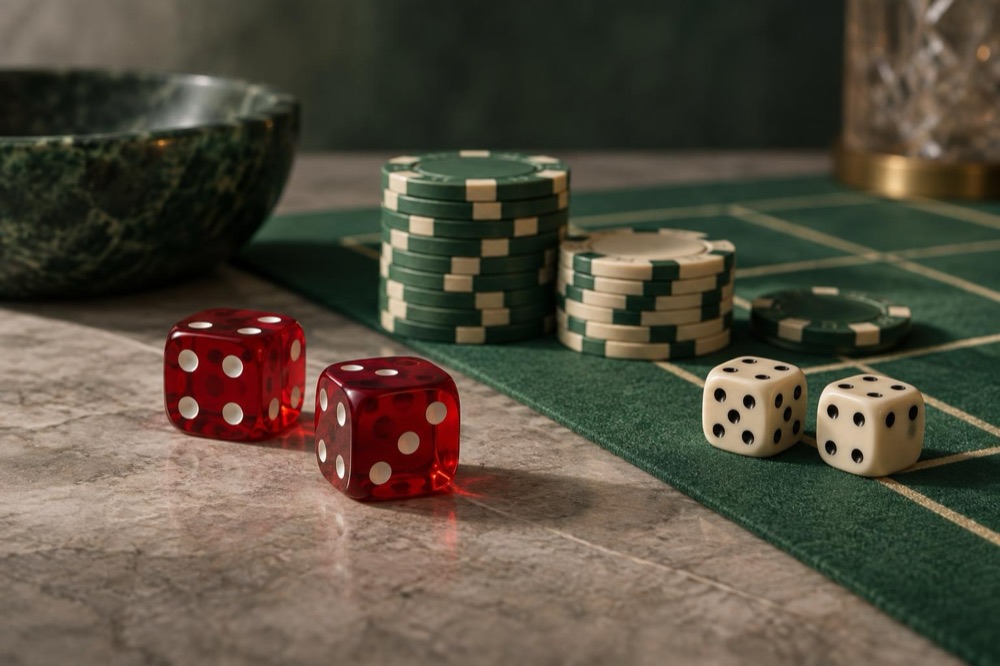
Craps has the widest spread of any table game. Across the whole game the house edge runs from about 0 to 16.6 percent, depending on which bet you make8. The pass bet and the come bet both carry a house edge of 1.41 percent3. Some craps bet options have no house edge at all, while others run as high as 16.67 percent3.
The bets with the lowest house edge are the pass line bets, come bets, place bets and odds bets2. Odds bets are the standout: they pay out at true odds, which means there is no house edge on them at all7. You can only place an odds bet behind an existing pass line, come, don't pass or don't come wager, so the edge on the underlying bet still applies to that portion of your money.
Sic Bo does not have a single headline number in the same way, because the layout is a grid of separate bets with separate edges. The general rule is simple: the higher the payout odds, the less likely the outcome is to occur, and lower payout odds mean greater chances of winning1. Big and small sit at the cheap end. The specific totals and combination bets sit at the expensive end.
For context, a 1.41 percent edge on a pass bet is one of the lowest figures on any casino floor. A baccarat banker bet runs about 1.06 percent and the player bet about 1.24 percent, while the tie bet runs 14.44 percent in a six-deck game9. Caribbean stud poker carries a house edge of 5.2 percent10. Craps, played on the right bets, is competitive with the best of them.
Bet types and payouts on each layout
The two layouts look nothing alike, and the reason is the dice count. Sic Bo spreads a wide menu of outcomes across a grid. Craps concentrates on a handful of core wagers and then adds proposition bets around the edges.
Sic Bo has six main categories of bets: single number bets, two number combinations, three number total bets, triple bets, pair bets, and big and small bets1. On a Macau layout the payouts run like this:
| Sic Bo bet | What it covers | Payout |
|---|---|---|
| Small | Total of the three dice from 4 to 10 | Even money |
| Big | Total of the three dice from 11 to 17 | Even money |
| Total of 8 or 13 | Exact three-dice total | 1 to 8 |
| Total of 9, 10, 11 or 12 | Exact three-dice total | 1 to 6 |
| Two dice the same, one different | A specific pair plus a different third die | 1 to 50 |
Those figures come from the Macau regulator's published rules for Sic Bo6. Note that big and small both lose on any triple, so the even-money bets are not quite as simple as they look.
Craps offers more than 10 types of wagers with varying combinations, though many of them lean heavily in favor of the house2. You do not need to know them all. The core bets are:
- Pass line and come bets, which pay 1 to 13
- Don't pass and don't come bets, which win on 2 or 3 and lose on 7 or 11, with a roll of 12 treated as a push where no one wins or loses7
- Odds bets, which pay at true odds with no house edge7
- The field bet, where 3, 4, 9, 10 and 11 are paid once the stake, and 2 and 12 are paid twice the stake11
- The any craps bet, which pays 7 times the bet and wins if 2, 3 or 12 comes up11
- The horn, where you bet simultaneously on 2, 3, 11 and 12; if the throw totals any of these, that bet wins and the other three lose12
The center of the table is where the big payouts live, and also where the house edge is highest. The components bet, for example, is a single roll bet paid 15 times the stake, stake included, and 30 times if the number chosen is made by doubles11. Those are the bets to treat as entertainment rather than value.
Where you can play each game in Asia
Sic Bo is the more widely available of the two across the region. It appears on the main floors of Macau casinos, in Singapore, in the Philippines, in Cambodia and in Vietnam, and it is a standard part of the Asian table game mix alongside baccarat, which is typically the only game offered in VIP rooms and the preferred game among Chinese players13.
Craps is a specialty. Macau regulates it and offers it, and the Philippines has been expanding its craps offering. Okada Manila published a page describing its Crapless Craps game, available exclusively at the property, and later added Crapless Max, an enhanced variant with placebet hardways, hop bets and bonus bets, playable on the mass gaming floor. Winford Manila added Crapless Craps among its new casino games for 2025. If craps is the reason for your visit, check the specific property before you travel, because a table that existed last year may not be there now.
Online, both games are widely available in live dealer formats. Live versions of blackjack, baccarat, roulette, Dragon Tiger and Sic Bo are standard, along with game shows4. If you are in a jurisdiction where online play is legal, that is often the easiest way to try craps, because you can watch a full round without feeling the pressure of a crowded table.
If you are planning a trip and want to know what is legal where you are going, the country guides cover the practical position for visitors, residents and citizens separately. Start with casinos in Macau if you want the widest choice of both games, or casinos in the Philippines if craps specifically is what you are after.
Sic Bo in Japan: illegal today, on the casino list
Japan is worth a separate note because the position is unusual. Gambling in Japan is basically illegal, but not all gambling is illegal, and some forms are permitted under other laws to respect everyday entertainment or to return proceeds to social welfare14.
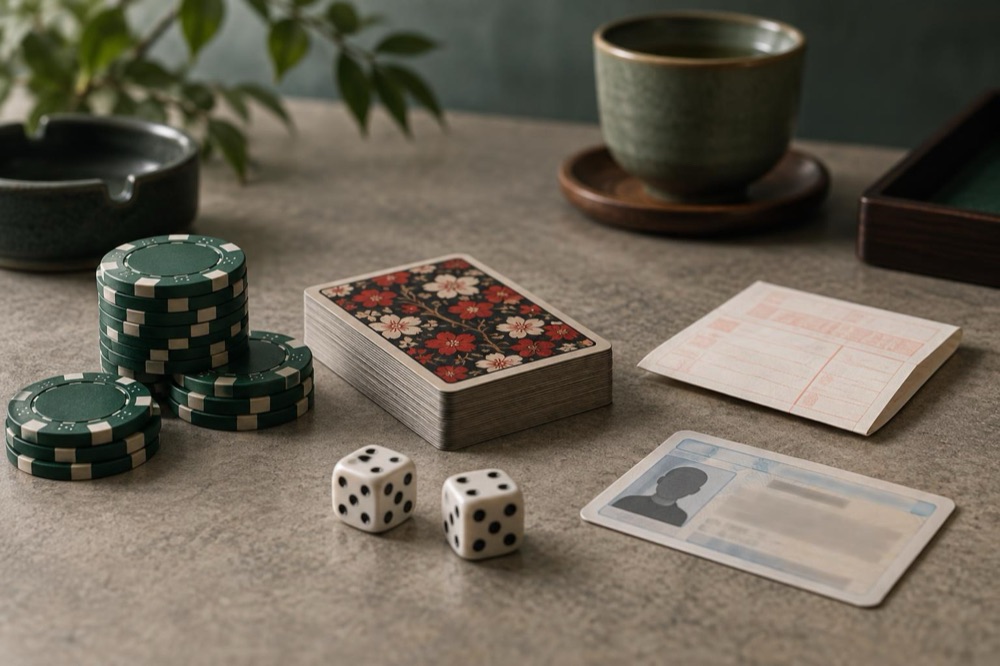
Playing on offshore casino websites is illegal in Japan, and players have been prosecuted. Connecting from within Japan to gamble on an online casino is a crime even if the operator is legally run overseas, and that applies to free versions and free bonuses as well15. The same warning covers online pachinko16.
At the same time, Sic Bo is on the list of permitted casino games under Japan's casino regulations, appearing as "シックボー" in the enforcement rules15. Casino business is prohibited under the Penal Code and is exceptionally permitted as a privilege under the IR Development Law16. In other words, Sic Bo is a game Japan has formally approved for the casino resorts it is developing, but those resorts are not open yet. Until they are, there is no legal land-based casino in Japan where you can play it.
For visitors to Japan, the practical position is that casino gambling is not available. For residents, the same applies. If you want to play Sic Bo legally in the region, Macau, Singapore, the Philippines and Cambodia are the realistic options.
Which game suits you
Neither game rewards study in the way blackjack or poker does. Both are pure chance, and no betting system changes the underlying odds. What differs is the experience and the cost of your bets.
Sic Bo suits you if you want a straightforward, fast round with a wide choice of bet sizes. You pick a section of the layout, the dice shake, and the result is immediate. The big and small bets are easy to follow and cheap in house edge terms. The specific totals and combination bets are the ones to be careful with, because the payouts are large precisely because they rarely land.
Craps suits you if you enjoy a game with a narrative. A round has a beginning, a point to chase and an ending, and the whole table is invested in the same roll. The pass line and come bets are among the cheapest bets in the building at 1.41 percent, and odds bets carry no house edge at all. The proposition bets in the center are the expensive ones, and the range across the game runs from about 0 to 16.6 percent8.
A few practical points apply to both. On Sic Bo, be aware of those around you and make sure everyone can place their chips where they want, and respect other players' time by acting in a timely fashion when betting5. On craps, buy your chips between rolls rather than mid-action, and remember that the shooter keeps the dice until they seven out, so a hot table can run for a long time.
If you want the numbers in more depth, the Sic Bo odds and house edge by bet page breaks down every section of the layout, and craps odds, payouts and house edge does the same for the proposition bets, place bets and odds bets. For the rules in sequence, craps rules: come-out roll, point, pass and come bets walks through a full round.
Common Questions
What does Sic Bo mean in Chinese?
Sic Bo is a Cantonese pronunciation of a name that means something close to dice pair or dice treasure. The game is an ancient Chinese dice game, and in Macau and Hong Kong you will also hear it called tai sai, which simply means big and small, after its two main bets.
How many dice are used in Sic Bo and in craps?
Sic Bo is played with three dice, and no more, thrown at every throw. Craps is played with two dice. That single difference explains almost everything else about the two games, from the number of possible outcomes to the shape of the betting layout.
What is the house edge in craps?
It depends entirely on which bet you make. The pass line and come bets carry a house edge of 1.41 percent. Some craps bet options have no house edge at all, and others run as high as 16.67 percent. The range across the whole game is roughly 0 to 16.6 percent.
What is the house edge in Sic Bo?
Sic Bo bets vary widely too. Big and small bets are the cheapest, while the specific totals and combination bets pay much more and win far less often. The general rule is that the higher the payout odds, the less likely the outcome is to occur.
Can some craps bets have no house edge?
Yes. Odds bets pay out at true odds, which means there is no house edge on them. You can only make an odds bet behind an existing pass line, come, don't pass or don't come wager, so the edge on the underlying bet still applies to that part of your money.
What is the highest Sic Bo payout?
The biggest standard payout is on the bet that two dice show the same number and the third shows a different one, which pays 1 to 50 in Macau. Specific triples pay more on some layouts. High payouts come with very low odds of winning.
What is the come-out roll in craps?
The come-out roll is the first roll of a new round. If it is a 7 or 11, pass line bets win immediately. If it is a 2, 3 or 12, they lose. Any other number, meaning 4, 5, 6, 8, 9 or 10, becomes the point and the shooter keeps rolling.
Is Sic Bo the same as Tai Sai or Hi-Lo?
Tai sai is another name for Sic Bo, used in Macau and Hong Kong, and refers to the big and small bets at the heart of the layout. Hi-Lo is a different three-dice game with its own layout and payouts, so do not assume the two are interchangeable when you sit down.
Sources16 sources
- Sic Bo: How to Play, PlaySmart
- Craps: How to Play, PlaySmart
- Craps Odds, PlaySmart
- Best online casinos for players from Japan, Wizard of Odds
- Sic Bo Etiquette, PlaySmart
- Sic Bo rules, DICJ Macau
- How to Play Craps: Details, PlaySmart
- 控除率, Wikipedia
- Baccarat, GameSense
- Table Games, PlaySmart
- Arrete Ministeriel 88-384, Legimonaco
- Craps rules, DICJ Macau
- The Transformation of Macao's Gaming Industry, University of Macau
- Consumer caution, Consumer Affairs Agency
- Online casino guidance, JCRC
- Gambling addiction pamphlet, MLIT















